Beatties Ford Road development has stagnated for years. But that’s changing now.
When he attended Johnson C. Smith University as a music business student in the late 1970s, Anthony Lindsey regularly walked a mile-long section of Beatties Ford Road.
These days when he drives down that northwest Charlotte corridor, it doesn’t seem like much has changed. He passes by many of the same residential homes and commercial properties. Some have shuttered; a couple other lots are vacant.
There hasn’t been much in the way of new development, either from the city or private businesses. Lindsey intends to change that through his work as a developer.
A three-story, 15,000-square-foot commercial building he’s pushing through a rezoning would be the first ground-up office project along a three-mile stretch of Beatties Ford Road in nearly three decades, Lindsey believes.
The project, Lindsey hopes, will bring back professional services to an area that’s badly in need of them. Topping that list: medical services that most residents have to travel far to find today.
“Over the last 40 years we’ve had so many conversations, so many plans, so many charrettes and neighborhood meetings,” Lindsey said. “There have been so many discussions around what needs to happen on the corridor and very little has happened.”
While the zoning still needs City Council approval, likely next month, Lindsey sees it signaling to other developers and investors that Beatties Ford Road is a good place to do business.
It’s also home to a number of Charlotte’s Black neighborhoods, including Washington Heights and Biddleville.
Lindsey’s project comes as a number of other developers have been redeveloping older properties, breathing new life into the corridor’s small business scene. Two sites that stand out are anchored by national banks but also local Black-owned businesses like Archive Coffee.
It also comes as the city invests millions of dollars through the Corridors of Opportunity program, including an affordable housing project and improving sidewalks, street crossings and traffic signals. The program is intended to revitalize six key areas across Charlotte with investment in transportation and safety, among other efforts.
There have been some additional minor projects too, like putting new lighting on a water tower and on a bridge underpass, plus more planting strips. The biggest project came in the form of the Gold Line streetcar that runs from east Charlotte to an intersection just past JCSU.
“Any time you put public investment first — infrastructure, sidewalks, curb, gutters, streetcar — private investment tends to follow,” said City Councilman Malcolm Graham, whose district includes the Beatties Ford Road corridor.
Paying homage, looking forward
More of that private investment is either underway or coming.
A developer from California purchased the former Excelsior Club building in 2019 with plans to redevelop the site. Developers Chris Dennis and Dianna Ward purchased commercial properties and redeveloped them for new businesses, many of them minority-owned. Another developer has plans to bring a new bank branch to a parcel with a shuttered business.
The latest project from Lindsey sits on a half-acre vacant lot at the corner of Beatties Ford Road and Gilbert Street. It’s fenced off with grass growing up through an old building foundation.
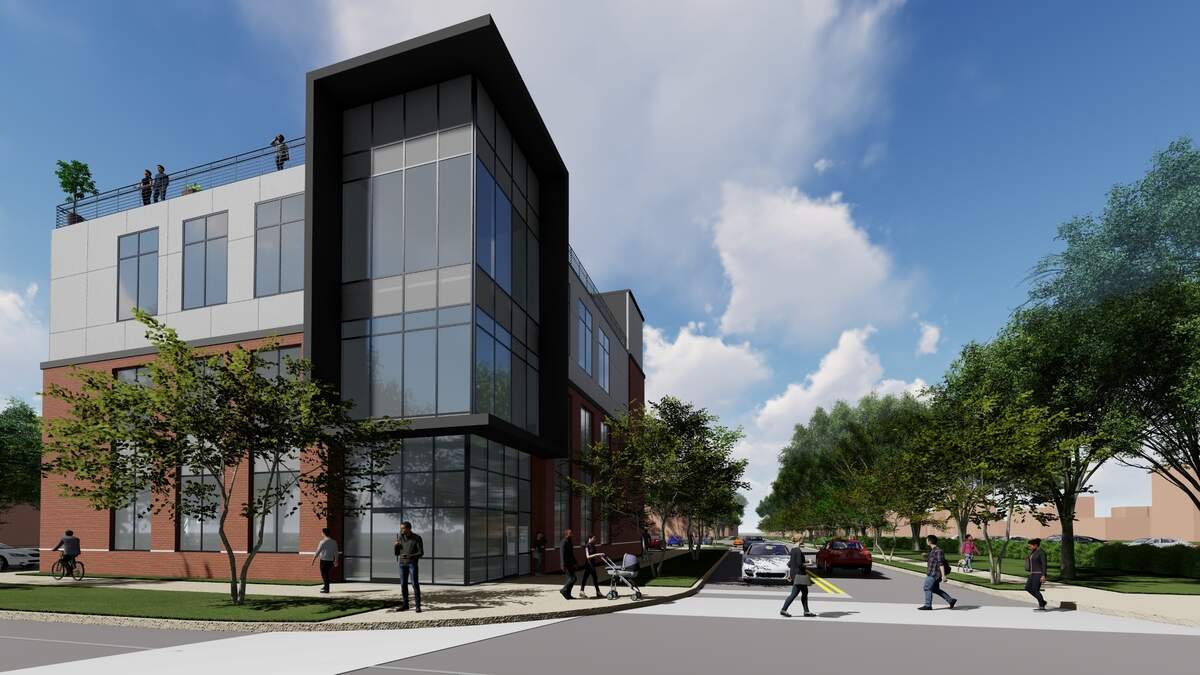
Lindsey’s plan calls for about 4,000 square feet of office on each of the three floors, plus a nearly 3,000-square-foot rooftop terrace.
He wants to bring more maternal health care to the corridor, calling it a pressing need in the Black community.
Black women are three times more likely to die from a pregnancy-related cause than White women, according to the Centers for Disease Control. There’s also a need for eye doctors, obstetricians and gynecologists. Lindsey sees his building as helping close the gap for such services.
In that way, the proposed building is paying homage to what once stood on the lot.
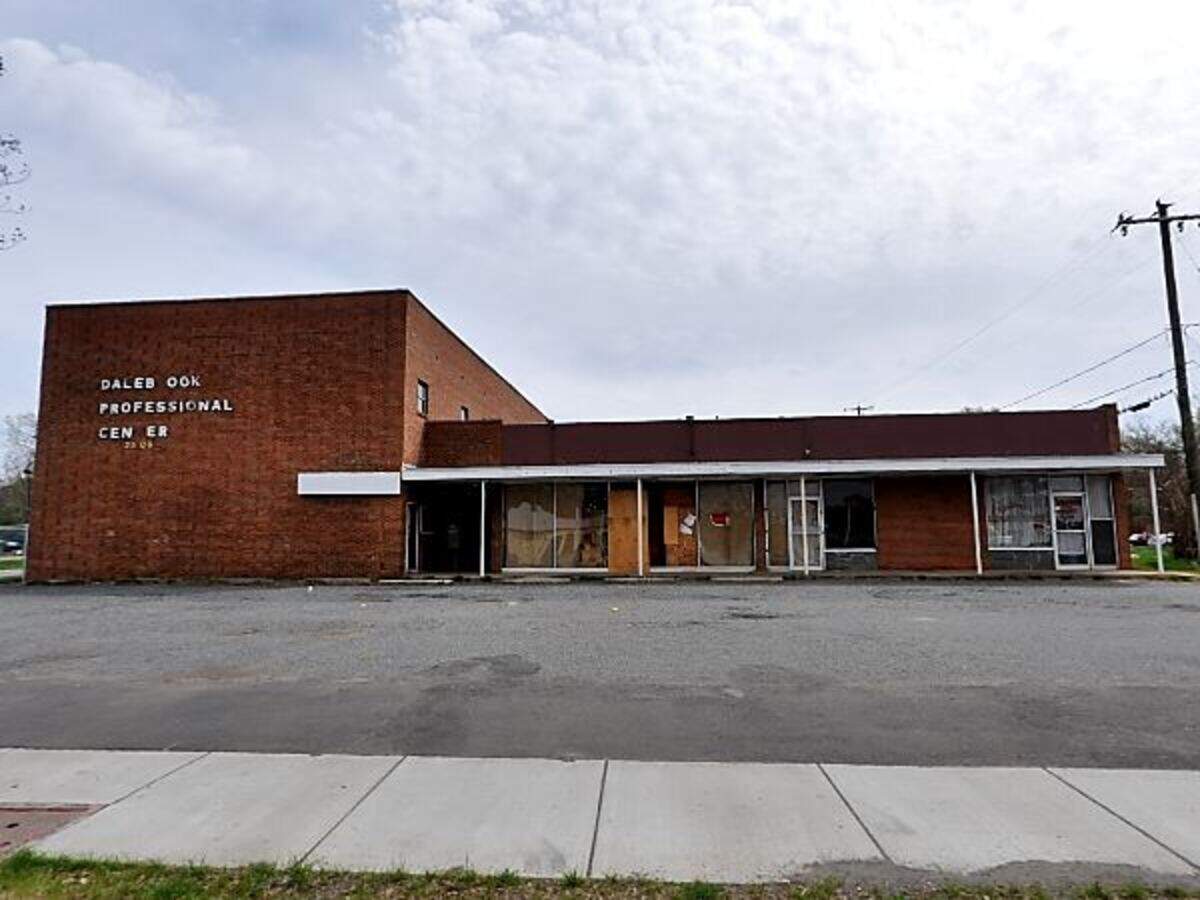
The Dalebrook Professional Center was built in 1963. It was founded by Dr. Roy Wynn, Charlotte’s first Black ophthalmologist, and became home to many Black professionals like doctors, dentists, pharmacists and beauticians, according to a report from the Charlotte-Mecklenburg Historic Landmarks Commission.
The building was torn down in 2016.
The proposed building will have a more modern look. The design and size of the building are intentional, too, Lindsey said.
He and the property owners, Roger and Claudette Parham, want to demonstrate that such projects can be successful in this part of Charlotte. That success is both in terms of bringing services to the community and turning a profit.
Lindsey wonders why there hasn’t been a major office building here — it’s relatively close to uptown and near a major interstate exchange.
The surrounding area’s economics are part of the equation, Lindsey said. Beatties Ford Road generally falls within what’s known as Charlotte’s crescent of lower-income neighborhoods to the north, east and west of uptown. There’s a wedge of more affluent neighborhoods to the south.
Developers are driven by profit as much as they are by mission and purpose, Lindsey said.
But people in this part of town shop along South and East boulevards or in SouthPark and Northlake Mall. Why wouldn’t they spend that same money in Beatties Ford Road if there were more goods and services?
“Part of the problem has been there’s a perception that the underlying economics in this market doesn’t sustain the kind of development that East Boulevard, South Boulevard would support,” Lindsey said. “We believe part of that is because nobody’s brought it here.
“There’s not been a serious test to know whether that’s true.”
‘This neighborhood shaped me’
There are others who have believed in the potential of the corridor for years.
Rodney Faulkner is one of them. He works for Boundary Street Advisors, a Black-owned commercial real estate firm. Before he joined the firm, he worked as a broker on a deal in 2011 that brought a Family Dollar store to Beatties Ford Road and Lasalle Street.
It was the first ground-up commercial development in years.
Part of the challenge of developing in the corridor is working with relatively smaller lot sizes compared to other parts of town. Developers either need to work with what they have or assemble several lots together for a project, Faulkner said.
Faulkner believes there are plenty of good opportunities up and down Beatties Ford Road for people to redevelop a single property.
“You take what you have and make the best use of that lot, and still affect the neighborhood in a positive way,” Faulkner said.
He envisions the corridor’s vacant buildings converted into restaurants like on East Boulevard.
He purchased a vacant building not far from Lindsey’s project that will be torn down for a new Fifth Third Bank branch.
His work along the corridor is an opportunity to give back. Faulkner grew up in a neighborhood off Beatties Ford Road. He wants to see less indecision with properties by property owners and more boldness.
“This neighborhood raised me,” he said. “It shaped who I am.”
City investment comes to corridor
The city of Charlotte has earmarked a number of investments along Beatties Ford Road the past few years.
It started with Five Points Plaza, which opened last March near Johnson C. Smith University. The $5.5 million plaza is seen as the gateway to the Historic West End, a predominantly African American part of Charlotte.
The plaza is owned and maintained by the city. It has seating, public Wi-Fi, a water splash pad and amphitheater for community events.
Overall, the city has invested about $12.5 million in the Beatties Ford Road corridor, including infrastructure improvements and housing, said Monica Holmes, executive manager of the Corridors of Opportunity program.
One of those programs includes spending $860,000 for improved bike infrastructure along a road that runs parallel to the busier, well-trafficked Beatties Ford Road.
The idea is to give people safer routes along Beatties Ford Road, which has two interstates cutting through it.
The fact there are a number of smaller parcels on Beatties Ford Road can be good for the community, Holmes said. That offers opportunity for incremental development, meaning more chances for a small business to thrive or a local developer to work on a project.
Avoiding displacement
Lindsey wants to make sure the injection of investment doesn’t negatively impact the existing businesses in the area.
The community has shared concerns about the level of new investment, fearing impacts like displacement.
Lindsey believes the corridor needs to become more dense and urban feeling. But the development needs to have a mix of uses and serve tenants and residents from a mix of incomes.
His project might not answer all the area’s problems. But he hopes there will be more projects like his to serve a variety of community needs.
This story was originally published April 19, 2023 at 6:45 AM.