Excelsior Club update: Parking challenges remain for west Charlotte redevelopment
Darius Anderson has big plans for the Excelsior Club. Convert the historic west Charlotte spot back to a music venue. Build a boutique hotel there and have a restaurant on site.
But one major impediment for the redevelopment of the historic theater that was once a central nightspot for the Black community in the city has emerged — adequate parking.
Opened in 1944, the club hosted big-name musicians like Nat King Cole and Louis Armstrong. It also served as a hub for Black political and community leaders for decades before it closed in 2016.
In recent years, the building had fallen into disrepair and was at risk of demolition.
But in 2019, Anderson’s Calif.-based Kenwood Investments purchased the former club on Beatties Ford Road for $1.35 million, with the help of $250,000 in funds from the city, county, Foundation for the Carolinas and the Knight Foundation. He started to consider plans for the future of the building.
Anderson began working with Charlotte architect Darrel Williams, founding partner and owner of Neighboring Concepts. It’s one of the largest Black-owned architectural firms in the Southeast.
Then, in late 2020, Anderson brought on Hamilton Anderson Associates of Detroit.
The firm has more experience in developing hotels, Anderson said. Hamilton Anderson is the largest Black-owned design firm in Michigan, according to its website and has helped design such projects as the MGM National Harbor just outside Washington, D.C.
The Excelsior project is still in early stages, Anderson said, and has been delayed by the pandemic. He had no firm updates on project cost or when construction might start.
Parking challenges at the Excelsior
For years, the Excelsior Club had a parking arrangement with a city water facility across the street that allowed club guests to park there, Anderson said.
That’s no longer an option, Anderson said. His company continues to work with the city of Charlotte, including Tracy Dodson, the assistant city manager and economic development director.
According to a city spokesman, parking at the water facility isn’t viable due to security reasons.
The city continues to work with Anderson about the Excelsior as well as with other sites nearby to help with parking and other needs, the spokesman, Cory Burkarth, told the Observer in an email. No clear answers have come up yet.
Burkarth described finding short- and long-term solutions for parking and other needs as extremely important for the city and that it is looking at a variety of solutions.
The Excelsior site is close to Johnson C. Smith University and a number of businesses up and down Beatties Ford Road. It also sits close to Five Points Plaza, where construction is nearing completion on a revamped space complete with an amphitheater, water splash pad, public WiFi, swings, tables and chairs.
Anderson didn’t know the number of parking spots needed for the project. But, he said, a certain amount of spaces are needed to make the project financially viable.
The lack of clear answers around parking does not mean the end to the project, Anderson said.
The developers are still in what Anderson calls the entitlement phase, figuring out the city codes that relate to the project like height restrictions and parking.
Once they have that set Kenwood will get into the cost of the project, figure out a timeline and start construction. “The biggest issue around the property is parking,” Anderson said.
Preserving Black history
The Excelsior is designated as a historic landmark by the Charlotte-Mecklenberg Historic Landmarks Commission.
But historic properties with that designation can still face the threat of demolition, the Observer reported last month.
Crews in Mecklenburg County demolished more than 4,700 structures from 2017 through last year, according to county building permit data reviewed by the Observer. Most — about 77% — were single-family residences.
Fast-paced growth can create tension between building shiny, new office and residential buildings and preserving older, historic properties that carry a lot of memories for residents. It has sometime meant the destruction of many iconic properties.
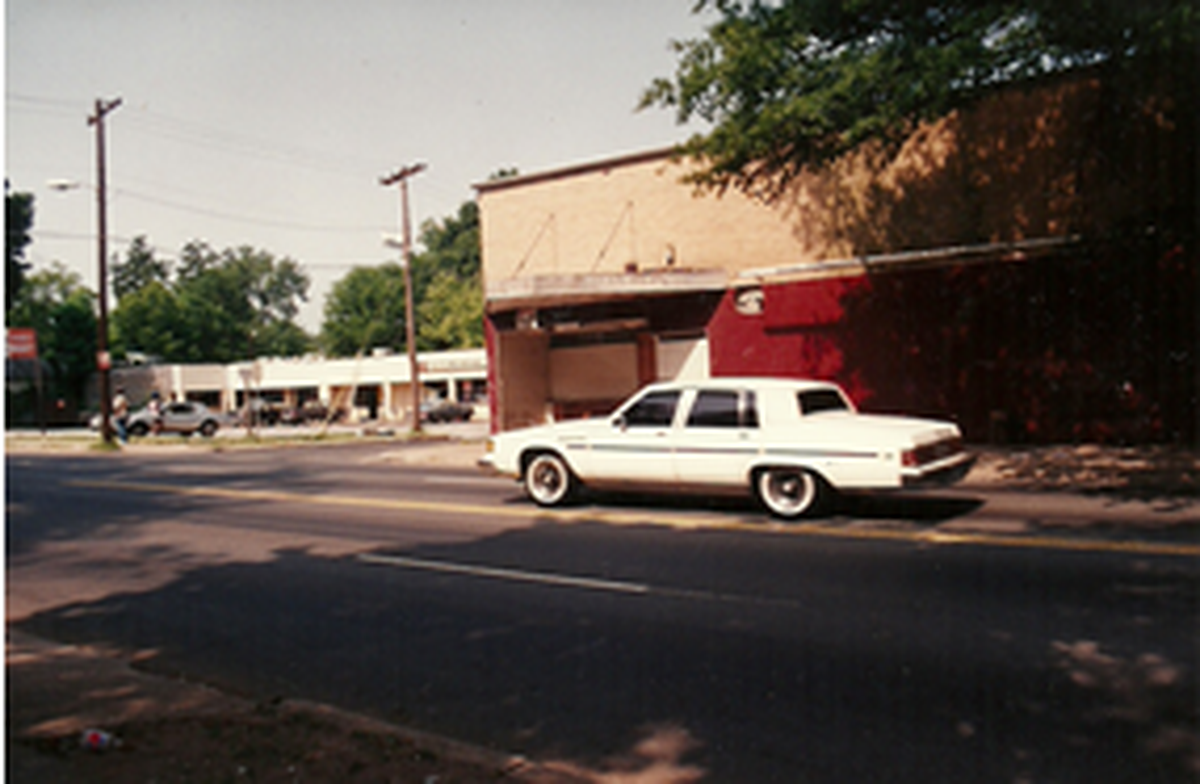
That’s included historic African American properties like the Ritz Theater, a segregation-era movie theater off Beatties Ford Road, and the Brevard Street Library for Negroes, which was torn down in 1961.
Anderson’s plans to breathe new life into the Excelsior Club are among a handful of efforts to save buildings that are important to the Black community around Charlotte.
Some of the other buildings include the Morgan School that educated Black children in the Cherry neighborhood for years and the Patterson Grocery Store, which has stood in the historically Black Washington Heights neighborhood for about a century.
Anderson was moved to purchase the Excelsior building while visiting Charlotte after reading an article in the Observer about the former club being added to the National Trust for Historic Preservation’s list of 11 most endangered historic places, according to Observer archives.
The Excelsior was included in the “Negro Motorist Green Book,” a guidebook that listed nightclubs, hotels, restaurants and other businesses that welcomed African Americans during the era of segregation. Anderson said many Green Book businesses have been demolished over the years.
After reading the Observer story, he said, he drove to the Excelsior site, researched its history at the library and fell in love with it.
This story was originally published March 2, 2022 at 6:00 AM.