
Coyote Joe’s owner vents as COVID closed down his site for nearly a year now
.jpg "Coyote Joe’s on Wilkinson Boulevard brings national country artists to Charlotte but has been closed nearly a year because of the coronavirus pandemic.")
For the first time in several decades, Alan Presley has had extended time off from his popular west Charlotte country-music themed nightclub Coyote Joe’s, all because of the coronavirus pandemic.
Presley usually spent his days at the club’s corporate office and nights at the music venue. Too many hours to count, he said. But due to North Carolina’s COVID-19 restrictions, the multi-level venue has sat dark for nearly a year.
“I’m bored,” he said. “You can only clean so many closets out.”
Presley, his brother Larry and the family of a former partner, the late Kent Robinson, own the club on Wilkinson Boulevard. It’s known for bringing headline country music artists like Luke Bryan and Tim McGraw to Charlotte.
This month, Coyote Joe’s marked its 30th anniversary — but without any celebrating. As the pandemic wears on, and indoor music venues like Coyote Joe’s must remain shuttered, Presley’s frustration has grown.
“It really bothers me that some of the venues that are allowed to be open, some of these breweries are slammed packed with 200 or 300 people, ” Presley said. “And of all the venues in town, we can certainly social distance.”
He said that’s because they have capacity for over 3,200 people and already added safety steps like markers and shields.
A home for country stars
The wall of artists’ pictures who have played Coyote Joe’s is dotted with the likes of Garth Brooks, Merle Haggard, Travis Tritt and Charlie Daniels. Some recorded live videos there, including Luke Combs’ “Hurricane” and Dylan Scott’s “Hooked.”
Country music star Blake Shelton decided to hold a surprise free popup concerts there, too, just three years ago. “That morning Blake tweeted he’d be in Charlotte, then it was on like Donkey Kong,” Presley said.
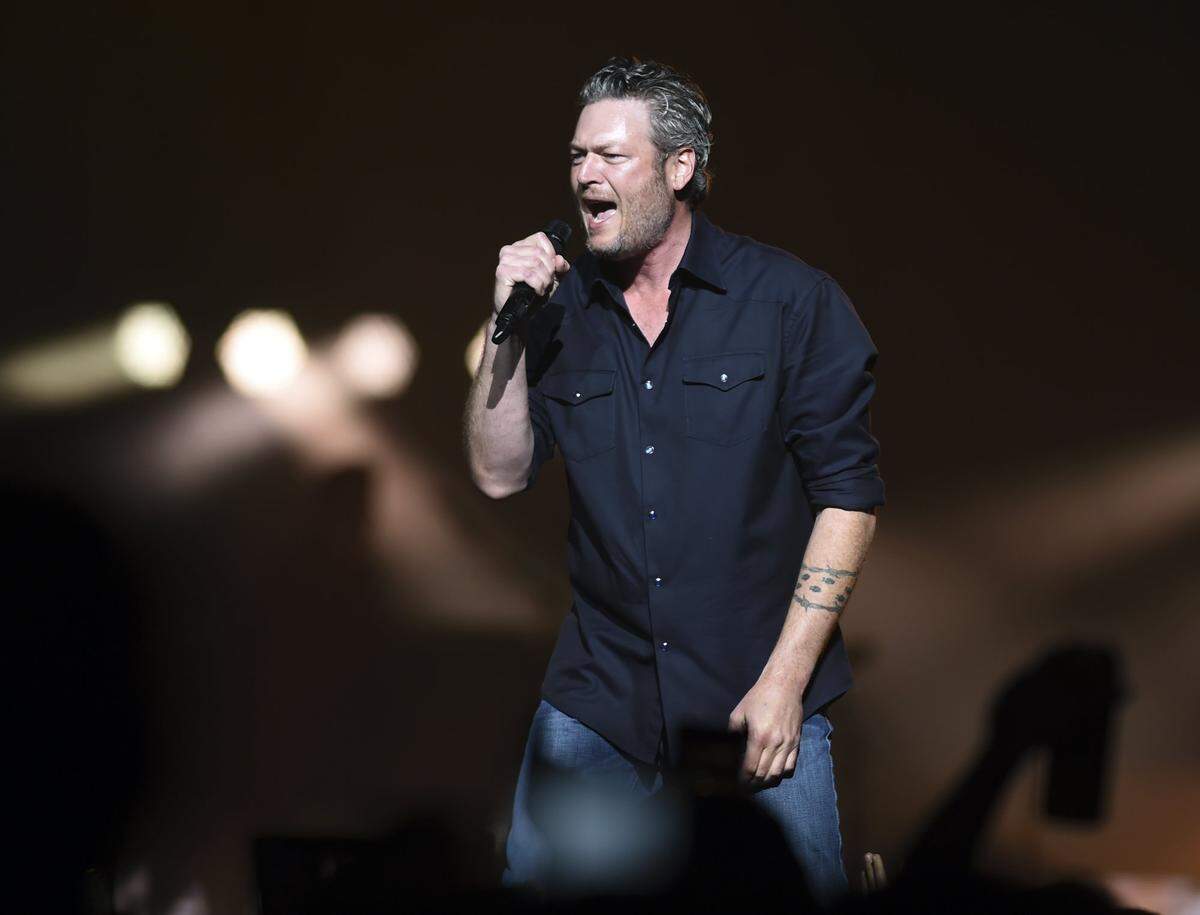
But it’s also where up-and-comers perform, including Luke Bryan and now Songwriter Hall of Famer Toby Keith back in 2005. Live events make up about 75% of all artist’s income, according to the National Independent Venue Association, a group of more than 3,000 venues that formed during the pandemic.
“We’re a development club for a lot of artists on their way up,” Presley said.
But rock bands like Smash Mouth also have played there, and Coyote Joe’s has been the host venue for annual CIAA tournament day parties.
The slogan is, “Everybody goes to Coyote Joe’s,” Presley said.
False hopes
Before the pandemic, Presley said the club was having a renaissance as country music gained popularity with new crossover artists like Kane Brown.
“We were pumped up,” he said, “then it went away.”
Coyote Joe’s typically sees up to 600 people a night for its popular line dance lessons on Wednesday nights on the large dance floor. People also take tries at riding the mechanical bull, and playing pool, Foosball and corn hole.
“It’s a close-knit crowd with regulars, some since the start,” Presley said.
But in mid-March, all but essential businesses were ordered to close. North Carolina has reopened businesses in phases but indoor music venues have yet to be allowed to open.
.jpg "CLT NEWS (1).jpg")
Nightclubs and bars are not allowed to open indoors, and can only operate with 30% capacity outside under Gov. Roy Cooper’s executive order. Phase 3 the final phase of the reopening plan, has been extended three times. The latest extension expires at 5 p.m. Sunday.
Presley isn’t getting his hopes up that anything will change this time.
“We’ve had several false hopes and dashed every time. I understand the seriousness of this disease and the complexity of it,” he said. “But we feel we can open in a safe environment.”
Costs of being closed
The expectation last March, Presley said, was the business would close for a few weeks, maybe a couple of months, to help flatten the curve of rising COVID-19 cases. He didn’t apply for the first round of Paycheck Protection Program loans.
“We were in good financial shape then,” he said. The business applied for the second round but hasn’t yet heard back.
Coyote Joe’s did receive a small music venue grant, Presley said, which was appreciated but “a drop in the bucket” as months have passed without any income. He didn’t say how much the grant was for.
“Our expenses have kept on keeping on but there’s no clear path to open, that’s the problem,” Presley said.
Coyote Joe’s has kept the manager and assistant manager on the payroll helping with the upkeep on the nearly 50,000-square-foot building.
But Presley said they had to layoff their 60 mostly part-time workers. He hopes most of them will return, but said he expects many have moved on. “It was catastrophic for my employees,” he said.
“We certainly always worry but are optimistic we’ll weather this. We’re not in this by ourselves,” Presley said.
For every $1 spent on a ticket at small venues, $12 in economic activity is generated within communities on restaurants, hotels, taxis and retail establishments, according to the venue association. Plus, Coyote Joe’s holds several charity fundraisers a year for St. Jude’s Children’s Hospital and Loaves and Fishes.
‘Window of hope’
Presley and his partners also own The Blind Horse Saloon, in Greenville, S.C., which is open. The capacity for the venue is 2,000 people, and it has hosted up to 600 guests under that state’s restrictions. Presley said there have been no COVID-19-related problems, further proof Coyote Joe’s can open safely.
Presley said last spring, when Coyote Joe’s closed, they deep cleaned the building and added plastic shields at the door and bar. They also laid out social distancing markers at the bar and other areas. They were ready to reopen in June.
Presley said as soon as they get the green light, Coyote Joe’s will reopen in two to three days, “five at the max.”
However, even if Coyote Joe’s can open soon, national artists still aren’t touring.
Presley doesn’t expect to make plans for large acts until next fall, once more people are vaccinated. The vaccine, he said, is a “window of hope for everybody.”
This story was originally published February 22, 2021 at 6:30 AM.