
Expect more COVID-19 cases with Charlotte colleges reopening, health director says
As students return to colleges and universities, Mecklenburg County Public Health Director Gibbie Harris said she expects to see an increase in COVID-19 cases.
“It’s an experiment,” Harris said at a news conference Wednesday. “We don’t know exactly what’s going to happen. We do anticipate there’s going to be some cases.”
Harris said the health department is working with local colleges and universities. Some campuses will hold classes completely online, while others plan to bring students back for a mix of online and in-person classes.
“The plans that our colleges have in place are good plans, and it will take work to make sure that those plans are managed and implemented appropriately,” Harris said.
The goal, Harris said, is to mitigate the risk for spreading the contagious virus.
Students will return to Charlotte and the surrounding area just as Mecklenburg officials are seeing a positive but modest turnaround in coronavirus trends. That includes fewer people hospitalized in recent days, a declining positivity rate of COVID-19 tests and a steady decrease in the average number of new cases detected per day.
“Even though the trends appear positive, we are not out of the woods yet,” Mecklenburg County Manager Dena Diorio said Wednesday.
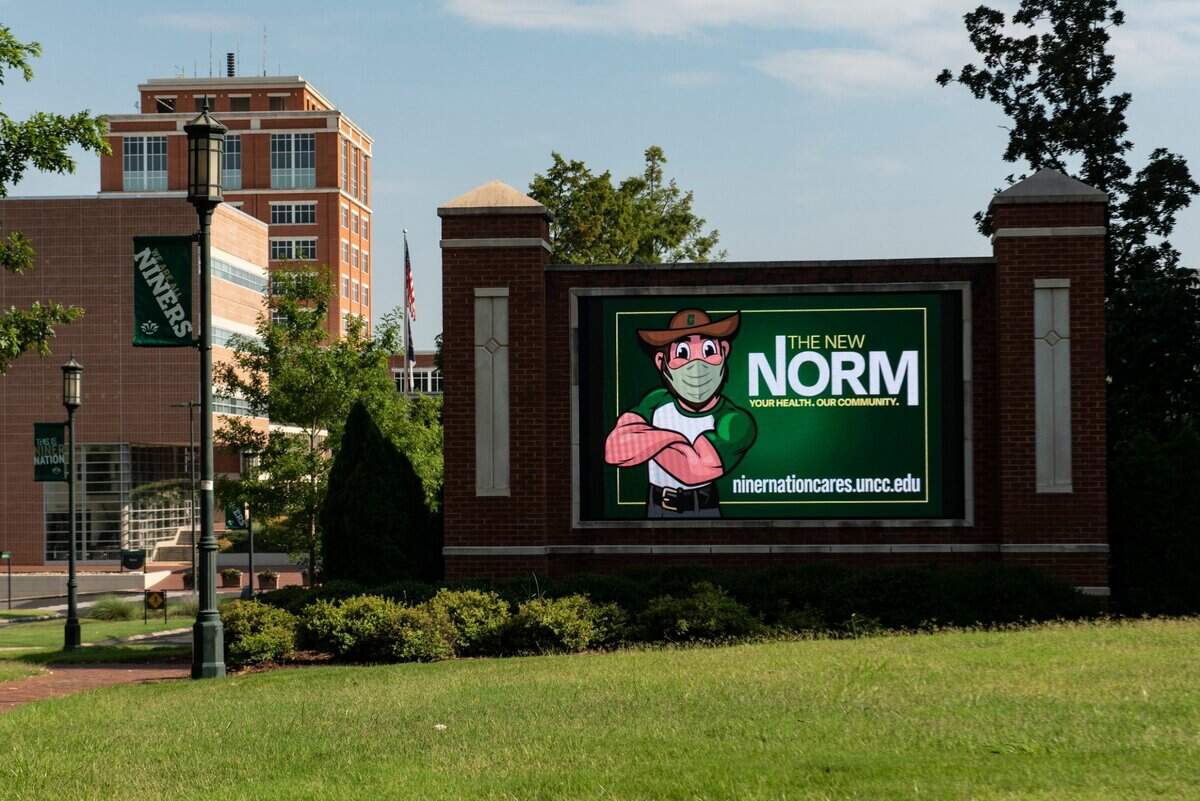
Charlotte’s largest university, UNC Charlotte, plans to resume classes with in-person and remote options on Sept. 7. Move-in begins later this month for many who live on campus.
That could mean more than 6,000 students returning to on-campus living, according to numbers from 2019’s fall semester. To accommodate social distancing in residence halls, UNCC will remove shared furniture from the common areas. Campus leaders also are planning to provide “isolation and quarantine” housing and meal delivery as needed.
Harris did not offer details on how specific campuses are planning for students to return but said: “You cannot bring that many people back into our community and not expect there to be cases.”
The health director also said she’s optimistic local leaders will be able to handle the expected increase in cases.
Young adults — people between the ages of 20 and 39 — make up the largest number of COVID-19 cases in Mecklenburg. County officials worry it’s because young people aren’t taking coronavirus restrictions seriously.
Nearly 44% of all COVID-19 cases in Mecklenburg appeared in people between the ages of 20 and 39 as of Aug. 9, the most recent demographic data available. That percentage has been steadily climbing since mid-April and is up from 31.7% on April 16.
“Part of it is because that population is extremely social,” Harris said. “They’re out and about with their friends, doing things in our community.”
What’s more, that age group is also more likely to be asymptomatic for COVID-19, she said. That means young people may be spreading the coronavirus without knowing they’re infected.
COVID-19 alcohol ban
County and state officials have braced for the return of college students to campuses and targeted rising COVID-19 cases in younger adults, in part, by banning late-night alcohol sales in restaurants.
Across North Carolina, bars remain shut and businesses are banned from selling alcohol past 11 p.m. Charlotte and some Mecklenburg town leaders have opted for more restrictive COVID-19 alcohol rules. But recently, more localities are opting out.
The town of Matthews on Wednesday became the third town to back out of Mecklenburg County’s restrictions. The town — similar to earlier decisions from Mint Hill and Pineville — opted to instead align with Gov. Roy Cooper’s guidelines, which allows restaurants to serve food in their bar areas, according to Tuesday’s amended proclamation from Mayor John Higdon.
The decision leaves only the city of Charlotte, the town of Davidson and unincorporated parts of Mecklenburg bound to an emergency order that lacked countywide support from the start.
Leaders in the towns of Cornelius and Huntersville did not join the proclamation, which took effect July 23.
But Harris and Diorio defended the county’s tougher stance during a Wednesday news conference, citing a lack of social distancing observed in bars.
“That is just a recipe for disaster,” Harris said.
While the late-night alcohol ban could be a positive step in slowing the rising cases among young people, the ban can’t stop people from getting together outside of businesses, Atrium infectious disease expert Dr. Katie Passaretti told the Observer in late-July.
“I think it’s helpful,” Passaretti said of the late-night alcohol ban at the time. “It’s certainly not going to be a fix-all for human behavior, but I do think it’s hopefully a step in the right direction.”
Passaretti said there’s a belief among young people that COVID-19 won’t affect them. But that’s not true for everyone, she said. While rare, some young people still see serious complications from the coronavirus. And even if they recover, young people can pass the virus on to loved ones who may be older and who are more at risk of serious COVID-19 complications or death.
Charlotte school plans
Not every college and university in the Charlotte area will hold in-person classes. Queens University and Johnson C. Smith University announced plans over the summer to switch to entirely virtual classes, due to the high tally of coronavirus cases in the region.
Most schools holding in-person instruction will stop doing so after Thanksgiving break and finish the semester with remote learning, the Observer previously reported. And face masks are required inside buildings — including in dining halls when people aren’t eating — under the governor’s executive order.
Davidson College plans to use indoor and outdoor spaces — in addition to limiting class sizes — to maintain social distancing guidelines. Administrators acknowledge Davidson cannot regulate students’ movements off campus, though it could “reserve the right to require safety steps upon return, such as isolation.”
Central Piedmont Community College, Belmont Abbey College and Pfeiffer University also have hybrid models to offer both remote and in-person classes.
In the Triangle, Duke University tested more than 3,000 students moving back to campus. Only four students tested positive for COVID-19 so far, out of 3,116 tests administered, the News & Observer reported Wednesday.
Students who test positive are required to isolate until getting medical clearance. Duke has set aside 300 beds for on-campus students. Only first-year, sophomore and special circumstances students are allowed to live on Duke’s campus this fall.
This story was originally published August 12, 2020 at 5:36 PM.
.jpg)