
County may ease COVID-19 hazard order after Charlotte church claims ‘overreach’
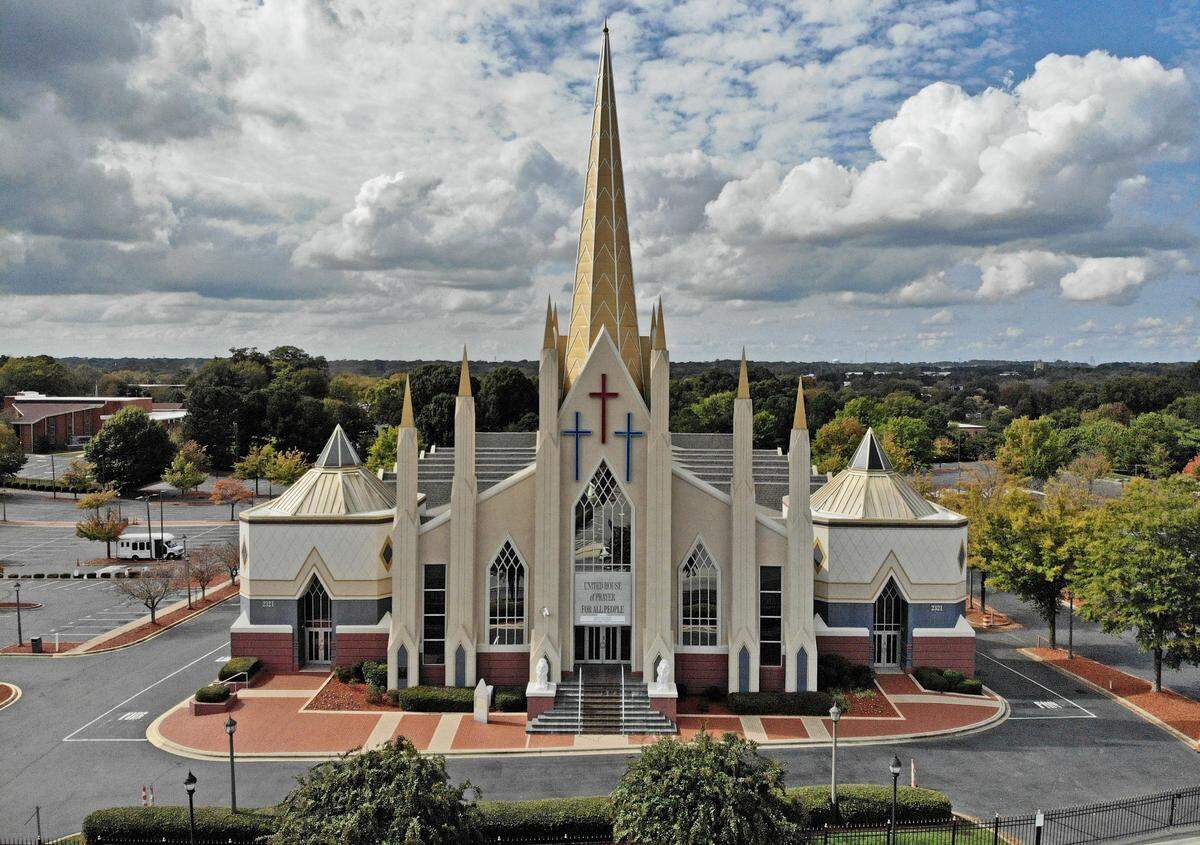
Mecklenburg County’s first and only health department COVID-19 abatement order that forced a Charlotte church to close may be changed before it expires, the county manager told elected officials this week, according to emails obtained by the Charlotte Observer.
In a message to county commissioners late Wednesday, Mecklenburg Manager Dena Diorio said officials are considering whether to modify the order, which forbids gatherings at United House of Prayer for All People buildings, if the church agrees to cooperate with health officials.
Health officials have identified 146 cases and five deaths, as well as a coronavirus outbreak inside a nearby senior living center, as traced back to the week of events held in early October at the House of Prayer location on Beatties Ford Road. Deputy Health Director Raynard Washington has said it’s the largest outbreak that’s been investigated in the county since March.
As cases continued to increase and health officials characterized church leaders as uncooperative, Mecklenburg officials on Saturday ordered all Charlotte area locations closed until at least Nov. 6.
A legal team representing the church has contacted the county, according to Diorio’s email to commissioners this week.
“UHOP holds services seven days per week and they believe that the order is an overreach,” Diorio wrote.
The county would consider modifying the order if the church allows site visits by public health staff and publicly encourages membership to comply with county guidance and cooperate with county case investigators, according to the emails.
Inspections on church locations were scheduled to start Thursday, after church lawyers agreed to those conditions, Diorio said. The church, which has multiple locations in the Charlotte region, has agreed to keep the location on Beatties Ford Road closed until Nov. 5, Diorio said in her email to commissioners.
“We believe that this settlement avoids potential litigation, addresses our concerns regarding the recent outbreak and avoids further infection,” Diorio wrote.
At least one commissioner expressed concern that modifying the order could risk public health.
“Are we caving on our public health standards and responsibilities to avoid litigation?” Commissioner Susan Rodriguez-McDowell asked in an email. Diorio responded, saying the county “would never abdicate our responsibilities for fear of litigation.
“If the situation changes we have no problem issuing another order,” Diorio wrote.
Diorio said the county order would not have been issued if church leaders had cooperated with Mecklenburg officials “at the outset of the outbreak.”
“It was the lack of cooperation and transparency that caused us to issue the order,” Diorio said in the email to commissioners. “By issuing the order we now have their attention and their cooperation.… If we have assurance and comfort that the House of Prayer can operate safely and be a good partner with the Health Department we have achieved our goals.”
The Observer has made repeated, unsuccessful attempts to contact church leaders, as well as an attorney who has previously represented them in legal matters.
Closure orders during COVID-19
County commissioner Trevor Fuller told the Observer he hopes the county abatement order will make local organizations take the threat of the coronavirus pandemic seriously.
“Our north star always has to be protecting the public health and protecting the public’s lives,” Fuller said. “I’m hopeful we won’t have to do anything like this again.”
The abatement order came four days after North Carolina’s top health official sent a letter to 36 counties encouraging stiffer penalties for anyone not following COVID-19 safety rules.
Mecklenburg County’s order forbidding the United House of Prayer for All People from holding in-person worship and social gatherings was the first of its kind issued locally since the pandemic hit North Carolina in March.
Legal experts interviewed this week by the Observer say the abatement order — which declares the church as an “imminent hazard” for spreading the virus — falls squarely within the county health director’s authority granted under state law.
Still, churches and religious groups across the country and in North Carolina have challenged government orders that restrict large crowds from gathering to worship as the coronavirus death toll continues to mount.
In the county, more than 200 new cases of COVID-19 are reported daily, on average, a Charlotte Observer analysis of DHHS data finds. That’s an increase from most of August and September, when public health statistics showed the spread of the virus on the decline locally.
While health officials have called out parties, as well as bars and breweries for holding events where people aren’t wearing masks or social distancing, Mecklenburg County health Director Gibbie Harris had not previously used the power to issue abatement orders of an “imminent hazard” during the COVID-19 pandemic.
But this is not the first time a similar order has been issued in North Carolina this year. In June, the state Department of Health and Human Services secretary Mandy Cohen ordered ACE Speedway in Elon to close down.
No ‘government overreach’
Cohen said Wednesday she is aware of the cluster at the United House of Prayer for All People in Charlotte.
“We are seeing further spread of the virus in religious settings,” Cohen said.
Transmission of COVID-19 at religious gatherings is responsible for at least 88 reported COVID-19 clusters, more than 1,000 lab-confirmed cases and at least 18 deaths, according to DHHS figures released this week.
This week, The (Raleigh) News & Observer reported religious events “have become the third leading source of known COVID-19 cluster infections in North Carolina.” In Mecklenburg, health officials have estimated about 6% of known coronavirus cases locally arise from exposures at places of worship.
“We know how important faith is to people in our community. We have got to continue to educate,” Mecklenburg Commissioner Mark Jerrell said in an interview Thursday.
“We have to be extremely respectful of the faith community and we’ve got to be careful about them feeling a sense of government overreach, which in this case I don’t believe we have government overreach.”
Issuing such an order was one suggestion in a letter from Cohen encouraging local officials to increase enforcement and penalties for various pandemic-related violations, noting an increase in cases across the state.
Though the order is the first for Harris during the pandemic, she has issued two other similar orders in her more than 30 years in public health, she told reporters this month.
Harris said in a Wednesday statement to the Observer she has used two similar orders in the past related to “raw sewage flowing through an apartment complex” and “an unattended swimming pool with inappropriate fencing and stagnate water creating a reservoir for mosquitoes.”
The abatement order falls within the legal authority of local and state health directors in North Carolina, Jill Moore, associate professor of public law and government at the UNC School of Government, told the Observer.
There’s a specific legal definition of what constitutes an “imminent hazard,” Moore said. That includes situations that could create an immediate threat to human life or serious adverse health effects.
In May, a federal judge allowed religious organizations to reopen their doors, blocking restrictions under an executive order from N.C. Gov. Roy Cooper which permitted only 10 people to gather for indoor worship, despite looser crowd size rules for some businesses and other entities in the state.
But abatement orders issued by health departments are a completely separate action, independent from the governor’s executive orders, Moore said. Enforcement of the governor’s coronavirus executive orders has been handled by local police departments.
‘Treat everybody equally’
Religious organizations must be treated the same as other organizations under the law, George Washington University health policy professor Tony Yang told the Observer. In Mecklenburg County, the order appears to be legitimate, Yang said.
During a health crisis like the coronavirus pandemic, the power to issue abatement orders is an important tool for local agencies, Yang said.
Ken Paulson, director of the Free Speech Center at Middle Tennessee State University, said local and state governments have been sued during the pandemic when restrictions for religious groups are more restrictive than other institutions.
North Carolina’s mass gathering ban exemption for houses of worship, protests and political rallies indicates the state was trying to avoid First Amendment issues, Paulson said, but added public officials have authority to keep people away from a dangerous environment.
“The state can impose restrictions on a church if it does similar things for community centers and fitness centers and other businesses,” he said. “You just have to treat everybody equally and not be tougher or easier on them because they’re places of worship.”
This story was originally published October 29, 2020 at 6:21 PM.
.jpg)
%20Cropped.jpg)