
Charlotte businesses remain wary as NC extends COVID restrictions for 3 more weeks
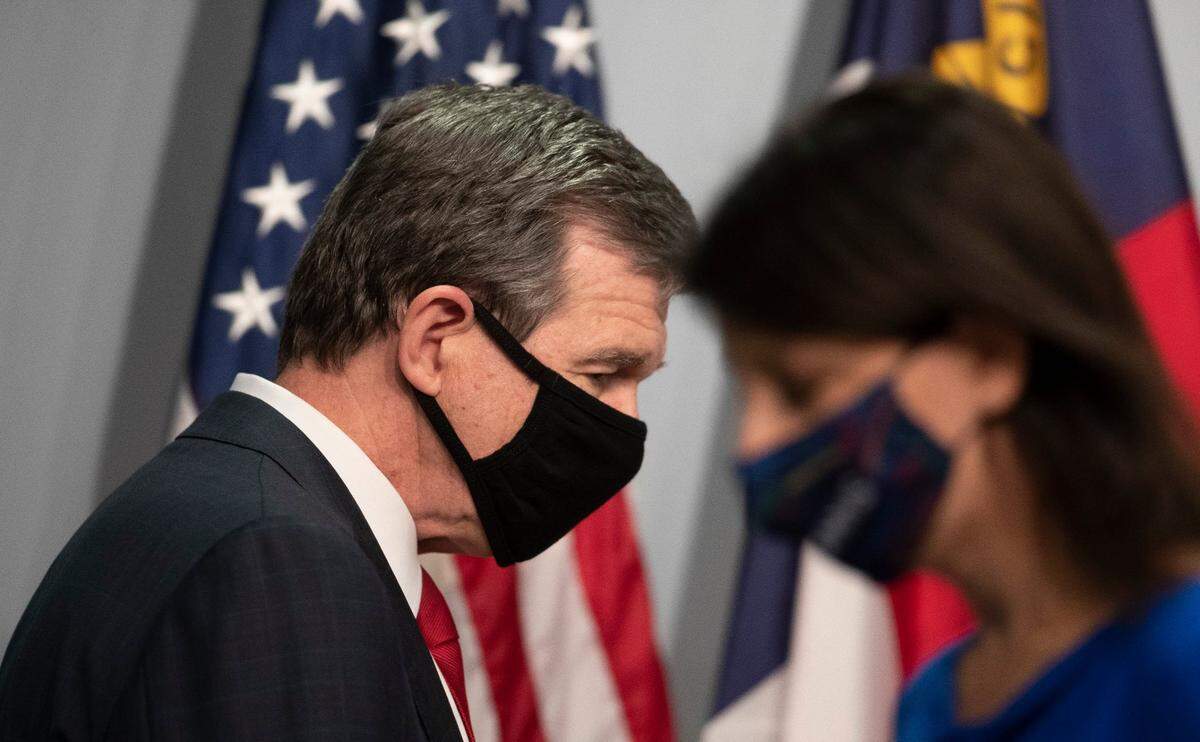
On Wednesday, North Carolina Gov. Roy Cooper extended the state’s stay-at-home order in the latest attempt to help slow the spread of the lethal coronavirus.
The move came as Phase 1B of vaccine distribution got underway in Mecklenburg County. Meanwhile, COVID-19 cases continue to surge around Charlotte and across the state with record-setting hospitalizations and test rates.
“COVID-19 remains a deadly threat and we’ve got to treat it that way,” Cooper said. “Simply put, don’t go places indoors where people aren’t wearing masks.”
The latest stay-at-home order, which was set to expire Friday, has been extended to 5 p.m. Jan. 29. Cooper said “all options” for restrictions remain on the table.
Dr. Mandy Cohen, the Department of Health and Human Services secretary, issued an advisory directive Wednesday telling people to stay home unless they are going to work, school, to exercise, to attend to health care needs or to get groceries.
This is the third time North Carolina’s Phase 3 coronavirus restrictions have been extended since they began Oct. 2. The executive order extension from December included a statewide curfew from 10 p.m. to 5 a.m.
Some Charlotte businesses remained on edge with the latest extension.
Many businesses won’t be able to survive “if they continue over and over doing (extensions),” said JackBeagle’s bar and restaurant director of operations David Ladish. “When does it end?”
Tim Freer, managing partner of the Cajun Queen restaurant, was antsy ahead of the latest update from Cooper, saying, “It’s scary just not knowing” what the governor will announce each time. “We hold our breath.”
But after Cooper detailed the extension, Freer said he was relieved it was not more restrictive: “I think he’s doing everything in his power to not shut us down”
What is Phase 3?
Under Phase 3, bars, nightclubs, music halls and auditoriums reopened at 30% capacity or 100 seats, whichever is less. Many businesses, including some bars and independent music venues, remain closed because seating is restricted to outdoors only.
Indoor seated venues for live stage performances are restricted to 25 guests, and cannot serve alcohol, according to Cooper’s order.
Small outdoor venues, movie theaters, amusement parks, entertainment facilities and conference centers also reopened under the same capacity restrictions.
Restaurants and revenue
Like other businesses, area restaurants continue under strain during the pandemic.
But the COVID-19 vaccine gives JackBeagle’s Ladish optimism, even as revenue is down up to 60%. There are three JackBeagle’s locations, in Charlotte and Mount Holly.
”I think it gives me hope personally and from a business perspective,” he said. “The more people who get vaccinated the numbers should start to go downward and we should be able to open for regular hours.”
The Cajun Queen has been a fixture in the Elizabeth neighborhood since 1985. Freer said gross revenue is down 30% since the restaurant reopened on June 1 after closing for 10 weeks on March 17. But weekends have done especially well at the restaurant, Freer said.
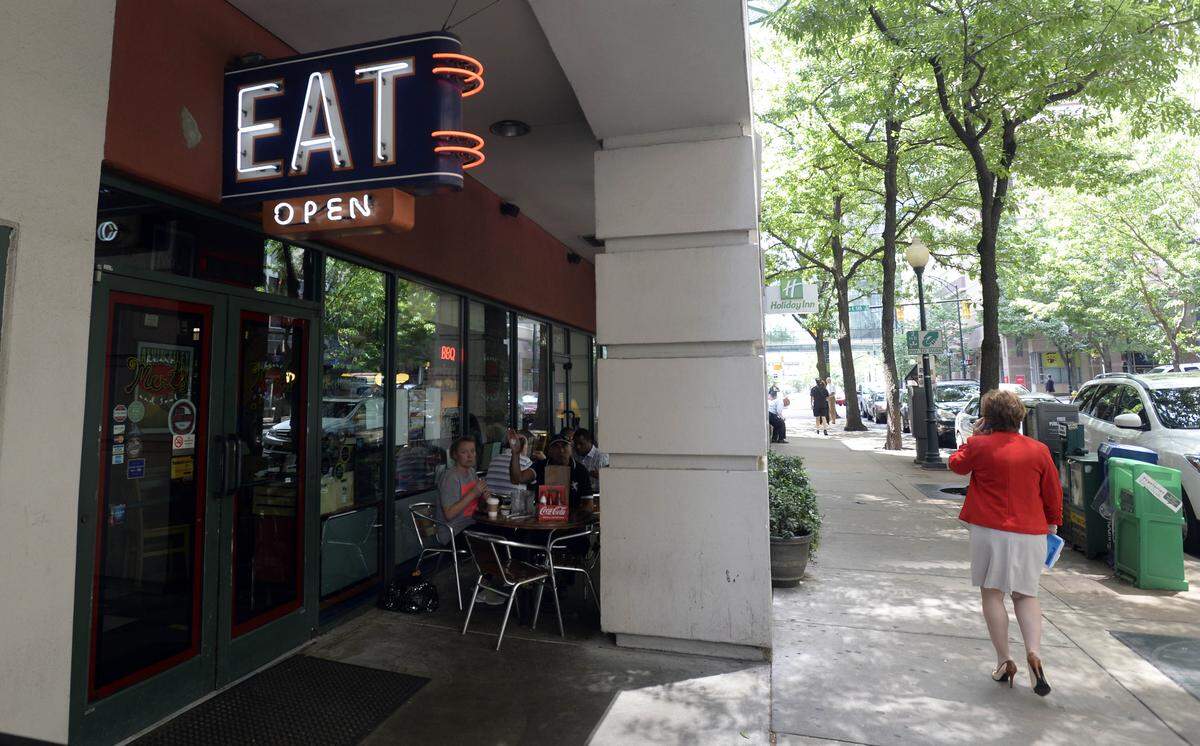
Mert’s Heart and Soul restaurant on North College Street in uptown has seen strong customer support particularly on weekends, Treshay Williams, a Mert’s manager, said Tuesday. But as Freer told the Observer: “If (Cooper) goes more stringent, the more we’ll be impacted.”
Meanwhile, several Charlotte area businesses recently closed temporarily after workers tested positive for the coronavirus while others have closed indefinitely.
Skylark Social Club said over the weekend it was closing until further notice due to rising COVID-19 cases in the neighborhood, while Boatyard Eats in Cornelius shut its doors citing “draconian restrictions” imposed on the industry.
Another business in uptown, SIP Bar & Cellar on North Tryon Street, said on social media Dec. 29 it would be closed until further notice after “taking into consideration the current climate of the pandemic.”
Small businesses hurting
Other businesses also are straining under current state restrictions.
That includes Vicie Moran, owner of Charlotte Family Yoga in Concord.
“I’m a small business owner in Concord, and my sales are down $200,000 since March,” Moran said. “I’m running at a loss each month. I haven’t paid myself a salary since August. I’m paying a teacher, and that’s it.”
Moran, who left a corporate job in Charlotte to open her business, said she “understands the need to keep people safe. And I’m doing everything they say to do” to keep people safe at her site. But every time Cooper begins one of his press conferences about COVID-19, she said she gets “this gripping feeling again.”
After Cooper’s latest announcement, she said, “It is what it is at this point... We have nurses and teachers in here every day. We remain essential.”
Over in Steele Creek, hairstylist Darcy Lesney at Hair Design 49 said the small shop of five stylists follows state capacity limits, social distancing and sanitizing. The biggest impact under the restrictions, she said, has been booking appointment times.
Unless customers are coming from the same household, the salon serves only one person at time. “It makes appointment times longer and days longer,” Lesney said.
But she called the start of vaccinations a “beacon of hope” to eventually return to normal business.
Vaccine and COVID-19 numbers
Mecklenburg County and Charlotte hospital systems Atrium Health and Novant Health are scheduled to begin vaccinating people in the first group of Phase 1b of the state’s roll-out plan this week. That includes anyone age 75 and older.
The state had first prioritized health care workers at high risk of exposure to COVID-19, along with long-term care facility residents and staff. Now, anyone 75 and older will be able to get a shot.
Mecklenburg’s vaccine clinic at Bojangles Coliseum, which is by appointment only, opened for the first time Wednesday morning.
The increased access to vaccinations brings a measure of hope to the Charlotte area, currently slammed by surging COVID-19 cases.
Each day of the last seven days reported by the county — Dec. 28 through Jan. 3 — set a new record for patients hospitalized with the coronavirus in the county. On Sunday, the most recent day reported, more than 500 people were hospitalized with COVID-19 in Mecklenburg for the first time.
The state started taking steps this week to hasten the vaccination process, with Cooper mobilizing the National Guard to help provide vaccine in urban areas with large medical facilities, as well as in under-served rural areas.
Cooper on Wednesday called the vaccine work “the top priority of the state right now.”
Other COVID-19 rules
Additional restrictions have been implemented, too.
A modified stay-at-home order took effect Dec. 11 that restricted travel between 10 p.m. and 5 a.m. All non-essential businesses must close at 10 p.m. Alcohol sales must stop at 9 p.m.
A stricter mask mandate began the week of Thanksgiving, requiring just about everyone to wear a mask in public or when they are with people who live outside their home.
Businesses also are required to have workers and customers wear a face coverings. Diners must wear a mask at restaurants unless they are actively drinking or eating. People are also required to wear a mask while exercising at fitness centers.
Retailers with more than 15,000 square feet of interior space also must designate an employee at each entrance to enforce mask compliance and monitor store capacity limits. Businesses and individuals not following the face-covering requirement could face fines of up to $1,000.
The state’s three-phased reopening plan was announced in the spring as non-essential businesses were temporarily closed in March when the COVID-19 pandemic began.
The (Raleigh) News & Observer contributed
Correction: This story has been updated to reflect that Phase 1B of vaccine distribution is underway in Mecklenburg.
This story was originally published January 6, 2021 at 2:12 PM.