
‘It’s brutal’: Charlotte health care workers open up about the 2-year toll of COVID
READ MORE
The toll of two years
Mecklenburg County has hit the two year anniversary of the first case of COVID. Here’s a look at the virus’ toll on Mecklenburg.
Expand All

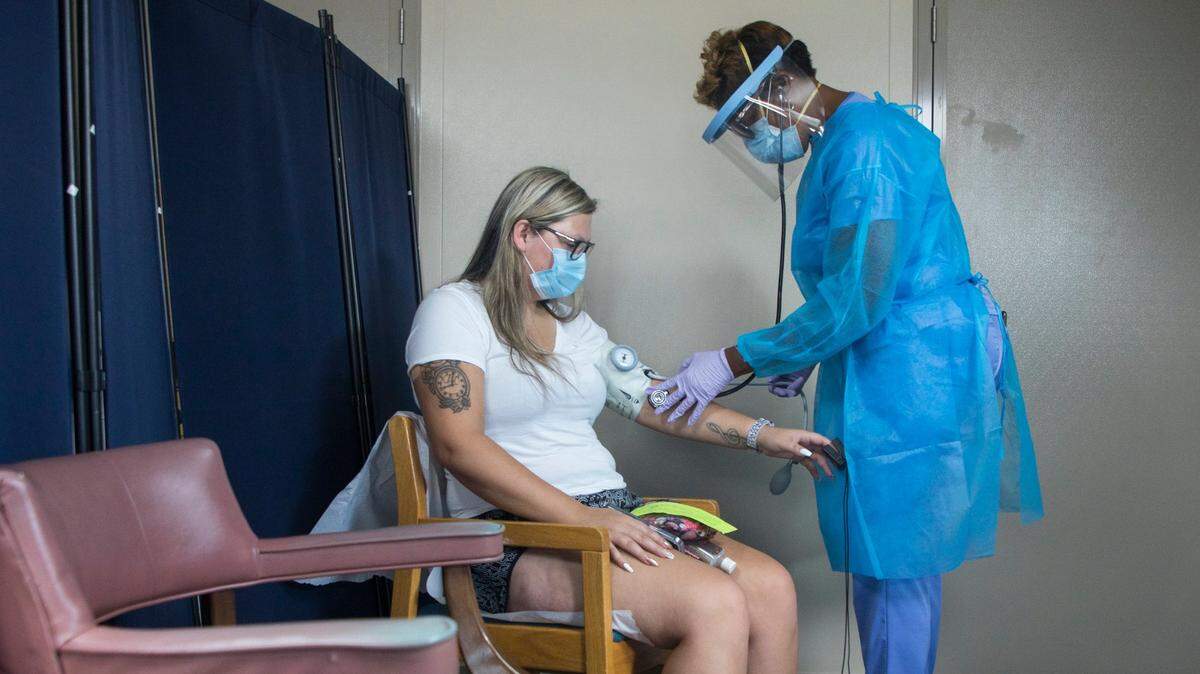
On one particularly hard day in the past year, Atrium Health respiratory therapist Stacy Wilson frantically worked to set up a video call for a 22-year-old man, hospitalized with COVID-19.
“He was so ill and all he wanted was to speak to his mother, to see his mother before he goes on the ventilator,” she said. He was able to speak with his mom over the phone, but Wilson said they weren’t able to get the video running in time because he was declining so quickly.
“All he wanted was for someone to be there with him, his mom in particular. He died with us being there with him instead.
“… There’s no words for that one,” she added.
That’s been one of the hardest parts of treating coronavirus patients for Wilson and other front line health care workers in the Charlotte area: watching their patients die alone.
On Saturday, March 12, the coronavirus pandemic officially hit the two-year mark in Mecklenburg County. On that date in 2020, the county announced it had identified its first two cases of COVID-19.
For many health care workers, it’s been their hardest time on the job. But throughout the pandemic, and in many cases, throughout their own COVID losses, they remained on the front lines.
The Observer interviewed four area health care workers about their lives and their patients. Here’s what they had to say about the last two years.
The early days of the COVID crisis
In early 2020, Novant Health emergency department nurse manager Julian Carranza sat down for a tattoo. He was getting one of the Brooklyn Bridge with the words “Life goes on” on his left arm, in honor of his journey moving from Colombia to New York as a teen.
During the session, the artist asked him about the pandemic: “Do you think this is going to last long?”
“Nah,” he told the artist. “’There’s no way …
“And look at us now, two years later.
“It’s been, without a doubt, the most challenging two years of being a nurse, or anybody that works in the hospital,” said Carranza, who has been a nurse for more than 12 years.
He even thinks that many health care workers will struggle with some kind of PTSD after the pandemic. The work never stops. “Physically, it’s exhausting,” he said. “Mentally, it’s brutal.”
New rules for a new disease
Around the time Carranza was getting tattooed, paramedic crew chief Madison Kiger and her partner were responding to a cardiac arrest call.
“We didn’t have masks on,” she said. “Not even surgical masks. We didn’t have gowns. We had gloves. That was probably our only PPE before all this happened.”
About halfway through the call, a supervisor with Medic walked in and whispered to them: Mecklenburg’s EMS agency had just rolled out new PPE protocols. That meant wearing protective gowns, masks and even goggles.
“We had to switch out (caring for the patient) and walk outside,” she said. “And that was the first time we had to dress out for COVID. And since then (we) haven’t gone back.”
Their hardest days
There was so much people didn’t understand about the pandemic in the early days, Kiger said. One call in particular stands out.
She and her ambulance partner were called to transport an elderly woman with COVID from a nursing home to the hospital.
At the nursing home, the woman was staying in the same room as her husband. He also had COVID, and both had dementia.
The woman was in respiratory distress. But she also had a do not resuscitate order.
There was nothing paramedics or the hospital could do for her. Still, the nursing home insisted on sending her to the hospital, Kiger said. The woman went into cardiac arrest soon after arriving there.
“So she died at that hospital, in a room with no one she knew, rather than dying in her room with her husband.”
Experiences like that almost make Kiger consider leaving the profession.
“It’s very disheartening, and you look at it and you’re like: I’m not going to watch this anymore,” she said. “I’m not gonna do this.”
“But then,” she added, “if I’m not here when that lady dies alone — I would want someone to be there with my family member when that happens.”
‘What am I doing?’
Thoughts like that have crossed the mind of Novant Health ICU nurse Diana Tejada too.
On one particularly hard day, Tejada was caring for two critical COVID patients at once. “One of them I had to take down to a scan,” she said. “My other COVID patient was pretty awake. And she removed her life support.”
The patient pulled out her breathing tube right as Tejada was leaving the room with the first patient. Tejada had to take off her PPE, put on new PPE and rush to the second COVID patient to intubate.
Then, she took her other COVID patient to the scan. It was bad news.
“I remember, after going to that scan, I just sat in our little meditation room and literally just bawled my eyes out,” she said.
“I just remember being like: ‘What am I doing?’ ” Tejada added. “It was just exhausting.”
Caring for COVID patients throughout the pandemic has taken a toll on her mental health.
“I feel like I was a happier person before COVID,” she said. “… I feel like we did more harm during this whole process by isolating everybody, even though I know we did it for a reason. Now we’re just seeing so much of the after-effects of two years of isolation for a lot of people.”
Tejada and Kiger aren’t alone in questioning their careers during the pandemic.
“It happens more than I think people think,” Carranza, the Novant ED nurse manager, said. “I take a step back and because of my role, I don’t want to show that to my team. I want to come in, and regardless of how challenging it is, even if they’re having a bad day, I want to be their cheerleader.”
Self-care in the midst of pandemic
Tejada and other health care workers needed to find outlets to deal with the weight of their jobs.
“Thank goodness for my family because they’ve definitely had to deal with all of my mood swings,” she said. She started running and working out at Burn Boot Camp.
For Atrium respiratory therapist Wilson, her outlet is listening to all kinds of music and watching her favorite TV show, “Law & Order: SVU.”
“Those are the things that take my mind off of what I just experienced and what I’m going through,” she said.
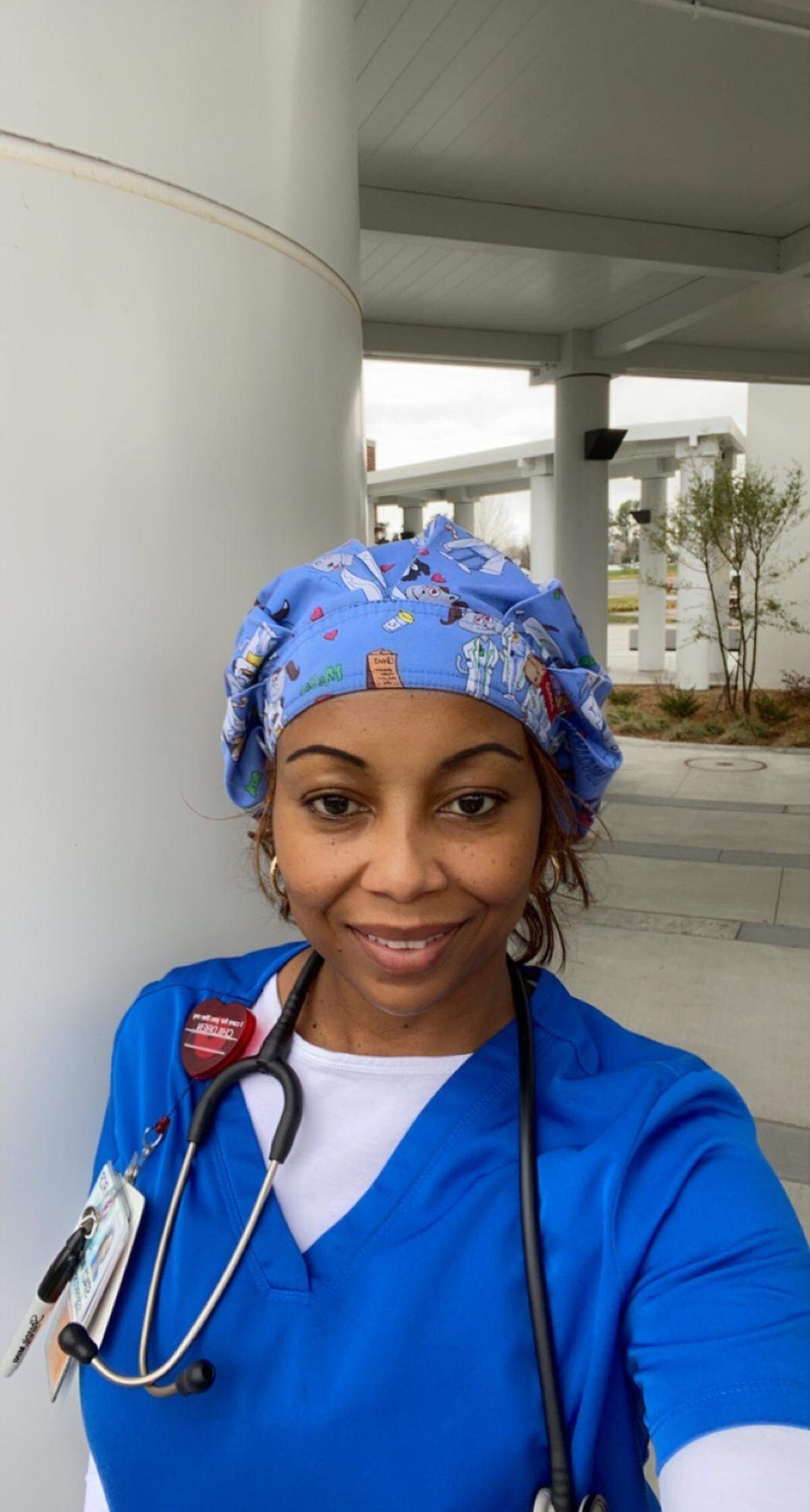
Paramedic Kiger leans on her co-workers, who provide a great support system. Plus, she’s taken up baking and makes a lot of macrons.
“People often talk about how you come to work and clock in, do your job and you’ve got to leave it here,” she said. “That is very difficult to do in EMS. Particularly when COVID is going on and that’s all around.
“You can’t get away from COVID.”
Carranza, the nurse manager, said his role requires him to be focusing on work nearly all the time. But he leans on his wife, Rachel Carranza, and dogs Ellie and Henry for support. And he encourages his team to be mindful of burnout and to take care of themselves.
What comes next
Carranza remains hopeful for the future.
“I think that’s where we can all agree. We’re hoping that we’re near the end of it,” he said. “Obviously it’s been very challenging. It’s exhausting, mentally, physically. It’s been really difficult to see very, very sick patients.”
Carranza himself got COVID in the beginning of January. He said he was lucky to get what was considered the least severe of the latest COVID variants, the omicron variant.
Omicron typically caused fewer severe complications even though hospitalizations surged due to the sheer volume of infections. Experts have said they hope the less severe variant may be a step in the right direction for controlling the spread of the coronavirus.
Health experts say the end of the pandemic may come in the form of the virus becoming endemic. That would mean upticks in infections would be more manageable and predictable, like influenza, and result in far fewer hospitalizations and deaths.
We aren’t there yet, Atrium respiratory therapist Wilson said. But she’s hopeful. No matter what the future brings, she can’t see herself leaving the health care industry.
“If I sat here and said to you that it has not crossed my mind I would be lying,” she said. “We’re all human. ... However, this is where our passion lies, at least for me. I haven’t wanted to do anything else in my life, but to help others and take care of people.”
And Wilson said she’s not alone in that.
“I appreciate every person that puts their life on the line to take care of COVID patients because it wasn’t easy. ... And we’re not out of the woods yet.”
By the numbers
As of March 7, here are N.C. and Mecklenburg County totals for these categories:
▪ Total cases: 2.6 million in NC, 275,663 in Mecklenburg.
▪ Recent hospitalizations: 1,140 in NC, 243 in the Metrolina Healthcare Preparedness Coalition (the region including Mecklenburg and parts of 11 other neighboring counties).
▪ Total Deaths: 22,802 in NC, 1,551 in Mecklenburg.
▪ Vaccination rate (percent of residents with at least one dose): 65% in NC, 67% in Mecklenburg.
This story was originally published March 13, 2022 at 6:00 AM.
.jpg)