How to spot a rip current at NC beaches and escape it safely back to shore
READ MORE
A guide to North Carolina’s beaches
Looking to get away? The News & Observer has put together a guide for you for things to do, eat and see as you travel to each region of North Carolina’s Coast. From the Outer Banks to the southern beaches, there’s something for everyone.
Expand All
Faster than an Olympic swimmer.
That’s how quickly a rip current can move you out to sea, says the National Ocean Service.
Rip currents — powerful channels of fast-moving water (often incorrectly referred to as a rip tide or undertow) — can move at speeds of up to eight feet per second, sweeping ocean swimmers far from the shore, where they are at a higher risk of drowning.
The National Oceanic and Atmospheric Association (NOAA) says that tens of thousands of people are rescued from rip currents by lifeguards each year in the United States. But even so, it’s estimated that an average of 100 people are killed by the currents each year.
Here’s how to spot a rip current from the shore and what to do if you’re in the water and get caught in one.
What is a rip current? Is it the same as a rip tide or an undertow?
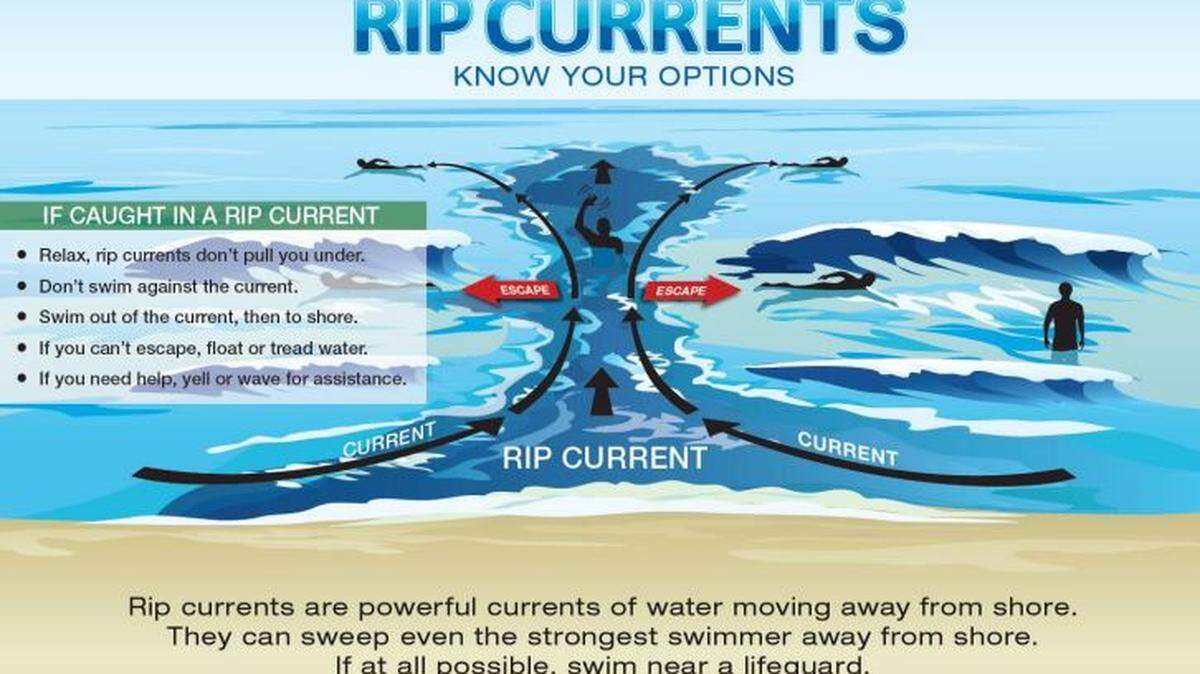
▪ A rip current is a powerful channeled current that flows away from the shore at surf beaches. A rip current will typically extend from near the shoreline, through the surf and past the line of breaking waves.
▪ A rip tide is a “specific type of current associated with the swift movement of tidal water through inlets and the mouths of estuaries, embayments, and harbors.” It is not the same as a rip current.
▪ An undertow happens “when water sinks back downhill into the sea after a wave has carried it uphill onto the beach.” An undertow isn’t usually very powerful, unless the beach has a steep incline. If the conditions are just right, an undertow may be strong enough to knock you down, but it will not pull you out to sea, the way a rip current will. The National Weather Service reminds us: “A rip current pulls you out, not under.”
When and where do rip currents happen?
Rip currents most often happen at low tide.
They can occur at any kind of beach with breaking waves, says NOAA, but may be more prevalent at beaches with significant sandbars near the shore. Rip currents will form in the breaks in sandbars.
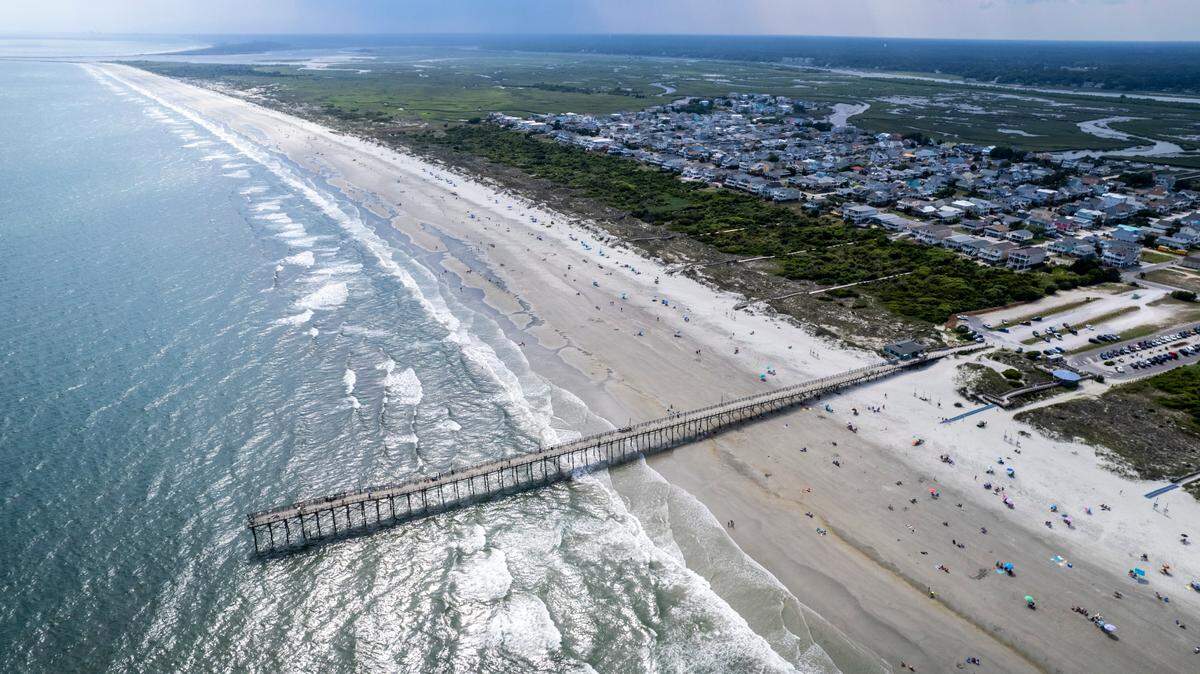
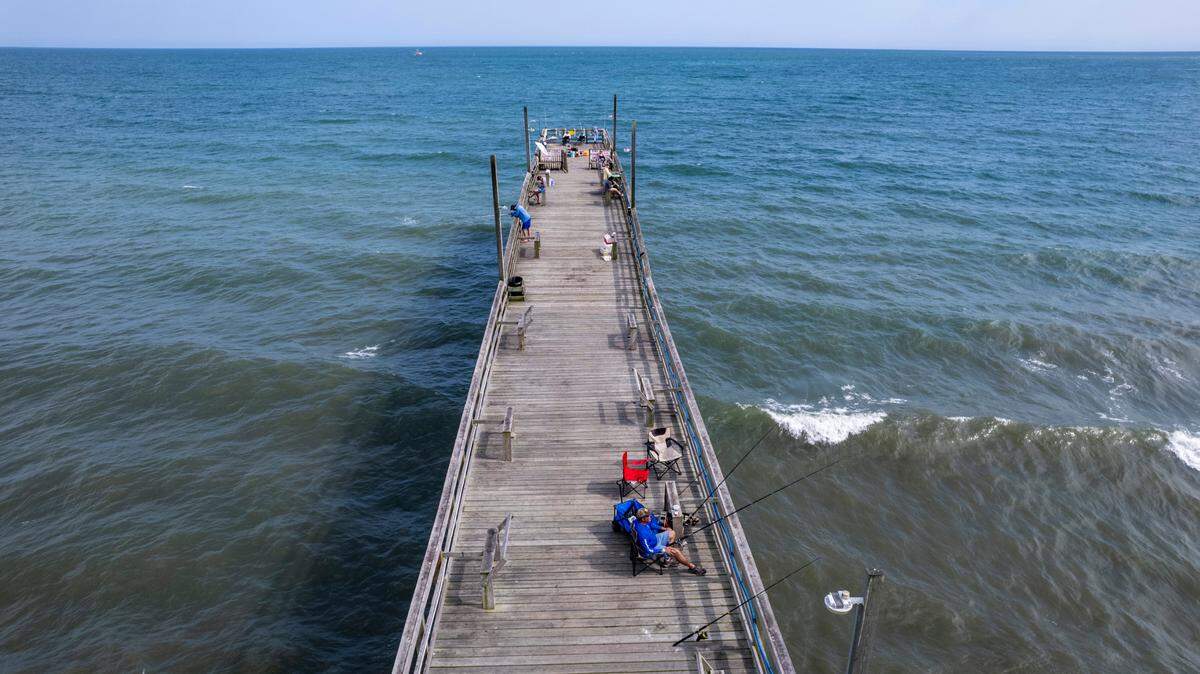
Also, you may see more rip currents at beaches with jetties, rocks or piers.
How to spot a rip current in the ocean
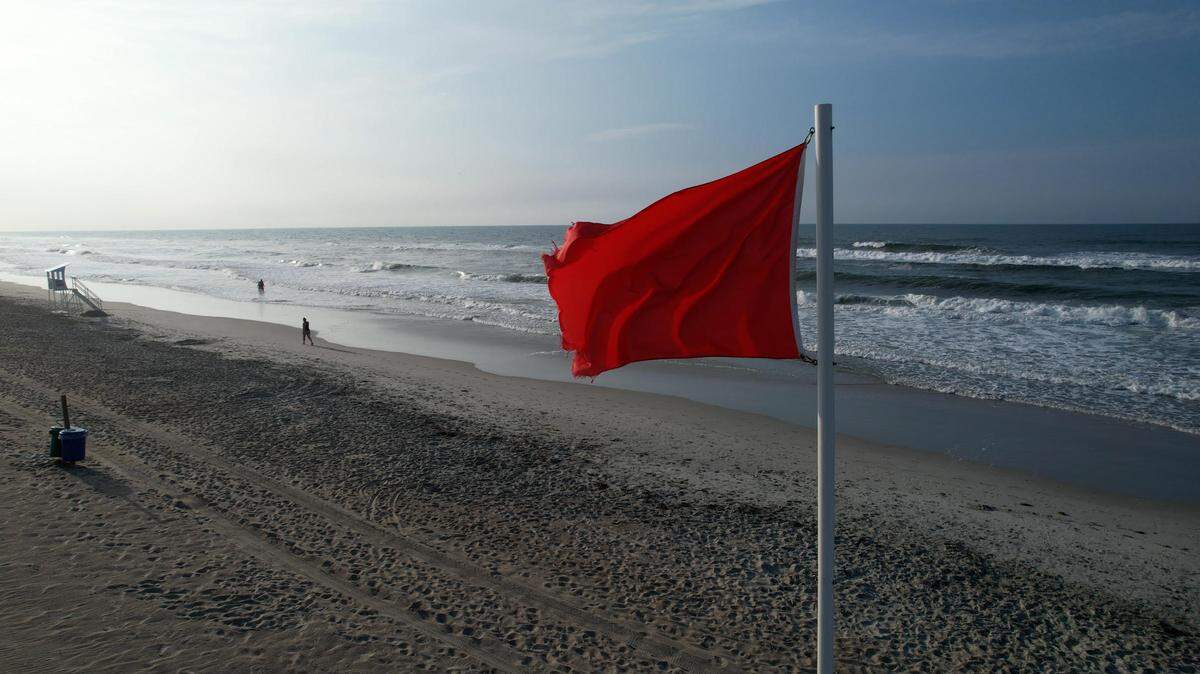
▪ Look for flags. You may be alerted to rip currents by flags or signs posted by a lifeguard at a beach.
▪ Look between the breaks. If there is no lifeguard, you can sometimes spot a rip current yourself by noticing the presence of mostly flat deep (darker) water that has breaking waves on either side. Waves will break on the left and right sides of sand bars, but will not break in the center where the rip current is.
▪ Look for dark water. Patches of deeper, dark-colored water can be an indication of a rip current.
▪ Look for moving foam. A line of foam, seaweed, or debris moving steadily seaward can indicate a rip current.
▪ Look for a beach report. You can also check your local beach forecast page from the National Weather Service (weather.gov/beach/ilm). Those pages show you surf conditions at beaches, including the rip current risk level.
NOAA’s SciJinks page (scijinks.gov/rip-currents) has great illustrations for learning to spot rip currents.
How to escape and survive a rip current
▪ Stay calm! When caught in a rip current, first and foremost, don’t panic.
▪ Don’t swim back toward shore. Also, do not try to swim back toward shore, even though that may be your first instinct. You can’t win that fight. Swimming against a rip current will exhaust even the strongest swimmer, and that’s how people drown.
▪ Swim parallel to shore. A rip current channel is relatively narrow, so the aim is to simply get out of the channel. Instead of swimming back toward shore, swim parallel to the shore (in other words, when facing the shore, swim either to your right or left).
Once you feel yourself out of the moving current, then you can start your swim back to shore.
▪ Call for help. If you can’t swim, but find yourself being swept out in a rip current, stay afloat by treading water and yell for help.
How to help someone caught in a rip current
The best way to help someone in a rip current is to notify a lifeguard. They are trained for these types of rescues.
If there’s no lifeguard, call 911.
NOAA suggests that you do not swim out to help a person caught in a rip current. “Many have died trying to help others,” says NOAA. “Don’t become a victim while trying to help someone else.”
Other things to try:
- Try throwing the person something that floats, like a lifejacket, a cooler or a ball.
- Yell instructions to the person on how to escape the rip current: stop swimming toward shore, swim parallel to shore.
What do colored beach warning flags mean?
Coastal communities use the five-flag system to quickly convey information about hazards on U.S. beaches.
Here’s what the flags mean:
▪ Two red flags or one flag with two red bars means the water is closed for swimming, usually because of the extreme risk of powerful rip currents that can quickly trap and pull swimmers far from the beach. Double-red days are most often seen when a hurricane is approaching, generating big seas and strong currents.
▪ One red flag indicates high hazard for swimmers, because of heavy surf and/or strong currents.
▪ Yellow flags indicate moderate surf and/or currents; rip currents may be present though not as strong as on red-flag days.
▪ Green flags indicate calm conditions, but beachgoers should still be cautious, because rip currents can develop any time.
▪ Purple flags indicate stinging marine life in the water, on the beach, or both. These could be jellyfish, stingrays, Portuguese man-o-wars or other sea creatures.
Sources: The National Oceanic and Atmospheric Association (NOAA) / National Weather Service
This story was originally published September 7, 2021 at 4:00 PM with the headline "How to spot a rip current at NC beaches and escape it safely back to shore."