The house by the giant tree — and a Charlotte couple’s quest to save it
READ MORE
Losing our trees: Threat to Charlotte’s prized tree canopy
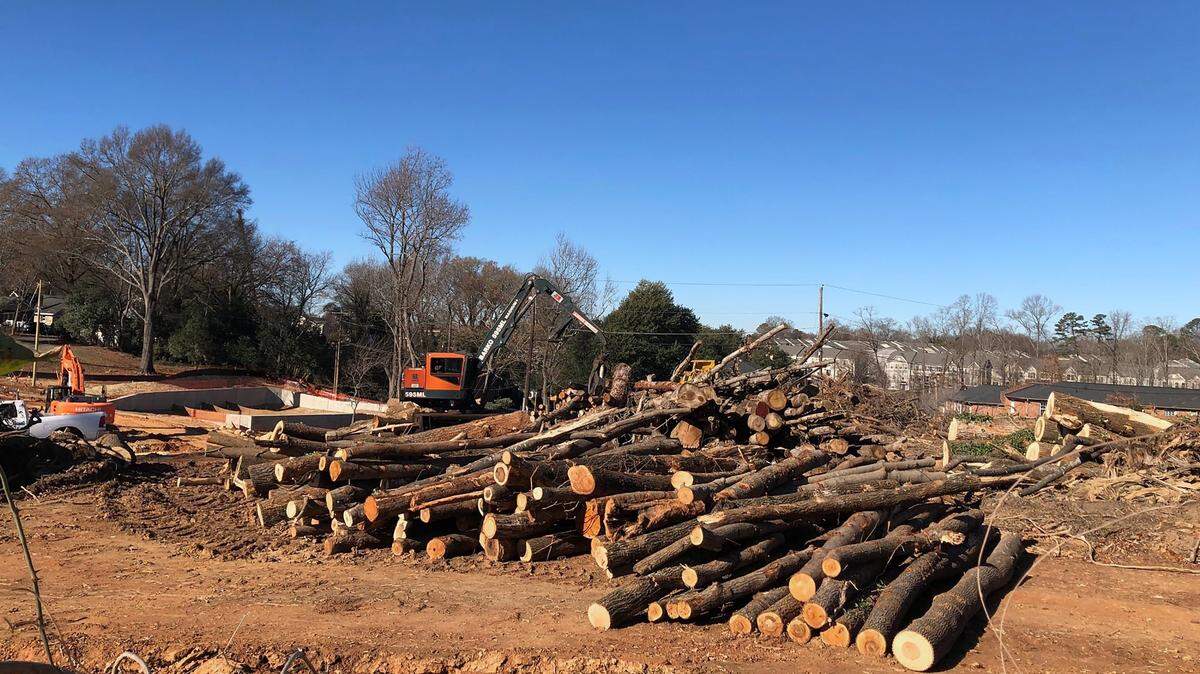
Charlotte’s trees are disappearing. Environmentalists say Charlotte should require more protection of its tree canopy, both beautiful and useful, especially in this age of climate change.
Expand All
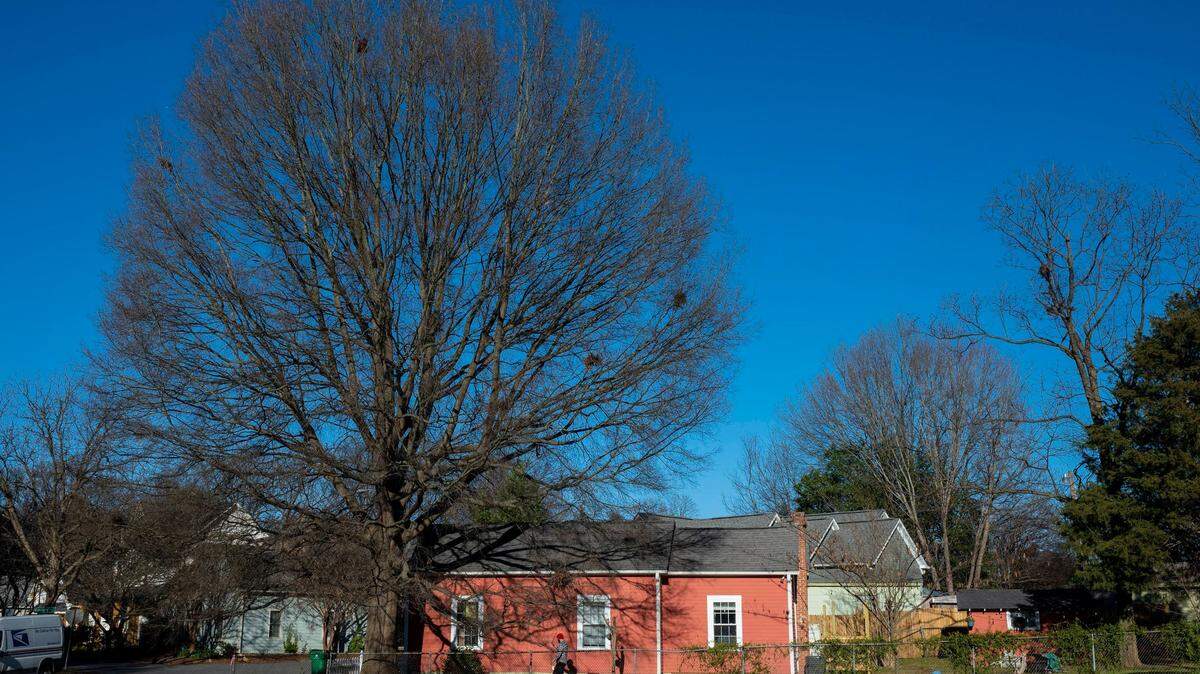
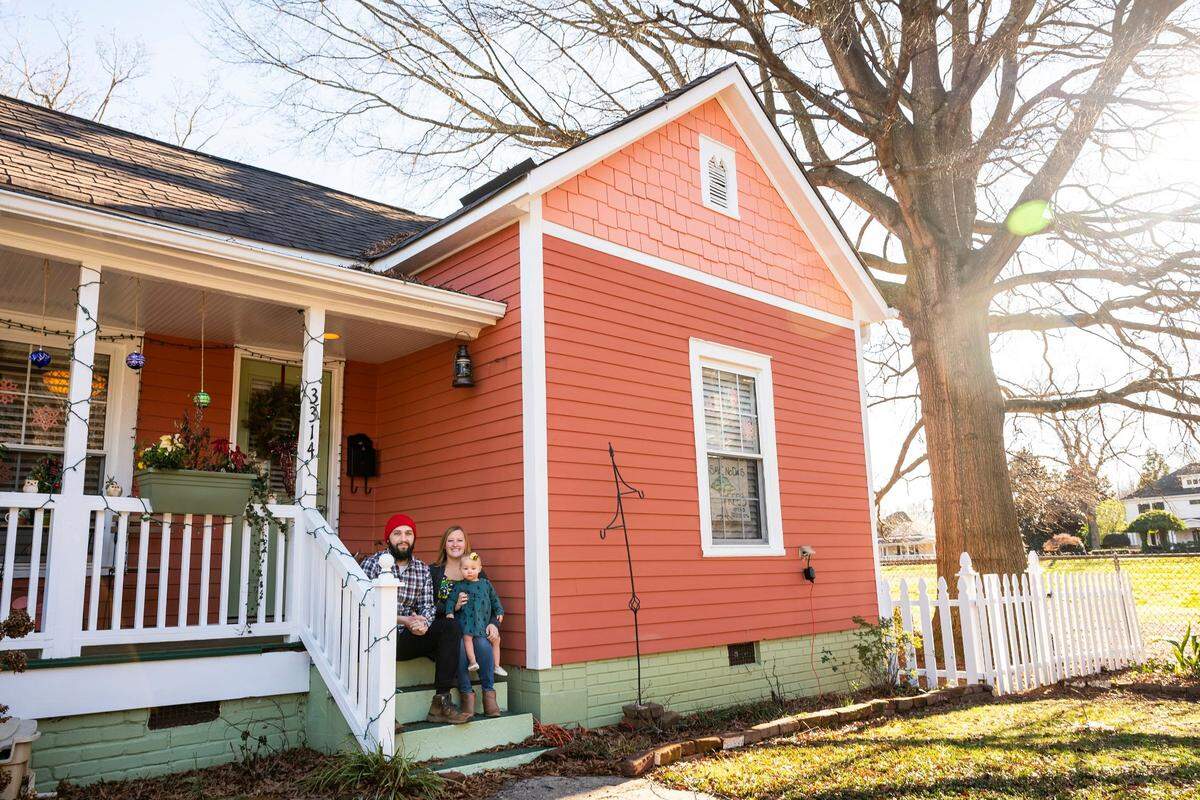
Between a small coral-colored house and a proposed multi-story apartment building in NoDa, stands a roughly 65-foot-tall willow oak tree.
The tree, which turns a light orange each fall and towers over nearby cottages and telephone poles, is a microcosm of Charlotte’s fight to save its canopy.
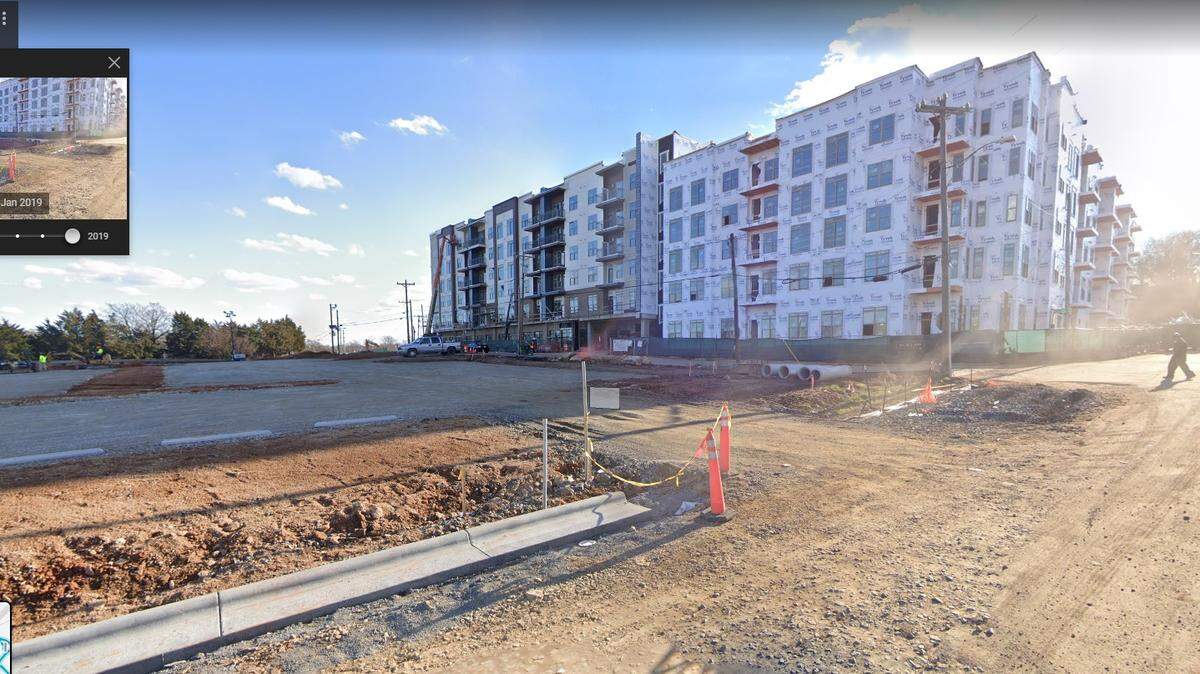
On one side of the tree are homeowners who hope to preserve it. On the other side is a proposed 200-plus unit apartment complex that could threaten its existence.
And in the middle are city officials who say they do not have the authority to protect the tree.
“It’s in a gray zone,” said Jason Newton, who, along with his wife, Krysten Reilly, own a house just feet from the willow oak.
Citywide, Charlotte is experiencing similar tree-saving struggles.
One tree at a time
City leaders have all but abandoned the goal of having a 50% canopy coverage by the year 2050. Charlotte, they say, simply has too much development.
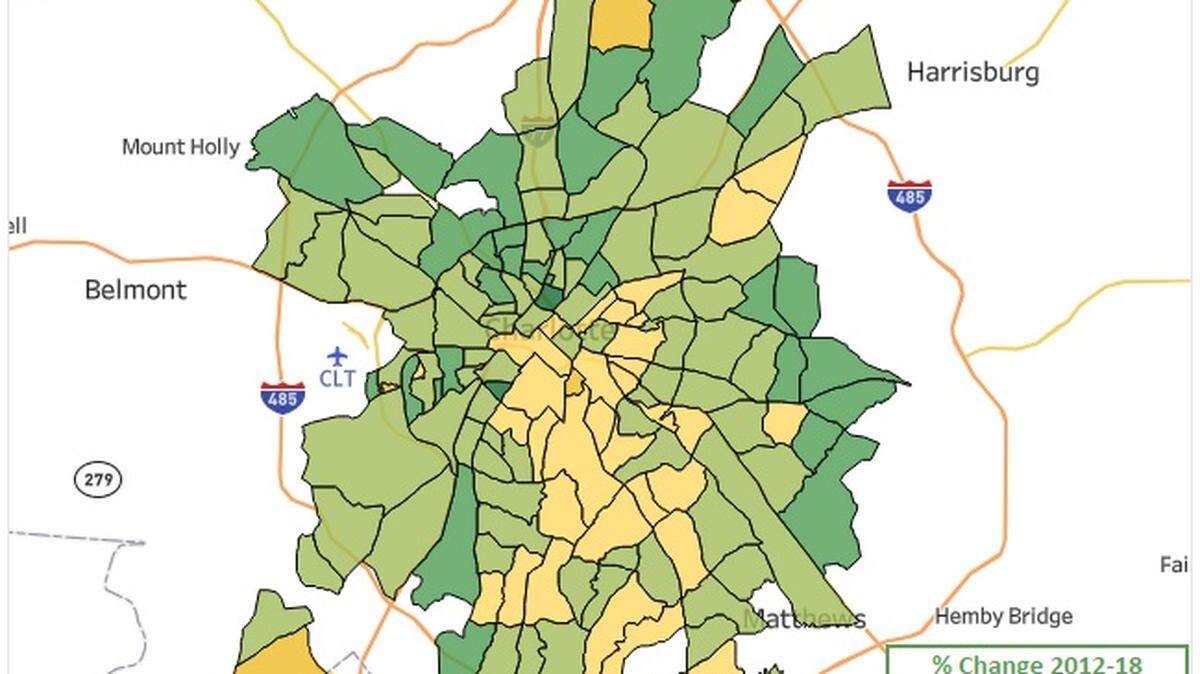
Environmentalists say the city’s tree-saving rules are too weak to preserve, let alone grow, its canopy — the tree cover that shaded 45% of the city’s area in 2018, the last year it was measured. Experts expect it’s lower today.
“In cities, we lose trees one house at a time,” said Newton, 35. “With a city growing as fast as Charlotte, one tree at a time multiplied by all the development that’s happening is how we lose tree cover.”
Newton, a postdoctoral history fellow at UNC Charlotte, and Reilly, a COO of a real estate investment company that focuses on affordable housing, call the willow oak “our” tree, knowing full well that it doesn’t belong to them.
They moved to Charlotte from upstate New York in 2020 and bought the small house last year. They fell in love with its history — it was built in 1929 — and its charm. It measures about 1,000 square feet.
The beautiful canopy of the towering willow oak provides wonderful shade for their home and yard.
But they fear that could disappear.
From 2012 to 2018 the NoDa area — a growing arts district between N. Tryon Street and The Plaza — lost 11.5% of its canopy, according to a study by UNCC and University of Vermont.
Only a handful of neighborhoods lost more.
Giant tree, paper street
The willow oak near Newton’s home stands in a “paper street,” what the city classifies as a dedicated but undeveloped right-of-way for a road that was never made.
Although it’s a public right of way, the thin strip of land — and its roughly dozen trees — are not maintained by the city, said Laurie Reid Dukes, Charlotte’s arborist, in an email to Newton.
Abutting property owners are responsible for maintaining the alleyways and trees, and any conflict would be a civil matter between neighbors, she wrote earlier this month.
This paper street is small, about 10 feet wide. It intersects N. Alexander Street and runs parallel to E. 36th Street and separates Newton’s property and the proposed development.
Newton and Reilly bought their home next to the paper street in September, knowing that the adjacent nearly two-acre lot would one day be developed.
When they learned an apartment complex would come within feet of the tree — and feared construction might kill it — they emailed more than two dozen city officials, environmentalists and representatives for the developers.
Since then, they’ve seen reason for hope.
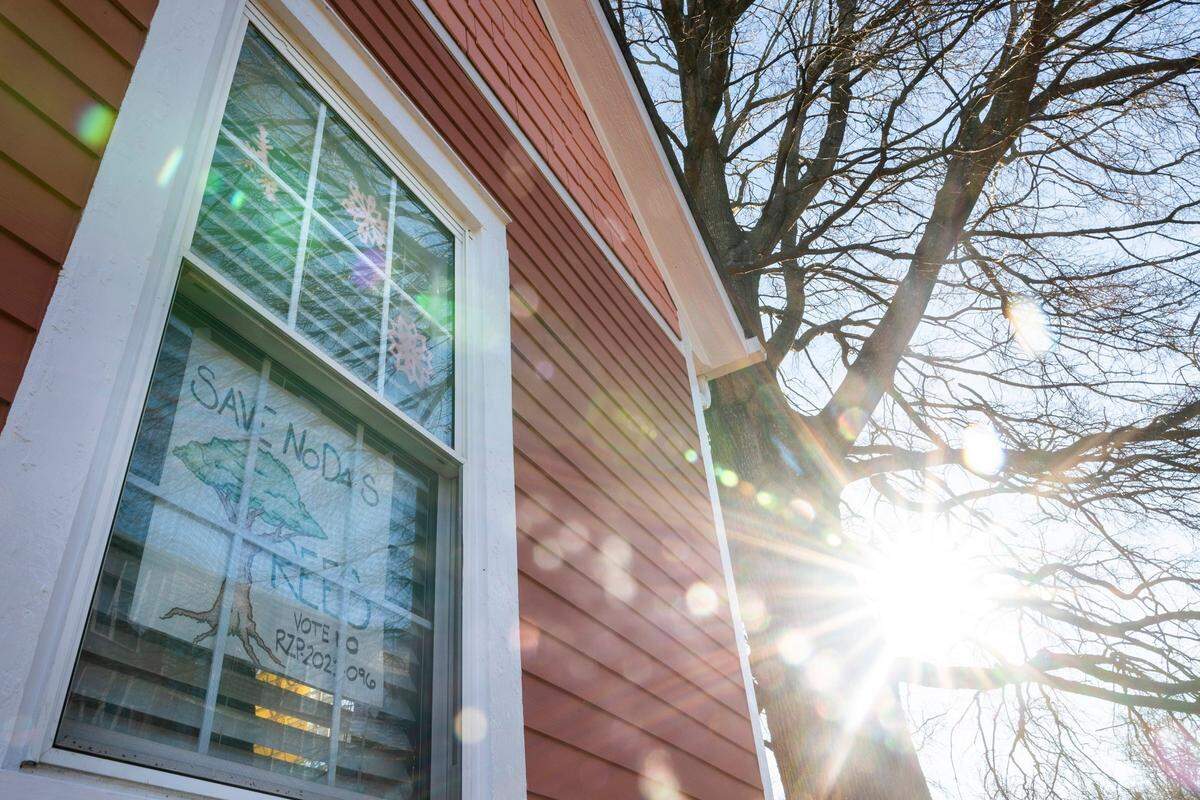
Watching and waiting
In November site plans, officials for Ascent Real Estate Capital made no mention of the tree or saving it.
That has since changed. December’s drawings said “best practices will be taken in an attempt to preserve the tree.”
Ascent also plans to increase the building’s distance from the tree from 18 feet to 34 feet, said Caci Jaeger, a partner at Ascent in an email Sunday to the Observer.
She said the petition to the city will be updated by Tuesday - if it hasn’t been already.
Ascent has asked the city to rezone the property from single-family to mixed use. Jaeger said the company knows mature urban trees are important and it tries to save them, even though that can be difficult.
Even if developers don’t take the tree down, Newton worries that construction could mortally damage its roots or any needed delimbing might promote fungal growth that would kill the tree.
If it dies, so would a mini ecosystem frequented by squirrels, songbirds and red-tailed hawks.
“It’s easy to say it’s just one tree, and it’s not that big of a deal,” Reilly said. “But when you think of all the big, mature trees that we could lose, what are we left with? Pavement.”
Editor’s note: This story is updated with information that Ascent Real Estate Capital provided after publication.
This story was originally published January 16, 2022 at 1:00 AM.