Too little. Too late. It’s something. What Charlotte’s feeling about student loan help.
Wednesday was a good day for student loan debtors — at least some.
President Joe Biden announced his administration’s plan to forgive up to $10,000 in student loan debt for eligible borrowers. It’s an unprecedented executive action that could cancel loans for some 1.3 million people in North Carolina.
But it won’t bring complete relief.
I talked with people living with those loan balances for a Charlotte Observer news series published this summer, called “Student Debt Distress.”
We spent weeks exploring how that debt has shaped their adult lives in Charlotte and beyond, and what could change for them if it got wiped away. At the time, no one knew if the president would cancel debt, or how much. But in our conversations, local borrowers spoke wistfully of the things they could accomplish without their loans: buying a house, building a nest egg or finally saving for their own children to attend college debt-free.
North Carolina ranks seventh among states for average student loan balances, above places like California and New York. Borrowers in our state owe close to $48 billion. It’s an ever-growing burden, one that’s shaping a generation’s worth of livelihoods.
Now, we know the president’s approach to debt cancellation — and the result will affect each borrower differently. Some will get utter relief. Others are carrying debts that don’t qualify, or loan balances so large that $10,000 only makes a dent.
In an informal Observer survey on Wednesday, about two-thirds of 77 respondents said they owe more than $10,000 in debt. About a quarter owe more than $40,000.
A myriad responses came in on the survey. One person told of their about husband walking out on them — leaving them alone to deal with more than $40,000 in debt. A 65-year-old woman said she’s counting on forbearance to keep from going under as she cares full-time for her adult son. She said she went into debt before the accident that caused her son’s traumatic brain injury and she now owes between $20,000 and $30,000.
Another 30% of survey respondents said they had been paying down their debts for more than 12 years.
“Even though I’m grateful for 10,000 to be (taken) off, I will never be able to pay my student loans off at my age,” one respondent wrote.
To get a sense of how different circumstances will be affected by Biden’s plan, I revisited a few of the people featured in our earlier series. Here’s a snapshot of how the proposal affects them — and what it could mean for you.
‘Huge impact’
Amber Wike, 33, started school at Bennett College, a private school in Greensboro. But she transferred after her freshman year, realizing the private school tuition would drown her and her parents in debt.
“I would have stayed (at Bennett). I just felt like we really couldn’t do four years,” she told me last month.
She transferred to N.C. Central University and graduated about nine years ago with more than $40,000 in student loans. Initially, she got a job as a social worker in Durham, but struggled to make payments. A loan cancellation advocacy group swooped in to pay her Bennett debts, alongside other alumnae of the historically Black women’s college. She currently works at a health care company in her hometown of Fayetteville.
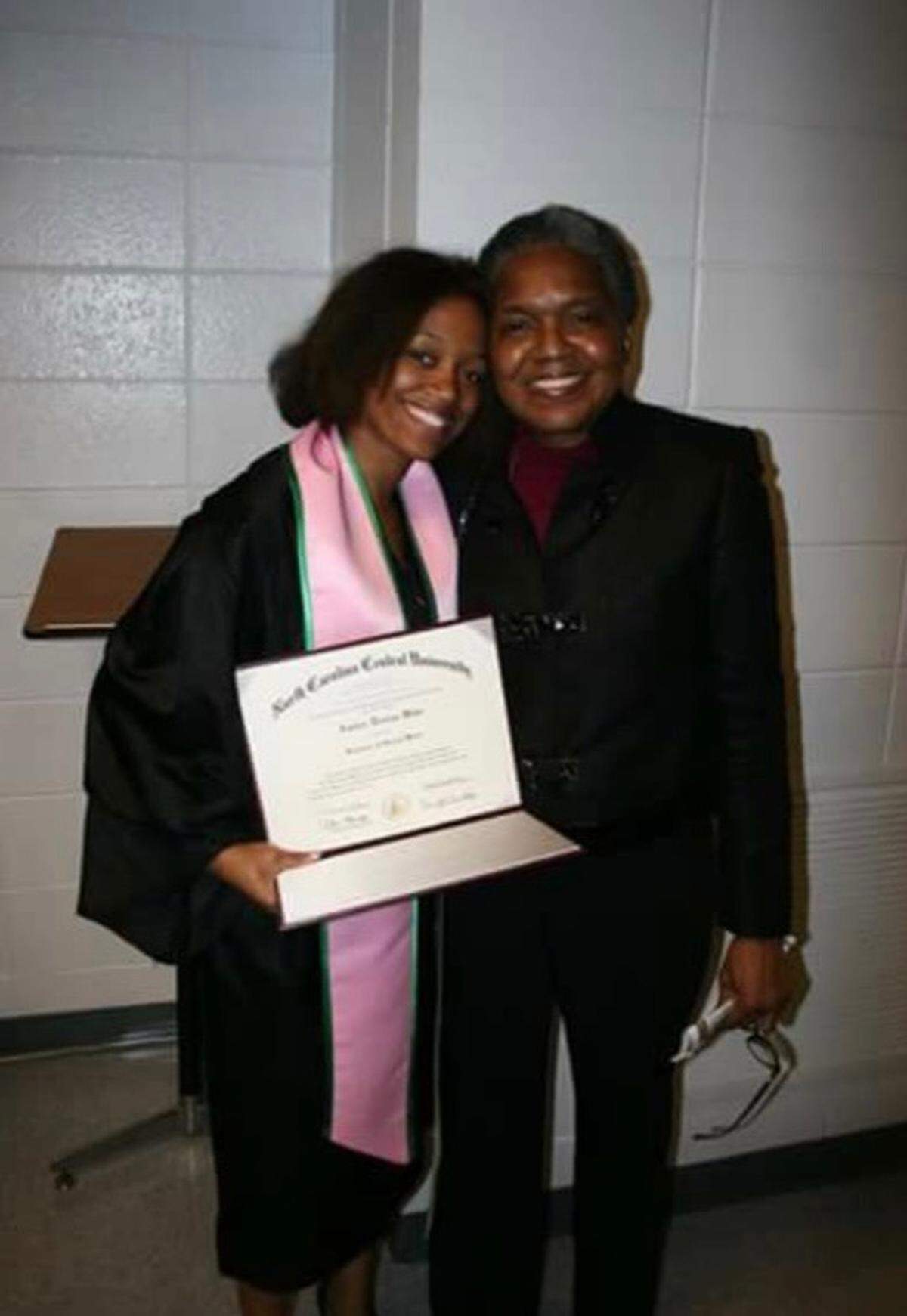
Biden’s plan offers up to $10,000 in student loan forgiveness for borrowers like her who make under a certain income level.
Now Wike says she not only sees herself quickly restarting payments on her loans — soon a $20,000 burden instead of $30,000 — but also starting to pursue a long-held dream of opening a sanctuary for neglected animals.
Before, debt limited her freedom, whether it was saving for a home, leasing a car, or even staying in a fulfilling but low-paying career. “Some of the things you want have to be deferred,” she told me in July.
“It’ll have a huge impact for me,” she said. “A $10,000 difference, it will help me go after things.”
She plans to rebuild her credit and start padding her savings. Wike, who is on an income driven repayment plan, may be eligible for automatic cancellation with Biden’s announcement.
For everyone else, there’s one more step: You’ll have to apply to get your debts forgiven later this year. The White House said in its announcement the Department of Education will make an application available before the pause on payments expires on Dec. 31.
No help at all
Princess Harris-Alford, an elementary school teacher, came to UNC Charlotte more than a decade ago to escape the poverty and violence that plagued her hometown. But putting herself through school on a cashier’s salary proved harder than expected, and her debt piled up.
“Financially, I was drowning outside of school,” she told me in June.
As she struggled to support herself and her son, it took eleven years to finish her education. In 2018, she finally graduated with a psychology degree — and close to $54,000 of debt.
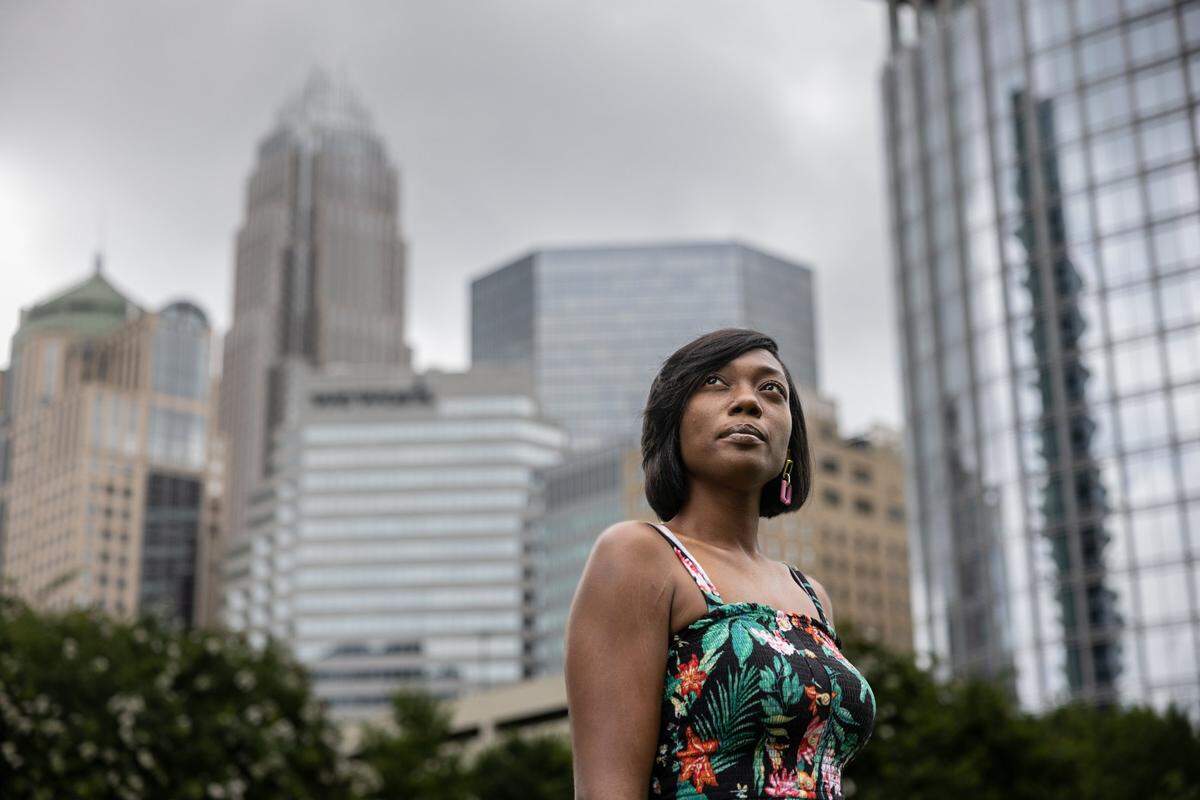
Harris-Alford received a Pell Grant, provided by the government to students with exceptional financial need, as a part of her federal aid package. That would have qualified her for up to $20,000 in forgiveness under Biden’s new plan.
But she consolidated her loans in early 2020, making her debts private rather than federal. She hasn’t benefited from the administration’s pause on payments that began more than two years ago, and she won’t see her debts canceled.
Her student loans are dragging down her credit score, and that makes it hard to find housing for herself and her two children in Charlotte.
“I never saw the good side of credit, because of my student loans,” she said.
Harris-Alford isn’t the only person I talked to who transferred or consolidated their loans with a private lender to help them better manage their debts. For those borrowers, Biden’s plan will leave their debt untouched.
They’re also not the only group who won’t be aided by the policy. Families and individuals that make over the income limit won’t get their debts canceled either. And some loan cancellation advocates have argued that the administration’s proposed application process will result in some eligible borrowers falling through the cracks.
For Harris-Alford, student debt has kept her in a cycle of financial insecurity she came to college to break. For now, she’ll have to find another way out.
“I want to feel like whatever I’m putting into my life is coming back,” she’s told me before. “But when you have debt, you cycle it all the way back over.”
‘Pretty trivial’
Others will get help from the proposal, but not enough. And in some cases, it’s too late.
In one emotional response to our survey, a woman wrote that she graduated from law school in 2005 and still owes more than $40,000. Since then she’s kept a good job, gotten divorced and survived breast cancer. But, she said, “I carry both federal and private loan debt like a weight around my neck.
“I ask myself daily, ‘Is my law degree worth $200K plus continuously accruing interest?’ No, it absolutely is not,” she says.
Worse, she wrote, she decided to never have children because of the burden of her financial debt. She’s 43.
“As the years move forward,” she wrote, “the weight becomes heavier and I fear that I will end up elderly, homeless, and/or unable to afford my medications in my ‘retirement.” I suspect a real retirement may never happen.”
For others, there’s anger.
One person in our survey described recently paying off large student loans and wishing they’d had help years earlier. The person said they and their husband went as far as to sell their home three years ago and move in with their two kids with relatives in order to get rid of $65,000 in student debt.
When I first heard news of Biden’s $10,000 policy, I thought of another person I spoke with in June, a former public school teacher who took out loans to get his masters in public policy.
His partner attended graduate school for social work. Together, he told me, they owed the federal government about $130,000.
At the time, the $10,000 cancellation proposal had been floating around. I asked him how that hypothetical policy would impact him and his family. The thought was “almost laughable.
“It’s pretty trivial,” he said. He imagined he’d pay that much in interest in only a year or two.
Instead, he’s banking on Public Service Loan Forgiveness, a federal program that forgives loan balances for nonprofit or government employees after 10 years of payments. That’s the only way he’s getting rid of his debt, he said, barring total cancellation — or winning the lottery.
It all came back to this, he said: “Of the richest countries in the world, how are we the only one that doesn’t offer either free or extremely subsidized higher education?”
To him, it’s example of how a presidential policy — though unprecedented — stops short of solving the student debt crisis.
This story was originally published August 25, 2022 at 12:25 PM.