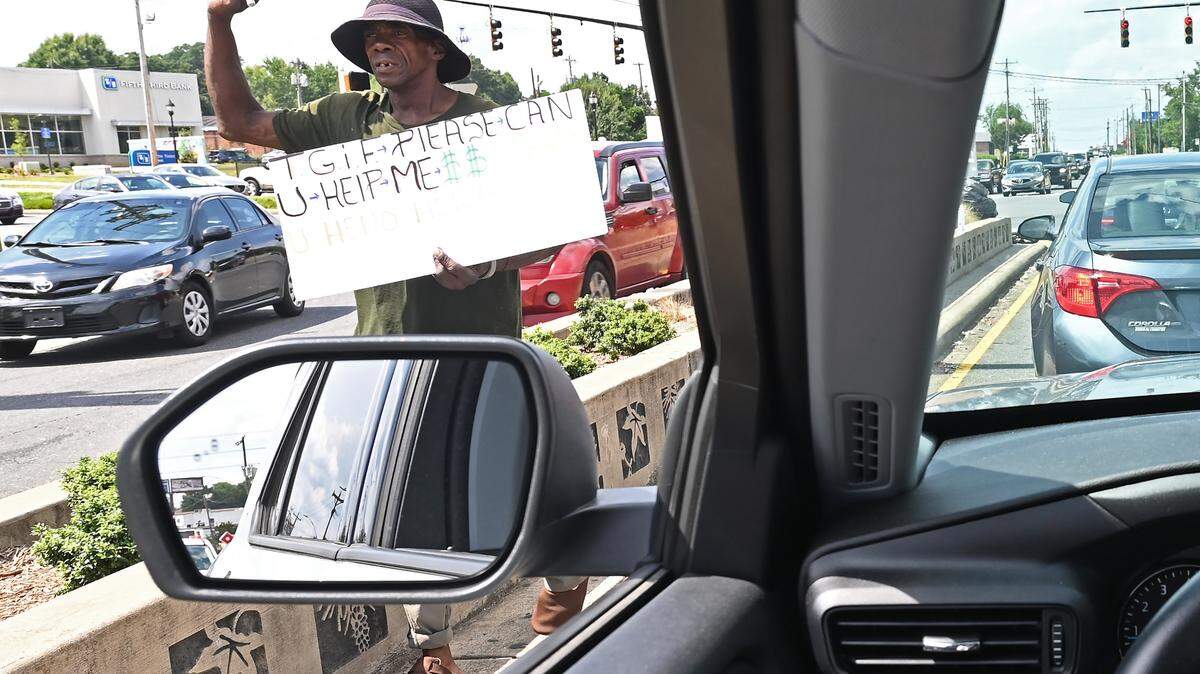
Panhandling on the streets of Charlotte — legal or not? The answer: It’s complicated.
READ MORE
Panhandlers’ Plight
We see them every day on street corners and medians, people asking for money by holding signs or walking up to cars or people. But what is life like for a Charlotte panhandler?
Expand All
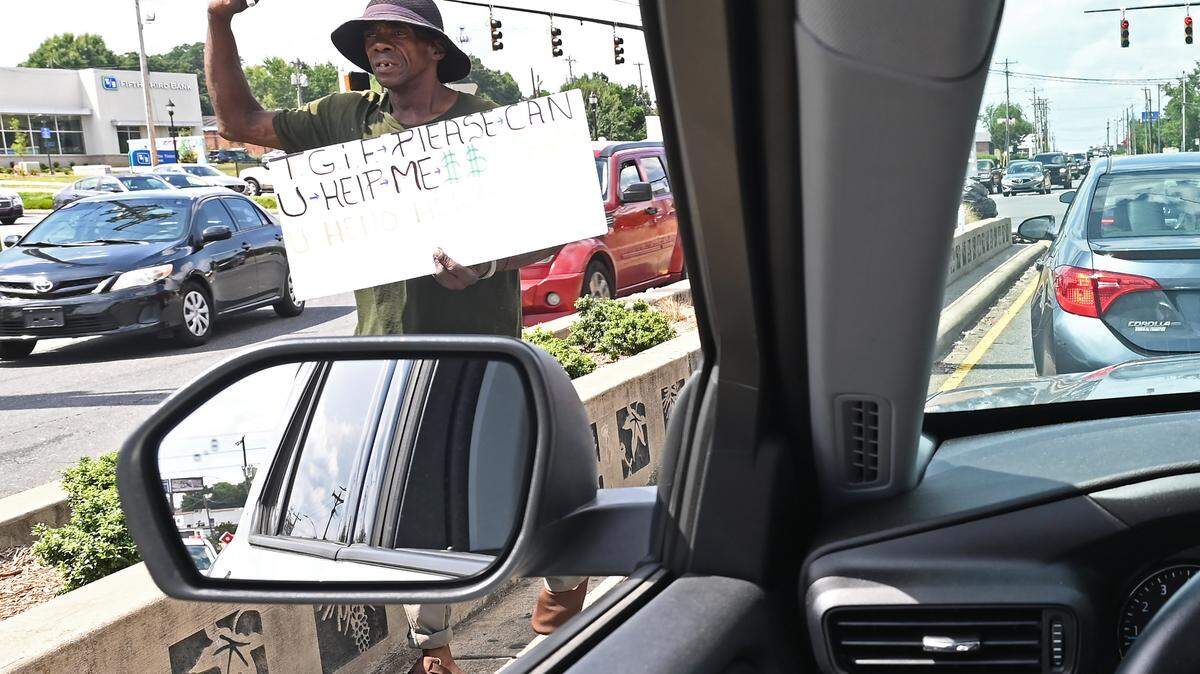
Panhandlers’ plight: They’ve lived at this intersection for years. Is there any way out?
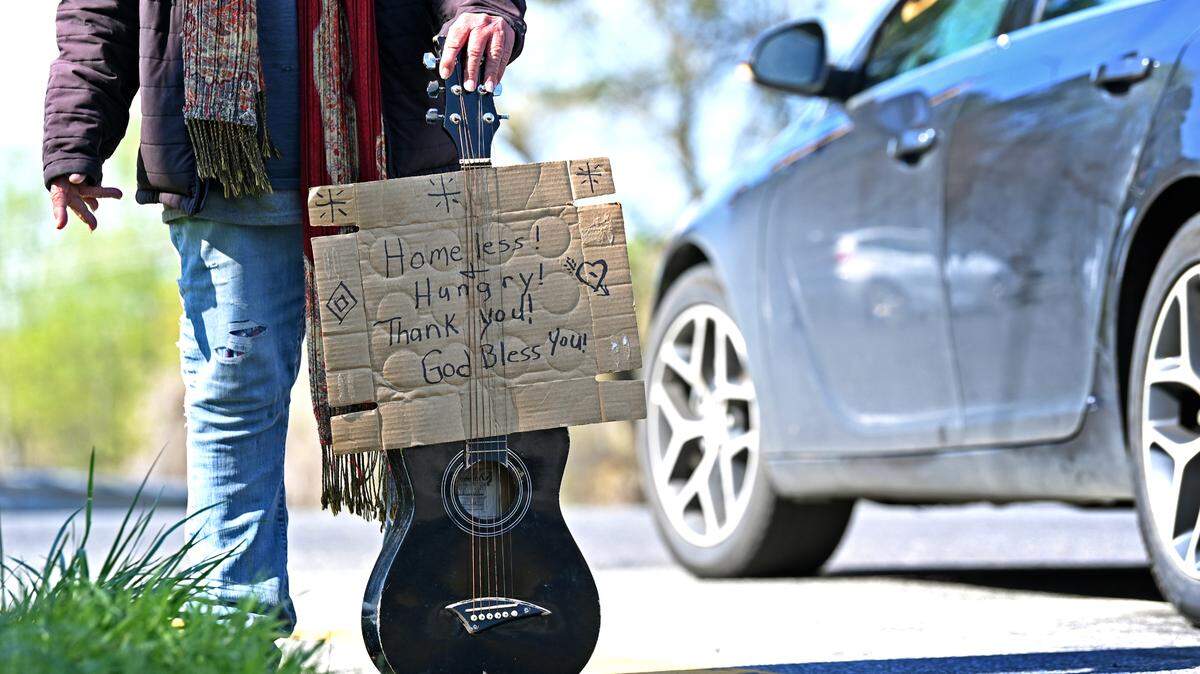
Panhandling on the streets of Charlotte — legal or not? The answer: It’s complicated.
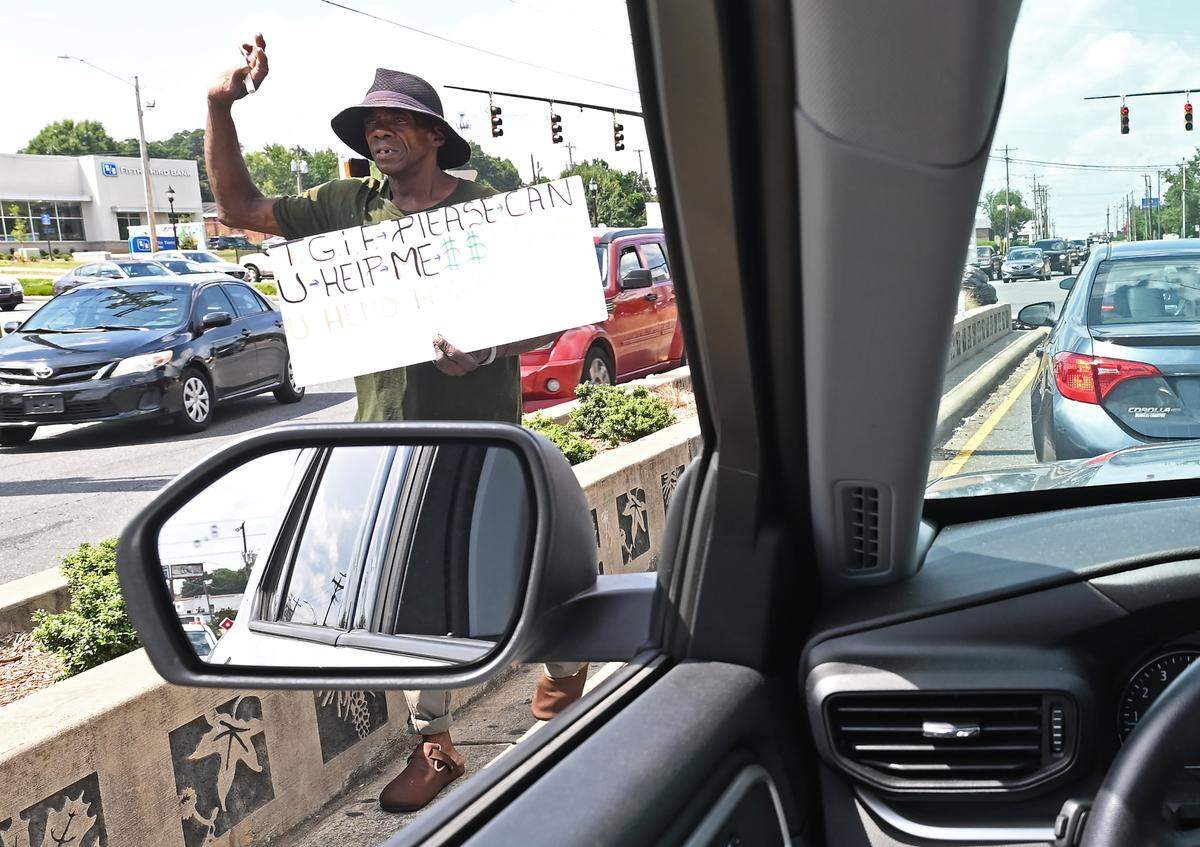
Photos: Life with Lefty and Kenny at the corner of Woodlawn Road and South Boulevard
‘They know us by name.’ These two men are familiar faces at a Charlotte intersection
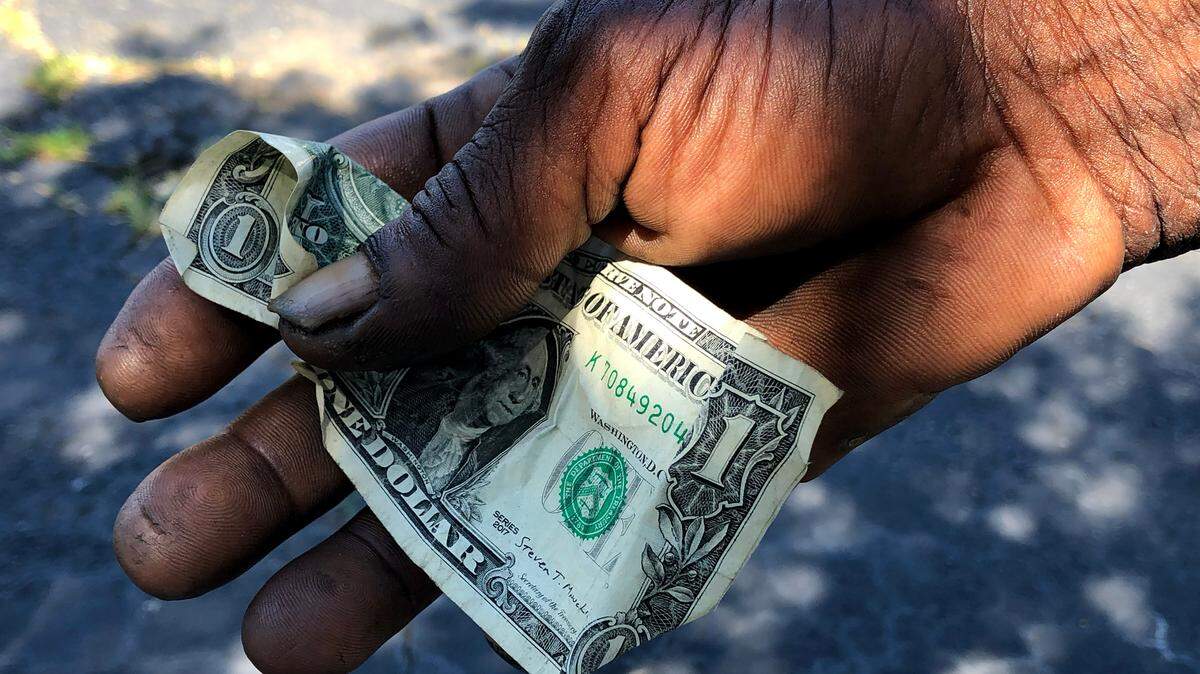
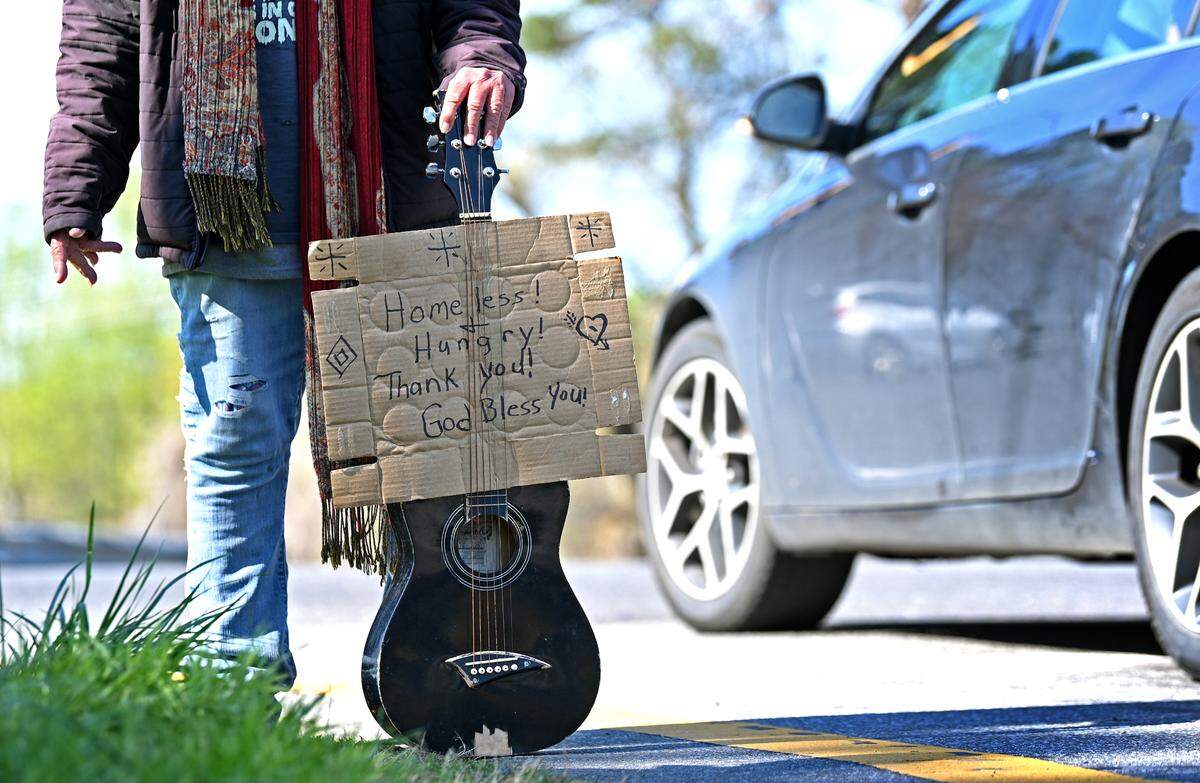
On medians and on street corners all over Charlotte, there are panhandlers — people holding signs with pleas for help, seeking to make eye contact with passing motorists, hoping that those drivers will reach through the window to pass them a bill or some change.
And when you’ve seen those people, perhaps you’ve found yourself wondering: Is this legal?
Common sense would dictate that it must be. After all, if panhandling was illegal, surely you would have seen a police officer dealing with a panhandler by now, right?
But as it turns out, explaining the legalities around panhandling is more complicated than you might expect.
The U.S. Supreme Court has held that the First Amendment covers “charitable appeals for funds,” and that therefore, panhandling, solicitation, or begging are all considered protected speech. Generally speaking, it only becomes illegal when a panhandler obstructs traffic, or your car, or assaults you in some way.
That said, an increasing number of U.S. cities have ordinances in place that specifically address panhandling, which has become more common in large part due to the rise of people experiencing homelessness.
Charlotte is among those that have an ordinance dealing with the regulation of “public solicitation and begging.”
Under the ordinance, panhandlers are in violation when they accost or touch someone (which voids the First Amendment protections); but also when they ask for money in a number of specific contexts considered untoward, including after dark, or in the immediate vicinity of any type of financial institution, outdoor dining or shopping area, or near a public transportation pickup point.
Violators are subject to a misdemeanor charge and, if convicted, face a fine of up to $500, jail time, or both.
However, in 2021, North Carolina Gov. Roy Cooper signed a law decriminalizing some city ordinances — including panhandling. Cities are still empowered to essentially decide on their own if they want to impose criminal penalties on violators of those ordinances, but Charlotte chose not to revisit the decriminalization of panhandling after a review of the ordinances affected by the new state law.
So the Charlotte-Mecklenburg Police Department’s official current position on panhandling is this: It is not issuing citations to panhandlers because the city’s panhandling law is “not criminally enforceable,” according to CMPD’s public information office.
Officers still will intervene and possibly cite if a panhandler is creating some sort of danger to themselves or to the public.
But otherwise, you’ll continue to see panhandlers doing their thing in and around Charlotte for the foreseeable future — unless the City Council takes up the issue again.
In the meantime, here’s a little food for thought regarding panhandlers from Liz Clasen-Kelly, CEO of Roof Above, a Charlotte nonprofit that provides a range of services for people experiencing homelessness:
“We often see that people conflate panhandling and homelessness,” Clasen-Kelly said. “The reality is that the vast majority of people who experience homelessness do not panhandle and not everyone who panhandles is experiencing literal homelessness.”
“In general, we recognize that how someone approaches interacting with someone asking for money is a personal choice,” she continued, but added that “we generally discourage people from providing money directly to people panhandling, and instead consider offering food/water, conversation, or help to connect with resources.”
In addition to Roof Above, notable organizations dedicated to helping people experiencing homelessness include Charlotte Rescue Mission, Charlotte Family Housing, and The Salvation Army of Greater Charlotte.
This story was originally published September 13, 2023 at 5:00 AM.