Mecklenburg roads are trashiest they’ve ever been. It’s a danger to drivers, officials say
The sight made Sarah Mitchell do a double-take: a twin-sized mattress sprawled across the shoulder of Interstate 485. Next to it, discarded bed frame pieces seemed to mock the absurdity of the situation.
The marketing manager had seen plenty of trash during her daily commute to uptown, but this was a new low.
“I couldn’t believe my eyes,” she recalled. “It was like someone had just moved and decided the highway was the perfect spot for their old furniture. I almost hit it.”
North Carolina’s roadways have become an impromptu dumping ground for everything from Bojangles boxes and Cheerwine bottles to building materials and bulky appliances. Unsecured truck loads also pose a danger.
Beyond the obvious eyesore, this trash jeopardizes driver safety, harms the environment and depletes local resources, officials said.
And the problem is growing.
Crews collected nearly 1.5 million pounds of trash from Mecklenburg County roads last year — an increase of about 50% from five years ago. Officials anticipate little improvement due to a growing population, rising costs and lingering pandemic effects.
“We’re picking up more than we ever have,” North Carolina Department of Transportation engineer Felix Obregon said. “There are more folks coming into Charlotte and more traffic on the roads. This is a constant issue.”
Who’s in charge?
The NCDOT manages more than 3,000 miles of roads in Mecklenburg. It usually cleans interstates every other month and secondary roads less frequently, but budget cuts reduced the frequency of scheduled cleanings, Obregon said.
“As soon as we clean the roads, folks keep on throwing trash on them,” he said. “And Charlotte keeps growing so there’s more people who might do it.”
In fiscal year 2024, which ended in June, the department spent over $800,000 to collect more than 1.2 million pounds of litter in Mecklenburg. That’s up from about $770,000 spent in 2023 for around one million pounds collected.
The city of Charlotte also has a dedicated unit for cleaning uptown, North Tryon and South End. The city, along with volunteer groups led by Keep Charlotte Beautiful, collected upwards of 300,000 pounds of trash last year.
“There are areas in the city that need to be cleaned multiple times a day due to the volume of trash,” said Eric DeLaPena, deputy director of operations for Charlotte’s Solid Waste Services. “Sometimes we need to slow traffic to manage it.”
Trash on NC roads
Public outcry over litter-strewn roads, and efforts to address it, date back at least to the 1980s in North Carolina.
NCDOT initiated the Adopt-A-Highway program in 1988, expanded with the Sponsor-A-Highway program in 2011 and introduced the “Swat-A-Litterbug” app in 2021 to make reporting littering easier.
“Trash can fly up or stuff gets loose and flings out the back of trucks and can possibly hit another vehicle. Someone could run over trash and lose control of their car,” NCDOT spokesperson Jennifer Goodwin said. “It can be very dangerous and isn’t isolated.”
The National Traffic Highway Safety Administration estimates objects on the road cause about 17,000 crashes annually across the country — 85% due to unsecured loads on the back of trucks. The actual number may be higher due to reporting limitations.
Crashes caused by trash on NC roads
Local trucker Kyle Langton experienced this first hand. Last year, a mangled car bumper slashed his tire and dented his truck.
“I had to make a split-second decision,” Langton said. “Swerve and risk hitting the car in the next lane, or stay in my lane and hope the bumper didn’t cause me to wreck. Luckily, I managed to get off the road before the tire fully blew out, but it could have been a lot worse.”
Roadway trash can also be mistaken for food by animals or find its way into creeks and streams, breaking down into microplastics that water treatment plants can’t filter, according to Jonathan Hill, executive director of Keep Charlotte Beautiful.
“You’ll end up drinking that trash sometimes if it’s not picked up,” he said. “It may not seem like it, but that littering has trickle down effects all the way to our daily health.”
The financial burden is equally daunting. In 2023, NCDOT spent over $25 million statewide on litter removal — all taxpayer dollars that could be allocated to other roadway projects.
“It’s an expensive problem,” Goodwin said. “It’s money that we could be using on other things to help improve our roadsides like filling potholes, mowing, new guardrails, sign repairs and other things.”
For Mitchell, the unsightly landscape has her questioning the city’s civic pride.
“It’s embarrassing to bring clients to a city where the first thing they see is a mattress on the side of the road,” Mitchell said. “It reflects poorly on our community as a whole and it seems like people don’t care about throwing stuff out the window.”
Lacking accountability
Part of the problem isn’t merely the litter itself, but the failure to catch offenders.
State court records show a 26% decline statewide in littering citations over the past five years despite more debris finding its way onto the roadside. Only 951 littering citations not associated with more serious crimes were issued in North Carolina last year.
Stringent fines alone — $250 to $1,000 for the first offense — may be insufficient without more enforcement.
“It’s hit or miss,” Goodwin said. “Fines could be effective but that’s for the legislature to decide. You have to catch someone or witness the littering first in order to report it.”
There is also little recourse for vehicle damage or injuries caused by roadside trash.
State laws require drivers identify the party responsible for causing an injury. However, determining the culprit is nearly impossible because of difficulties spotting where the trash is coming from or memorizing the plate numbers of offenders, said Cameron deBrun, an attorney for Ted A. Greve & Associates in Charlotte.
“I think the law is stupid and I think most lawyers would agree. Someone’s car can get wrecked or the driver could get injured or killed but gets nothing,” he said.
deBrun is skeptical the law will change because of the influence of the insurance lobby. The counter argument to change, deBrun said, is that it could create opportunities for fraud.
What’s being done?
Officials with NCDOT officials say a large part of the solution lies in changing public behavior.
“If they want to stop seeing trash, stop disposing it on roadsides,” Goodwin said. “The public has a role in this. Educating people that they can fix many of the problems is a big goal of ours.”
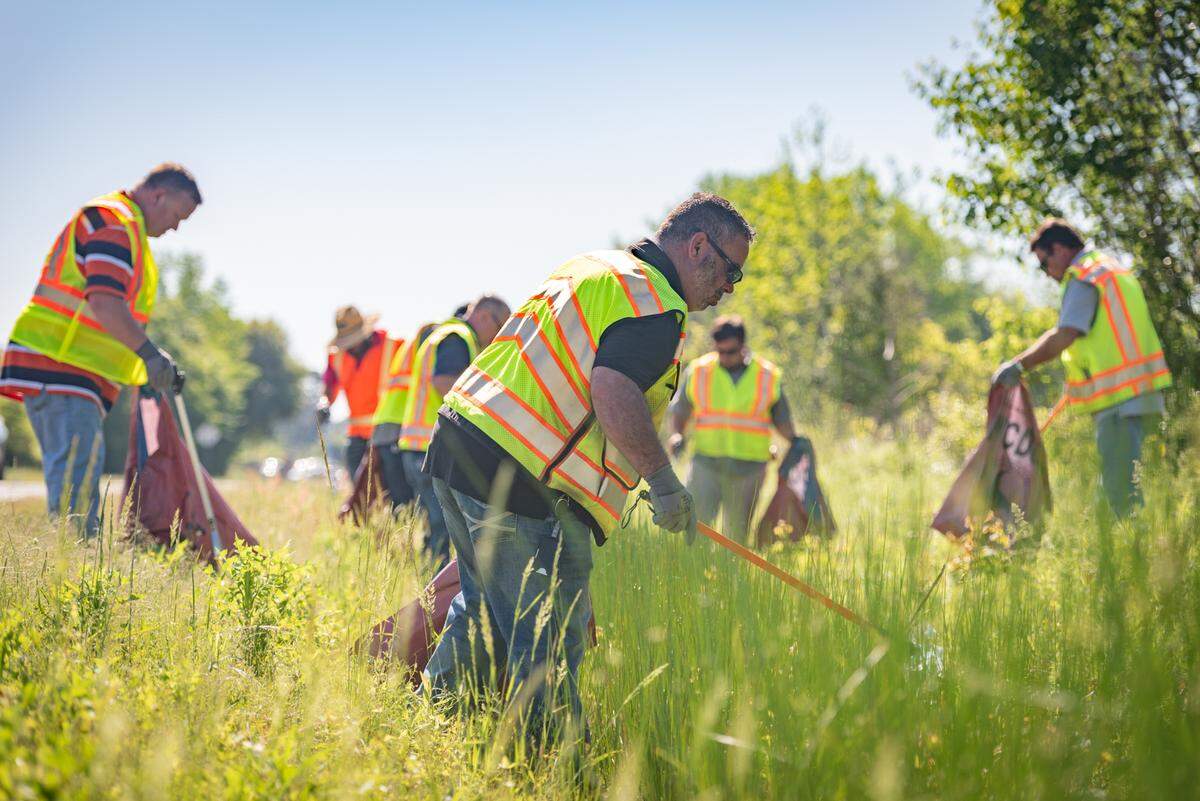
NCDOT and the city of Charlotte are planning initiatives to clean up roads later this year, including the “Fall Litter Sweep” from September 14 to 28, where residents across North Carolina will volunteer to clean up roadways.
In the meantime, NCDOT advises securing trash loads, avoiding dumping things along roads and recycling. For large objects on the road, call 311 to report them. To report littering, click here.
This story was originally published August 7, 2024 at 6:00 AM.