After Helene, flood victims wonder: Should we still be living in this part of Charlotte?
Perhaps under happier circumstances, this string of neighborhoods on the northwest edge of Charlotte would look like a nice place to call home.
They’re peaceful and quiet. They’re on a picturesque portion of the Catawba River. They’re lined with mostly modest houses — just over a hundred in all — and connected by largely traffic-less roads, one of which is dirt, two of which dead-end. And the neighbors have evolved into a hearty mix of young parents, middle-aged artists and eccentrics, blue-collar lifers, and comfortable retirees. By and large, legendarily wonderful people. The kind that look out for each other, party with each other, splash round in the water with each other.
Right now, though, these do not look like neighborhoods most people would want to inhabit.
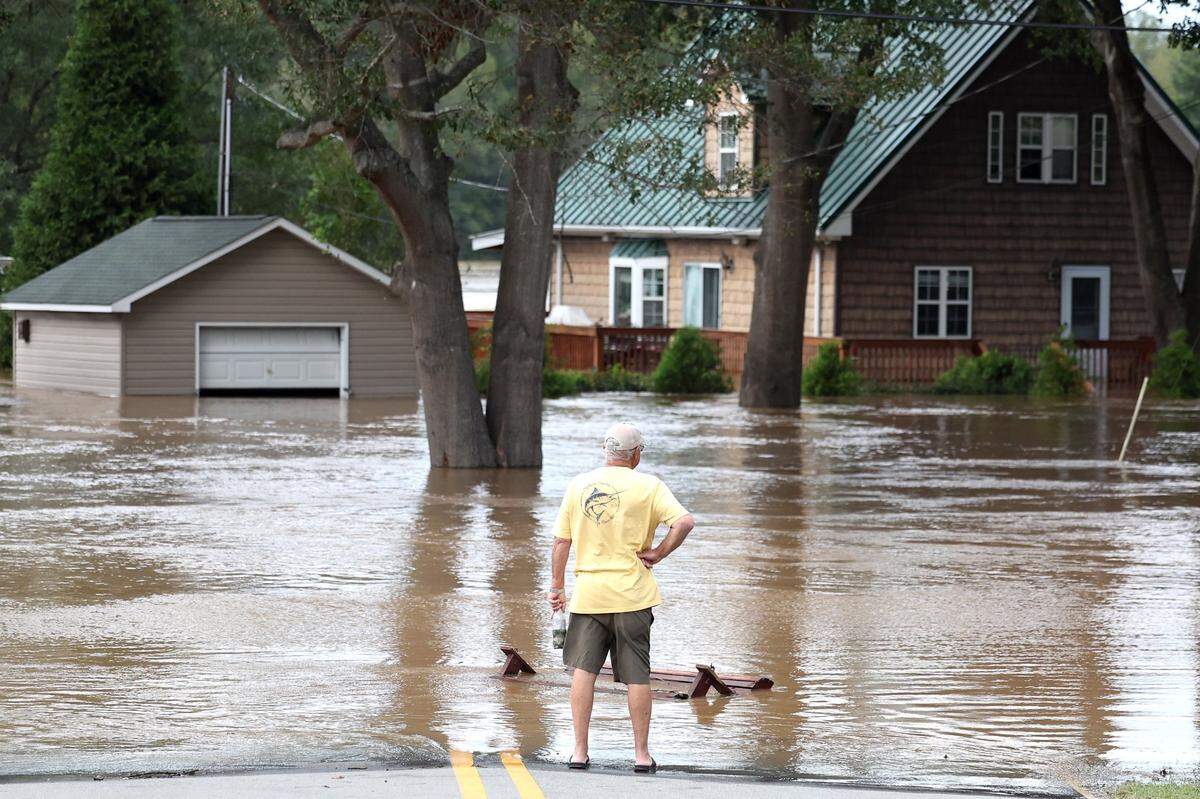
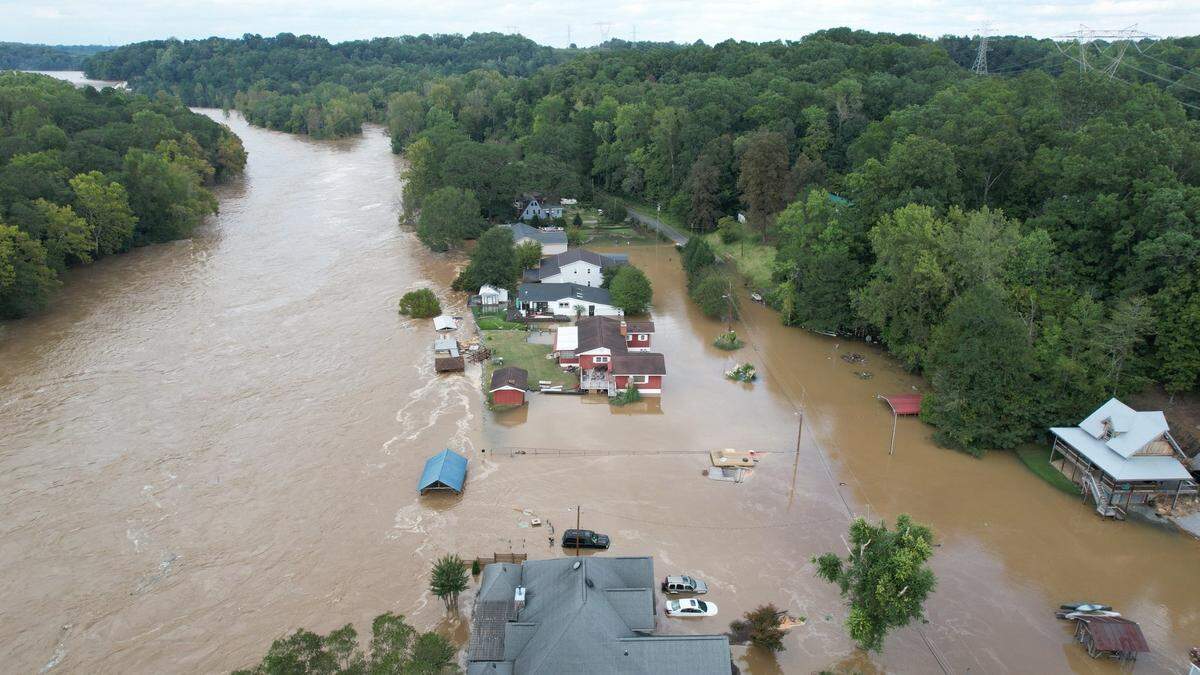
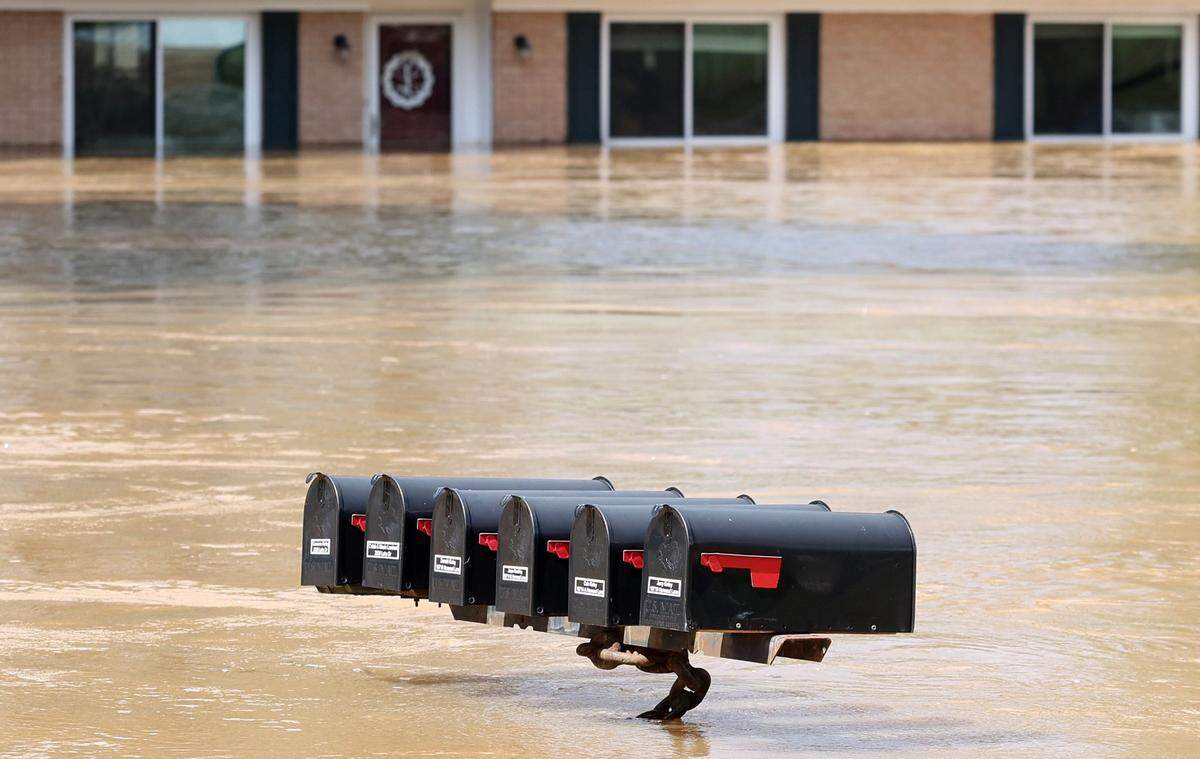
Not since Helene’s fury sent a tidal wave of water here from afar, causing the river to swell with rainwater, to become an ocean that rose high above its banks, then above driveways, then porches, then windows and doors, then all the way up to roofs in some cases.
Five months later, these neighborhoods — more than 100 miles from the epicenter of Helene’s destruction in Western North Carolina — still look decimated, demoralized and devastated.
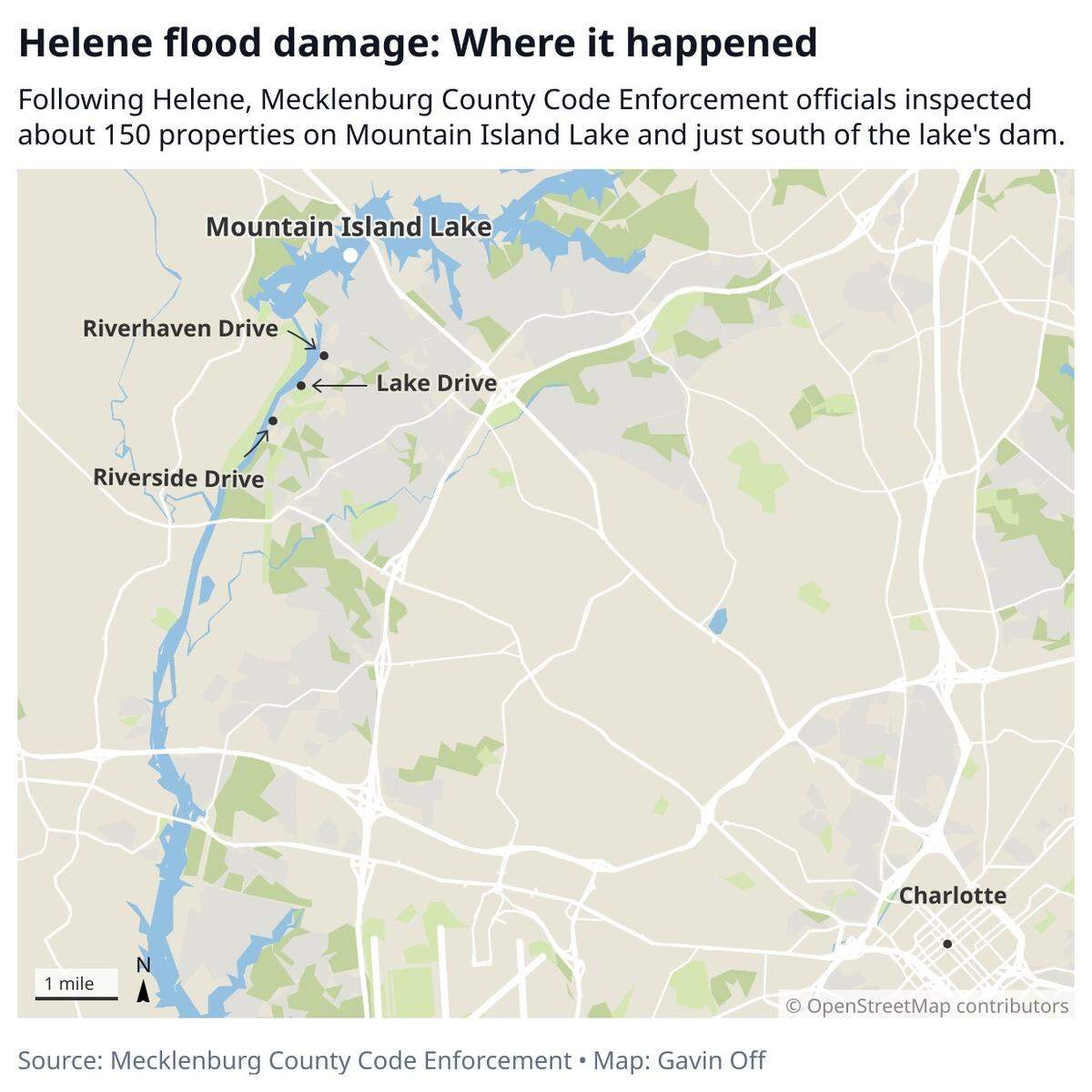
Front doors of brutalized bungalows still hang wide-open. Picture windows remain blown out. Fences that were leveled haven’t been cleared. RVs continue to clog driveways. There’s a sinkhole in front of Missy Hubbard’s busted garage door on Riverside Drive, there are two overflowing dumpsters outside of Donnie McGuire’s house on Lake Drive, and next to Mark Conn and Betsy Patton’s house on Riverhaven Drive — where their neighbor’s house used to sit — there is nothing.
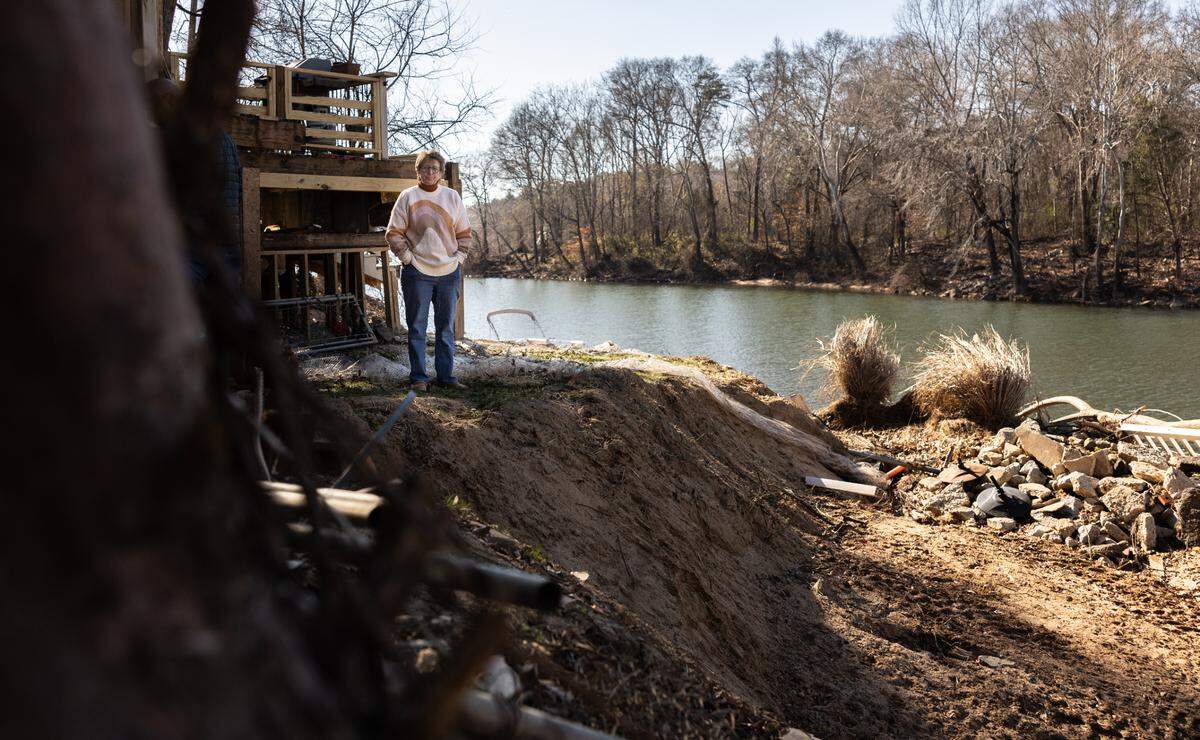
Nothing but wreckage, and remnants. The house is gone, ripped from its foundation, scattered across the bottom of the river, probably, for miles downstream.
Or, wait, that might be part of it underneath Mark and Anna Davis’s broken deck. It’s hard to tell.
As Anna Davis points out, floodwaters scattered debris everywhere along Riverside, along Lake, and along Riverhaven. “It looks like a freaking wet tornado went off everywhere,” says the 38-year-old mom of two, who’s lived on Riverside as both a child and an adult. “It looks like somebody took a dumpster and just” — she makes a splat sound with her lips — “put it upside down. It’s a mess.”
There are indications here and there of a rebuilding effort: Tyvek wrapping around houses, bulldozers and backhoes rumbling down streets, contractors’ signs staked into front yards.
But several months after Helene pummeled this part of the Southeast, there are mostly messes of the kind you might imagine would still need cleaning up in some of the worst-hit areas of Western North Carolina. And given that last September’s catastrophe was the second “hundred-year flood” since 2019, as much as it pains residents to admit it, many are grappling with whether they should tear themselves away from this place they once viewed as heaven.
In fact, there’s now some question as to whether anyone should risk living here at all.
‘The odds of that happening are just so low’
Unless you lived here, or visited someone who lived here, or took a wrong turn, you’d likely never know this enclave existed.
Yet here it is, the definition of a hidden gem, set along a sleepy 2-mile stretch of the Catawba River that can feel like a vacation spot — a land of jet skis, inflatable rafts, Fourth of July golf-cart parades, and late-night dock hangs — yet actually is so close: You can be on Interstate 485 in less than 10 minutes, at the airport in less than 20, in the heart of uptown Charlotte in under 25.
Taylor Atwood could hardly believe her good fortune when she and her partner Eddie found what would become their first home back in the fall of 2022.
The house was a charmer — a three-bedroom, two-bath ranch with a sun room and a huge detached garage out back, on almost three-quarters of an acre. Sure, it was approaching 40 years old and needed a bunch of updating, but the foot of their driveway was going to be less than a hundred yards from the edge of the river. And they’d have access to a private neighborhood boat launch just up Riverhaven Drive.
This, Atwood thought, is only $345,000? Come on.
“We felt like it was kind of a pocket of Charlotte that didn’t really exist,” says the 29-year-old Charleston, S.C. native who, as a land acquisition analyst for a home-building company, knows a little something about the market. “We’ve got acres of protected green space behind us. Our neighbor has horses. We have access to the dock. The river’s in front of us.
“All of those things were huge for us to get in our first home. The odds of that happening are just so low.”
.jpeg "image9 (1).jpeg")
While there are a handful of newer, larger homes out here, the hallmark of these neighborhoods remains modest, older ones — many of them smaller and less-expensive than Atwood’s — that command a fraction of what a waterfront home would cost on Lake Norman.
But what really has made the area special, many residents agree, is the people.
When Erik Jendresen was looking to move across the country to Charlotte to be near his wife’s mother seven years ago, he was turned onto the neighborhood by a family friend who sold them the property they now live on. Then, it was a 900-square-foot brick house that Jendresen was trying to transform into something ripped from the pages of an old Orvis catalog.
As a formerly California-based screenwriter who wrote multiple episodes of the HBO miniseries “Band of Brothers,” he says he initially anticipated being regarded as “a Hollywood libtard.” Instead, “there was a great sense of acceptance.”
Says the 65-year-old Jendresen: “It’s a neighborhood of wonderful, down-to-earth people from every walk of life you can imagine. ... Everybody looks out for everybody else. Everybody’s sort of a little bit aware of everybody else’s business. I mean, there’s the Lake Drive section, the Riverside section and Riverhaven. There are three distinct zones.
“But, yeah, it’s just an unusually communicative and communal kind of community, as opposed to what you see a lot of nowadays in this country — you know, people living next to each other, but completely alone ... and not having much interaction.”
On top of all that, not only is there minimal car traffic, there’s also minimal boat traffic that comes in from the outside.
September’s storm, however, underscored a drawback to this area. A potentially brutal drawback: If it rains upstream hard enough, in exactly the right places, the river can swell dramatically and this neighborhood can be submerged in water — like no other part of Charlotte can.
And perhaps just as alarming is the fact that some residents are convinced that both this most recent flood and the one in 2019 were preventable.
‘We have to look at things holistically’
Part of the reason this section of the Catawba River doesn’t attract many non-local boaters is because this is, effectively, a dead end.
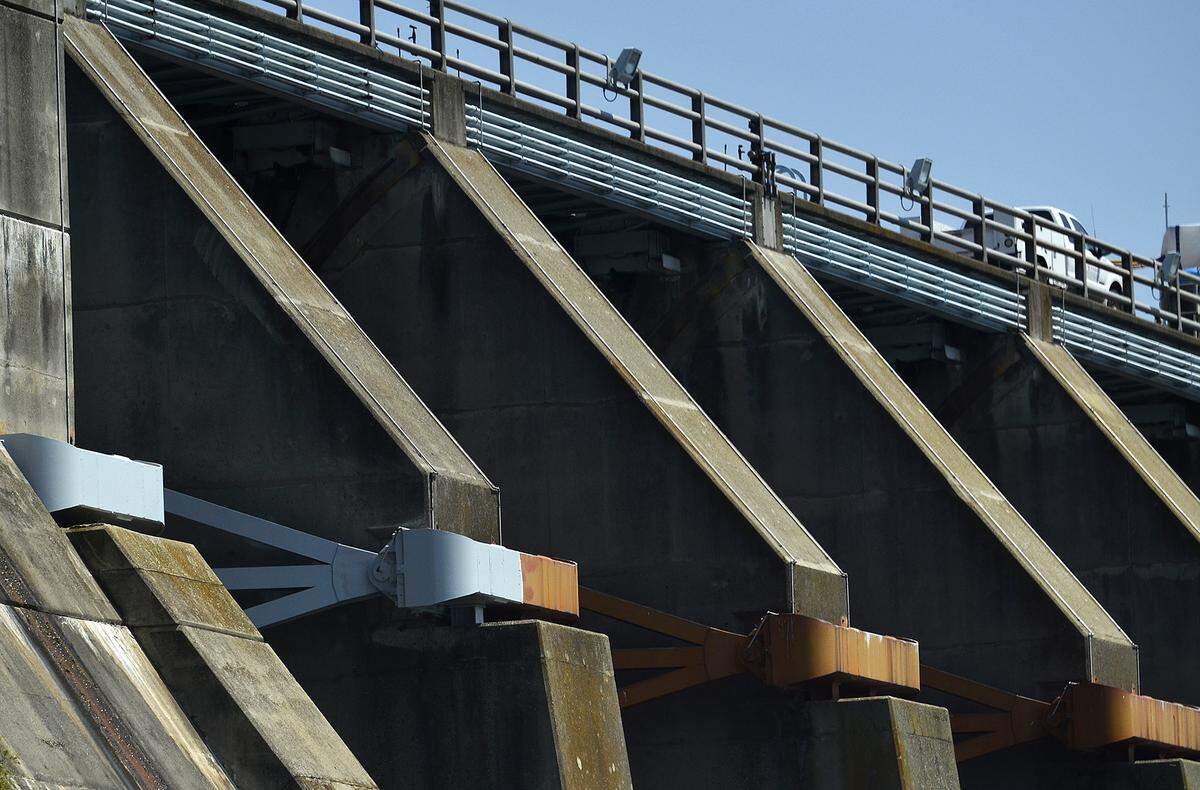
You could cruise past the neighborhoods on the east side, or the forests to the west, but very quickly you’d run into the 100-foot-tall Mountain Island Lake hydroelectric station and the 100-foot-tall spillway — and to get there you’ll have to either fight the stiff current directly below the former or brave the shallow water directly below the latter.
So on lazy summer days, Lake Drive resident Mitchell Peterson says, he and his fiancée Jennifer Kleine-Jaeger and their friends would “leave a golf cart down at the end, take my stepmom’s boat up to the dam, and everybody could just jump out in floats and then float to the end of the road.” Or, on the spillway side, Riverhaven Drive resident Andrew Freund has been able to wade summer after summer into the peaceful, shallow, clear water below his and his wife Devon’s house with a snorkel and a mask on his head, surveying the bottom of the entire cove.
They had the water to themselves. Felt like they owned the place. But, of course, they never have.
Both the section of river that runs along these neighborhoods and the lake that is Mountain Island right above it are but small cogs in a gigantic wheel. That wheel is the Catawba-Wateree River Basin, which winds a 200-mile path from the Blue Ridge Mountains through Charlotte and into South Carolina, before ultimately draining into the Atlantic Ocean.
And that wheel is largely overseen by Duke Energy.
The utility company’s job as it pertains to the river basin is to manage the levels of those 11 lakes, and it does so by moving water through a network of 12 hydroelectric stations and — where possible and when necessary — operating spillway gates.
The stations use the water to produce enough electricity for roughly 630,000 homes. The lakes serve as reservoirs that provide the region with drinking water for more than 2 million people. Wildlife rely on the bodies of water for food, water and shelter. Countless people take advantage of the recreational opportunities these various bodies of water have to offer.
The stakes are considerable.
That’s why, as Duke Energy vice president for regulated renewables Bryan Walsh says, “we have to look holistically at things.” To be mindful, he says, that “a drop of water that starts in Lake James will eventually come out at Lake Wateree.”
In between, that water will pass through Norman — the largest of the river basin’s lakes, with its 3.4 trillion gallons of water held in place by the Cowans Ford Dam — and then the smallest: Mountain Island, less than 10 miles downriver from Cowans Ford and held in place by the un-gated spillway protecting these neighborhoods.
By and large, it’s an almost invisible process, this movement of water from the mountains to the sea by Duke Energy officials duty-bound to operate in accordance with the power company’s license with the Federal Energy Regulatory Commission.
But on very rare occasions, this process gets put under a microscope. In a drought, for instance. Or, say, a serious rainstorm.
Prior to Helene, the last time that happened was 2019, after Duke Energy opened its Cowans Ford floodgates to relieve pressure on Lake Norman in the wake of roughly 12 inches of rainfall over three days. In June of that year, Mountain Island’s 100-foot-tall dam was overwhelmed by a crest of 106.91 feet — the second-highest in the history of the then-nearly-century-old lake — and subsequent flooding to the neighborhoods below left more than a hundred homes waterlogged and damaged, in some cases irreparably.
The aftermath was ugly.
Nearly 40 families filed a lawsuit, accusing the power company of mismanaging the water flow and disregarding their safety. Duke Energy defended itself by arguing, among other things, that the families’ insistence that it could have moved water through the system ahead of the storm ignored the implications of the impact on drinking-water supplies if less rain had fallen than forecast.
The suit was settled out of court in 2023.
Then came the wrath of Helene, and along with it, clear evidence that if a drop of water that starts in Lake James will eventually arrive in Charlotte, the same holds true for a deluge.
‘I started chucking suitcases in the car’
Residents of the neighborhoods below Mountain Island Lake took the precautions they felt were appropriate.
For two days prior to Helene’s arrival, they started marshaling groups of family and friends to move furniture and belongings and keepsakes from basements and tuck-under garages to main levels, or — in houses with main levels on the ground — from first floors to seconds. They started moving boats and cars out of the neighborhoods and onto higher ground. They started unhitching docks and towing them to a protected point on that fork in the river.
It was a steady, methodical process that quickly accelerated on Thursday, September 26, as the rain rolled in; and as police and firefighters canvassed the neighborhoods, knocking on doors, announcing that a voluntary evacuation was in effect.
“I just started chucking the suitcases in the back of the car,” says Anna Davis, the 38-year-old Riverside resident. “Even when you have warning, you’re kind of in a panic mode, so you don’t really know what to get. You’re like, OK, so how long am I gonna be gone? …
“But I wasn’t like, Oh, I’m never coming back to my house again, you know?”

By Thursday night, the majority of the homes in the area had been deserted. Meanwhile, the worst of the weather here was over. The rain had tapered down overnight, just softly pattering on rooftops by Friday morning.
Relative to, say, 2019, five or so inches didn’t necessarily seem like something the area couldn’t handle.
Between west Mecklenburg and the source of the Catawba two hours to the north and west, however, the river and the lakes got pounded for three days. In excess of eight inches across the state’s mountain region. Twelve inches in many areas. Upwards of 30 in the worst-hit locales. Duke Energy had started moving water through its system ahead of the storm, but it did so conservatively — again, concerned that if it drew down lakes too much, and if rainfall predictions fell short, then there could be public water shortages.
So when the storm turned out instead to be worse than expected in the mountains, the river basin swelled and huge volumes of water rolled toward and into Mecklenburg, filling Lake Norman steadily as Thursday turned into Friday, ultimately forcing Duke Energy’s hand. At 5 p.m. Friday, it fully opened the first gate at Cowans Ford Dam. Then a second. Then a third and fourth were partially opened, too.
There was only one place all those millions of gallons of extra water could go.
‘Something right out of the Old Testament’
Residents here will insist that this most recent flood in particular was — like Lake Norman and Mountain Island Lake — manmade.
That makes it sound sinister. As if Duke Energy is the bad guy. Which is a matter of opinion, one the power company has and will continue to defend itself against. But there’s no denying the fact that Duke Energy and its decision-making has and will continue to have a uniquely profound impact on the neighborhoods in question.
“I mean, we’re used to floodplain maps and hydrographs and data and hydrological data that (tells us) ‘if we get this much rain, this is how this creek is gonna respond,’ and we can map that out, right?” explains Jonathan Beller, project manager for Charlotte-Mecklenburg Storm Water Services. Here, they can’t, he says, because Mother Nature isn’t in control of how much water is released through the system. Duke Energy is.
Just how different of an animal is this area? “I would say in Mecklenburg County, this is our highest level of flood vulnerability, per capita.”
Over the past two decades, homes immediately downstream of Mountain Island have been hit now four times.
In September 2004, 35 were flooded by Hurricane Frances. In May 2013, heavy rains caused storm surges that penetrated the insides of more than a dozen homes. Then came that 2019 flood, which wreaked more havoc than both of the previous events combined.
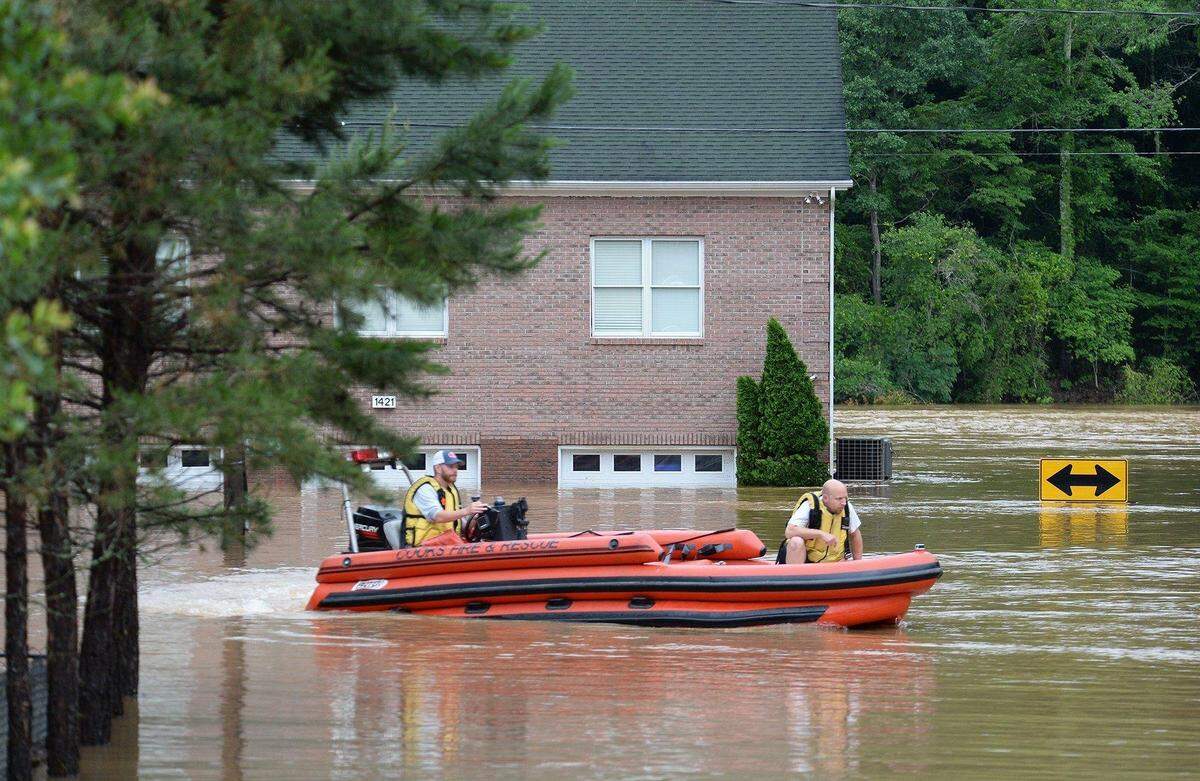
They called that one the area’s hundred-year flood. It took years for some to rebuild.
Yet Helene trumped them all. It was so much worse than any of the neighbors ever imagined it would be. Water raged even higher this time (nearly 8 feet over the top of the spillway) and became a monster, obliterating parts of the neighborhood.
On Riverhaven Drive, it completely washed away the small cottage next to Mark Conn and Betsy Patton’s property, as well as a small ranch home, and two mobile homes. On Lake Drive, Susan Covington’s home — which in 2019 got nearly 3 feet of water inside of it, and which she vacated for more than two years as Covid slowed the remodeling process — was submerged up to the gutters. And on Riverside Drive, where Adam and Rebecca Fennel had just built a brand-new house last April — 10 feet up, across the street from the river — floodwaters swelled to their doorstep ... then over it, then inside, ruining all kinds of stuff Adam had brought up from the basement.
Over the weekend after the storm, when someone showed Rebecca drone footage shot from above their house, “I literally screamed and fell over, just sobbing,” she says. “I was like, ‘I didn’t get the baby books! I didn’t get the pictures! I didn’t get our fire safe!’ I didn’t get anything.
“I could not wrap my head around it had gotten into our home.”
She was hardly the only one struggling to comprehend what they were seeing. Erik Jendresen — who lost his original Lake Drive home in the 2019 flood and rebuilt a larger one 12 feet above the ground — watched in disbelief as surging water crested a mere 8 inches shy of his subfloor this time around.
On Saturday, September 28, after the voluntary evacuation became a mandatory one, he was among a group of residents looking on incredulously from the relative safety of the hill above the top of Lake Drive: “There was a moment when the siren across the river went off, which is the siren warning of dam failure. ... There was this sort of stunned moment of What do we do? But within about four or five minutes, we got the report that the flood waters had reached the control box for the siren, so it shorted out, and they just couldn’t get to it to shut it off.
“So for about half an hour to an hour, that thing just went off, blaring over this ridiculous scene with boats floating down, houses floating down the river. I mean, it was something right out of the Old Testament.”
At the same time, it also was something right out of Western North Carolina.
‘I get they need help, but so do we’
In some ways, there’s no comparison between what happened here and what happened out there.
Many in this little slice of Mecklenburg had some experience with floods, and all had enough warning to safely and easily evacuate. Most in Western North Carolina had none of either. More than 100 people died as a result of the storm. Here, none did. But after Helene swept across the state, there was an overwhelming sense below Mountain Island Lake that its residents’ cries were being drowned out.
After all, almost everyone else in Charlotte was feeling virtually no pain post-storm.
Just over the hill and down the road, motorists filled up at the QuikTrip, kids munched on fries at Chick-fil-A, shoppers pushed carts down the aisles at Walmart. Local media did sporadic stories about the local flooding, but there were endless reports about Western NC, including from national news outlets.
In the days, weeks and months that followed, massive relief efforts sprung up and headed for the mountains, many originating in Charlotte. At the end of October, an all-star lineup of musical artists converged on Bank of America Stadium and raised nearly $25 million for “Helene relief efforts in western North Carolina.”
To the communities below Mountain Island, all of this was understandable, but also unbelievable.
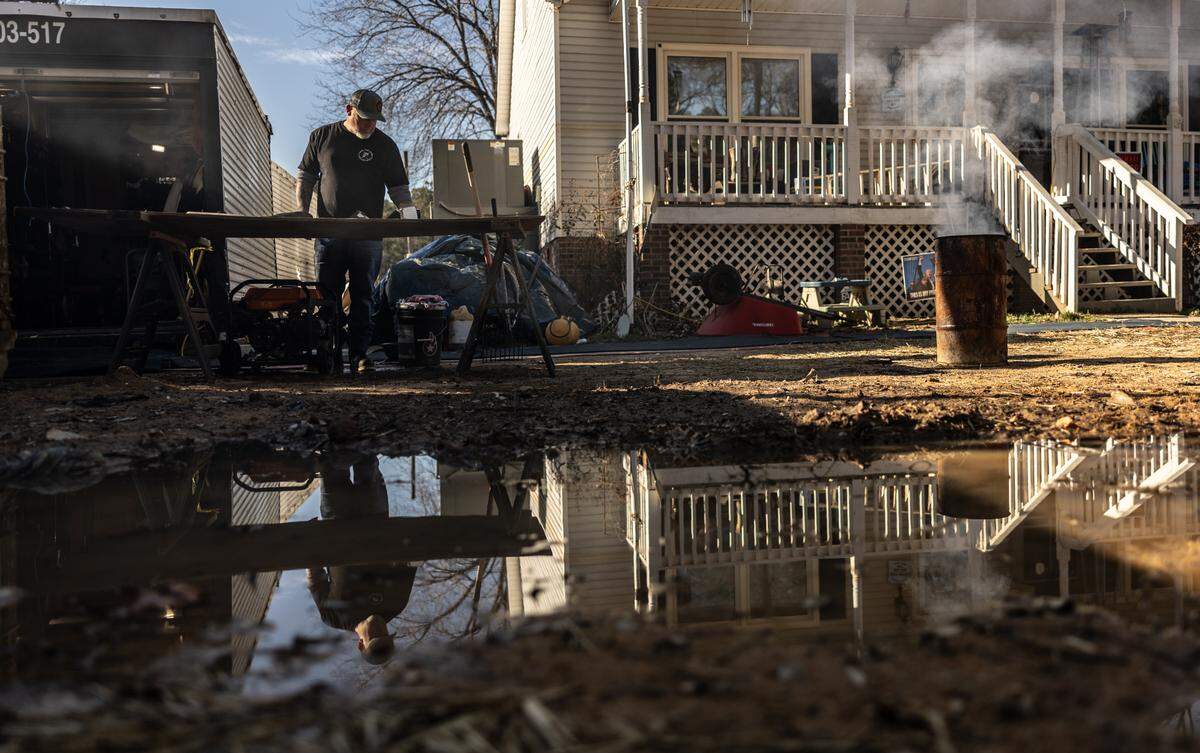
Back in November, Kellie Rose stood on the gutted main floor of her family’s Riverhaven Drive home, explaining how eight weeks earlier it had filled like a swimming pool, how her future as a homeowner was in limbo, and how tenuous their financial situation was.
“I actually posted today in one of the mom groups on Facebook about what was going on,” says the 36-year-old mom, “and the amount of people that were like, ‘We had no idea, or we would have been sending resources or helping! We’ve been sending everything to Western North Carolina!’ Which I get. It’s really bad up there. I do. I get it. But it’s hard. Like when they had that big benefit concert here. ... It’s hard to see stuff like that happen when you’re in the city that the concert is being put on, and you’re not receiving any of the help from that.
“I get that they need help, but so do we, you know?”
Adds Riverside resident Anna Davis, describing people’s reaction to hearing about her plight: “I told my husband, jokingly, that I’m just gonna be like, ‘Actually, we’re from Asheville.’ I know that sounds terrible, but it’s easier to (just say) that.”
Without being able to put a specific number on just the homes directly below the dam, county officials estimated the storm caused $26 million worth of damage to the broader area (encompassing homes from above Mountain Island Lake dam to Upper Lake Wylie). Even that was a blip to the outside looking in, considering the total amount of direct damage statewide was pegged at more than $44 billion, and Mecklenburg County ultimately being included in the federal disaster declaration.
It was one heck of a blip looking at it from the inside, though — and had virtually everyone in the neighborhood contemplating the same question: Should we stay, or should we go?
‘A lot of people know houses are abandoned’
To say the neighborhoods directly below Mountain Island are still in limbo, all these months later, would be a colossal understatement.
The main reason for the mass uncertainty is that there are dozens of families stuck in the rather glacial process of jumping through the hoops required to be included in one of two government buyout programs.
Neither the county nor the state program being administered on behalf of FEMA has made any offers yet, much less closed on any sales.
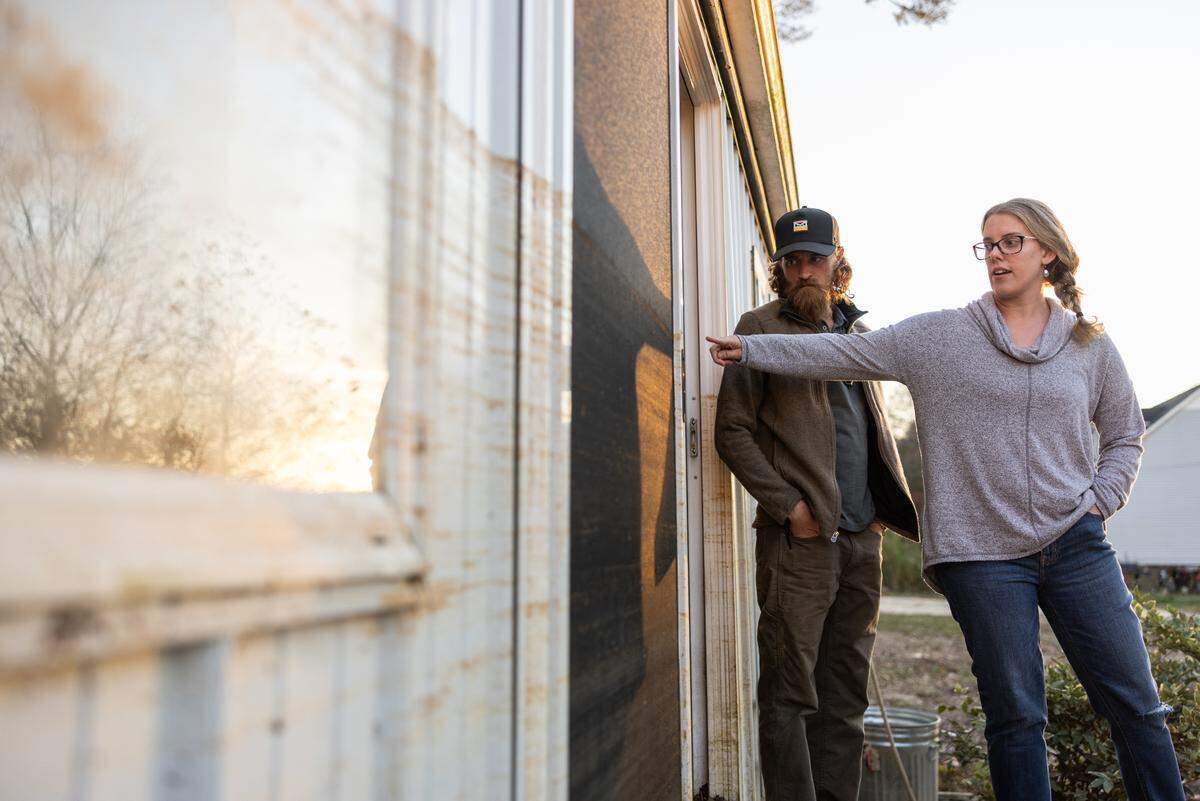
In the meantime, that’s potentially dozens of families with living situations that are on pause, that are too tenuous for them to risk investing any money in cleanup or upkeep or repairs or renovations. So, for the time being, that means dozens of rundown, abandoned eyesores scattered along the streets, but also lots fewer people in general.
For those who have remained in the neighborhood during this long period of purgatory, it’s been cause for concern.
Repeated instances of looting were reported in the days and weeks that followed the storm. As recently as mid-January, however, Riverside Drive resident Rebecca Fennel said the neighborhood was still “having major issues with crime,” in part because of the lack of streetlights, in part because “a lot of people know houses are abandoned. Cars are being stolen, home items. It’s really scary.”
Another major worry for those who’ve been able to live in their homes is all the trash.
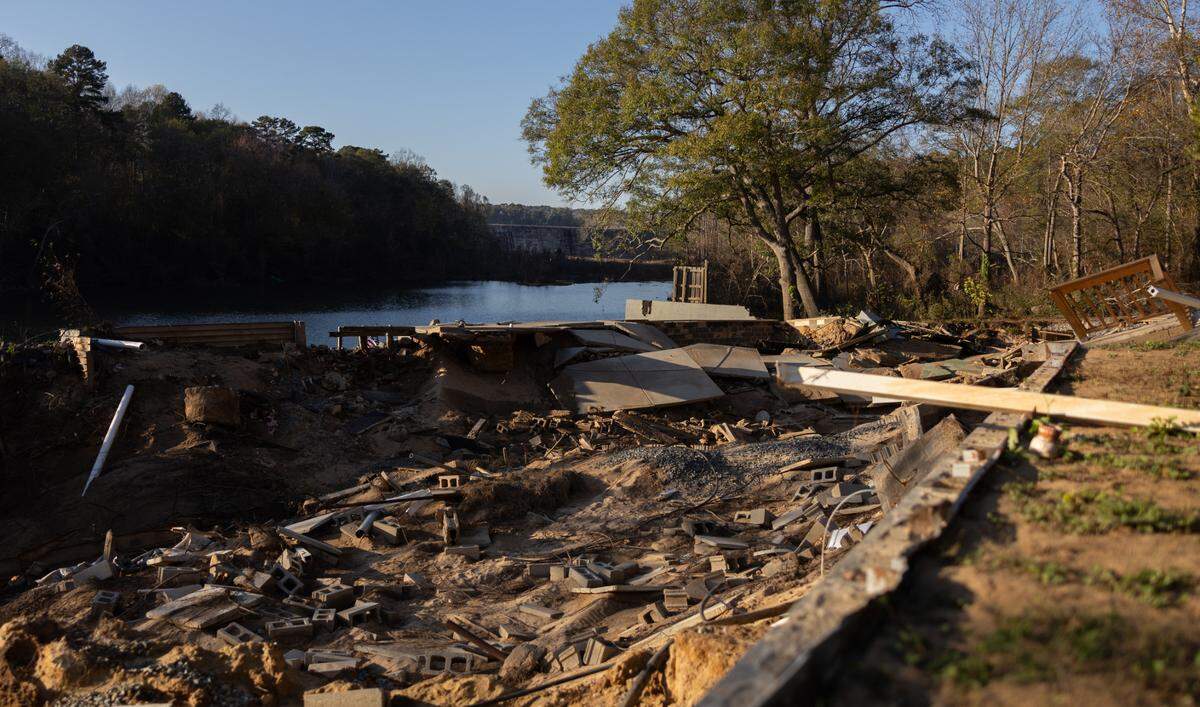
There’s a surprising amount of debris still visible along the road, in yards, under decks, against fences and up in trees, but also a river full of massive amounts of unseen junk, some of which residents fear could pose serious hazards — say, to a falling water-skier.
And while Catawba Riverkeeper Brandon Jones says the foundation he helps lead has marshaled thousands of volunteers who last year pulled about 140,000 pounds of garbage out of the Catawba-Wateree River Basin, he admits there are major challenges in areas that were hardest-hit, like these.
“There’s houses, there’s campers ... I mean, anything that was on the side of the bank is now in the river,” he says. “So it’s not an easy process to remove.”
Then there’s the thing that troubles the people who are staying the most: the shrinking of the neighborhood.
Jonathan Beller of county Storm Water Services told The Charlotte Observer approximately 40 residents have expressed interest in the buyout program he oversees; meanwhile, a spokesperson for the North Carolina Department of Public Safety reported receiving 61 applications for the program it is administering on behalf of FEMA.
All of the damaged homes purchased through these programs eventually will be razed, with the property becoming county land that will be turned into some form of natural floodplain.
After the 2019 flood, 12 houses disappeared via the county’s buyout program. It could be several times that this go-’round.
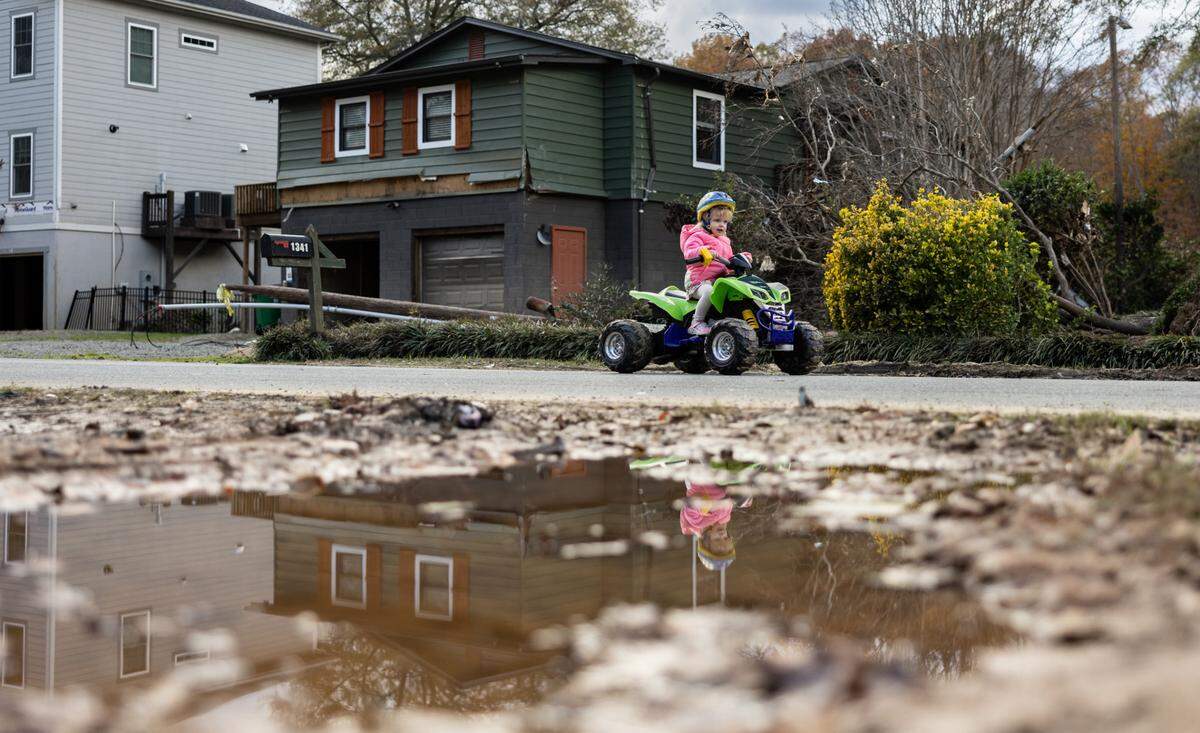
Erik Jendresen, who plans to stay put with his wife in their Lake Drive home, says neighbors who had enthusiastically rallied behind recovery efforts five years earlier just “hit a wall” after Helene. “It was genuinely tragic, the vibe down here, in the weeks that followed, eventually. People were just done.
“The sense I have,” he says, “is the vast majority of people are gonna probably leave.”
Yet for some, leaving the neighborhood has proven to be just as hard as it would have been to try to stay.
‘It’s like dealing with a death, really’
On a cold day in early January, Macie Lambert stands behind her and her husband Caleb’s Lake Drive home on a riverbank 15 feet from a large canopied dock — one that’s unreachable, because the flood washed away the earth leading to it.
She starts playing a video on her phone. “This is when we walked in. After it subsided,” she says of their initial post-flood return visit to their home, on Sunday the 29th.
She notes that she and Caleb actually had to break in because a dresser was blocking the front door from the inside, having been swept down the hall from a bedroom. She notes their 1-year-old daughter Kinley Ray’s toys floating in the brown water. Then she notes that she misspoke just a second ago.
“I shouldn’t say ‘walked in.’ We definitely had to kayak in. But it was pitiful. Everything we owned was flipped over.”
The 30-year-old middle-school special-education teacher went away for college but was born here, raised here, and returned here to live in the house she inherited in 2017 from her papaw. He built it in 1968. In the more than half-century that followed, his family grew to become arguably the neighborhoods’ most famous residents, as members bought up adjacent properties and established a family compound that bore his surname, Kinley.
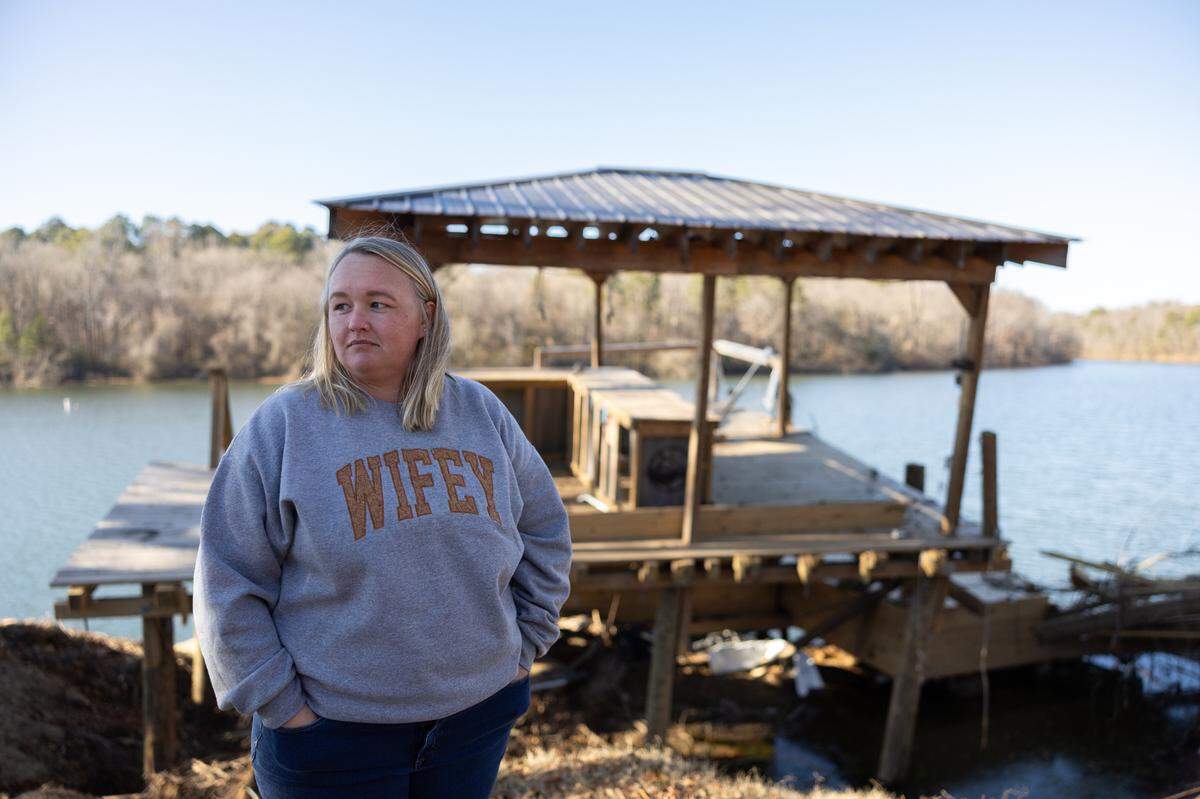
Lambert figured she’d grow old with Caleb here, that Kinley Ray would one day inherit the house, that the place they called “Kinleyville” — which when the storm hit in September comprised two mobile homes and four houses, including hers — might last forever.
She had regarded the 2019 flood as an anomaly. When water got into the crawlspace and the floor joist underneath her house back then, it didn’t make her consider leaving, she says, “because everybody’s like, ‘That was the hundred-year flood. It’ll never happen again. Y’all are safe.’” She repaired and reset.
But she doesn’t feel safe here anymore.
“It’s crazy, ’cause as long as my grandpa lived and my dad’s lived here, it never happened. That’s almost 60 years. Never happened, never happened. Now it’s twice in five years. ... No, we are selling out. All of us. Sad as it is. All the generations that were here,” Lambert says. “We just — we can’t do it.” Even so, she cries as she talks about leaving.
Missy Hubbard, the one with the sinkhole in front of her garage, cries too at the end of a personal era. “It’s like dealing with a death, really,” she says as she fights back tears.
She moved in with her late husband in 1981, got flooded out in 2004, put the house up on 14-foot supports after that. It proved a smart move: In 2019, she got 12-1/2 feet of water in her garage from the flood, giving her 18 inches to spare. So, she says, “I thought I was good to go.” But she was not. In addition to putting that sinkhole into her property, Helene put three full feet of water up into her house.
So now she’s done, Hubbard says, because “I just don’t trust building back would be any better. I’d have to go up probably a couple more feet. I’m gonna be 70 this year, and the thought of having to walk more steps to get up into my house is not very pleasing.”
Her neighbor, Anna Davis — who is also her daughter — also has moved on, already having bought a new home 18 miles away.
Has moved on physically, at least. Not yet emotionally.
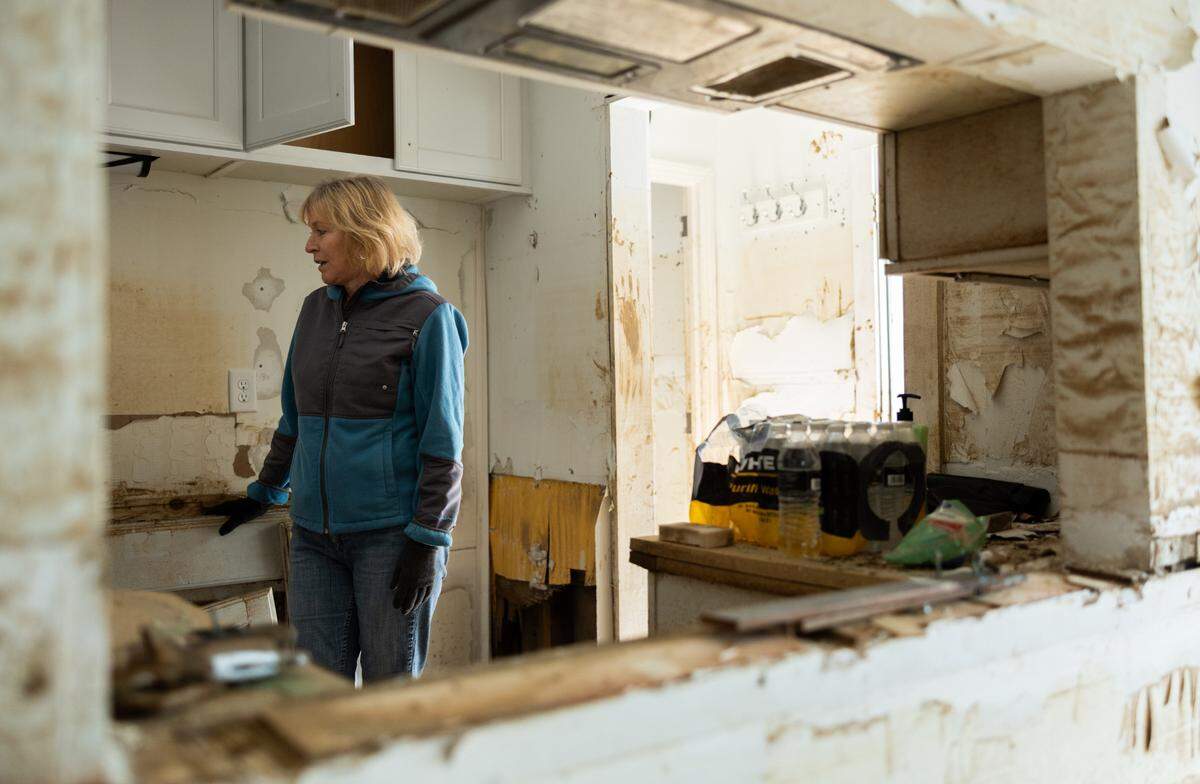
“The people,” Davis says when asked what she missed the most about the neighborhood, while standing in her old home’s mud-caked kitchen during a brief return visit earlier last month. “Everything else is just stuff, ’cause you can plop your family into a new house, and it’s fine. But the people I’ll miss the most.”
She suddenly apologizes, as she turns away and drops her chin. For the next several seconds the only sounds are her soft sobs and that of the wind blowing through the wide-open front door.
This story was originally published February 26, 2025 at 5:00 AM.