‘More than a house’: Mecklenburg County unveils plan for redesigned Latta Place site
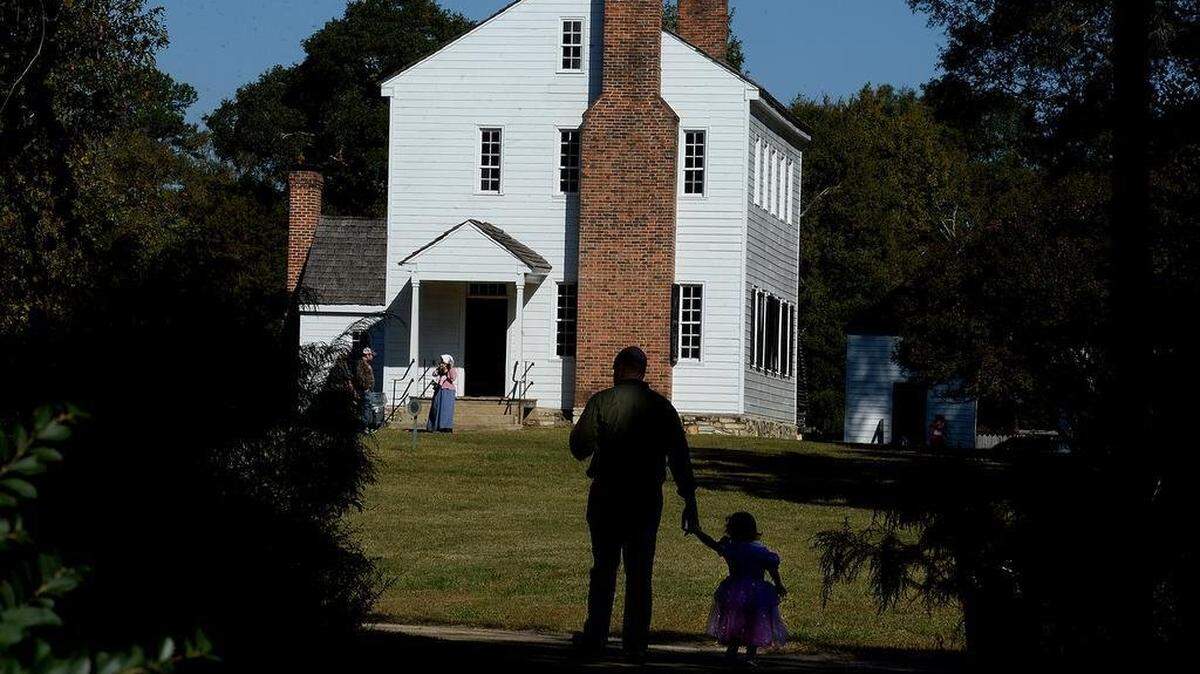
Mecklenburg County unveiled Thursday the new design for the former Huntersville slave plantation closed by controversy four years ago.
The $11.2 million redesign of Latta Place will include a new visitors center, a tribute to the enslaved people who were held on the land and an “interpretive trail” providing historical context as visitors explore the site.
The county closed the site, formerly known as Latta Plantation, to the public in 2021 after uproar over organizers promoting a racist Juneteenth event. The land, part of the Latta Nature Preserve, is county owned but was previously managed by a nonprofit.
Mecklenburg County cut ties with the nonprofit soon after the Juneteenth incident and launched a years-long process to redesign the site and its educational programming.
On Thursday, county officials unveiled their design and a timetable for when Latta Place will reopen to the public at a community meeting at the North County Regional Library in Huntersville.
“It is our hope that Latta Place will be a destination featuring holistic storytelling, highlighting the varying perspectives of all who lived on the site, bridging the past and the present, providing space for reflection and being welcoming to all,” Deputy County Manager Leslie Johnson told attendees.
Why was Latta Place closed?
Latta Place was first built by James Latta in 1800 as part of a 742-acre plantation, where he once owned 34 slaves. The 6-acre historic site previously operated as a “living history museum and farm” under the direction of the Historic Latta Place Inc. nonprofit.
But many in the community and multiple elected officials slammed the group in 2021 for an event timed to the Juneteenth holiday, which commemorates the emancipation of slaves in the United States. Promotional materials for the event, called “Kingdom Coming,” promised to tell the story of “white refugees” and defeated Confederate soldiers and referred to a slave owner as an “overseer” and “massa.”
Soon after, Mecklenburg County closed the site to the public and announced it wouldn’t renew its contract with the nonprofit. In February 2022, the county formally removed “plantation” from the site’s name, adopting “Latta Place” as it underwent a comprehensive review.
“The change in management has opened the door for reinvention of the site — not by denying its painful past — but by allowing for a space to share its history from a sensitive, unbiased frame of reference for those seeking knowledge and understanding,” County Manager Dena Diorio wrote in an opinion column for the Observer in 2022.
County officials said in 2023 they would reopen Latta Place as an educational site after working with experts and gathering community input.
Latta Place redesign plan
A steering committee made up of county staff, historians, scholars, community leaders and descendants helped guide the county’s efforts and traveled to other former slave plantations as part of their work.
Committee member Kendall Kendrick, executive director of the Charlotte Trail of History, is a descendant of the Sample family that also previously owned the Latta property. She said she “felt a deep sense of responsibility as the descendant of enslavers to participate in healing and to help tell untold stories.”
“It’s been overwhelming with the weight of the history and the pain that continues to trickle through generations, but I’ve also witnessed moments of profound connection, courage and empathy that have given me a lot of hope,” she said at Thursday’s meeting.
Community feedback and the steering committee’s guidance were key drivers of the new design, principal landscape architect Gina Ford said.
The plan unveiled Thursday hits on key points from that feedback, including shifting focus away from the Latta House, and incorporating an interpretive trail and a tribute to the slaves held on the site, she noted.
“We think it’s an opportunity to really cater to a broad and diverse group of different groups of people,” Ford said of the plan.
Visitors will begin their journey at a new 6,000-square-foot visitors center that will include gallery space, a community meeting room and outdoor gathering areas.
They’ll then embark on an interactive trail that will loop through Latta Place and the surrounding nature preserve. The goal, Ford said, is to highlight the experiences of all types of people who lived on the Latta land — including Native Americans, slaves and landowners — and the ways in which they interacted with the natural ecosystem.
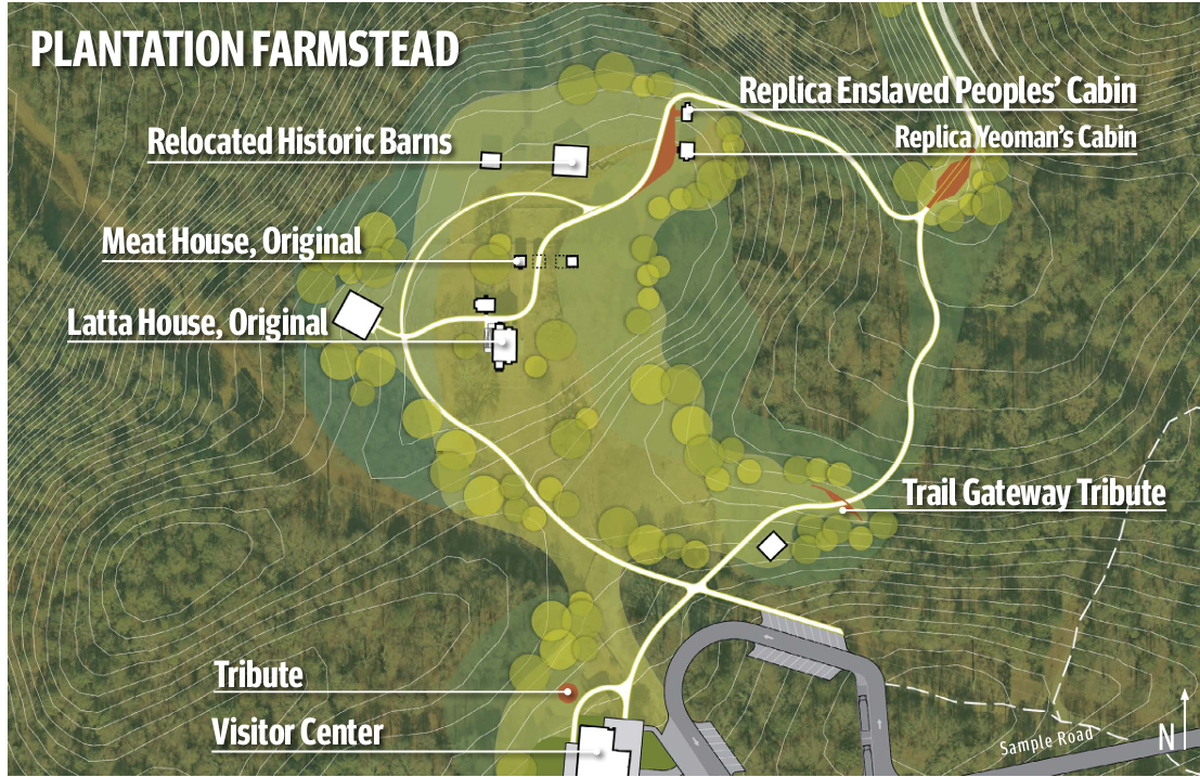
Stops along the trail will highlight the surrounding forest, the bordering Mountain Island Lake, the cotton plantation fields and the plantation farmstead and include signs providing information and historical context.
The farmstead will still include Latta House, an historic landmark, and an original meat house. But some replica buildings will be removed.
“We really want to tell the story about family, about community, about survival,” Ford said. “A lot of times we think about enslaved populations purely through the lens of trauma, the terror. We also need to think about what kept them going, what made them resilient. And a lot of times that was a sense of home and a sense of family and sense of community.”
Work on the main Latta House will be minimal, said Bert Lynn, Capital Planning Division Director for Mecklenburg County Park and Recreation.
“We decided we don’t want this to be kind of a museum-style experience,” he said.
The loop will end with a tribute to the slaves who lived, worked and died at Latta. The final design of the tribute is to be determined, and the county hopes to collaborate with a public artist on the project, Ford said. But the hope is to potentially include the names of every enslaved person known to have lived on the Latta site.
“We very much believe this should be a small, intimate, quiet space of reflection,” Ford said.
When will Latta Place reopen?
Mecklenburg County hopes to start construction on the revamped Latta Place in late 2025, Lynn said, and expects work to take about a year.
The county anticipates reopening Latta Place in 2026.
Moving forward, the site will be managed and operated by county parks staff, Lynn said, who are working to develop programming for visitors and school groups.
“What we’re going to do is expand the perspectives that we share in the programming,” he said.
This story was originally published March 20, 2025 at 8:39 PM.