Army Corps pulls tons of Helene debris from Catawba River waters near Charlotte
Within 15 minutes last week, three converted dump trucks packed with tangled messes of mud-caked tree parts rumbled down Mount Holly’s North Main Street, a windy, two-lane road near the Catawba River.
Hours before, the jagged limbs, trunks and root balls were wedged somewhere along the coffee-colored river or one of its Gaston County tributaries, where Helene’s historic flooding left them six months ago.
The U.S. Army Corps of Engineers is removing everything from fallen pines to tractor-trailer beds from waterways, parks and private property in 40 North Carolina counties. The $1.6 billion project is one of the biggest in the agency’s history.
Since mid-March, crews have worked seven days a week cleaning up trees and tree limbs from the Catawba River and its creeks. Mount Holly, situated just across the river from Charlotte, is the Corps’ southern most worksite on the Catawba.
Helene left some 75,000 cubic yards of debris in the creeks and Catawba River and another 51,000 cubic yards in parks and on school properties, the Army Corps estimates. That’s enough material to fill about 38 Olympic-size swimming pools.
Submerged or floating debris is dangerous to boats navigating local waters, said Ernie Henry, an Army Corps spokesman. It’s also a threat to businesses, tourism and the safety of those who spend time on the river, he said.
So it must go.
Mount Holly cleanup
When Helene dumped more than two feet of rain on parts of western North Carolina on Sept. 27, it sent torrents of water gushing down rivers.
With all that water went trees, houses, semi-trucks and things much smaller.
For nearly a month, Corps contractors stationed in Mount Holly have hoisted more than 13,000 cubic yards of debris — nearly all of it trees and other plant debris — out of the river and Dutchman’s Creek.
Their primary tool is a 40-foot-long barge with a 28-foot-long claw at the front that can yank up to 5,000 pounds of debris off banks or out of the water with a single grab.
For shallower areas along Dutchman’s Creek, workers with the national disaster recovery company AshBritt are using a log-harvesting truck with gigantic tires that can drive into the creek, said Dow Knight, a company senior vice president.
Five grapple trucks – dump trucks with a similar claw at the rear – haul debris away to get mulched, buried in landfills or sold, as happened to some large oak trees, Henry said.
Mount Holly officials have directed AshBritt’s 25-person crew to debris locations, Knight said. But the company did aerial and drone surveys to spot hotspots, as well.
“You truly don’t know how much debris is out there until you pick up the last truck-load of debris,” Knight said.
During the flood, Casey Bragg saw a picnic table and above-ground pool wash by her home on Dutchman’s Creek. A beach chair was still stuck high up in a river birch tree within sight of Bragg’s home last week, she said.
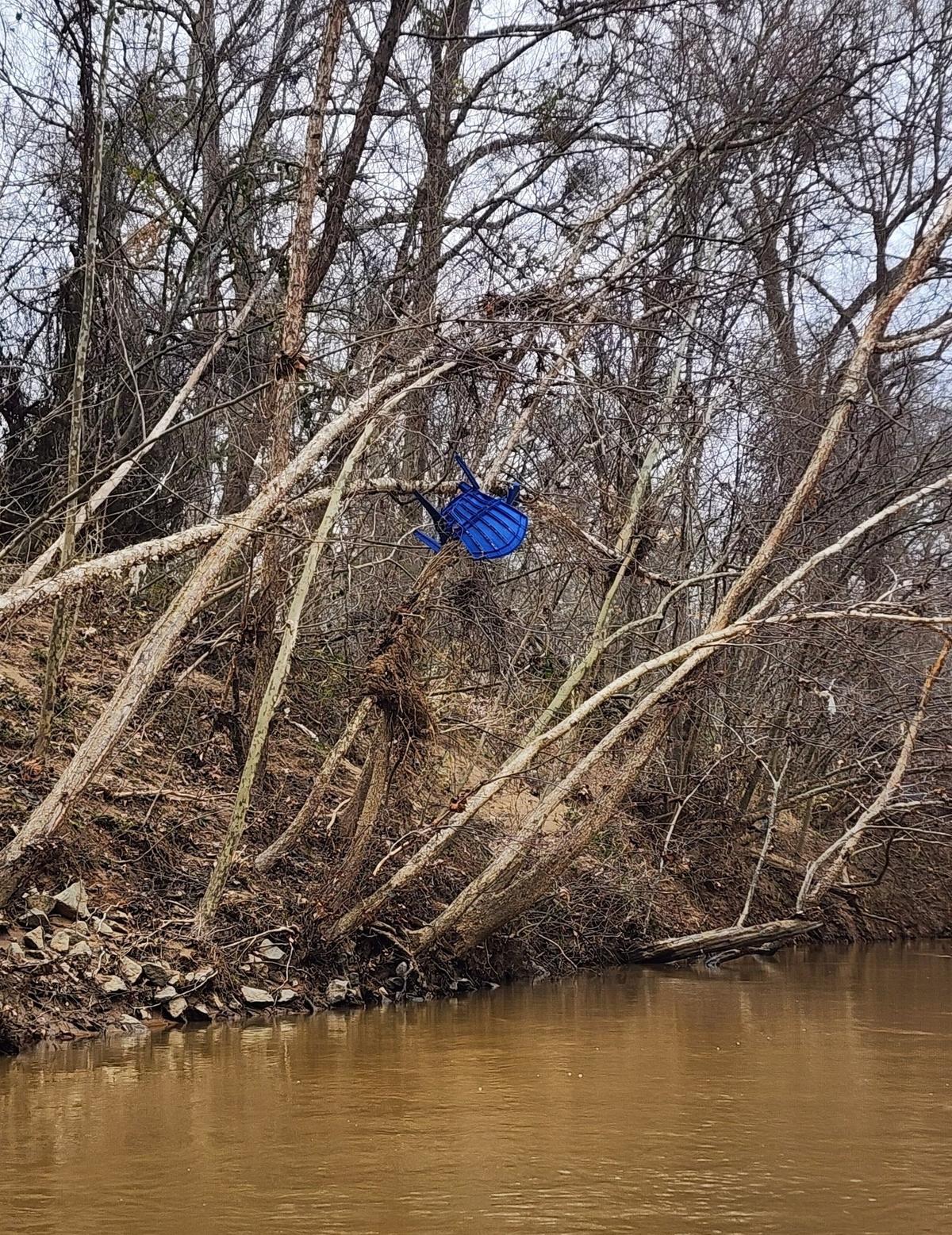
On the banks below a wall of mostly large limbs and trees remained, she said.
“On a scale of one to 10, if Asheville is a 10, we’re not Asheville,” said Bragg, who runs “Get the Muck Out,” an annual Dutchman’s Creek cleanup. “But it’s a six to eight. This was extremely devastating.”
Since Helene battered North Carolina, Catawba Riverkeeper Brandon Jones has flown over or paddled on most of the river and its main tributaries, from its headwaters in McDowell County to Congaree National Park near Columbia, S.C.
“Compared to the damage in the upper Catawba or the top part of Wylie, the damage was not as severe,” Jones said, referring to the Lake Wylie reservoir. “But there were a lot of pushed-over trees and potential damage to infrastructure.”
A statewide effort
The Army Corps of Engineers works closely with the Federal Emergency Management Agency on natural disaster recovery. Its Helene debris-removal project is scheduled to wrap in June but it could take all of 2025, Henry said.
They are clearing environmental hazards, such as gasoline and propane tanks, from North Carolina waters, as well as restoring their natural flow and improving their navigability and safety, Henry said.
Corps contractors have already removed more than 4 million cubic yards of Helene debris from waterways and public property, including schools and parks, the agency says. That’s enough material to fill the Empire State Building more than four times.
Buncombe County, along with Asheville, have the most debris — more than half of all material in the state and about 23 times more than Gaston County, an Army Corps report about the cleanup shows.
Doug Miller is co-owner of Aquatic Adventures, a kayak outfitter that gives tours along Dutchman’s Creek and the Catawba. He launches tours from the Mount Holly Boat Landing, which AshBritt has been using to transfer debris from the barge to trucks.
Following Helene, Miller saw trees, sheds and docks float down the river. But it’s what’s unseen that can cause the biggest problems, Miller said.
“You don’t know what’s below the surface,” Miller said. “You have boaters and fishermen and kayakers out there. You want to make it safe for them as the river comes alive in the spring and summer.”
This story was originally published April 10, 2025 at 5:30 AM.