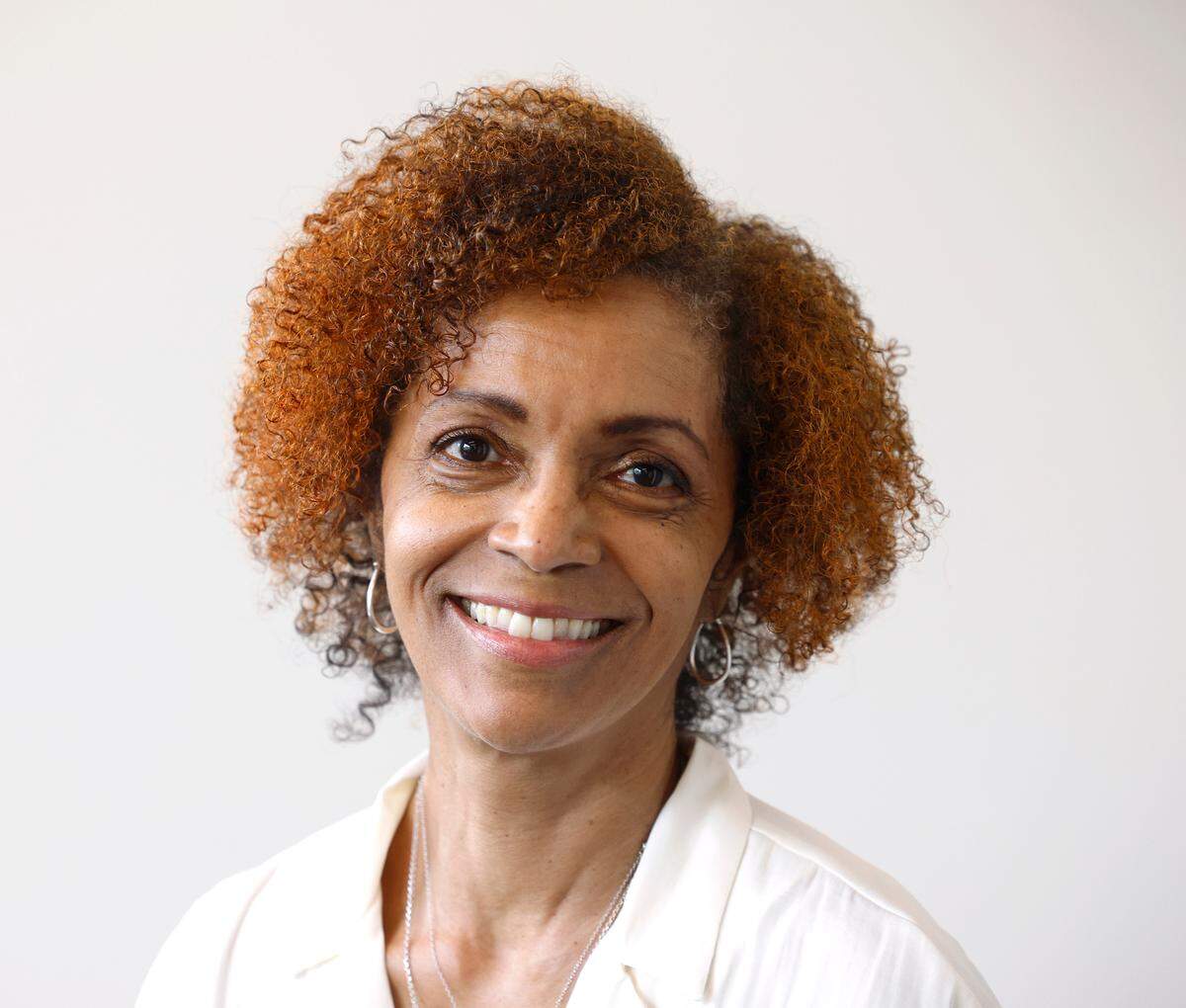
Charlotte-based PR firm leader among the NC Media & Journalism Hall of Fame 2025 class

When LaToya Evans heard she was headed to North Carolina’s Media and Journalism Hall of Fame, the first emotions bubbling up were tears.
Every industry has some version of this accolade, but for Evans, after more than a decade as a journalist, fashion writer and public relations executive, receiving this honor is a dream she had thought about for a long time.
“My work is also greatly about purpose,” Evans, 38, wrote in an email to the Charlotte Observer. “Being in this field is part of my purpose on earth, and I also fulfill my destiny and do God’s work by making sure I go to work every day.”
The honor, sponsored by the University of North Carolina Hussman School of Journalism and Media, recognizes individuals with “deep ties” to North Carolina who have made outstanding and career-long contributions to the fields of advertising, journalism, media or public relations.
Evans, a Hussman School alumna, is among six being inducted into the 2025 class. The honorees include McClatchy Media’s Chief News Officer Robyn Tomlin, who will be inducted April 11, at the Carolina Inn in Chapel Hill.
Evans, the principal and chief communications officer at Charlotte-based The LEPR Agency, has represented some high-profile election campaigns and cases throughout her career: the families of George Floyd and attorney Ben Crump; the late Cheslie Kryst and now her family; and many local families and causes in Charlotte, to name a few.
She works with a core staff of about six people who are located between Charlotte, Atlanta and the Northeast.
She and I traded emails ahead of the ceremonies, where she shared her media and journalism journey, what leadership means to her, some of her greatest life lessons and who inspires her.
Responses have been edited for clarity.
Q: What was your immediate reaction to learning of being inducted into the Hall of Fame? What were you doing?
Honestly, I was in literal tears. It was something I aspired to for a long time, especially having attended UNC and hearing about the Hall of Fame for as long as I could remember.
It was also a very funny way that I found out. The day after the presidential election, I got a call that the Dean of the Media and Journalism School wanted to speak to me. I was upset because I said to myself: “Who is doing a fundraising call at a time like this?!” I gave his assistant my thoughts on that, and then she scheduled another time for us to chat in a couple of weeks as we were finishing up election-focused work. It wasn’t about fundraising, but it was this amazing surprise!
Q: What does leadership mean to you?
Leadership is about accountability and admitting when you’re wrong just as much as it is about celebrating your wins and having the confidence to be decisive. Being a leader requires humility, and you will always eat last.
My work is also greatly about purpose. Being in this field is part of my purpose on earth, and I also fulfill my destiny and do God’s work by making sure I go to work every day.
Q: What drew you to your field?
I went to UNC as a biology major and got into journalism after meeting Andre Leon Talley, who was Vogue’s editor-at-large at the time. He was also a native of North Carolina, and I was impressed by how far he’d gotten professionally being from Durham and attending Hillside High, as I also went to a historically Black high school in NC. (Fun fact: I currently represent his church. Andre and I always also stayed in touch over the years and he was instrumental to me getting to Vogue).
While I had already considered journalism as a potential major, my parents weren’t exactly on board. I changed my major anyway after meeting Andre and started doing summer internships in New York, at Cosmopolitan, CosmoGIRL, Real Simple, Vanity Fair and Vogue while I was in undergrad.
After the first summer at Cosmopolitan, I began what was actually my first business as a freelance writer. I started working at Glamour, People, Woman’s World and others while I was still in school. I was pitching editors and getting contracts, writing feature articles while still a traditional college student. And I was still super active on campus, too. I also founded multiple organizations, including an official j-school club that was called the Carolina Association of Future Magazine Editors, where I taught other students how to get internships. (It existed for 10+ years after I graduated UNC).
As I approached graduation in 2008, I also was intrigued by public relations, as I learned more about it from my media ethics class. It was actually a woman who worked in PR at Wells Fargo in Charlotte at the time who really made it sound exciting. I got to work on my first PR campaign about six months later — a partnership with MARS chocolate and IBM — and I saw my name in print as a spokesperson for the first time and my first PR placement — the rest was history. I didn’t think I could ever beat the euphoria of seeing my name in a byline, but I did.
Q: How did you start your LEPR agency?
I started LEPR after spending many years in corporate communications, starting at IBM in New York and later Philips (the electronics and medical device company), before relocating to Arkansas to work for Walmart corporate.
I then relocated (after my son was stillborn in 2013), back to North Carolina to be closer to family — this time to Charlotte — to work at Bank of America. I eventually became a part of the corporate reputation team and was a crisis spokesperson for most of the mid-Atlantic and Southeast (including New York, New Jersey, Washington, DC as a bank spokesperson).
While relocating, I worked on my first political campaign for now-N.C. Sen. Val Applewhite, District 19, when she ran for mayor of my hometown of Fayetteville. It set the groundwork for how LEPR would start. Applewhite ended up losing the race by about 200 votes, and it was a tough loss, but I never forgot the lessons I learned during that race.
Q: What is your greatest lesson and your greatest contribution to date?
I get to literally see history every day.
I was on the PR team that launched IBM’s Watson computer, worked on some historic changes in retail and pharmacy at Walmart corporate as the Fortune 1 company, and also being a crisis spokesperson for banks after they started to rebound from the financial crisis. Then, in my own company, being a part of so many social justice and human rights movements. We’ve represented historic churches. We have the first nonbinary person to win a Tony Award for Best Actor. I also have been a spokesperson for some of the world’s largest companies.
I’ve worked with presidential campaigns like Andrew Yang, Michael Bloomberg and mostly Biden-Harris, and the Democratic National Convention on their national media campaigns. We also represent a lot of local nonprofits, mom-and-pop restaurants, and political leaders, whether they’re mayors or presidents. Most of our clients have been with us for years. Some have been with us since the very beginning, even.
We’ve been able to help corporations do the right thing by people and help grieving families get justice. I always say, give a voice to the voiceless. And a good story always told.
I think the greatest lesson is that people want to be heard and sometimes they want to be seen, too — no matter if they’re trying to correct an untruth, get justice or start a business.
People also greatly downplay this profession. The media influences the opinions of people in virtually everything they do — who they vote for, what they believe, what they buy, where they work, where they live and what they eat. If you’re effective in telling a story over and over again to one of the world’s biggest mediums of influence, that’s not a small thing.
Q: Has your journey toward motherhood influenced your career choices or how your career evolved?
I’m not sure that my journey to motherhood influenced my career as much as it did show me that grief is an important part of the human experience, and a lot of my clients are experiencing grief. Whether it’s George Floyd or Cheslie Kryst, a lot of crises we deal with involve some result that people expected that didn’t come into fruition. Understanding that process — mentally and emotionally — has helped me to understand people.
Q: Was there one person who had the strongest influence on your life?
My father certainly had a strong impact on my outlook of the world and the way I do business. He instilled in me the value of hard work, which is a challenging viewpoint to have in a world that values the quick dollar or quick success. Having that upbringing has kept me on my path without being distracted by the quick wins. It’s kept me focused on the long game and knowing the tortoise always wins.
Q: What is next for LaToya, professionally, personally?
As always, it’s to keep going. The reality is I accept the assignments God gives me, and I just stay focused on my purpose, which is deeply tied to work. I get to do what I love everyday, and even on the most stressful days, it’s fulfilling.
This story was originally published April 9, 2025 at 7:00 AM.