In a city focused on future, Charlotte preservationists want to remember the past
AI-generated summary reviewed by our newsroom.
- Preservationists protect Brooklyn landmarks and house Black-owned businesses.
- City growth drives demolition; advocates seek preservation agreements for permanence.
- Historians stress storytelling and cultural institutions to sustain civic memory.
On South Brevard Street in uptown Charlotte, two aging brick structures stand out against the modern glass skyline that surrounds them.
One is the Mecklenburg Investment Company building. The other is Grace AME Zion Church. Together, they are among the last physical remnants of Brooklyn, once Charlotte’s largest Black neighborhood.
For Monique Stubbs, who leads the Brooklyn Collective, these buildings are more than artifacts. They are proof that a thriving community once stood here — a “city within a city” complete with shops, banks, theaters, barbershops and beauty salons before it was razed during urban renewal.
“I’m a firm believer that when we stop telling stories, sharing stories, these go away,” Stubbs said. “It is important to us that the stories surrounding those buildings are continuously shared… and that the activities held within honor the heritage for which they stand.”
Growth is Charlotte’s brand — and its blind spot, historians say. As the city keeps remaking itself, the same question persists for preservationists: Which places and stories endure?
Charlotte: A city focused on tomorrow
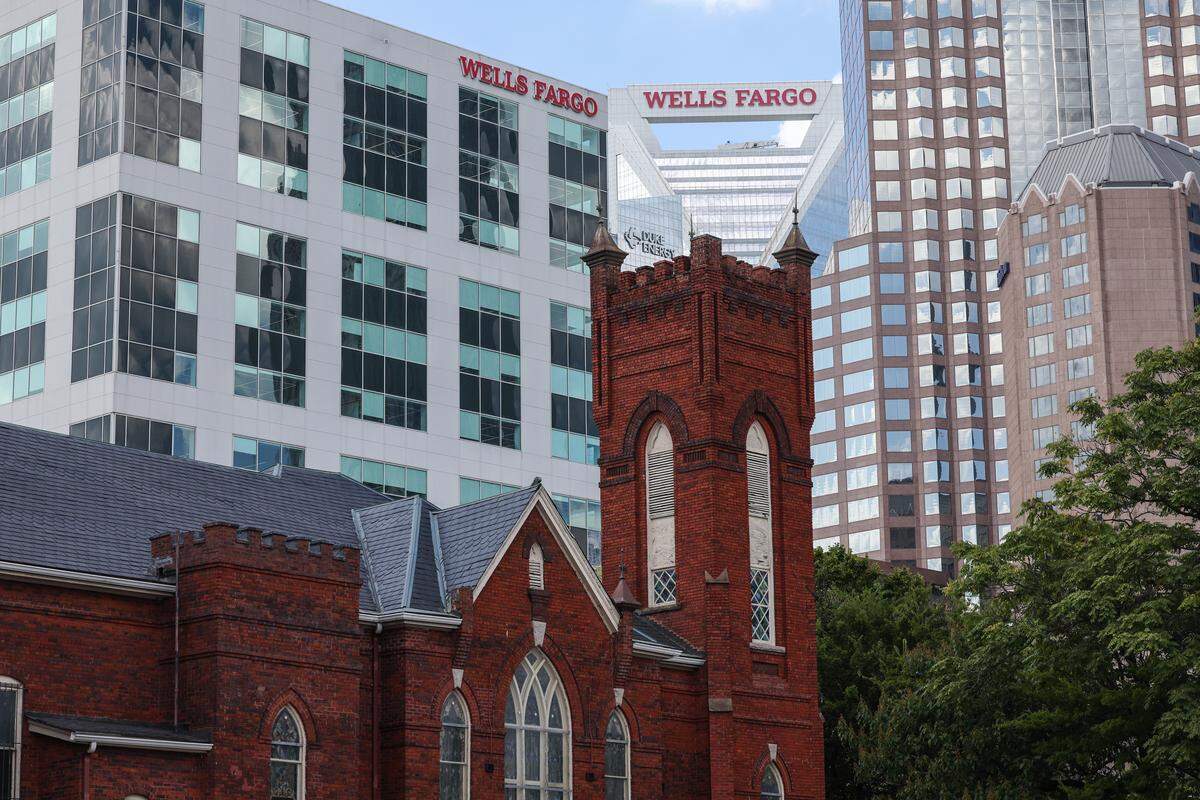
“Charlotte is a city that identifies itself with tomorrow, not yesterday,” said historian Dan Morrill, who spent four decades leading the Charlotte-Mecklenburg Historic Landmarks Commission. “Charlotte gets its primary sense of meaning from what it aspires to be, not what it has been.”
That outlook helped fuel Charlotte’s explosive growth, but it has also left preservationists fighting uphill battles to protect the city’s memory.
During his tenure, Morrill helped build what he calls the largest public-agency preservation revolving fund in the United States at the time of his retirement. The fund buys at-risk properties and resells them with preservation covenants. He said local landmark designation can only delay demolition up to 365 days and the only way to assure preservation in perpetuity is a preservation agreement.
Despite the common belief that Charlotte’s history has all been torn down, Morrill said the city hasn’t erased everything. Preservation wins from Fourth Ward to Plaza Midwood’s Knowlton–Shaw House, Washington Heights’ Patterson Grocery and Myers Park’s Elizabeth Lawrence Garden show the spirit of remembering is still alive, he said.
Stubbs said preservation is about learning from the past to guide growth, not fighting it.
The Brooklyn Collective carries forward the founders’ intent of supporting Black enterprise: today the group houses small businesses on the second and third floors of the Mecklenburg Investment Company building, she said.
“There are ways that we can take what happened in history and look at what are the good things we can claim from this, and what are the things we don’t want to repeat,” Stubbs said.
For her and for others working to save Charlotte’s past, the question isn’t whether the city will grow, but whether it will remember what it’s been.
When the ordinary disappears in Charlotte
Even as groups try to carry history forward, historian Tom Hanchett worries about the quiet loss of the everyday.
While preservation often zeroes in on marquee sites, he says Charlotte is losing “background buildings.” The city has designated more than 300 landmarks, he noted, but the ordinary storefronts and small houses that give neighborhoods their texture often disappear.
On Elizabeth Avenue, he said “almost all” of the historic homes and mom-and-pop businesses are gone, replaced by Central Piedmont Community College projects and private development.
“The historic fabric that was this grand street once upon a time… is gone,” he said.
For Charles Thomas, the Knight Foundation’s Charlotte program director, the work is as much about cultural memory as it is about buildings — supporting institutions, artists and storytelling that give neighborhoods a sense of place.
In the Historic West End around Johnson C. Smith University, he said the goal is to support growth while maintaining the area’s historical and cultural character and storytelling, with resident-led groups helping guide development.
One example he points to is Archive CLT, a Black-owned coffee shop full of memorabilia such as old Essence magazines, Johnson C. Smith University yearbooks people can buy and a mural highlighting African American leaders.
“When you walk in, it is that third place that we want to create throughout our city that becomes an anchor point and a hub for folks to come together,” Thomas said. “Archive is that… a sense of Black culture and history, where all generations feel they can come and be present.”
But if buildings hold the past, stories carry it forward. Emily Zimmern, former director of the Levine Museum of the New South, argues that a city of newcomers needs more than saved structures; it needs shared stories.
It’s the same goal Stubbs shares on South Brevard and Thomas echoes in the West End.
“We have to share stories,” Zimmern said, “to weave the threads into a strong civic fabric.”
For Morrill, the case for preservation in Charlotte comes down to remembering the past while building the future.
“History is not a function of time. History is a function of human memory,” Morrill said. “The great cities have both a sense of tomorrow and a sense of yesterday.”
This story was originally published October 8, 2025 at 5:00 AM.