‘Obvious,’ life-altering stroke labeled ‘anxiety’ by Charlotte jail nurse, lawsuit alleges
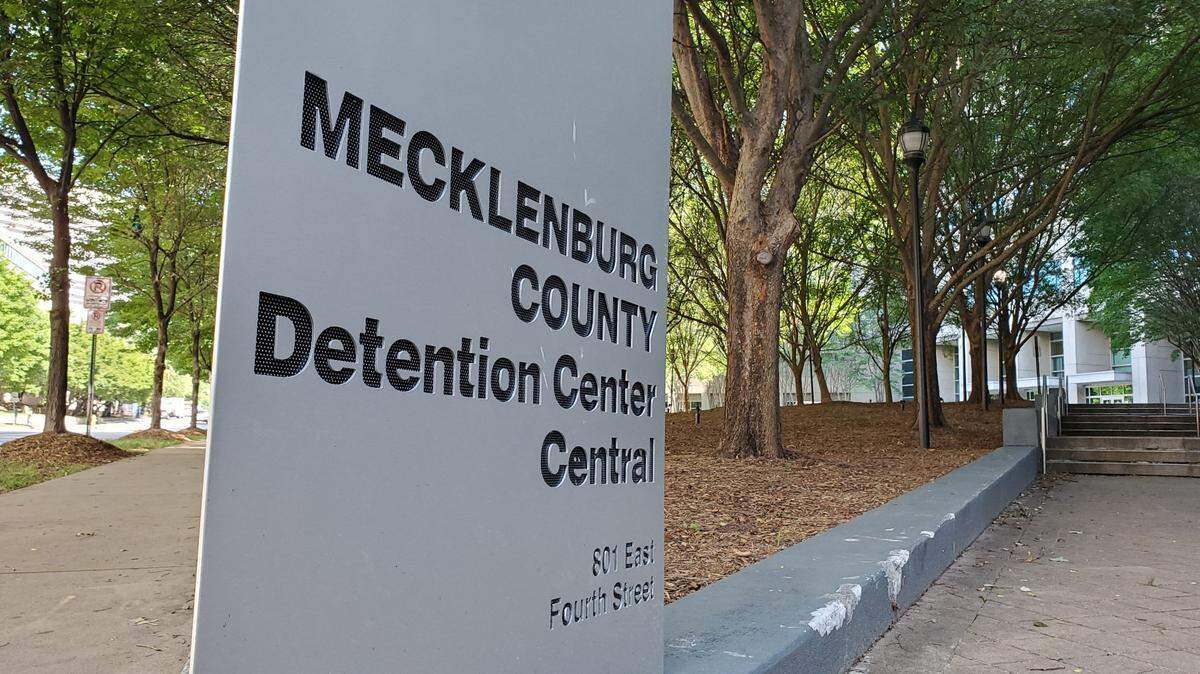
Jamil Stafford lost his ability to speak, fell down flights of stairs and for days shook “as if he was lifeless” inside the Mecklenburg County Jail before he got any help, a lawsuit alleges.
He asked for medical help six times, pleading for treatment as blood slowly stopped flowing to his brain over the course of a month and a half, the recently-filed lawsuit alleges.
The 34-year-old now lives completely differently than before he was arrested, unable to stand normally or use his right hand for daily tasks, and with a speech impediment, the lawsuit says.
Stafford’s mother, Lessie Thomas, is now his caretaker. She filed the lawsuit in U.S. District Court for the Western District of North Carolina.
The allegations detail the then-31-year-old’s slow, public descent into a stroke his mother alleges had ample warning signs but was written off and once labeled as anxiety by Wellpath nurses working inside the jail.
Officer reports provided more information than medical reports in the days leading up to Stafford’s eventual 18-day hospital visit.
Stafford had previously been charged with probation violation, larceny and robbery. He was again arrested on March 27, 2021, on charges of misdemeanor larceny.
He showed stroke symptoms while awaiting court dates inside the jail on July 30, 2021, the lawsuit alleges. At the hospital on Aug. 3, 2021, doctors confirmed he had a stroke and that he had been showing symptoms for days.
Stroke inside Mecklenburg jail
Stafford’s symptoms were so “obvious” by then that guards noticed them and took Stafford to the Wellpath nurses inside the jail.
In 2021, the lawsuit alleges:
- On May 10, Stafford complained of a “serious persisting headache” that made it difficult to eat, sleep and perform other basic tasks. A nurse prescribed him ibuprofen and Zyrtec.
- On May 17, he didn’t feel better. The same nurse gave him ear drops and more intense pain medication — a ketorolac shot and Toradol.
- On May 27, Stafford told a new nurse that the headaches still hadn’t gone away. She told him to drink more water. “Dehydration will cause headaches,” she wrote in medical records included in the lawsuit.
- On June 3, Stafford told another nurse he couldn’t stand or breathe correctly and asked to go to the hospital. “I have kids,” he wrote in a request, “I dont want any to happen to me...” When Stafford didn’t provide a urine sample, the nurse concluded the visit.
- On June 16, he submitted another request for help with “dehabilitating headaches,” according to the lawsuit. A nurse “refused to renew” his medication.
- On July 4, the headaches were getting worse. He, again, was “written off” by the nurse who first saw him on May 10.
Days of stroke symptoms
Three weeks passed, according to the suit, then in 2021:
- On July 27, Stafford rated his pain a 10 on a 1-10 scale. Wellpath employees told him to drink more water and gave him a blanket to prop his head up. That was supposed to help with “tension-type headaches.” They sent him away with nortriptyline — a medicine used to help people quit smoking and to treat depression and chronic pain, according to the National Institutes of Health.
- On July 30, Stafford had stopped making his own requests and started falling down stairs. An officer saw him “shake as if he was lifeless.” Later that day, a nurse said Stafford “may be having anxiety,” according to reports, and another said he was “nonverbal by choice.” They referred him to mental health services.
- On July 31, other inmates caught Stafford as he again started to fall down stairs. A new nurse suggested he be moved to the bottom bunk when he “mumbled that he needed help,” reports say.
- On Aug. 1, Stafford fell for the fourth time. Officers took him to see nurses, who immediately sent him to rest for the night without examining him.
- By Aug. 2, officers alerted Wellpath nurses of his worsening state. They gave him more pain medication.
- On Aug. 3, Stafford’s mother saw him on a video call while he was “physically held up by an inmate because he could not talk or walk on his own.” Officers again called mental health services.
Stafford eventually made it to the hospital Aug. 3, 2021, with a unmovable right arm and right side of his face, the lawsuit alleges. By then, he’d missed the time slot for treatments that could have improved his chances of recovery, the lawsuit says.
He stayed hospitalized for 18 days, the lawsuit says. During that time, Mecklenburg County Sheriff Garry McFadden released him.
Ignoring Stafford and “dismissing his overt stroke symptoms as mere anxiety issues ... defies every concept of constitutionally adequate healthcare,” Stafford’s mother says in the lawsuit.
Wellpath’s long list of problems
Stafford’s case mirrors that of a Rowan County inmate who sued Wellpath for ignoring his consistent pleas for medical attention.
Wellpath, formerly known as Correct Care Solutions, worked in Charlotte’s jail since 2008, The Charlotte Observer previously reported. Its most recent contract was set to expire later this year, but was cut short in May.
That news came two months after two people died in custody following reported medical emergencies.
There have been at least eight other deaths at the Charlotte jail with similar circumstances, the Observer reported: Michael Trent in 2019; Michael Mangan in 2020; Karon Golightly and John Devin Haley in 2021; Francine Laney, William Rhinesmith, Russell Fincham and Derrick Geter in 2022.
The sheriff’s office said those deaths weren’t factors in Wellpath terminating its contract with the jail.
More than 1,000 lawsuits have been filed against Wellpath in federal courts. A review of lawsuits filed between 2014 and 2018 showed that it was accused of contributing to more than 70 deaths, CNN reported in 2019.