Sheriff Garry McFadden settles lawsuit claiming he infringed on the right to bear arms
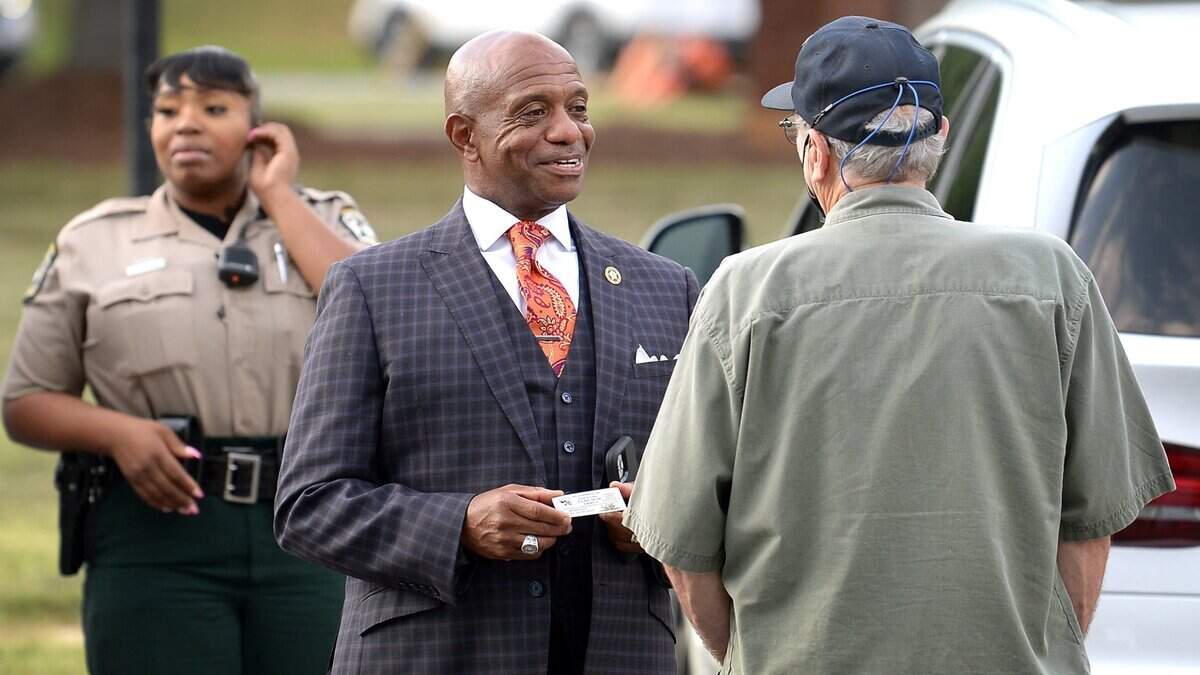
Mecklenburg County Sheriff Garry McFadden has settled a lawsuit that accused him of infringing on Americans’ right to bear arms.
Seven plaintiffs — including Charlotte residents and national gun-rights groups — claimed McFadden’s requests for mental health records made him and his office unconstitutionally slow in processing concealed carry permits.
The requests were “irrelevant,” the 2022 lawsuit claimed, and McFadden took months to more than a year to do “what takes other North Carolina sheriffs days or weeks.”
He was violating the Second Amendment, the plaintiffs said. But state law says “the sheriff may conduct any investigation necessary to determine the qualification or competency of the person applying for the permit, including record checks.”
In a news release Thursday, the sheriff’s office announced McFadden settled the case and will continue to “inquire of each applicant whether the applicant has sought mental health treatment.” If applicants have, MSCO will require them to list their provider.
Once the office reviews “relevant records,” it will have 45 days to issue or deny the permit, according to the release.
McFadden will not pay any damages to the plaintiffs, but his office will pay $5,000 of their attorney’s fees.
Mecklenburg sheriff sued in 2nd Amendment lawsuit
Last year, U.S. District Court Judge Max Cogburn struck down most of the plaintiffs’ original arguments challenging North Carolina’s mental health provisions themselves and said the statutes were consistent with the country’s “historical treatment of firearm regulation.”
The way McFadden was conducting those checks, though, could have been unconstitutional, Cogburn said. He allowed the lawsuit to move into the discovery phase, which prompts opposing parties to give more information.
McFadden’s lawyers responded to the original lawsuit saying he “cannot control how long it may take any given mental health provider to return the requested records.”
As long as McFadden issues or denies the concealed handgun permit within 45 days of receiving records, he remains in compliance with the law, his lawyers argued.
Mecklenburg County residents Sara Beth Williams, Bruce Kane and Jason Yepko were joined by Gun Owners of America, Gun Owners Foundation, Grass Roots North Carolina and Rights Watch International in filing the lawsuit. They first challenged McFadden, his office and state Attorney General Josh Stein, but the lawsuit now only names the sheriff as a defendant.
The local plaintiffs said they waited months or more than a year to get a concealed handgun permit or a renewal, according to court filings.
Williams’ online application portal showed that the sheriff’s office was waiting on mental health records from the U.S. Department of Veterans Affairs, according to the lawsuit.
“I do not and have never had mental health problems ... Nor have I ever served in the military,” she wrote.
And while her father had served in the military, she argued, she had not been a dependent of his for 25 years.
The group in December asked the U.S. District Court for the Western District of North Carolina to order McFadden to speed up the process.
McFadden said his office must confirm applicants don’t lie.
“For example, a recent applicant indicated that he had never served in the military, but VA records showed that not only had the applicant served (and thereby qualified for treatment at the VA), he had also attempted suicide on multiple occasions and threatened physically to harm VA employees at a VA facility,” McFadden’s attorneys wrote.
The plaintiffs’ got their permits and renewals before a judge could consider telling McFadden to hurry up.
Grass Roots North Carolina President Paul Valone said the settlement has made a positive difference for gun owners.
“McFadden has agreed to pay $5,000 towards damages and legal fees, which we regard as insufficient,” he said. “But we are a public policy organization. Our primary goal is to impact public policy. We have had the impact that we require. We have won on every point, and we are therefore quite happy with the settlement.”
Observer reporter Ryan Oehrli contributed to this story.
This story was originally published August 30, 2024 at 5:00 AM.