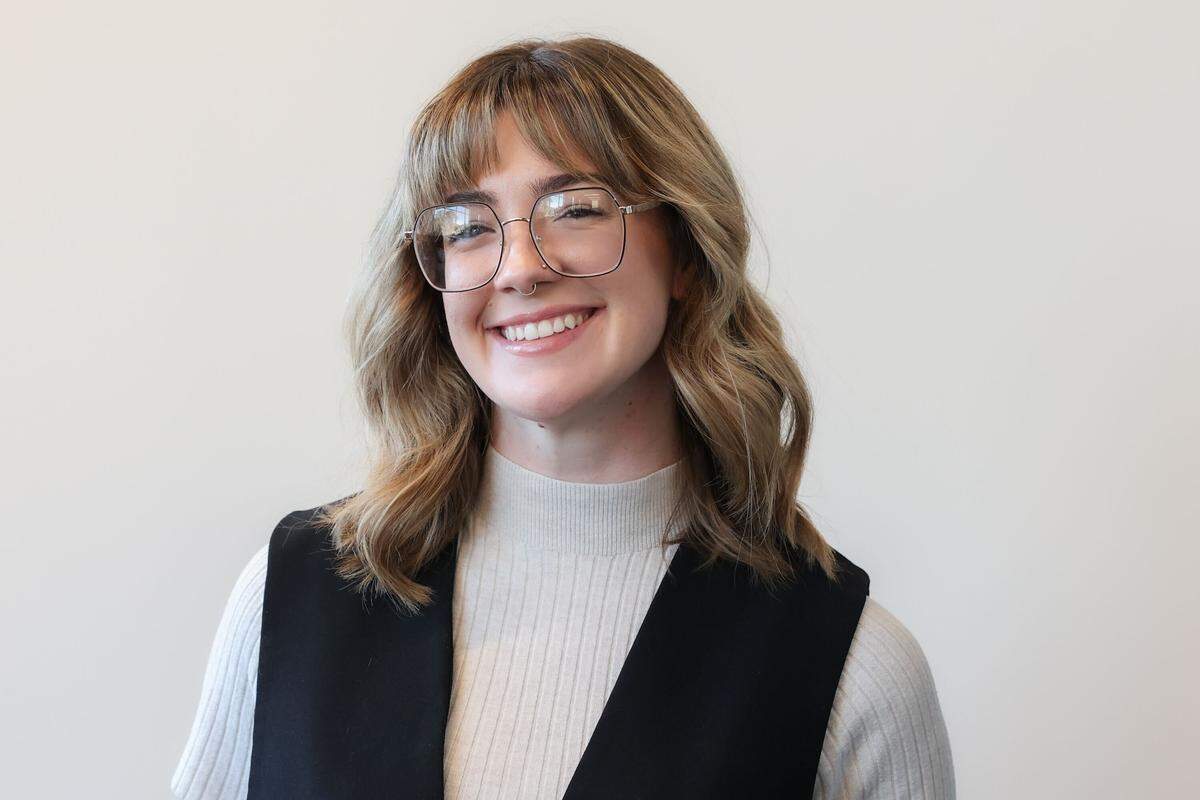
Hard-to-prove NC drug law leaves families of fentanyl victims chasing justice
Skateboard wheels skid in front of Sadie’s home, scraping, squeaking, then moving on. She paces between the porch rails, trying to peek at the face below the rider’s floppy hair.
Is it Laird? Looks like Laird. Sounds like him, too, Gwyneth Brown imagines Sadie, her panting, shedding German Shepherd, is thinking.
“I’m with Sadie on this one,” said Brown. “I’m still waiting for him to come home.”
The pair have been waiting more than a year for one of the skaters to kick up their board and walk up the front steps. They never do. It’s never Laird.
Laird Ramirez, a 17-year-old Mecklenburg highschooler, skateboarder and wrestler, died last July after taking a pressed pill that disguised fentanyl — a lethal synthetic opioid — as a Percocet, his parents said.
The Charlotte Observer reported a year ago on accounts from parents and students of how those $7 pills infiltrated Hough High School and how drug incidents inside Charlotte-Mecklenburg Schools reached a 10-year high amidst Laird’s death.
Justice, Brown said, did not follow in his wake.
While law enforcement and prosecutors say they’re aggressively going after people whose drugs lead to an overdose or fentanyl poisoning, some families say they haven’t seen that — and they’re searching for ways to cope once court dates pass.
Mecklenburg death by distribution cases
A man who was 21 in July 2023 was accused of selling Laird fentanyl and charged with death by distribution.
Brown says there was video footage of that drug deal. She says the drugs captured on camera killed her son. Half a pill was still in his wallet when police returned it to her.
But the Mecklenburg District Attorney’s office dropped the charge two weeks after the suspect was arrested, telling Brown and Laird’s father, Chris Ramirez, there wasn’t enough evidence to prosecute.
Tina Marie Alexander, 46, was accused of being the main supplier to at least eight Hough High students like Laird. This July, she pleaded guilty to possession with intent to sell a schedule II substance, but she did not face a charge of death by distribution. Her plea meant she will spend between 6½ years and 10 years in prison and pay a fine of $100,000.
That’s not justice, Brown said.
Justice would be a 17-year sentence — one year for every year of Laird’s life.
Building a case
Mecklenburg District Attorney Spencer Merriweather on Wednesday told the Observer it’s rare to have enough evidence to make a strong case for death by distribution. Defense attorneys, he said, will immediately ask: How do you know the drugs that killed the victim came from this defendant?
Even with video evidence of a drug deal, prosecutors often cannot use that as proof of where — and who — the lethal dose came from, Merriweather said.
For example, he said, video evidence of a drug deal could capture only a minute of the day leading up to a person’s death. If there’s no evidence of everything that person did after they received the drug — and there rarely is — then there’s “a pretty cavernous hole” in the case, he said.
“They’re very, extremely difficult cases,” Merriweather said. “It doesn’t mean that we don’t grieve with those families ... who know that somebody sold their child poison.”
What is death by distribution in NC?
Death by distribution, a felony charge, was introduced into state law in 2019 and broadened in 2023.
Bill sponsors Dan Bishop and Harry Brown, who were at the time Republican state senators for Mecklenburg and Onslow counties, respectively, wrote in a draft of the 2019 bill that the charge would be “a greater deterrent to persons who want to illegally distribute opioids and further exacerbate the opioid epidemic.”
The law’s first version targeted low-level dealers and required proof of sale of the drug that killed someone. The current version updated by the General Assembly in 2023 does not require proof of sale — only proof of distribution.
Advocates like Barbara Walsh, the director of the Fentanyl Victims Network of North Carolina, saw the 2023 changes as a victory.
But results haven’t always followed.
“It seemed like it would open the door to broader utilization of the law,” said Jeff Welty, a professor of public law and government at UNC-Chapel Hill. “It has, to some extent, but there are still difficulties in a lot of these cases.”
Victims may have obtained their drugs from more than one source or consumed more than one substance at a time, he said. And witnesses are often people who are suffering from addiction themselves. Juries may not always see them as credible, Welty said.
Prosecuting poison
A lack of prosecutions is common, at least in Mecklenburg, Walsh said. She formed her grassroots nonprofit after the accidental overdose death — or what Walsh and advocates call fentanyl poisoning — of her daughter in 2021.
Sophia Walsh died after stopping at an acquaintance’s home on a North Carolina road trip. She used the restroom and grabbed a water bottle, not knowing it had fentanyl in it. Sophia Walsh was 24 when she died.
She’s stayed “Forever 24” while Walsh has for two years pushed North Carolina law enforcement and prosecutors to use the new charge — and follow it through.
“I didn’t know anything about fentanyl,” Walsh said during a phone interview Tuesday. “I didn’t know how to spell it. ... Over that year of grief, that intense grief is when I started collecting data.”
She now travels across North Carolina to host summits, events and rallies and support families going to court dates for the person accused of killing their loved one. In January, the organization posted victims’ photos on billboards across Charlotte to raise awareness.
When Walsh isn’t spreading the word, she’s sifting through whatever data she can find.
According to her research, Mecklenburg has never followed through on prosecuting under the death by distribution statute, even though most DA’s offices in North Carolina have.
Data from the North Carolina Administrative Office of the Courts show that local law enforcement opened six cases in district and superior courts charging people in Mecklenburg County with death by distribution since 2021.
None resulted in a conviction. None remain pending today.
Four were disposed of — or closed — within 30 days of being filed, according to the state data. One was closed before a year had passed, and the other was closed before six months had passed.
According to state data, two were moved from district court to superior court but eventually died.
While death by distribution cases haven’t panned out, Merriweather says his office had redoubled efforts to prosecute trafficking cases.
“If we can attack supply, large supply, then we have our best chance of reducing death,” he said.
Union County law enforcement and prosecutors take a different approach, Walsh said. The suburban county has a population about a fourth of Mecklenburg’s and has filed seven cases with the death by distribution charge.
“If you can hit the big loads of drugs coming into your county, then you can absolutely slow down the inventory to hit your streets,” said Lt. James Maye, the Union County Sheriff’s Office public information officer. “But we think it’s important here in Union County, whether you’re a street level dealer or whether you’re trying to bring in a tractor-trailer load, that you know that we’re watching.
“We don’t want street-level dealers to think that they have a free pass.”
It’s true, Maye said, that in order to convict in court, a charge “has to be proved beyond a reasonable doubt,” but “not proof beyond any doubt.”
Walsh has held meetings in Union County applauding Sheriff Eddie Cathey and District Attorney Trey Robison. Her research suggests the county has prosecuted death by distribution charges and other drug-induced homicide charges 15 times since 2019.
Statewide, police officers and prosecutors have filed death by distribution charges 187 times in superior courts, 54 of them coming this year.
Of those 187 cases, 25 this year ended in a guilty plea.
Deaths from fentanyl have been dropping, according to data from the N.C. Office of the Chief Medical Examiner. There were 169 fentanyl-positive deaths in July 2024 compared to 262 in July 2023.
Supporting each other
Stuck between frustration with the hard-to-prove law, officers and prosecutors, many grieving advocates in the state have found a path for justice within a club none of them signed up for.
Fentanyl drafted them.
In a small, cinderblock Statesville community room, 12 strangers sat across from each other in late July. The deadly synthetic opioid killed their sons and daughters, husbands and wives. For one man, it took his two grandsons.
Below a cranking air conditioner, they weeped and consoled and tried to learn.
Walsh sits at the head of the plastic table in the middle of the room. Red folders strewn across the table held everything she knows.
There was data on how many death by distribution cases have been prosecuted in each district. There was information on how to start a non-profit. There was a collection of The Charlotte Observer’s articles on Laird’s death and reporting on how Narcan then became stocked in Charlotte-Mecklenburg Schools.
It’s everything Walsh wished she knew two years ago. The officers handling her daughter’s case were inexperienced, Walsh said. She said she spent nearly two years educating them on what death by distribution was, what fentanyl was.
When any North Carolina case ends in a conviction, Walsh said, “I consider that justice for Sophia, because her death got me involved.”
No matter how badly families want justice for their loved ones, Walsh said, they’re likely never going to get it.
“We’re never going to be OK with that. You eat it, and you eat it every day. And that sucks,” she said, “but that is the coal that keeps me burning for other families.”
Walsh’s organization was one of two fentanyl-focused nonprofits in the state when she started it in 2022. Now, there are 26.
Stephanie Triplett, a Statesville meetup attendee, founded one of them: Embers from Ashes.
Her husband, Christopher Triplett, died in November 2023. His death was labeled an overdose, and there was never a death investigation. She was outraged, confused. She was lost.
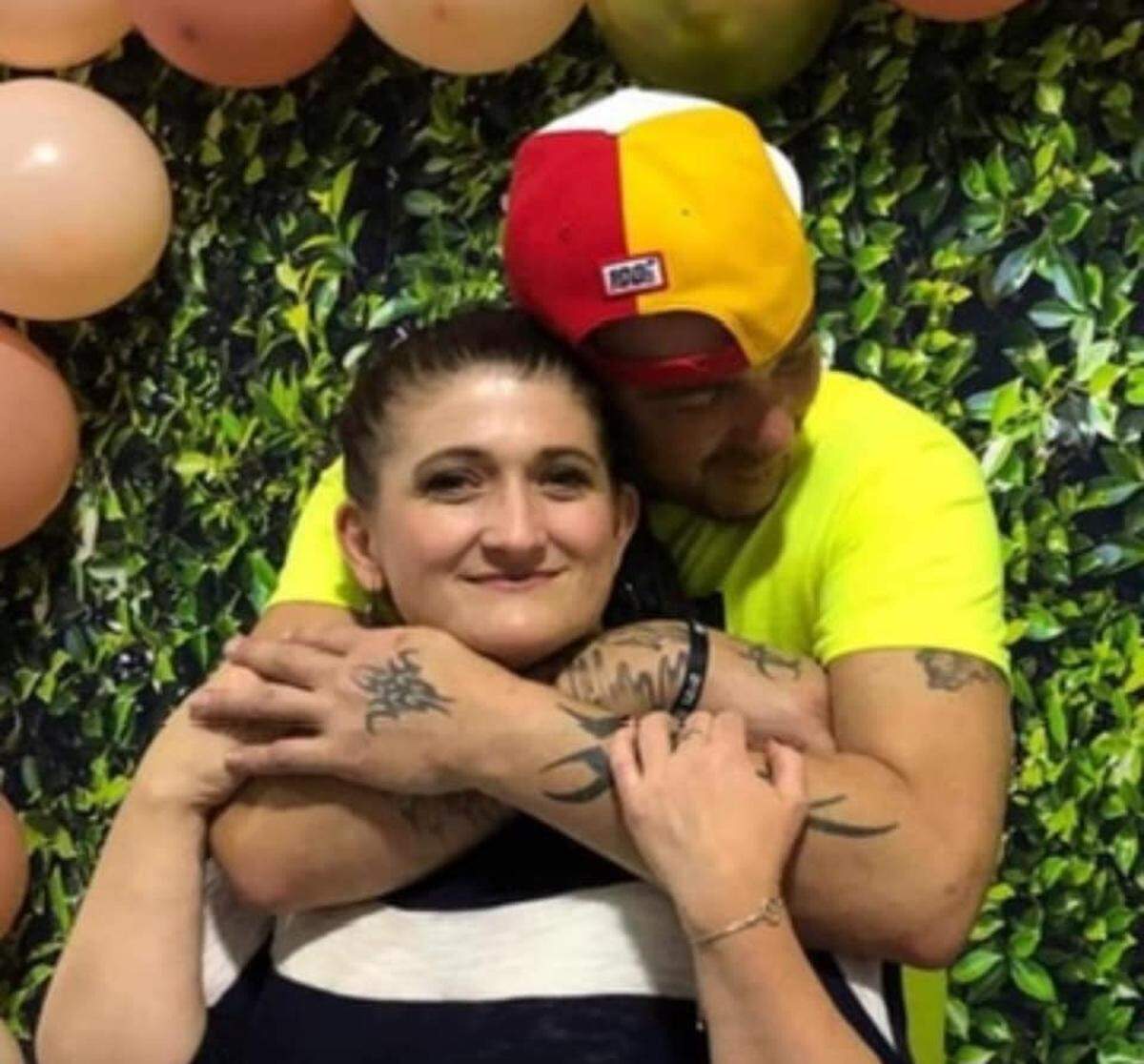
Then, in June, she launched her nonprofit.
“It has become the priority,” Triplett said.
And, for now, it’s all self-funded.
Triplett posted dozens of memorial photos of her husband and others who died from fentanyl on her Facebook page.
Since June, Triplett has helped get Narcan in Iredell-Statesville Schools — where her daughter made news for focusing her eighth-grade project on the dangers of fentanyl.
She also routinely orders boxes of Narcan — a brand of overdose reversal nasal spray naloxone — from The Blue Plaid Society, an organization that ships a case — or 12 boxes — of the spray for free. She puts them in Ziploc bags with cards with Christopher’s name and story on it.
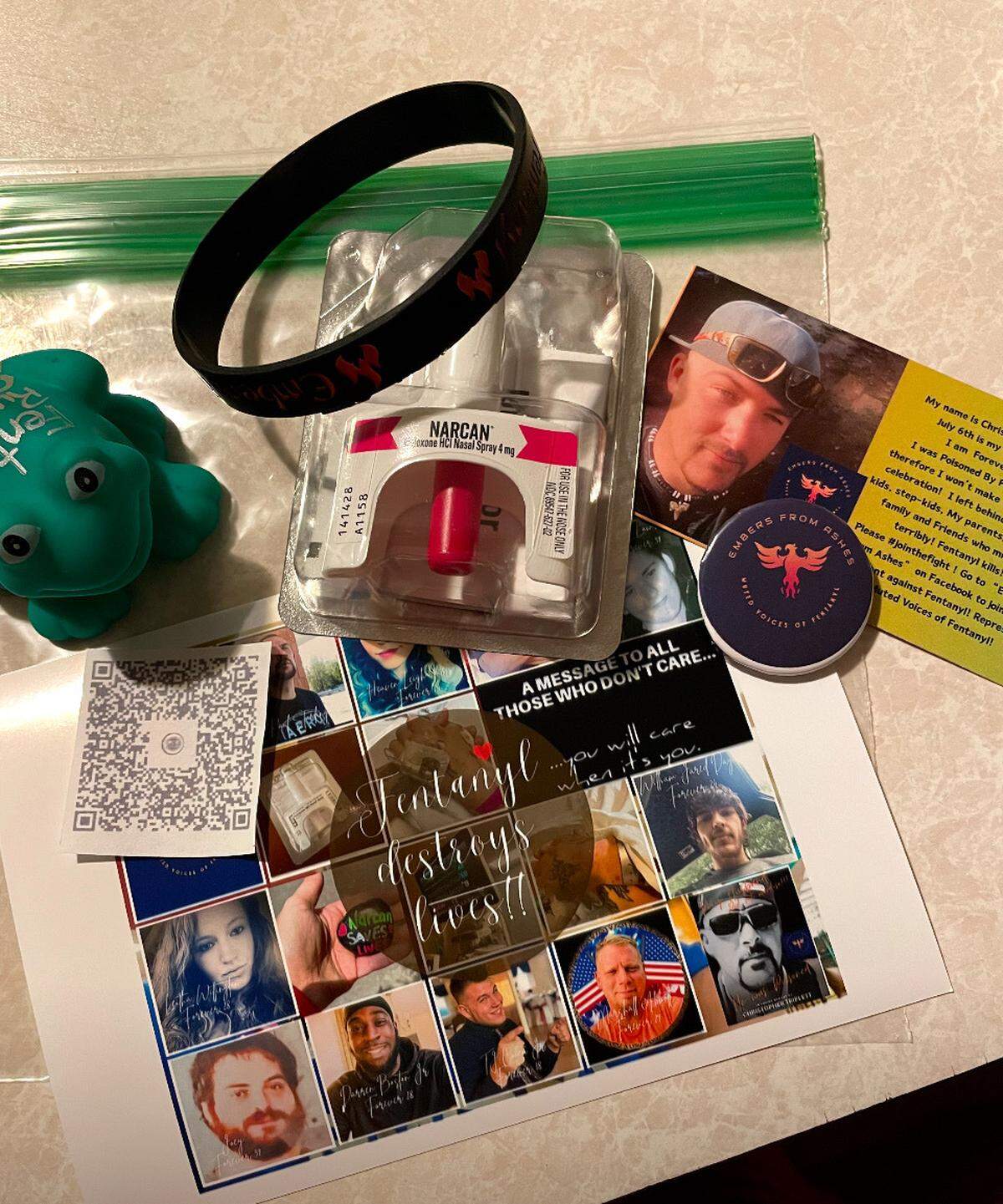
The kits are a way to hopefully save a life, she said.
She said she’s addicted to the work. It’s how she copes, she said. It’s how she chases justice.
Lately, Laird’s mother hasn’t been coping as well, she said in an interview with The Charlotte Observer on Wednesday.
In the months following her son’s death, Brown was vocal about her disappointment in the state, in Merriweather and in Charlotte-Mecklenburg Schools. She partnered with Walsh, published a column in the Observer, shared articles and urged change using the hashtag #JusticeforLaird.
In recent months, she said, her brain slowed, her productivity plummeted, and she lost her job in September. Her nerves spiked in a way she’d only experienced once before in high school, and she spent a weekend in a hospital for mental health treatment, she told the Observer.
Brown’s fire is still there, she said, but grief — sometimes triggered by the skating Laird-lookalike who lives in her neighborhood — can quickly suffocate it.
“He’s just disappearing,” she said. “And that’s really hard.”
News & Observer database editor David Raynor contributed to this report.

This story was originally published December 5, 2024 at 5:00 AM.