CMPD has a new chief. These may be biggest challenges facing Estella Patterson
AI-generated summary reviewed by our newsroom.
- Estella Patterson returns to lead CMPD as city faces fallout from Jennings’ settlement
- Her administration will likely face calls to improve transparency
- Patterson will also face concerns about youth violence, high-profile crimes
A familiar face is taking the helm of Charlotte’s police department, but the job is likely to come with its fair share of challenges amid ongoing controversies.
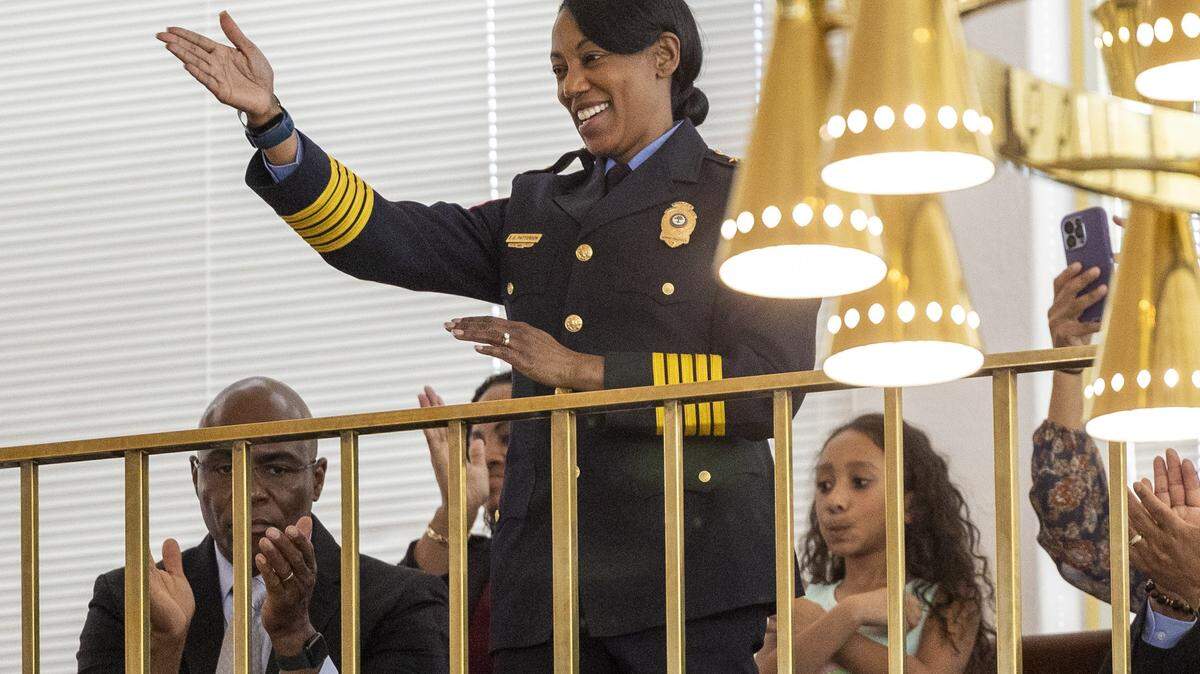
Estella Patterson will become the Charlotte-Mecklenburg Police Department’s first female chief following the retirement of current Chief Johnny Jennings at the end of the year, CMPD announced Friday. She spent 25 years with CMPD before leading the Raleigh Police Department from August 2021 to March 2025.
Patterson returns to Charlotte following a monthslong controversy over the circumstances of Jennings’ split with the city, including a secretive six-figure settlement that triggered an investigation by the State Auditor’s Office.
The city’s public safety system is also facing questions and scrutiny after high-profile violent incidents, including a fatal stabbing on the Blue Line light rail that garnered national attention.
Here are some of the biggest challenges facing Patterson as she begins her tenure as CMPD chief:
Lingering questions surrounding Jennings’ settlement, transparency
Jennings and CMPD defaulted to privacy and, sometimes, secrecy that led to scandal.
In 2022, as people across the country demanded more transparency from law enforcement, the chief rolled out a new media policy that limited his staff’s interactions with reporters and kept information from the public.
Since then, the department has repeatedly declined to answer questions from The Charlotte Observer.
In 2023, when video circulated of a police officer punching Christina Pierre, Jennings announced meetings with community leaders to rework policy. Not only were the meetings private, participants were not allowed to share what they discussed at the time.
The chief’s preference to stay out of the public eye came to a head this year when the Charlotte City Council voted in closed session to approve a financial settlement with Jennings to avoid a lawsuit over comments by now-former council member Tariq Bokhari during a feud over an equipment purchase.
Weeks of speculation, silence from the city and CMPD, criticism from the local Fraternal Order of Police and the announcement of the state auditor’s investigation into the reported deal followed.
Following the news of the state auditor’s investigation, Jennings released the terms of his “separation agreement” — worth $305,000 — himself following an interview with the Charlotte Optimist newsletter in which he announced his retirement at year’s end.
The auditor’s report was released in September and “made no findings with respect to the funds used to pay the settlement or with respect to the city’s actions under the Public Records Act or Open Meetings Law.” But it included multiple recommendations for the city “in order to promote full transparency with the public.”
State Auditor Dave Boliek, a Republican, criticized the Democrat-led city’s response to the audit following its release.
“Our report brought transparency to the City of Charlotte. However, as shown in the mayor’s response, City leadership doesn’t share our interest in being open and transparent about spending the people’s money,” he said on X, formerly known as Twitter.
Patterson’s administration is likely to face questions about what it will do to improve transparency.
Perceptions of crime vs. crime statistics
Debates over perceptions of the state of public safety in Charlotte compared to crime statistics are not new, but they were thrust into overdrive following the fatal August stabbing of Iryna Zarutska on the city’s Blue Line light rail.
The killing, footage of which went viral on social media, followed other high-profile incidents in uptown.
City and transit officials have announced safety initiatives specifically targeting buses, trains and uptown since the stabbing.
Many conservative elected officials and pundits at the local, state and national levels blamed Charlotte’s criminal justice system for the stabbing, saying the courts are too lenient with repeat offenders due to Democratic policies.
The man arrested in Zarutska’s killing, DeCarlos Brown Jr., had previously been arrested multiple times. He served a multi-year prison sentence for armed robbery, breaking and entering and larceny and had last been charged with a misdemeanor misusing 911 offense — even though he apparently was calling 911 for legitimate help for a mental health problem. An Observer review of North Carolina law and Mecklenburg County’s bail policy found the magistrate in that case was adhering to policy when she released Brown on a written promise to appear in court.
Despite headline-making violence, CMPD reported in mid-October overall crime dropped 8% year-over-year through the first three quarters of 2025. That includes a 20% reduction in violent crime, police said.
Patterson will take office at a time when politicians are calling for revamped approaches to public safety and centering their messages on crime.
Juvenile crime
Crime committed by teenagers is a particular and long-running concern.
Last year, Jennings wrote in an Observer editorial that his officers face a “juvenile crime wave” in a criminal justice system that plays “catch and release.”
In one recent example, Charlotte-Mecklenburg police pointed to an unnamed 15-year-old who they say has been arrested 111 times since August 2023. That includes 55 car thefts, according to the department.
Several teenagers also were recently charged with shooting and murdering 16-year-old Tyshaun Stokes. They shot into his home, which three smaller children and two women were also in at the time, in August, police said.
Jennings has said that CMPD cannot simply arrest its way out of the city’s juvenile crime problem. If he is right, Patterson will need help from others in the criminal justice system.
Recently, state public safety officials and local advocates again said Sheriff Garry McFadden should reopen the county’s shuttered juvenile jail. Juveniles charged with serious crimes are sent to an overfilled facility in Cabarrus County. District Attorney Spencer Merriweather recently told the Observer that judges might hesitate to send teenagers there because of poor conditions.
While Patterson will not have a direct say in whether the jail reopens, she will be another person who has to deal with its absence — and work with the sheriff’s office on the issue.
Officer recruitment, retention and relationships
Patterson will have plenty of opportunities to improve the relationship between CMPD’s leadership and the local chapter of the Fraternal Order of Police.
That group represents many of the rank and file at the department, and it has been increasingly critical of Jennings.
In one of many disagreements, the FOP criticized Jennings for not allowing patrol officers to wear outer carrier vests. The chief thought they looked too militarized and did not fit into his vision of community policing.
Eventually, after Bokhari joined in the criticism and more drama unfolded, the chief relented — partially. Officers could request the vests, CMPD said.
While Bokhari positioned himself as supporting officers in that feud, Jennings had said the vests offered no greater protection.
FOP President Dan Redford also said that CMPD, under Jennings, put more effort into recruiting new officers than retaining those already at the department. He lamented that strategy.
“When you have a police officer from Charlotte with as much training as these officers go through, and they leave and go somewhere else, you are losing a humongous asset,” Redford said last year, when vacancies were a topic of discussion.
By the time Jennings’ six-figure settlement became known to the public, the relationship had long soured.
But a new one with Patterson could be better.
“Chief Patterson’s name was repeatedly mentioned in an FOP survey as someone our members wanted as CMPD’s next police Chief,” a Facebook post by the FOP said on Friday. “We are extremely grateful for her willingness to serve. We wholeheartedly support Charlotte City Manager Marcus Jones’ decision and are looking forward to working with Chief Patterson on matters important to our members.”