‘How long can we sustain this?’ Stress is elevated as NC schools face staffing shortages
READ MORE
Staff level down, stress level up
North Carolina’s colleges and universities are graduating fewer prospective teachers, and principals say they’re getting fewer applicants for openings. Why? Many schools have dealt with staffing shortages by asking remaining employees to do more. No one thinks that solution is sustainable. What is the reason behind the mass staff shortage challenge? This is The N&O’s special report.
Expand All
‘How long can we sustain this?’ Stress is elevated as NC schools face staffing shortages
How bad is the school shortage? Thousands of NC school jobs are unfilled
‘Exhausted.’ ‘Overworked.’ ‘Defeated.’ Wake teachers describe this challenging year
Want to fix the school staff shortage in North Carolina? Pay your staff.
North Carolina’s 1.5 million public students returned to classes this fall for what’s been anything but a normal school year so far.
Widespread school staffing shortages are affecting everything from the bus routes to how meals are served, how often classrooms are cleaned and who is teaching classes. It’s leading to elevated levels of stress for those school employees who’ve stayed on and it’s affecting the education that children are receiving.
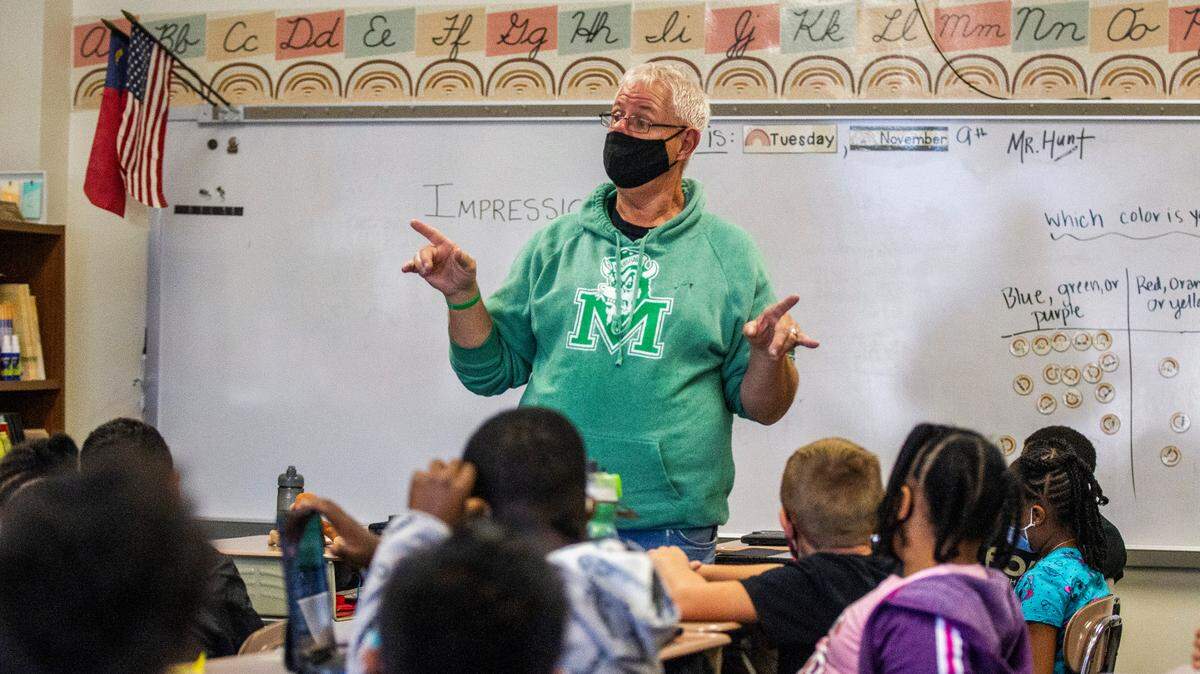
“It’s all hands on deck,” Tiffany Stuart, principal of Aversboro Elementary School in Garner, said in an interview. “Everyone willingly helps out whenever they can, and so that’s been very reassuring.
“My concern as a principal is how long can we sustain this? How long can we continue to spread everyone so thin on a daily basis?”
Aversboro’s 20% teacher vacancy rate is among the highest in the Wake County school system.
North Carolina schools are reporting so many vacant positions that, according to a September survey by the N.C. School Superintendents’ Association, some principals are driving school buses, working in cafeterias and teaching classes.
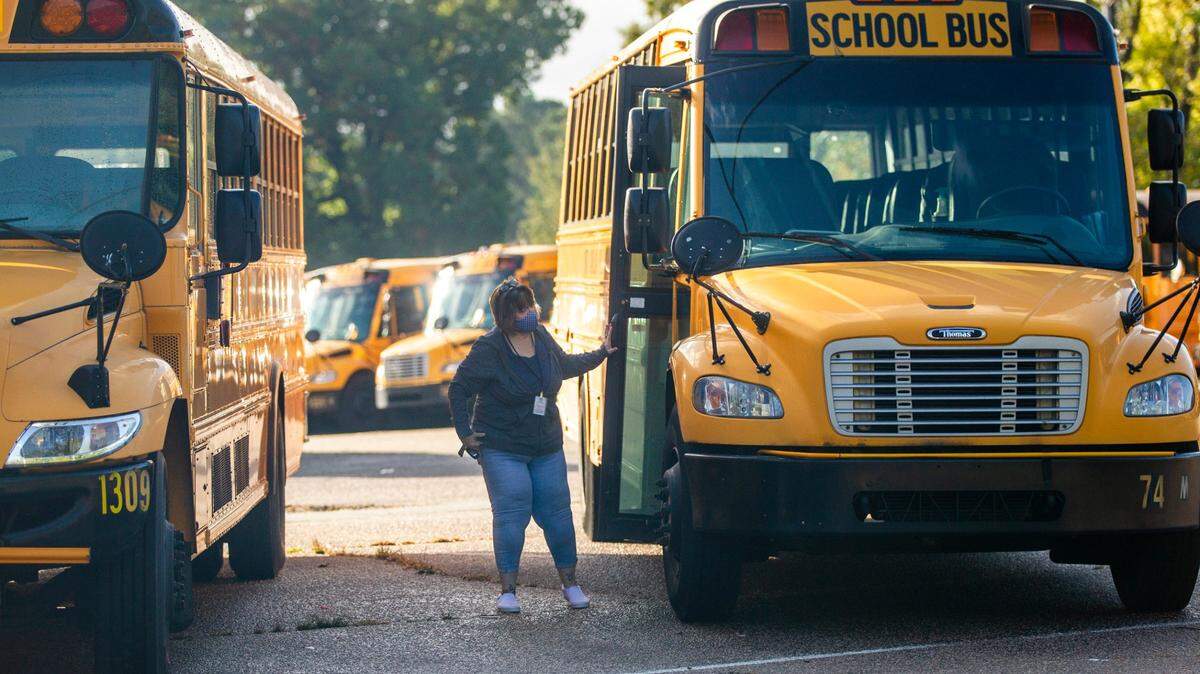
Carrie Tulbert, principal of Oakwood Middle School in Statesville, has driven a school bus at times this school year. Iredell-Statesville Schools, about 150 miles west of Raleigh, is so short on bus drivers that assistant principals are being required to get licensed to drive a bus.
“We all thought that schools would return as close to normal as possible,” Tulbert said in an interview. “But in August we got slammed with changes: contact tracing, masks, just so many things that were unexpected due to COVID.”
Bus drivers in demand
The most common way schools have dealt with staffing shortages is to ask remaining employees to do more.
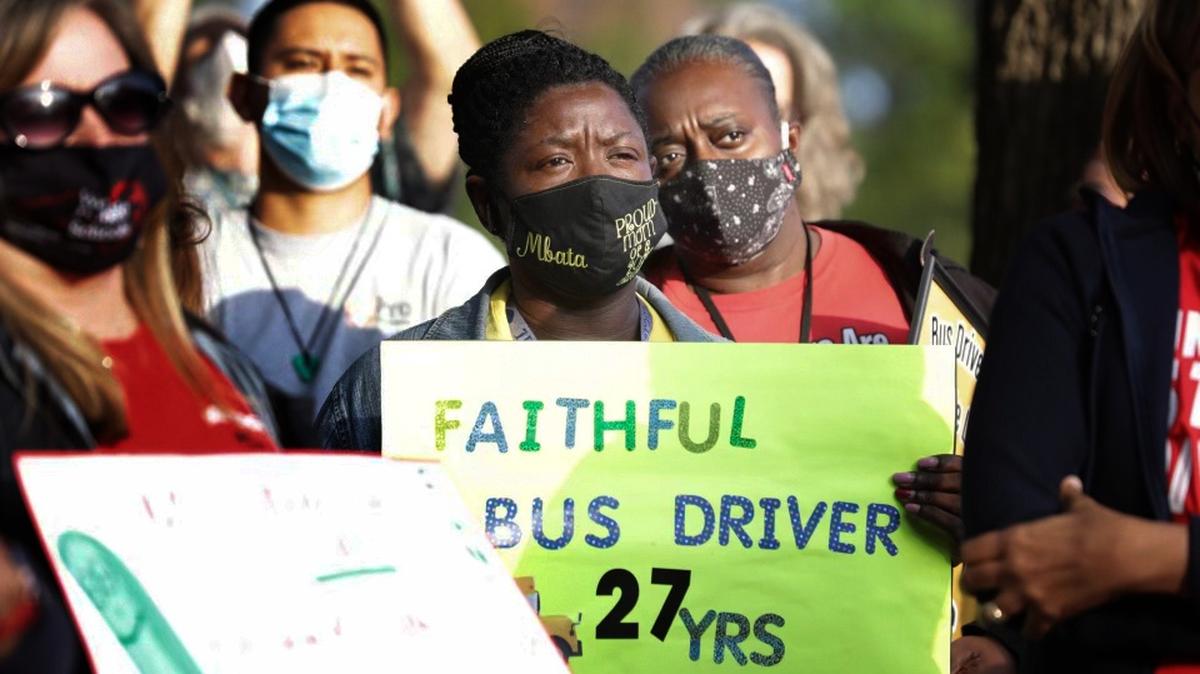
School bus drivers are driving more routes than ever. Complaints about the extra routes, while making hourly salaries of around $13 to $15 an hour, sparked driver sickouts this month in Wake County and Cumberland County that caused parents to scramble to get their kids to and from school.
“I used to wake up every morning excited and ready to go see my kids,” Alicia McNeal, a school bus driver, told the Wake County school board this month. “But the wakeups in the mornings now are starting to get hard because the pay is no good. The living wage that we have not received in years, we need it.”
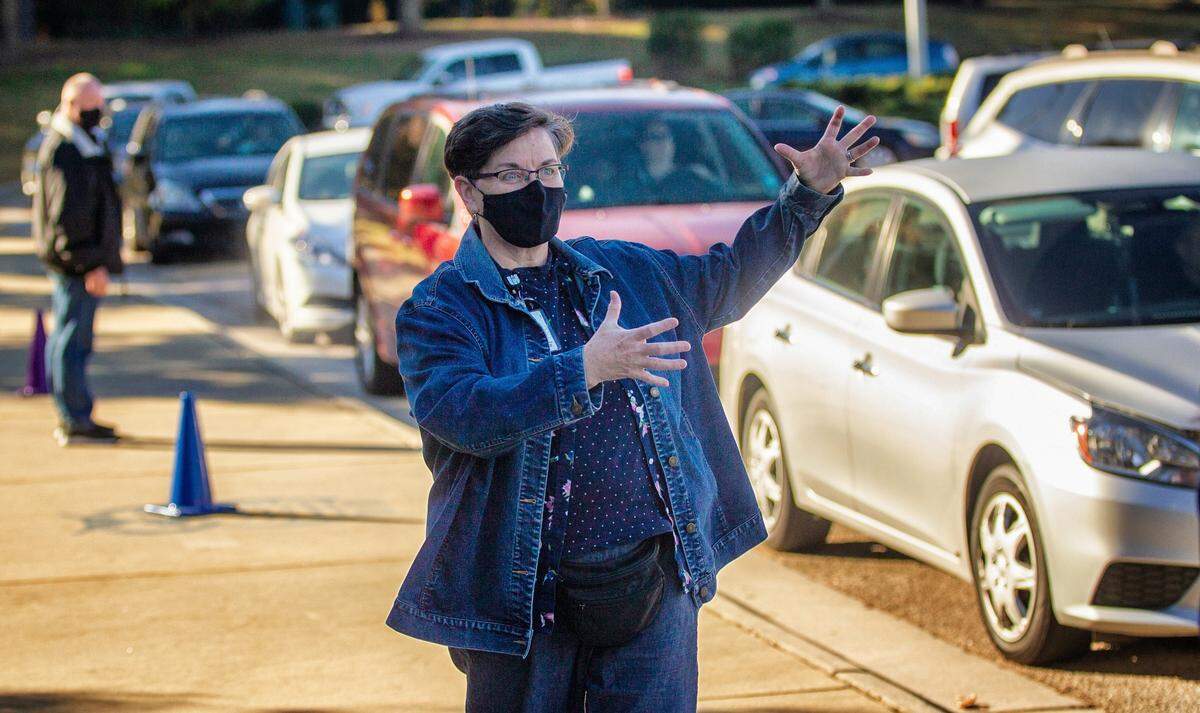
The change in bus routes is also stressing other school employees. Stuart, the Aversboro principal, said there are fewer people to help share in the duties of supervising children when they arrive in the morning and are dismissed in the afternoon.
“We do have later and later routes that arrive in the afternoons, as well, and it means children are getting home later from school,” Stuart said. “It means that staff stay and supervise them and make sure that they safely board their buses and get home in the afternoons. It makes a longer day for everyone.”
School cafeterias understaffed
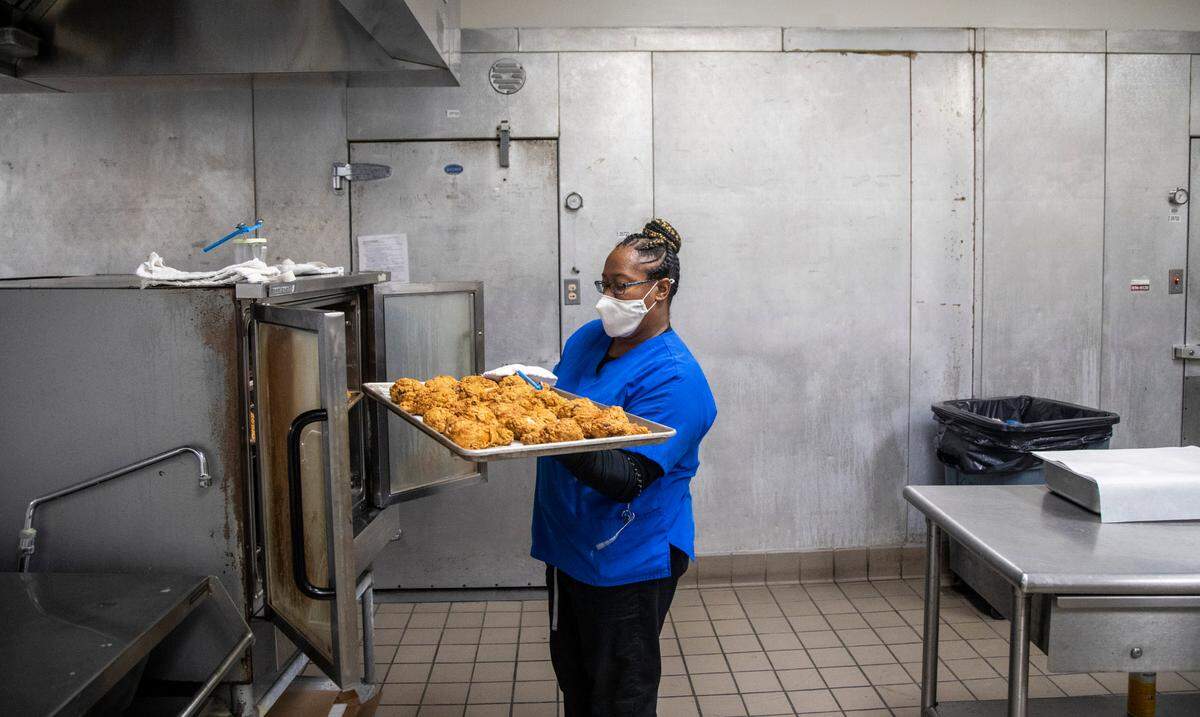
Shortages are being felt in school cafeterias, as well, with some districts having vacancy rates of 30%.
Until earlier this month, Yolanda Banks was the only person working in the cafeteria at Swift Creek Elementary School in Raleigh. She has been coming in at 4:45 a.m. to single-handedly prepare 90-plus breakfasts and 200-plus lunches each day for the students.
Banks said she felt an obligation to make sure that students, who might be getting their only meals of the day at school, are still being properly fed.
“I get tired and I just ask God to give me the strength everyday because I’m here for the kids,” Banks, the school’s cafeteria manager, said in an interview.
A ‘bingo game’ finding enough teachers
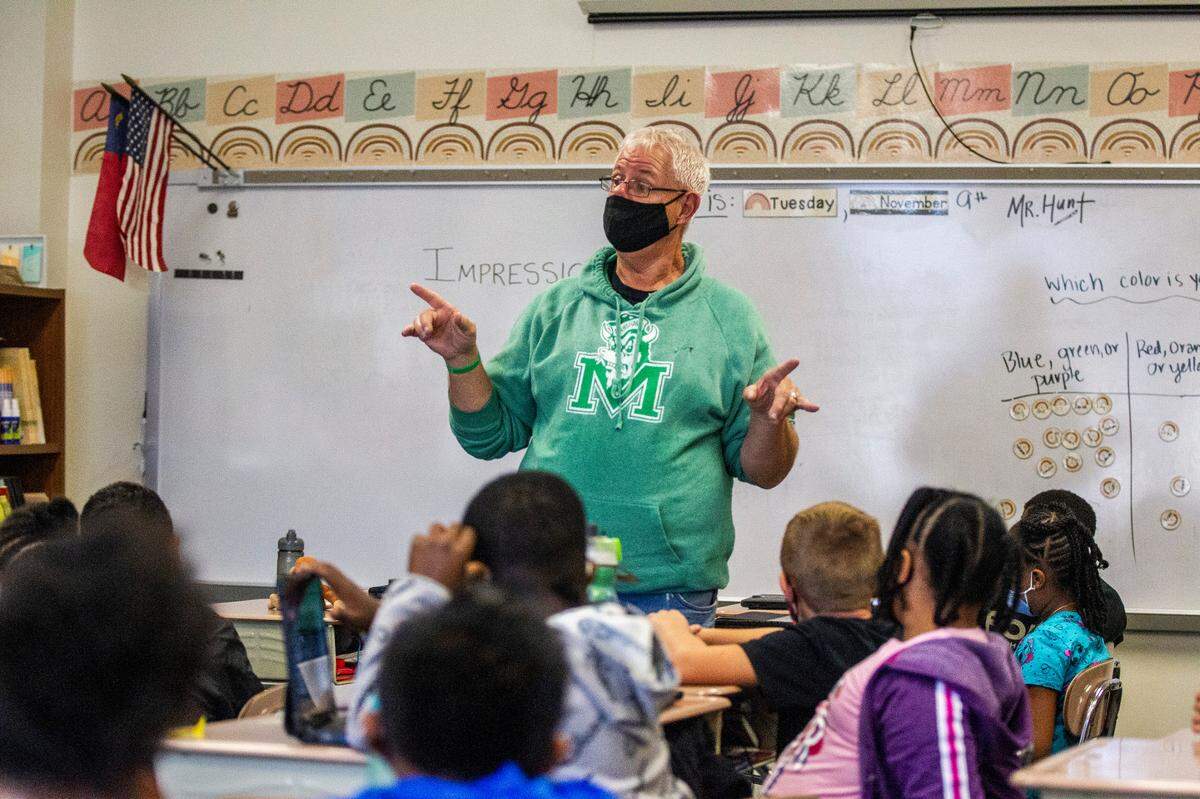
One of the most pressing challenges for principals is making sure classrooms are staffed every day. In addition to dealing with vacancies, schools have to cover classrooms when teachers are sick or can’t come in for various reasons.
Due to COVID health rules, teachers are more likely to miss days to make sure that the symptoms they’re experiencing aren’t due to the virus.
“Day in and day out it creates a tremendous amount of stress not knowing what the pieces of the puzzle are going to be today,” Stuart said. “Not knowing who’s going to need to be covered, not knowing what substitutes will be available.”
Gretta Dula, principal of Sanderson High School in Raleigh, says it’s almost like a bingo game now getting classes covered. Teachers are having to give up planning time and a work-free lunch break to cover classes when subs aren’t available.
“The hardest part for me is seeing those teachers filling in during their planning periods,” Dula said in an interview. “We don’t have enough subs. Subs aren’t taking on enough jobs, so the teachers are having to carry the load.
“Anytime I go to PTA meetings I’m asking if you know of anybody who wants to sub.”
Wake County central office administrators, including Superintendent Cathy Moore, are spending time each week subbing at schools. Paul Koh, assistant superintendent for student support services, said he’s glad to help out at Sanderson each week.
“It’s a great privilege to be able to be with students and the folks who are at the schools,” Koh said in an interview.
Teachers stretched thin
The stress that teachers and instructional assistants are facing from picking up all these additional duties is becoming acute.
“Daily I am stretched thinner than the day before and barely have time to do my job between covering the front desk, covering classes with vacancies because teachers left or the positions were never even filled in the first place,” Stacy Eleczko, an instructional coach at East Garner Middle School, told the Wake school board this month.
“If something isn’t done soon, I don’t know if I will return next year.”
Eleczko said that eight staff members have quit from East Garner Middle since the start of the school year, with more considering resigning. Eleczko said one teacher who lives on her street has had 11 resignations from her school and another teacher has had 10 resignations.
Stuart said she’s had three teachers resign from Aversboro Elementary since the start of the school year. She said the school would normally not have this many resignations at this point in the year.
Jessica Peacock is quitting her job this month as a teacher at Dillard Drive Elementary School in Raleigh.
She says she’s leaving partially due to her desire to reopen her family’s grocery store near downtown Raleigh. But Peacock said it’s also due to the challenges she faced making the transition from teaching in a middle school.
“People are really having their own problems,” Peacock said in an interview. “So people don’t have the capacity to support how some people need to be supported now. It’s nobody’s fault.”
But each teacher who resigns will be harder to replace. North Carolina’s colleges and universities are graduating fewer prospective teachers, and principals say they’re getting fewer applicants for openings.
“How are we going to try to get teachers into a profession that’s been blasted?” said Tulbert, the Statesville principal. “It’s just harder to get great teachers in a classroom because the job takes so much more than it did a year ago.”
Shortages impacting children’s education
All these shortages are having an impact on the education students are receiving.
“The current conditions don’t provide an environment conducive to learning, much less one that cares for the most basic needs of our kids,” Eleczko told the Wake school board.
Some students are showing up late in the morning due to the new bus routes, while others are getting home later than normal in the afternoon.
Some classes are still being taught by substitute teachers more than two months into the school year because principals have been unable to fill positions.
“Students not having a regular teacher in a class definitely has an impact,” said Koh, the assistant superintendent. “When you’re the teacher at the start of year, you’re not just teaching the content but you get to know the students. You’re building a relationship over time.”
Schools are turning to less qualified teachers to fill vacancies. The N.C. Association of Principals and Assistant Principals says the state’s schools have already been forced to place more than 3,400 “residency, permit to teach, or emergency licensed” teachers in classrooms.
Is help on the way?
School districts have canceled classes to add mental health days to give employees a breather.
“We have definitely worked very hard in this first nine weeks to go above and beyond to try to ensure that things are seamless,” Stuart said. “But at this rate, at what point will we be able to continue doing that knowing that we face the staffing challenges that we do?”
Districts have also used federal COVID relief dollars and local savings to give employees bonuses and raises to try to retain staff and hire people to fill vacancies.
“We are at a critical juncture,” AJ Muttillo, Wake County’s assistant superintendent for human resources, said in an interview. “That’s why you’re seeing us recommending retention bonuses, increased sub pay so we can provide more relief to schools.”
But Muttillo said what schools need is more help, particularly from the state. The state pays the base salaries for school employees, with school districts sometimes supplementing what’s provided.
School employees haven’t received state raises recently due to the ongoing budget fight between Democratic Gov. Roy Cooper and the Republican-led General Assembly.
But a new state budget could offer some financial relief to school employees. In addition, a judge has ordered the state to transfer $1.7 billion to increase school funding. But that order is expected to be contested by GOP lawmakers who say only the legislature can appropriate money.
Tulbert, a former North Carolina Principal of the Year, said the problem is that public education doesn’t get enough support in the state. She said what would help is if local and state officials spent some time visiting schools to see how challenging conditions are now.
“If you are shadowing a teacher for two hours or a principal or assistant principal for two hours and spending time talking with educators, I think that would make a huge difference with morale and hearing from those in the trenches what can actually help,” Tulbert said.
This story was originally published November 17, 2021 at 6:00 AM with the headline "‘How long can we sustain this?’ Stress is elevated as NC schools face staffing shortages."