Can I feed or pet stray cats in Charlotte? What the law says
AI-generated summary reviewed by our newsroom.
- Charlotte‑Mecklenburg has no specific regulations about maintaining stray cats.
- Residents may call 311 or 704-336-7600 to lodge a nuisance complaint about cat colonies.
- The department’s Community Cat Program provides medical care and returns cats outdoors.
Many people love cats, but maybe there can be too much of a good thing.
In Charlotte, there aren’t specific regulations about maintaining stray cats, according to Charlotte-Mecklenburg Animal Care and Control Communications and Outreach Manager Melissa Knicely.
Can I pet stray cats?
Some cats are “community cats” meaning they are known and even loved in the area they live in, and likely engage with people. The department offers a Community Cat Program for cats that cannot be taken by the shelter. Cats are given medical care and then released back.
“Community cats tend to be that cat that roams the neighborhood, and everybody feeds, but nobody claims to own it, and they’re typically friendly, and typically they don’t get as many complaints, because it’s everybody pitching in,” Knicely said. “Everybody knows that cat, and heaven forbid, if you try to take that cat, people would be like ‘That’s George, he comes to our house on Thursdays.’”
Feral cats, you generally cannot touch.
“You can almost think of them as like wildlife. They actually are good for our environment. They help with snakes,” Knicely said.
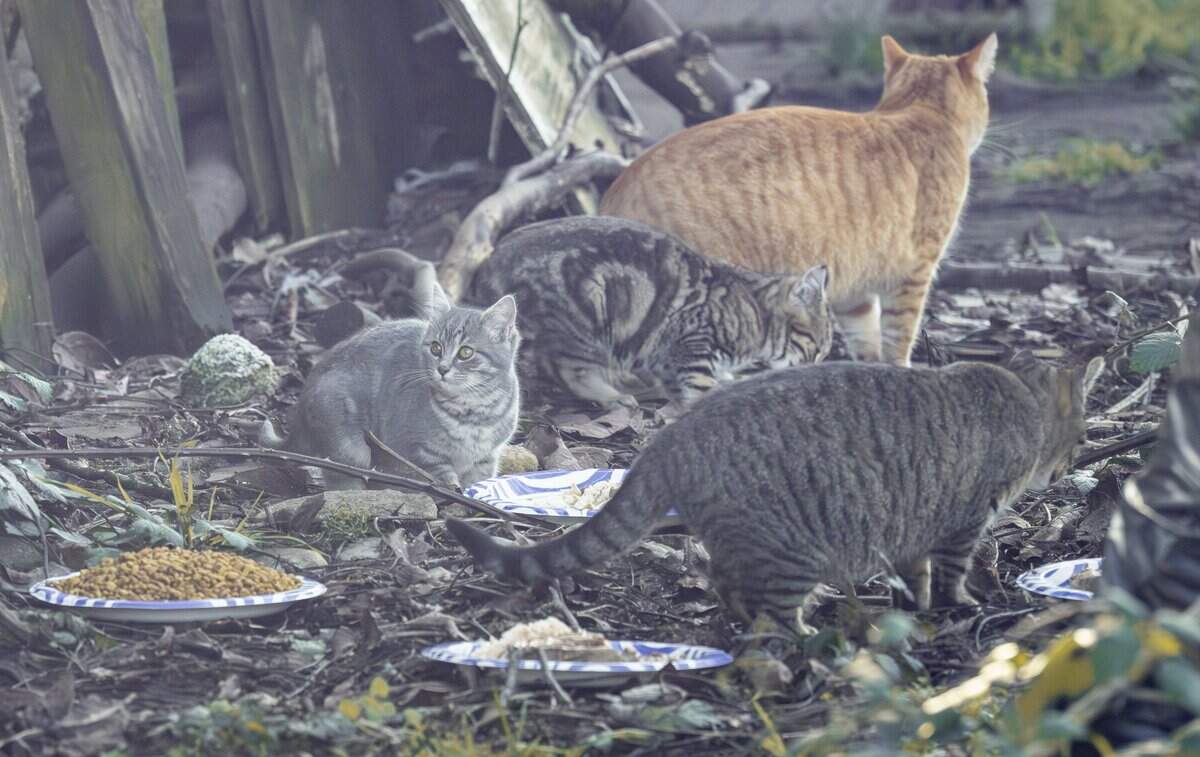
Can I maintain stray cats?
It is not illegal to feed the cats, but Animal Control may intervene if the situation becomes a nuisance, or unsafe.
“Unfortunately, in animal welfare and in animal control, there’s a lot of gray area,” Knicely said. “This person is doing right by these cats, but also we don’t want them to be a nuisance, so there’s a lot of things that we can try.”
Outdoor cats generally have a short lifespan, around two years, because of threats such as traffic and coyotes.
“I wish that people knew that when they let their cats roam outdoors, they are basically allowing that cat to become a part of the local food web, both as a predator and as prey — because cats kill a lot of native wildlife, they’re the number one killer of songbirds in the United States, and they also kill a lot of small reptiles and amphibians,” Falyn Owens, a wildlife biologist with the North Carolina Wildlife Resource Commission said.
Trap-Neuter-Vaccinate-Return
Some feral cats have been through TNR or TVNR programs. Organizations and volunteers trap cats and neuter, vaccinate and return them to their outdoor living place. This option is ideal for cats who cannot live with people or be taken in by a shelter.
Knicely said the animal control department would consider this in a complaint. Cats that have been through TNR have been rabies vaccinated in accordance with state law, and they do not pose a public health risk.
“A lot of times now we’re certain groups are starting to put microchips in them as well, so that way they’re tracked, they have a record, they’re legal, somebody has to take ownership of them in our system,” Knicely said.
Nuisance complaint
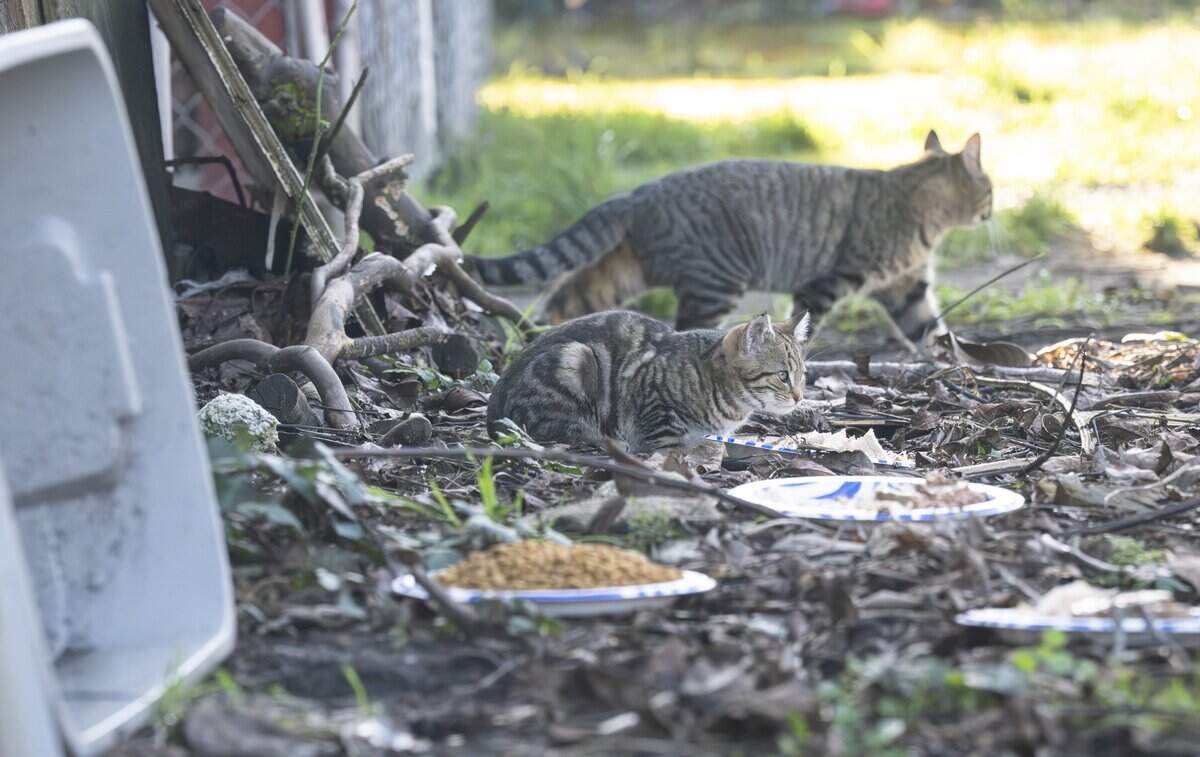
If someone were to lodge a nuisance complaint about a cat colony, the first thing the department would offer is deterrents, Knicely said. Options include solar-powered ultrasonic deterrents, sprinklers, car covers and even leaving tinfoil in locations the cats frequent — as it turns out, they don’t like it.
If the felines will not be deterred, Knicely said it is important to keep documentation of the nuisance, whether it be damage, excrement or sound.
To lodge a nuisance complaint, call 311 or 704-336-7600. The department will respond to first time complaints by notifying an owner by mail. If further calls are submitted, an officer is dispatched– but must hear or see a violation to respond with civil action.
Healthy, stray cats that are picked up and brought to the shelter will be turned away.