Why is downtown Charlotte called ‘uptown’? Learn the city’s history
AI-generated summary reviewed by our newsroom.
- Charlotte is the only major U.S. city whose central business district is called Uptown.
- One origin of the Uptown name is the higher elevation at Trade and Tryon streets.
- Independence Square displays four statues honoring the industries that built Charlotte.
Charlotte is an uptown girl living in an uptown world — but most cities aren’t.
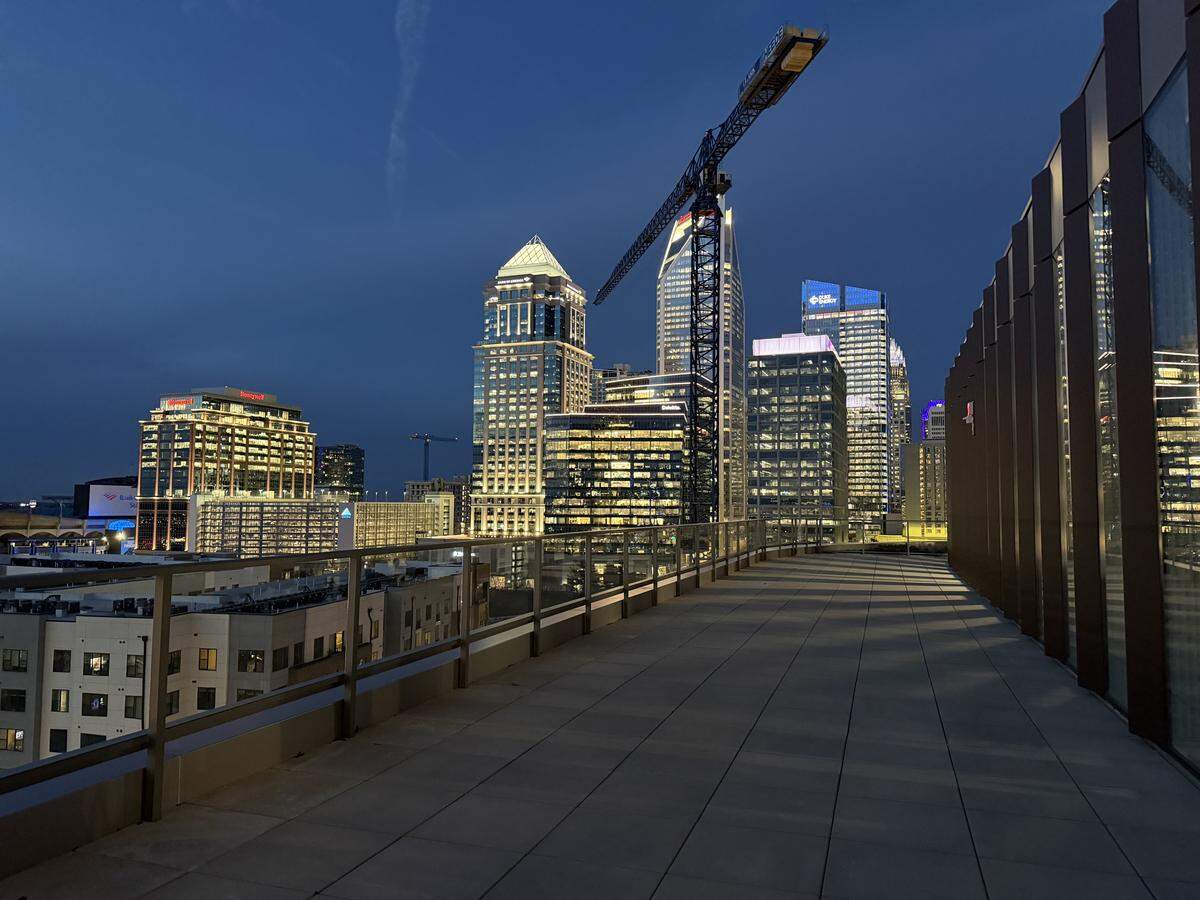
In most cities, a central area full of businesses and culture is called “downtown.” As any native and most transplants will tell you, Charlotte’s financial district is called uptown.
Charlotte is the only major city in the United States where the central business district is officially known as “uptown,” according to Charlotte Center City Partners. But why?
Why is it uptown?
One explanation for the name comes from Charlotte’s higher elevation, Tom Hanchett, a Charlotte community historian, explained to The Charlotte Observer in 2015.
“In the mid-1700s, the nation’s trading path from the southeast to the Atlantic ran along a ridge top,” Hanchett said. “One of those Indian trading paths in Charlotte came to be Tryon Street and it crossed another that became Trade Street. This was the highest elevation point and the city grew around it. When people came to this point, they were going ‘up.’”
Hanchett also noted that the name gained traction after a 1974 Charlotte City Council declaration aimed at encouraging people to visit the district.
“A city council proclamation declared that the shopping and business district in the center city be officially named ‘Uptown Charlotte,’” said Hanchett. “The push for this came from local merchant and booster, Jack Wood. Wood argued that Uptown name was in use in the 50s and needed to be restored.”
Tryon and Trade
Uptown was built around the intersection of Trade and Tryon streets, the Observer previously reported.
Trade Street was named for the area’s early role as a trading path, as Hanchett mentioned. Tryon Street was named in honor of William Tryon, former governor of North Carolina according to Charlotte Center City Partners.
The intersection was once the site of the home of Col. Thomas Polk. He was a North Carolina legislator who played a key role in drafting the Mecklenburg Declaration of Independence and the Mecklenburg Resolves.
Polk is long dead, and Trade Street is no longer a trading path in the same sense as it was in the 1700s. Now, the intersection is called Independence Square.
Independence Square is marked with four statues memorializing the industries that brought Charlotte to prominence, according to Center City Partners:
- Commerce: A prospector panning for gold represents the discovery of gold in the area and the opening of the U.S. Mint in 1837.
- Industry: A pair of millworkers, woman and child, represent Charlotte’s early textile factories.
- Transportation: A railroad builder symbolizes the city’s status as a railroad hub. An eagle represents the area’s major airport.
- The Future: A mother holding her child and posing with North Carolina’s state flower, the Dogwood, represents the promise of the future. The other three statues look toward her.
Today, Charlotte is home to nearly 1 million people, and 19 Fortune 1000 companies are headquartered here.
Portions of this story were previously published in the Charlotte Observer.