Charlotte mayor to meet with Truth and Reconciliation group addressing racism
Charlotte Mayor Vi Lyles says she’ll meet with leaders of a local Coalition for Truth and Reconciliation who have called for the city to commission research on systemic racism. A spokesperson for the mayor on Tuesday said the meeting may happen this month.
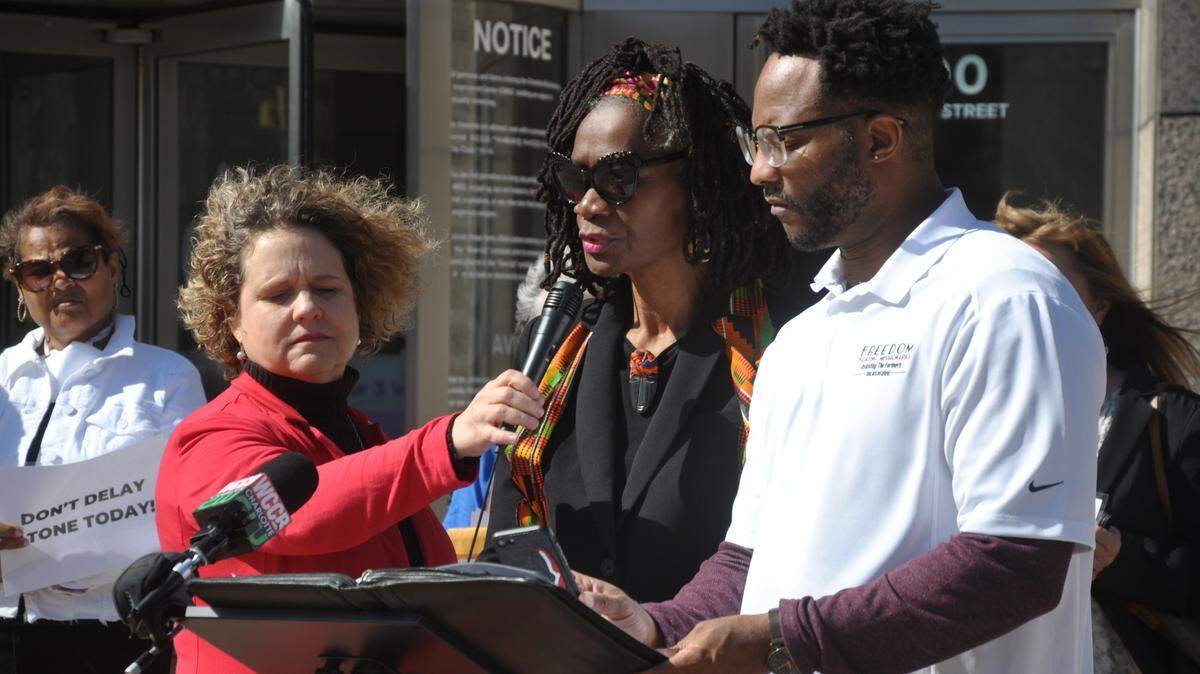
Founded in 2019, the coalition has pushed political leaders to research policies that have exacerbated racism in Charlotte and Mecklenburg County and put money toward marginalized groups that have historically been harmed by the government.
Last month, the group released a report, created by Charlotte-Mecklenburg Library’s Robin-Spangler Carolina Room at the behest of county commissioners Mark Jerrell and Laura Meier last May, that explores how racism has been embedded in Mecklenburg County government since the Civil War.
Since then, they’ve met several times with county leaders and have asked for more money and for Mecklenburg to help fund partnerships within the community. Specifically, the coalition is asking to have influence over how elected commissioners decide to spend $2 million allocated in Mecklenburg’s budget last year for equity investments.
At a press conference in February, county leaders said the findings of the library report would be addressed through measures like increased funding. At its core, the Mecklenburg report found “Active discrimination and apathy on the part of public and private institutions have sustained the racial inequities that exist in the region today.”
Coalition chair Rev. Janet Garner-Mullins asked the community to read and discuss the report, and said the coalition was still exploring how to move forward. And leaders say they want the city of Charlotte to undertake a similar investigative report into instances of discrimination and oppression through the years by city officials.
It’s a measure that could align with Charlotte’s recent strides to advance equity. Last August, the coalition called on Lyles to apologize for city-driven urban renewal policies in the 1960s that displaced Black residents from communities like Brooklyn, and in November, Charlotte announced a $250 million investment toward racial equity in Charlotte.
History of racism
The 40-page report details direct actions by the state and county government that disenfranchised Black Charlotteans and empowered white residents — in infrastructure, policing, education and politics.
Examples include:
▪ Late 1800s: After the Civil War, the first temporary police forces were composed of former Confederate politicians and soldiers. And when more permanent police forces were established, hostility toward formerly enslaved people remained — aggressive behavior continued until calls for more Black police officers in the 1920s and 30s.
▪ 1869: The county government appointed the Grand Dragon of North Carolina’s Ku Klux Klan, H.C. Jones, as the county’s representative in the state assembly.
▪ 1877: The North Carolina state assembly stopped the election of county commissioners out of fear of “negro domination.” The Conservative Democrat Party, which opposed Black participation in politics, had overtaken the Board of County Commissioners immediately after the Civil War, so Black Charlotteans had little opportunity to advocate for themselves. And white Charlotteans supported these measures.
▪ 1900: The state general assembly amended the state constitution to specifically disenfranchise Black voters, two years after the White Supremacy Campaign of 1898.
▪ Early 1900s: After the Civil War, the first temporary police forces were composed of former Confederate politicians and soldiers. And when more permanent police forces were established, hostility toward formerly enslaved people remained.
▪ 1930s: County courts for decades sided with white Charlotteans who were violent toward Black residents. Mecklenburg County saw its first non-white juror in 1937. Black people were disproportionately jailed in Mecklenburg County and were forced to construct roads and lay railroad tracks until 1933.
▪ 1954: Charlotte-Mecklenburg Schools answered the Brown v. Board of Education ruling’s desegregation order with the Pearsall Plan — allowing “token” Black students into white school to prevent widespread integration.
▪ 1969: It wasn’t until the landmark Swann v. Charlotte-Mecklenburg Schools case that schools were integrated through a busing plan — though the district was resegregated in the 1990s after the busing plan’s dissolution.
▪ Late 1900s: Black residents regularly experienced lesser county services — county health facilities only permitted white residents until the 1960s and some majority Black communities did not have access to sewer service and clean water until the 1980s.
Next steps
Garner-Mullins said the coalition has outlined several priorities to focus on, starting with the Equity Investments Committee.
The $2 billion budget the board of county commissioners approved for fiscal year 2022 includes $2 million, which represents 0.1% of the overall budget, for “equity investments that align to the goals of the County’s Equity Action Plan.” Another $9.5 million is allocated to reducing racial disparities through other investments, like improving neglected parks, funding a new position in the Office of Equity and Inclusion and permanently eliminating library fines.
The ad-hoc committee, chaired by commissioner chair George Dunlap, is tasked with deciding how those funds are distributed.
The committee has met a couple of times so far, committee member Mark Jerrell said, and has discussed where the money should go, but none has been allocated yet.
The new fiscal year starts in June. “Theoretically,” Jerrell said, the money needs to be spent by then — if not, he suspects it’ll “roll over.” But Jerrell said he thinks they will come to a decision before the end of the fiscal year.
“It’s not that we don’t want to spend the money,” he said. “I understand the frustration, but we also want to be responsible on how we spend it because we really want to make sure that we are able to have the impact that we want.
“Building this framework is taking longer than what all of us wanted for a lot of different reasons, but now that the community is really pushing it, we’re in more of a position as a board to really focus on it.”
Garner-Mullins said the coalition wants the committee to invest in grassroots organizations that are “healing the harm that’s been done,” and wants community leaders to have an opportunity to be involved with the committee.
Garner-Mullins also said the coalition is working on involving more of Charlotte’s faith community and partnering with Dr. Rodney Sadler’s Reimagine America Project, which is also centered around restorative justice practices and holding Charlotte’s institutions accountable for their history of racism.
Another committee the coalition is interested in speaking with is the city’s intergovernmental relations committee, co-chaired by council members Braxton Winston and Tariq Bokhari, about how to include the city in this work.
This story was originally published March 8, 2022 at 2:02 PM.