Their hearts are in Ukraine. But their fight will be in an NC pool, for NCAA titles.
Just after 10:30 p.m. one night nearly two weeks ago, when Vlada Maznytska normally would be trying to rest peacefully ahead of a 6 a.m. Queens University of Charlotte swim team practice, she received a text message from a friend that sent her into a full-blown panic attack.
At right about the same time, 30 miles to the southeast, Wingate University swimmer Slava Ohnov also was suddenly wide awake and in the throes of shock after opening an urgent text from a friend halfway around the world.
For the next several hours, the Ukrainian-born and -raised athletes stayed glued to their phones, thinking little about sleep or swimming as they desperately tried to check in with family members back home; frantically scoured news websites and social media for information about the invasion of their country by Russian forces, and anxiously traded texts with friends, including each other, both in the U.S. and Ukraine.
“It didn’t seem real,” says Ohnov, a 24-year-old native of the central-Ukrainian city of Kropyvnytskyi, where his mother and his 10-year-old brother have periodically found themselves rushing to the basement of their home in response to air raid sirens. “It’s something like, you know, from some American movie. It couldn’t happen. Not in real life. But it did.”
Ohnov says he managed just a fraction of fitful sleep that first night after hearing the news. Maznytska, who is 22 and hails from the city of Rivne in the western part of the country, says she stayed up all night worrying about the fact that her parents were stuck outside of the country and away from her younger sisters.
Then they both headed out their respective front doors before sunrise the next morning to get to their respective practices.
Because the two friends knew — as individual qualifiers for the NCAA Division II men’s and women’s swimming and diving championships, which begin Wednesday in Greensboro — that their coaches and teammates were counting on them to help vie for team titles.
Sure, swimming suddenly seemed so much less consequential. But over the next couple of days they realized:
Competing is actually, in a way, the best and the most important thing they could do right now to support and raise awareness for their country.
Learning to love swimming in America
After being pushed into swimming by her parents when she was 8, Maznytska was slow to develop a genuine passion for the sport. She was quick, however, to develop a genuine talent. By the time she was 15, she was a Ukrainian national champion for her age group as a backstroker and was participating in European and other international-level swim meets.
Not long after that, Maznytska came to a crossroads, because of the way elite-level athletes are handled in Ukraine as adults. It’s a bit complicated, but the situation boiled down to this:
If she wanted to keep swimming competitively in Ukraine, she’d need to commit to attending the National University of Physical Education and Sports of Ukraine. And if she did that, her eventual career path would have to be in coaching, or sports management, or something similar.
If she wanted to be able to swim competitively while pursuing a career outside of sports, Maznytska would have to move to a country that didn’t have such a rigid structure for student-athletes like her.
Her parents wanted the latter, so they pushed her in that direction. And with guidance and encouragement from her friend Dima Sydorchenko, who had left Ukraine to swim for and attend school at Queens, she decided to give Charlotte a shot, arriving in the U.S. in January 2018.
It was precisely the move she needed, it turns out.
After years in Ukraine of feeling isolated in the pool, Maznytska quickly warmed to the team-focused mentality of Coach Jeff Dugdale’s program and fell in love with the sport for the first time in years. In her first season, she was an honorable mention All-American in the 100-yard backstroke. In her second, she was an All-American in the 100 back and the 200 back. In her time at Queens, she’s been a part of three Division II national championships.
On top of that, she’s pursued the career she wanted to, majoring in multimedia storytelling and landing internships with Queens’ student-run news service and with Streamline Teams, a website geared toward swim coaches.
Maznytska is set to graduate in May. Originally, she was hoping her parents and her two younger sisters could travel to Charlotte for the commencement. “But considering the events,” she says, “don’t think that’s gonna happen.”
In fact, for the moment, the war is keeping her entire family apart. When Russia started the invasion, her father was in Germany, where he’s been working for the past couple of months; her mother was in Egypt on a trip with friends; and her sisters — Daria, 16, and Khrystyna, 11 — were with their godparents outside of Rivne. Due to restrictions on travel into Ukraine, her parents have been unable to get home.
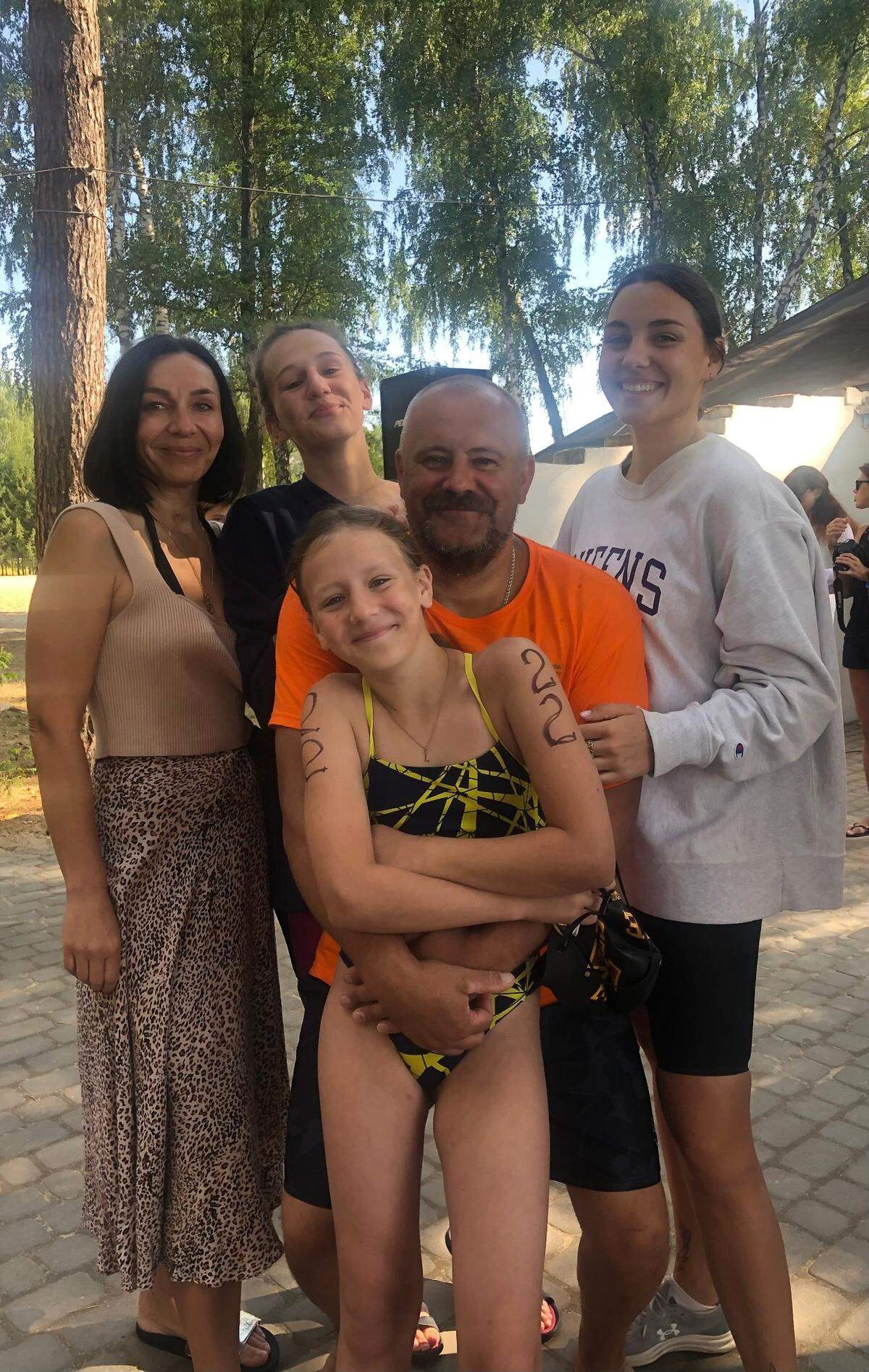
“My sisters are safe,” Maznytska says. “Our godparents are taking really good care of them. And something happens in the west, they’re gonna take them out of country. I am not worried about them because I know they’re in good hands.”
Still, there’s a big part of her that wishes she could be there for them — and there for her country.
“If I were there,” she says, “I’m confident that I would do anything that I could possibly do, like, driving people to the border. Or driving around the city, or helping the Territorial Defense. Feeding them. Gathering stuff for volunteers. I know I would be doing it.”
Ohnov, meanwhile, can imagine how much different things would be for him, too, if he wasn’t at Wingate getting ready to swim at the NCAA meet.
In his case, he says, it’s simple: “I believe I would be on the front line right now.”
‘I am afraid, of course’
Ohnov’s story is similar to Maznytska’s.
He also began swimming around the age of 8, and he also achieved great success as a teenager, posting Ukrainian national records for his age group and winning national titles as an individual multiple times.
Ohnov also wanted to pursue a career away from athletics; he wanted to study criminal justice. But his mother and stepfather couldn’t afford to send him to a school in Ukraine that would allow him to do that. So, after weighing options with family members and getting guidance and encouragement from friends who’d taken scholarships to swim for colleges in the U.S. — including Maznytska, whom he’d met through the sport in 2015 — he took the leap.
He was interested in Wingate, he says, by a few other Ukrainians who had come through private college and because he got a good feeling from Kirk Sanocki, who has been the Bulldogs’ head coach for more than 21 years.
Upon arriving in North Carolina in January 2020, Ohnov made an immediate impact, earning All-American honors in the 100 freestyle and as a member of the 400 freestyle relay team during a COVID-shortened season. In his sophomore season, at the 2021 NCAA championships held last March, he recorded four first-team All-American swims.
Ohnov also has excelled as a student; last year, he earned Scholar All-American honors.
His goal after graduation a year from May is to become a police officer, and to perhaps eventually progress into a job as a crime scene detective or a SWAT team member.
“We’ll see. It’s also one of the reason why I feel kind of guilty, because I’m studying criminal justice. I’m looking forward to working with crime in my future, but I’m not back home right now, not protecting my country,” says Ohnov, noting that several of his childhood swimming friends have volunteered to join the Territorial Defense Forces. “And this is just everything like mixed up in my head.”
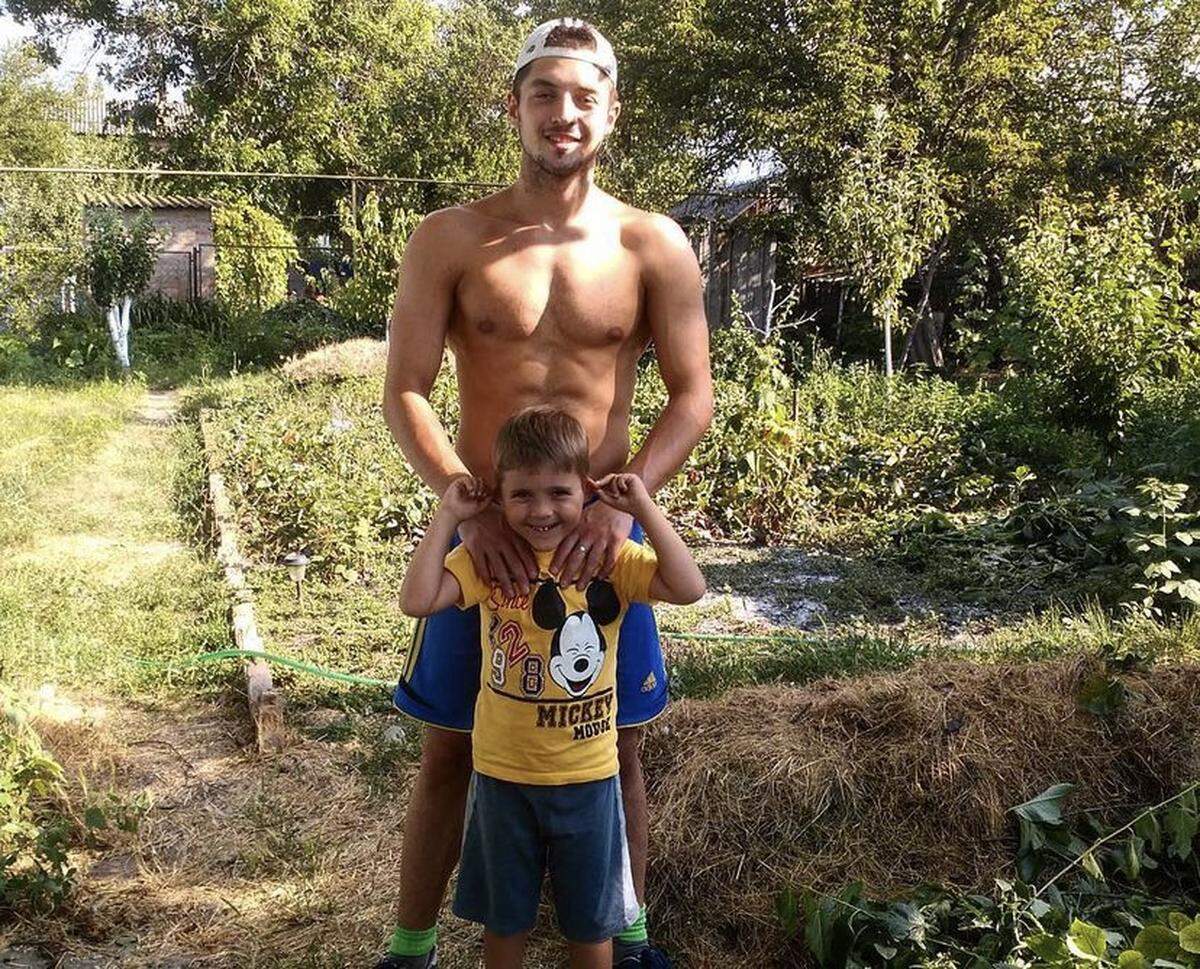
His family — including his mother, his stepfather, and his younger brother Danil — is in region of Ukraine that is more unsafe. Last Tuesday, in fact, there were reports of Russian planes bombing the airport in his hometown of Kropyvnytskyi.
“I am afraid, of course,” he says. “I mean, it’s my family. I haven’t seen them for almost 2-1/2 years.” Unlike Maznytska, who has been able to return home to visit multiple times in the past few years, Ohnov has not been back since he arrived in the U.S.
“I hope,” he continues, “I will be able to see them again.”
A plan to show their colors at NCAAs
After her panic attack was over that first night, Maznytska went into the bathroom to wash her face and found herself staring at her reflection in the mirror.
“I was like, ‘What’s swimming? What nationals? What am I doing?’ That was kind of going through my head,” she says, “like, how is this even important right now?”
Ohnov, meanwhile, says that for the first few days, “I was nowhere but in news, in my phone, and trying to keep in touch with everybody that I can.”
“I don’t have that much thoughts about swimming right now,” he says. “I mean, all my thoughts are with regard to Ukraine, my family and friends right now.”
At the same time, they’ve both come around in their thinking over the past week.
“I kind of see this last meet right now as my fight, and my chance to show the swimming community what we are and what we’re made of,” Maznytska says. “I think what’s going on at home, like, if those brave men can protect our country at the cost of their lives, I need to do what I made a commitment to.”
“I wish I was there to be doing it,” she continues, referring again to being at home helping the resistance. “But I believe that everyone needs to be where they can be of the most good use. And I think right now, I can be the most useful to myself, to my team, and to my country here.”
Last week, Maznytska texted Ohnov to ask him whether he had a Ukrainian flag, saying she wanted to walk into each of her races at the NCAA meet with one draped over her shoulders.
He told her he did — and that he was thinking the same thing.
It’s important, they both agree, for people to see that they’re from Ukraine.
“To see,” Ohnov says, “that I’m actually worried for my country.” Echoing his friend’s sentiment, he adds: “Since a lot of my friends ... back home are fighting for their country, for my country right now, I guess at least I can do is show that I’m part of it, and I can fight my own fight in the swimming pool.
“My friends back home, they don’t give up in fighting. I can’t give up here. I have to keep swimming.”
-
Ohnov will compete in the 100 freestyle as an individual and expects to swim with all of Wingate’s relay teams at the NCAA Division II men’s and women’s swimming and diving championships, which take place in Greensboro starting Wednesday. Maznytska will be competing in the 100 and 200 backstroke as an individual and says she also will be on the 200 medley relay and 400 medley relay teams. If the Queens women win the team title, she’ll graduate with four championship rings.
Ohnov urges anyone interested in learning more about Ukraine’s situation to visit https://war.ukraine.ua/#pll_switcher, a website maintained by the Ministry of Foreign Affairs of Ukraine. Those wishing to donate to defense efforts can also do so via the site.
This story was originally published March 7, 2022 at 6:00 AM.