
Hispanic representation in Meck County isn’t reflecting population growth trends. Why?
READ MORE
Where’s the representation?
In Mecklenburg County, Hispanic people make up more than 14% of the population. But just three out of more than 100 political candidates are Hispanic or Latino. Check out our special report below.
Expand All
Hispanic representation in Meck County isn’t reflecting population growth trends. Why?
What are Mecklenburg County Latino voters’ top concerns? It might surprise you.
Hispanic Federation is mobilizing Latino voters in NC. Its goal? A record turnout
How changes to the census reveal Charlotte is much more Latino than we thought
Latinos running for office face roadblocks — even in blue parts of NC
Despite a population boom of Hispanic people over the past decade in the Charlotte area, voters will see few Hispanic candidates on their ballots in Mecklenburg and surrounding counties this November.
In Mecklenburg County, where the U.S. Census Bureau found Hispanic people make up more than 14% of the population, only four out of more than 100 candidates are Hispanic or Latino, according to an analysis of voter registration data by the Raleigh News & Observer. All told, less than 4% of all candidates in the county identify as Hispanic or Latino.
In the five bordering counties, there are a combined four Hispanic or Latino candidates. Each county has between 40 to 60 candidates.
The lack of representation in elected office is nothing new, said German DeCastro, who founded the Hispanic Voter Coalition in Mecklenburg County in 1992 with his wife, Olma Echeverri. It can also have big consequences.
“If you don’t jump in the ring you will never win the fight,” DeCastro said. “If we don’t have people who are in elected official bodies, we are going to have to work maybe 10 times as hard to obtain what should be something normal.”
Susan Rodriguez-McDowell believes that when she was elected to the Mecklenburg Board of County Commissioners in 2018, she was one of just two Hispanic or Latino elected officials in the entire state.
The number has grown since then, but remains a fraction of the percentage of Hispanic people in North Carolina’s population.
“The implications are huge,” Rodriguez-McDowell said, adding that Hispanic people’s priorities and points of view aren’t adequately represented at the tables of power.
Rodriguez-McDowell is running for reelection in November. The other three candidates who identified as Hispanic in Mecklenburg County are Ray Fuentes, who also is running for the Board of County Commissioners; Steven Rushing, who is running for Charlotte school board; and Cecelia Oseguera, who this summer was appointed as District Court Judge, District 26 Seat 18, to fill the post formerly held by Judge Reggie McKnight. Oseguera is now running for that seat unopposed.
In Union County, two school board candidates identify as Hispanic or Latino, along with one state House candidate in Cabarrus County, and a school board candidate in Gaston County.
No candidates in Lincoln or Iredell counties identified as Hispanic or Latino on their voter registrations, according to the News & Observer’s analysis.
Hispanic people represent a lower percentage of the population in the counties bordering Mecklenburg, according to the U.S. Census Bureau: 12% in Union County, 11.7% in Cabarrus County, and between 7% and 9% in Gaston, Lincoln and Iredell counties. In York County, SC, 6.6% of the population is Hispanic.
Barriers to entry: It’s complicated
It’s one thing to run for office, Rodriguez-McDowell said. It’s another to win.
Rodriguez-McDowell said Hispanic candidates might have less access to money than candidates from other races or ethnic groups, particularly those who have been long established in political circles.
Access to fundraising can be coupled with difficulties getting invited to events or appointed to important boards and commissions, which can be stepping stones to winning elections, she said.
Rodriguez-McDowell sees gerrymandering and voter discrimination as potential serious roadblocks to seeing more Hispanic people elected.
And the Hispanic or Latino identity can be complicated in itself, Rodriguez-McDowell said.
Her father was born in New York to a Cuban father and a Puerto Rican mother. Rodriguez-McDowell, 58, said her father, who was discriminated against because of his ethnicity, “wanted his children to be as Americanized, quote unquote, as possible,” so didn’t teach her Spanish.
That’s left her as one of the few elected leaders in the state representing Hispanic people, but without the language that connects many of them.
“I spend a lot of time feeling inadequate, like I’m not doing a good enough job because I don’t have the language piece,” Rodriguez-McDowell said. “But there’s a lot of people like me.”
Rodriguez-McDowell pointed out that there are prominent Hispanic leaders in the county, just very few in elected positions. Among them are Manolo Betancur, a Colombian who founded Manolo´s Latin Bakery in Charlotte, and has been recognized for his work in social activism and philanthropy.
Others she noted are Jose Hernandez-Paris, executive director of the Latin American Coalition; Wendy Mateo-Pascual co-founder of the Camino Center; DeCastro; Federico Rios, the assistant director of the city’s office of equity, mobility and immigrant integration and Jorge Millares, who made an unsuccessful run for City Council in 2019.
Millares was among three Latino candidates — including Gina Navarrete and Gabe Cartagena — who ran that year. Charlotte has never had a Hispanic City Council member. Dan Ramirez, who died in 2014, was elected to the Mecklenburg County Board of Commissioners in 2002 and again in 2006.
“There’s leadership in the Hispanic community, in the Latino community,” Rodriguez-McDowell said, “but it’s not necessarily elected.”
Pushing for change
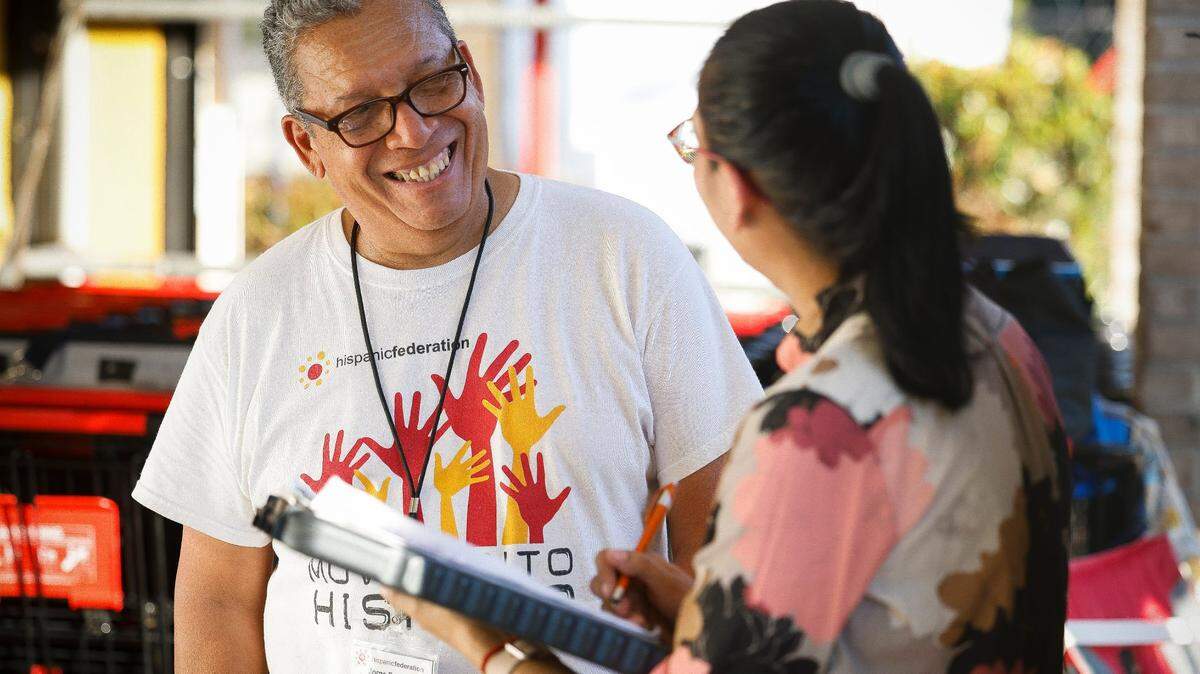
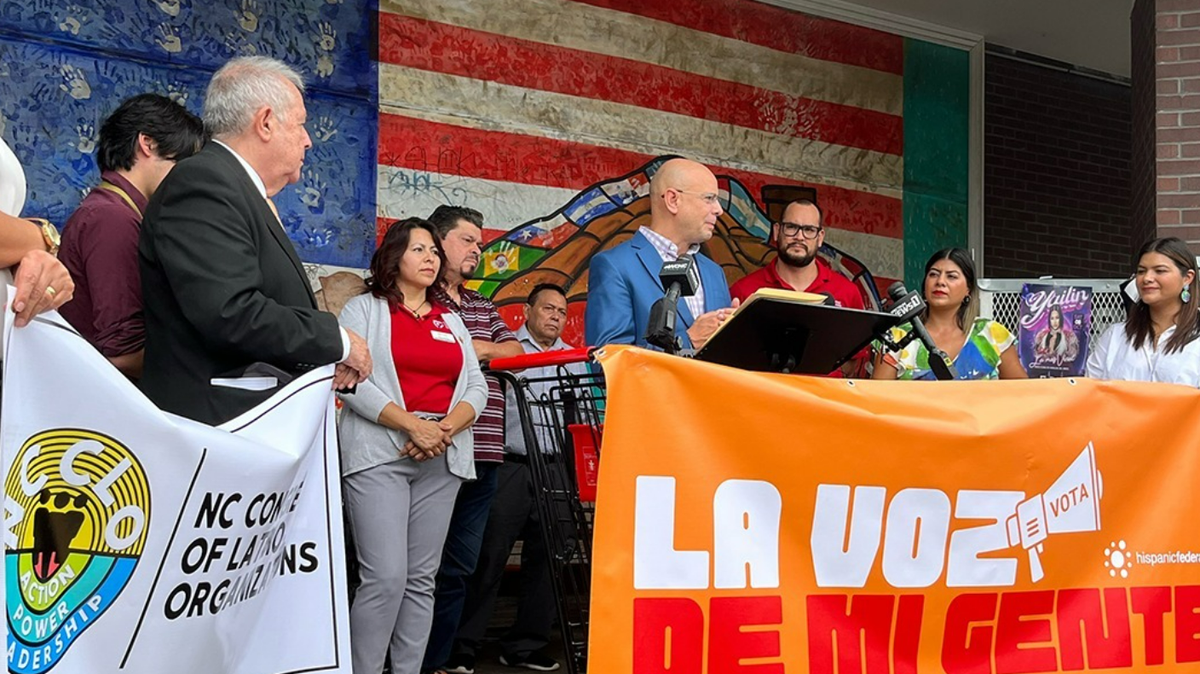
Frederick Velez, the National Director of Civic Engagement at Hispanic Federation, is helping lead a Hispanic voter engagement program in North Carolina and Charlotte called La Voz de Mi Gente (The Voice of My People).
The nonpartisan effort will be targeting Hispanic people through door knocking, phone calls and texts. They’ve also set up voter registration booths, including at four Compare Foods locations around Charlotte. (4316 North Tryon St; 3600 North Sharon Amity; 818 East Arrowood Road; 201 West Arrowood Road.)
Velez said the program will continue through 2023 and hopefully after that. They’ve already seen success.
Some of that success comes not just from contacting voters, but in the ways canvassers are connecting with them, he said. That can include providing materials in Spanish, but also telling people how the elections will impact them.
They’re also telling people just how few Hispanic people have been elected in North Carolina, and about the collective power they can leverage if Hispanic people turn out in force.
“If Latinos turn out, (politicians and candidates) are going to see the numbers,” Velez said.
That could make them think twice before voting for or against a bill that directly affects Latino people, he said.
Why it matters
Rafael Prieto, a journalist with Qué Pasa-Mi Gente in Charlotte, has written extensively about low voter turnout among Hispanic voters in Charlotte.
In the municipal elections this July for Charlotte mayor and City Council, just over 3% of registered Hispanic voters in Charlotte cast ballots, he found.
About 12% of all registered voters cast ballots, according to the state Board of Elections.
In 2018, 4.1% of registered Hispanic voters voted in the primary. About 37% voted in the general election, Prieto wrote for Qué Pasa-Mi Gente at the time.
Prieto said part of making progress will depend on voters realizing just how important local elections are.
For example, he pointed to sheriffs’ offices, which in general, wield a lot of power. Law enforcement personnel working there can decide whether to turn people over to federal immigration authorities if they’re apprehended for a potential violation, even relatively minor infractions.
From 2006 to 2018, 15,478 inmates were processed for deportation in Mecklenburg County. Of those, nearly 4,000 had been arrested for DWI, The Charlotte Observer reported in 2018.
The issue became a focal point of the sheriff’s race, with the incumbent Irwin Carmichael supporting the program that cooperated with immigration authorities and two challengers who opposed it.
Garry McFadden, Mecklenburg County’s current sheriff, opposed partnering with Immigration and Customs Enforcement, or ICE, and won.
Prieto said on other topics like Medicaid, ID laws and law enforcement, Hispanic residents suffer by not having enough representation in elected office.
Representation is more complicated than what’s on the ballot, Prieto said.
On many levels of government — the percentage of police officers who are Hispanic or Latino; the number of contracts between Hispanic vendors and local or state governments; the number of teachers who speak Spanish — Prieto said he hopes to see improvement.
That starts with making the Hispanic population as a whole realize the amount of power they could hold by voting, he said.
“We have to educate them,” Prieto said. “I need for my community to change, to change this pattern of indifference.”
Raleigh News & Observer reporter Luciana Perez Uribe Guinassi contributed to this story.
--
Editor’s note: The News & Observer found the number of Hispanic or Latino candidates by combining the North Carolina State Board of Elections’ current voter registration database with its 2022 candidate database.
The candidate database does not include what ethnicity candidates identify with, while the voter registration database does. This merging of databases shows which candidates identified as Hispanic or Latino in their voter registration.
This list is meant to be comprehensive but may leave out Hispanic or Latino candidates if they did not include their ethnicity in their voter rolls. You can read the full N&O methodology in the ‘Hispanic_candidates_NC’ GitHub project.
The list also would not include people who are currently in office but not running for reelection in November.
This story was originally published September 30, 2022 at 6:00 AM.
.jpg)