How changes to the census reveal Charlotte is much more Latino than we thought
READ MORE
Where’s the representation?
In Mecklenburg County, Hispanic people make up more than 14% of the population. But just three out of more than 100 political candidates are Hispanic or Latino. Check out our special report below.
Expand All

Hispanic representation in Meck County isn’t reflecting population growth trends. Why?
What are Mecklenburg County Latino voters’ top concerns? It might surprise you.
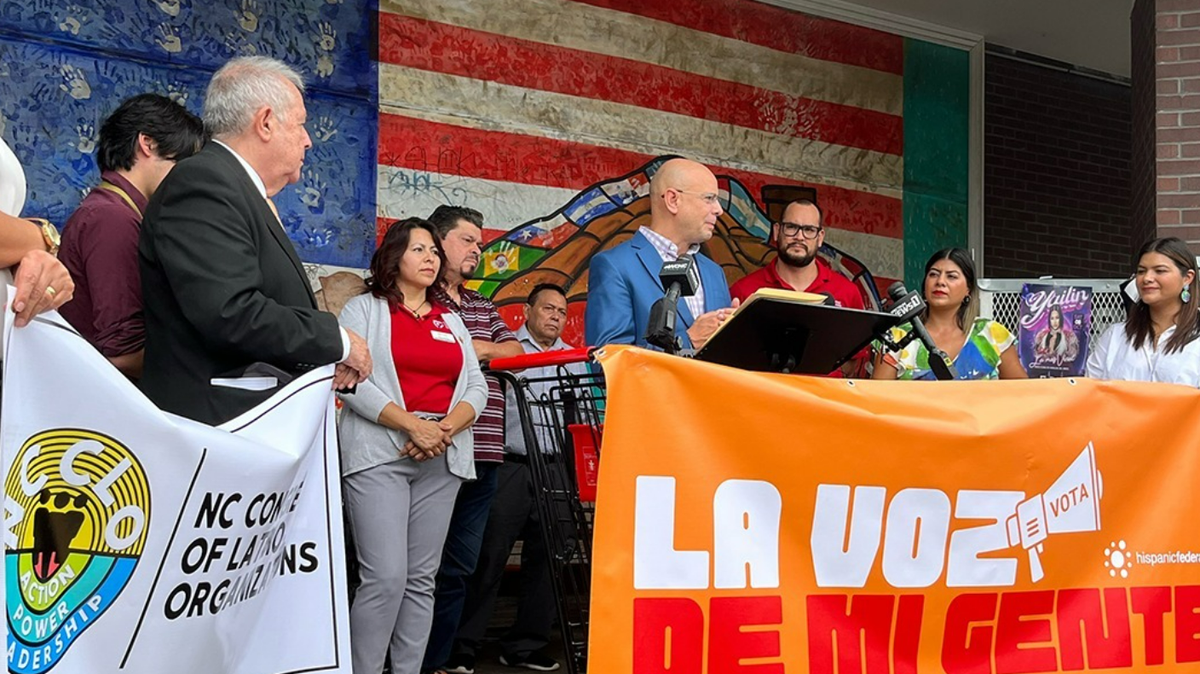
Hispanic Federation is mobilizing Latino voters in NC. Its goal? A record turnout
How changes to the census reveal Charlotte is much more Latino than we thought

Latinos running for office face roadblocks — even in blue parts of NC
Home to authentic markets, vibrant festivals and some of the best taquerias in the state, Charlotte’s Hispanic and Latino community is not a quiet one — and it is not as camouflaged as it was a decade ago.
In fact, the most recent census shows a boom in the Hispanic population everywhere.
While Charlotte has experienced a massive boom in population since 2010, the U.S. Census Bureau attributes the rapid growth of Hispanic and Latino populations in recent years to changes in its data collection that have led to more accurate reporting.
Since 2010, the state of North Carolina has seen a 40% increase in the Hispanic population, according to the 2020 Census. More specifically, in Mecklenburg County, the Hispanic population accounted for some of the highest growth out of any other ethnic population over the last 10 years. In Charlotte, Latinos make up 14% of the population.
The agency began collecting data in 1790 and is widely considered the most reputable source of U.S. population demographics. However, data on the Hispanic and Latino population has only been collected and reported since 1970.
During the last five decades, changes have been added to census questions that offer the Hispanic and Latino population other choices in how they wish to self-identify. The most recent data release shows the number of persons in this demographic nationally has surpassed 62 million — an increase of 12 million since 2010.
The shift in aggregating practices comes as a result of research conducted in 2008 and 2015 wherein new designs to the Hispanic and Latino section of the questionnaire were experimented.
According to the agency, the improvements allowed for a more accurate self-identification process for Hispanics and Latinos which, paints a more precise portrait of the general population.
This portrait shows that the national population is “much more multiracial” and “diverse” than what has been previously reported.
“We are confident that differences in the overall racial distributions are largely due to improvements in the design of the two separate questions for race data collection and processing as well as some demographic changes over the past 10 years,” the bureau wrote on its website.
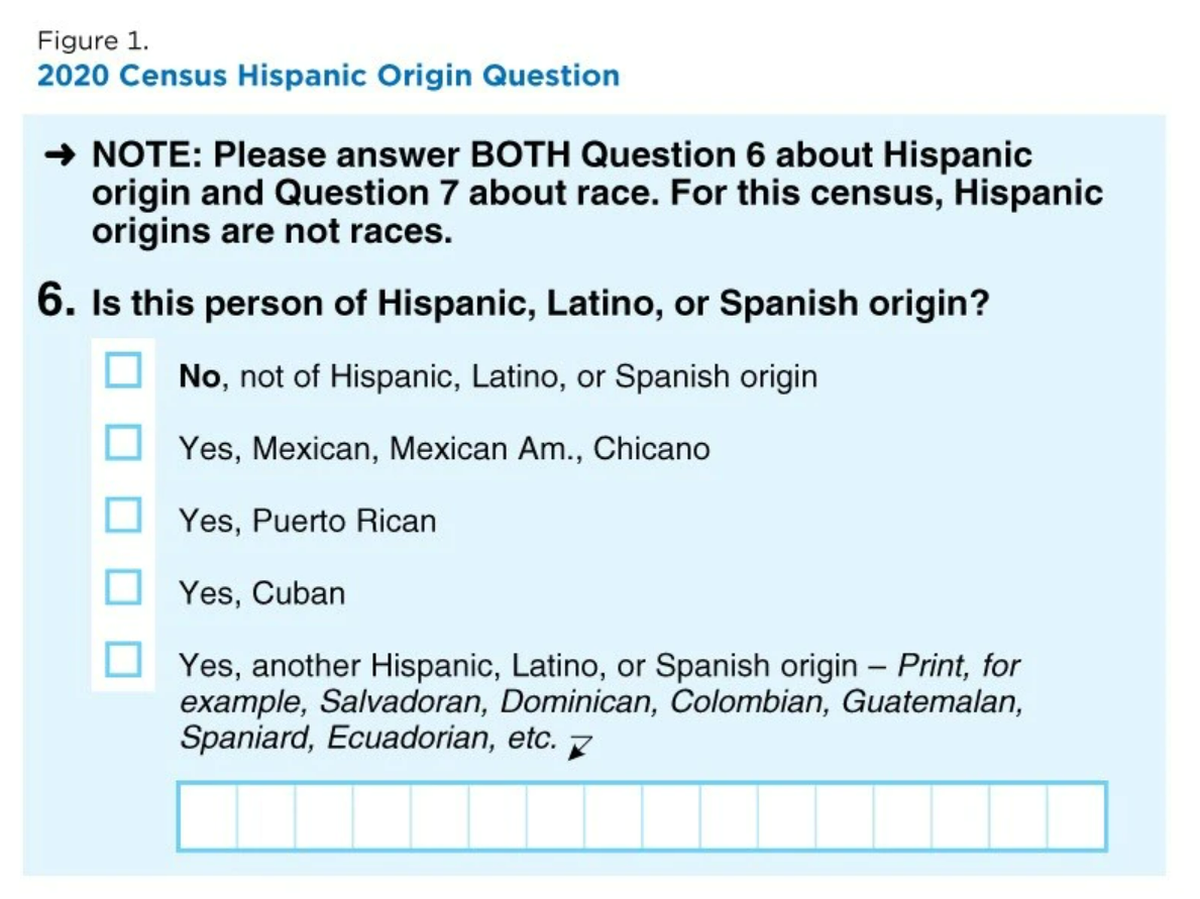
Historically, people who consider themselves Hispanic or Latino could classify themselves on the census form as “Mexican, Mexican American; Chicano; Puerto Rican; Cuban; or of another Hispanic, Latino, or Spanish origin.” That language on the census hasn’t changed.
But smaller details, such as the revision where a person could print their country of origin allowed participants to better understand what the questionnaire was asking, research by the bureau found.
Additionally, census-provided examples of those “other” groups were updated to offer diverse options, such as “Salvadoran, Dominican, Colombian, Guatemalan, Spaniard, Ecuadorian,” for example, as displayed on the most recent questionnaire.
The edit was done to give examples of the most populous Hispanic-origin populations in hopes that more people who opt to write in their origin use the self-identification field as accurately as possible.
Another improvement comes in the form of “coding.” The coding process begins when census forms are received and data is collected from responses.
One of the more efficient revisions allows the bureau to capture up to 200 characters in a Hispanic or Latino origin “write-in” response. In previous data collections, the maximum number of characters considered in that field was 30.
The census bureau stated the changes to coding will improve the accuracy of origin reporting in the 2020s and ensure “a more complete picture of the detailed identities reported.”
“These improvements more accurately illustrate the richness and complexity of how people identify their race and ethnicity in the 21st century,” the agency stated.