No transit tax vote in 2022, but new rail lines will require increase, CATS CEO says
Charlotte voters won’t see a transit sales tax referendum on their ballot in 2022, but the measure remains key to building two new rail lines in Mecklenburg County, according to Charlotte Area Transit System CEO John Lewis.
The transit sales tax idea dates back to at least 2020, when the Charlotte MOVES Task Force proposed paying for up to $6 billion with a new sales tax and city bonds — a “One Cent for Mobility” plan. But the idea never gained enough steam in the state legislature or among local government officials representing parts of Mecklenburg County to make it onto ballots.
Likewise, the proposed Red Line to northern Mecklenburg County has remained stalled for more than two decades partly because of of Norfolk Southern’s ownership of the O-line, a rarely used freight line that runs from Winston-Salem to Charlotte that CATS hopes to use, too. A CATS policy board on Sept. 29 approved $5 million for design of the Red Line and for “continued coordination with Norfolk Southern for use of their existing rail line.” But City Councilman Ed Driggs, chair of the council’s transportation committee, says that’s only a move to freshen up the plan and position CATS to move quickly after a deal with Norfolk Southern.
The Metropolitan Transit Commission approved a phased strategy for the Silver Line, an east-west light rail running from Union to Gaston counties. The plan is in its first phase. CATS is working on design and “identifying sources of local and federal funding.”
If county leaders truly want to see a LYNX Red Line or the Silver Line, they’ll need to put a penny sales tax referendum or something similar on the ballot to pay for it, Lewis said at a transit and economic development forum organized by CharlotteEAST Thursday.

CATS has relied on the half-cent transit tax to fund itself for more than two decades — and the system has outgrown the funding model, Lewis said. The plan in 1998 included only the Blue Line and the Red Line.
Though the Red Line has not yet come to fruition, the Blue Line has increased in popularity since its opening in 2007. From 2012 to 2019, CATS doubled the number of light rail vehicles from 20 to 42 as part of the Blue Line extension project.
The Gold Line streetcar and MetroRapid Interstate 77 bus line have been added as rapid transit options.
But the Silver and Red Line are “not possible without a new funding source,” Lewis said.
“Whether it’s 1 one cent or whatever, we just have to do the math and figure out what it’s going to take to do that,” Lewis said.
What are the Red and Silver lines?
Charlotte is far from being the transit-oriented city it plans to be.
The Strategic Mobility Plan passed in June showed 76.6% of Charlotte workers drive alone to work. Only 3.4% of Charlotte’s workers use public transit, with others working from home, carpooling, biking or walking. The plan blames Charlotte’s car dependency on sprawling growth after World War II and the city’s historic under investment in walking, biking and public transportation infrastructure.
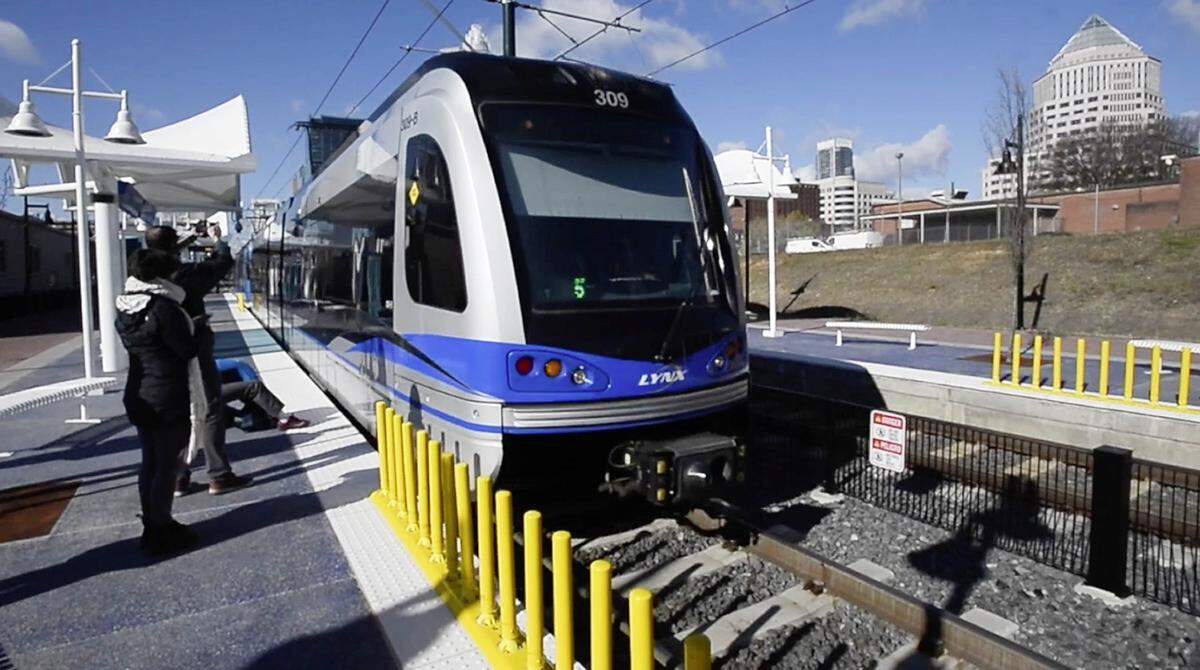
In an effort to change this, the plan’s transit goal includes adding 25 miles of commuter rail, 37.8 miles of streetcar and light rail and 27.4 miles of bus transit. Specific completion dates aren’t attached because projects aren’t funded yet.
The Red Line represents the entirety of the 25 miles of commuter rail. Plans show 10 stations and nine park and rides in northern Mecklenburg County. An extension into Iredell County would require regional support, according to the Strategic Mobility Plan.
The Silver Line would be 26.6 miles of light rail from Belmont to the Central Piedmont Community College Levine Campus in Matthews, passing Charlotte Douglas International Airport on its way. But an extension into Union County and further into Gaston County would require regional support.
How would Charlotte raise taxes?
Any proposed sales tax increase and referendum would require authorization by the General Assembly. Charlotte’s current 7.25% tax is one of North Carolina’s highest.
Mecklenburg County would then contact the local and state boards of elections to have an advisory referendum on a ballot during a regularly scheduled election. The county must also hold a public hearing at least 30 days before the election on the referendum.
If voters approve the tax referendum, county commissioners would vote on a resolution to levy the taxes.
But before any of this can happen, CATS has to convince the county the sales tax referendum is the right way to go.
What do elected leaders think?
At-large County Commissioner Pat Cotham is skeptical about the Red Line and a tax referendum because relations with Norfolk Southern have not allowed use of its existing rail line for the past two decades. Why would they do it now?
“I’ll believe it when I see it,” Cotham said. “I think it’s wishful thinking that discussions with the railroad will allow this and the people in north Mecklenburg have received the short end of the stick on roads.”
It would also be tough to get northern Mecklenburg County support, Cotham said. Cornelius, Huntersville and Davidson have not seen benefits from the half-cent sales tax they’ve been paying for decades. And when plans called for new lanes on Interstate 77, they were toll lanes.

“I think the main concern is having had the bad experience of paying the (transit) tax all these years and not seeing anything,” Cornelius Mayor Woody Washam told the Observer last year. “I’m really not in favor of another tax. Basically because we’ve gotten nothing, so to speak, out of the original tax.”
Getting the northern towns on board also is a concern for Driggs, who said a referendum is still a few years away.
“We’ll need to conduct a lengthy marketing campaign to persuade the public that there are advantages to this plan for everybody, not just people who use public transportation,” said Driggs, who noted that investment in public transit results in less congestion on roads and cleaner air.
Without a new transit tax, Charlotte is missing funding for 60% of the Red Line, plans show. Federal funding would make up the rest through the forms of grants through the Federal Transit Administration or from President Joe Biden’s Infrastructure Law passed in 2021.
CATS working on new transit center uptown, negotiating union contract
Meanwhile, Charlotte is discussing redeveloping its uptown transit center with a goal of completion by 2028. The Charlotte Transportation Center, which has served the city center for almost three decades, “is nearing the end of its useful life,” Lewis said.
Lewis said he hopes a new CTC would:
▪ Create a more comfortable experience;
▪ Centralize bus transfer;
▪ and minimize pedestrian and automobile conflicts.
It’s unclear what the new CTC would look like or how much it would cost — but $15 million is coming from a federal government grant. CATS and City Council are considering different design options that could move the bus facility underground, move it up to the same level as the Blue Line or keep it at street level.
.png "image (20).png")
The $15 million Charlotte received is just a tiny fraction of the $2.2 billion that’s being distributed nationwide from the Infrastructure Law. The Rebuilding American Infrastructure with Sustainability and Equity (RAISE) program awards communities funds to modernize transportation and make systems more “accessible, more affordable, and more sustainable.”
The transit system is also bargaining with its workers’ union for a new contract.
In late September, Charlotte bus drivers rejected a contract that would raise wages by $2 an hour but reduce the number of unexcused absences drivers have.
Starting wages for CATS drivers is $18.77 an hour and the rejected contract would have raised it to $20.78, Hunter said. The proposed contract also included higher shift-differential pay, meaning the additional pay for working off-hours, including nights, Hunter previously told The Charlotte Observer.
The contract rejection comes after a summer of transportation inconsistency. Driver shortages led CATS to trim the frequency of some bus routes this summer. Vacant positions, employee absences, scheduled vacations and days off all affected transit system schedules, officials said.
This story was originally published October 4, 2022 at 7:00 AM.