Light rail, racial equity in policy: Here’s what Charlotte City Council voted on
The Charlotte City Council voted Monday night on a framework to include an equity lens in policy making and approved millions of dollars in light rail investments.
The council also voted to make amendments to its meeting schedule through the end of the year and discussed a land exchange to jump-start hotel development near the Convention Center.
Here’s a roundup of what happened Monday night.
Equity in governance framework
The council voted to adopt an “equity in government” framework, which would require it to consider racial and other inequities when voting on new proposals to ensure policies are inclusive.
Republican council members Tariq Bokhari and Ed Driggs voted against the framework.
The framework sets the following questions as an “equity lens” to help guide city council before voting on policy:
▪ What does the policy seek to accomplish?
▪ Have the people most impacted been engaged and how?
▪ Who benefits or could be burdened by the proposal?
▪ What benefits or adverse impacts could result from the proposal?
▪ How was addressing racial or other inequities considered?
▪ Will the proposal reduce disparities?
.png "image (31).png")
City Council members say using this framework will advance equity by prioritizing disenfranchised residents, creating upward mobility opportunities and addressing historic inequities.
Frederico Rios, assistant director of Charlotte’s Office of Equity, Mobility and Immigrant Integration, said a recent example of policy examined through a racial equity lens is one adopted in June that will make it easier for residents to get speed bumps on their streets. The policy removes a rule that only allowed property owners, not renters, to petition for traffic calming policies.
“This framework is a living document, and as we implement it we’re going to learn how to put an equity lens on our different policy decisions,” Mayor Pro Tem Braxton Winston said before the vote. “This will help future councils make more equitable decisions.”
Bokhari, who represents District 6, said he plans to work with the Equity, Mobility and Immigrant Integration office to expand on the plan — but he didn’t support it how it’s currently written.
“There is inequity in every part of this community,” Bokhari said. “But what we have right now is a set of questions that ... essentially reminds us to ask the question, are we considering equity? That is not a framework.”
Along with applying the equity lens to future projects, the framework in governance would also require the council to review current policies that could be changed to produce more equitable outcomes, equity indicators through data collection and publish an equity dashboard.
In Charlotte, 36% of residents are Black, 15% are Hispanic and 7% are Asian, U.S. Census data show.
The framework comes almost a year after the city of Charlotte launched a $250 million Mayor’s Equity Initiative. The initiative is intended to tackle issues like education and economic mobility to create a corporate response to decades of laws and policies that created disadvantages for Black residents and other people of color.
Convention Center plaza updates
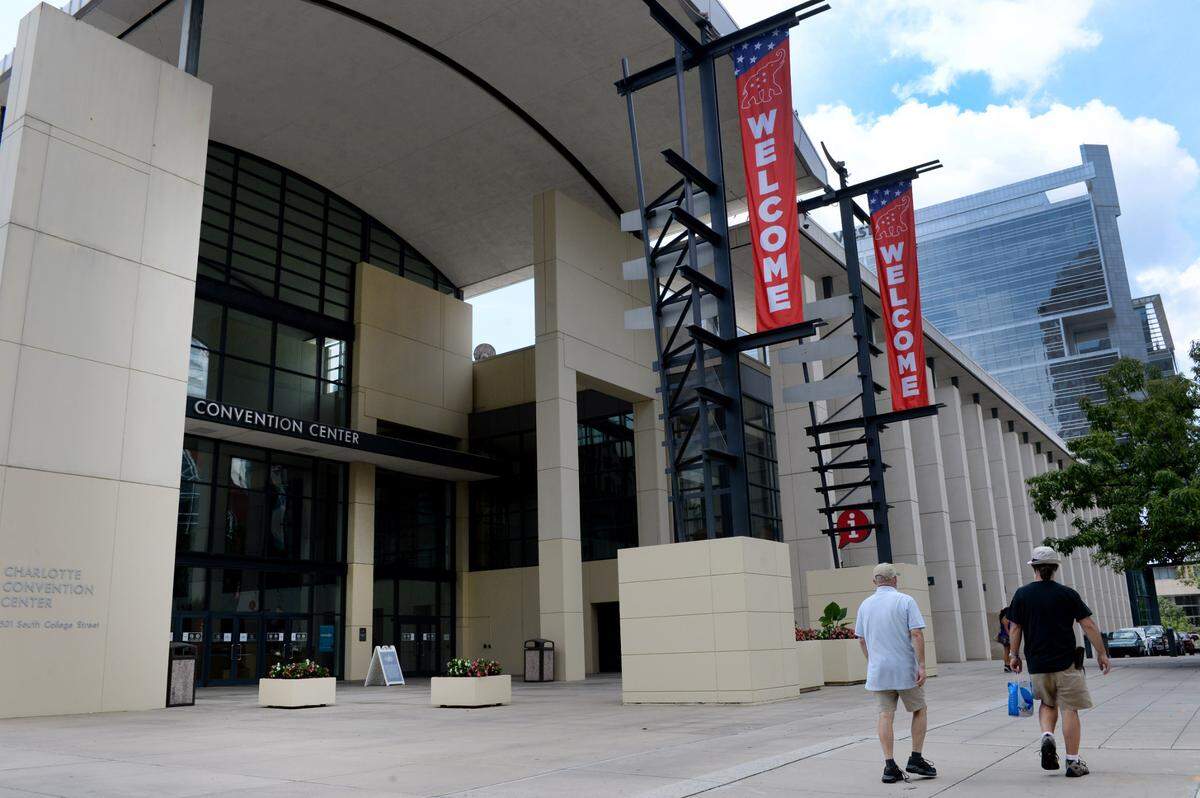
The Charlotte Regional Visitors Authority presented a land swap proposal Monday in an effort to jump-start the development of two hotels adjacent to the Convention Center. The council did not take action on the proposal.
Millennium Venture Capital is under contract to purchase the 0.7-acre property owned by Duke Energy at 401 S. College St. In the proposed swap, Millennium would give that land to the city in exchange for 2.2 acres at 501 S. Caldwell St. The Caldwell property is currently used for surface parking.
The venture capital company also agreed to redevelop the plaza around the Convention Center. With the proposed renovations and land swap, the city is expected to benefit from the deal, Visitors Authority’s CEO Tom Murray said.
Several council members said they were skeptical of the proposal.
“I’m going to be looking critically at the numbers that we get back at valuation because, the fact is, we’re being asked to give out three times as much land as we get,” Councilman Ed Driggs said.
Currently, the Convention Center can host about 15,000 attendees, Murray told council members. Uptown Charlotte only has 6,200 hotel rooms. The greater metropolitan area has 32,000 hotel rooms total, Murray said.
City Council is expected to vote on the land swap Nov. 14.
Norfolk Southern property acquisition
The city gave Charlotte Area Transit System permission to purchase 18 acres for $15 million from Norfolk Southern along North Brevard Street and Parkwood Avenue in the Optimist Park neighborhood.
The property sits next to the North Brevard Light Rail Facility that was built as part of the LYNX Blue Line extension. The property acquisition is to ensure CATS can meet long-term capacity requirements for Blue Line services, according to city documents.
.png "image (32).png")
The land costs $14.8 million, which will come from the CATS Revenue Reserve Fund and the CATS Capital Project Fund.
At-large council member Dimple Ajmera asked if the land was considered for nonprofits or parks prior to the city’s decision to acquire it. CATS CEO John Lewis responded that he was not aware of such considerations.
“We needed this space originally to handle the ongoing maintenance of our fleet and current storage,” Lewis said. “Right now we are storing trains in maintenance bays because we don’t have enough storage space for the current fleet that we have.”
NoDa Blue Line pedestrian connection
Deeper into NoDa, the city also approved a $250,000 pedestrian connection at the Blue Line’s Sugar Creek Station.
Atlanta-based developer Third and Urban is paying for it because it will connect to land it owns at 4100 Raleigh St. CATS will design, construct and test the improvements, which include railings, pedestrian gates, signage modification and safety improvements.
Two former industrial buildings are on the site and the developer plans to build office, retail and restaurant space on the site according to the city’s planning department.
The Sugar Creek Station currently is only accessible from the south end adjacent to the parking garage.
This story was originally published October 24, 2022 at 9:47 PM.