
NC groups host desirable trips where NC lawmakers, lobbyists can mingle. Who pays?

On its website, Opportunity for NC bills itself as dedicated to “education, free market solutions, and family flourishing.”
The Wilmington-based nonprofit’s only activity promoted there is a YouTube video with state Sen. Michael Lee, a Wilmington Republican with ties to the group’s founders, in a roundtable discussion about the future of education. Its Facebook page lists no leaders, has one follower and its only two posts are of its logo.
Not mentioned: Last July the organization hosted some of North Carolina’s most powerful politicians and a top lobbyist in Paris as the Summer Olympics opened.
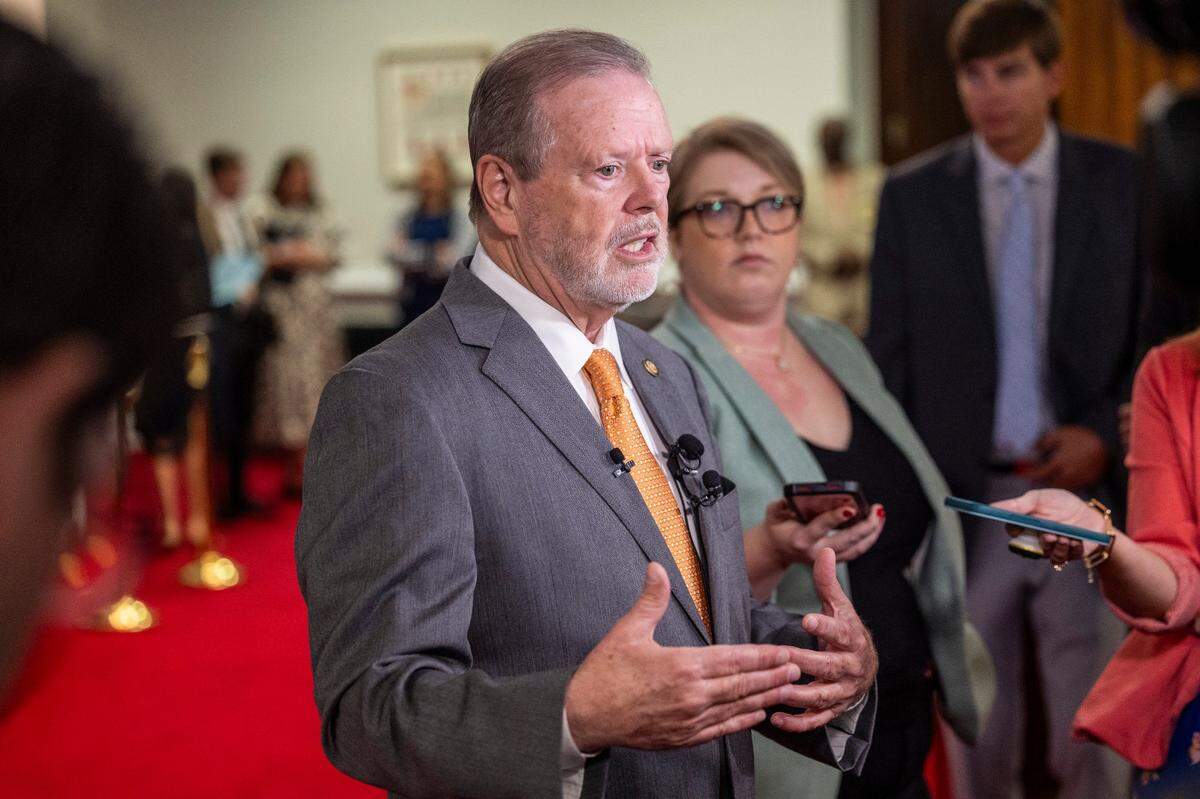
It reported spending $109,000 on Senate leader Phil Berger, Lee and four other state lawmakers; two UNC Board of Governors members; a N.C. State trustee; and a State Lottery Commission member. They stayed in a highly rated hotel that was a 20-minute cab ride from the opening ceremonies, all at the nonprofit’s expense.
Andrew Heath, the nonprofit’s vice chairman, also attended. He’s a registered lobbyist in North Carolina with clients such as MetLife and Cigna. David Powers, the NC State trustee, is also a lobbyist with major clients, including a trade group for sports gambling businesses. Chris Hayes, the lottery commission member, is a senior director of state government affairs with tobacco giant Reynolds American.
Lobbyists and their clients are generally prohibited from taking North Carolina lawmakers on trips, or even buying them a meal. Legislative scandals 20 years ago pushed state legislators to pass a ban on most gifts from lobbyists and their clients. The law allows for exceptions, such as travel for some educational meetings.
Opportunity for NC isn’t disclosing who paid for the trip. Like other so-called social welfare groups, it’s not required to publicly disclose its donors.
“That’s a problem in so many areas,” said N.C. Secretary of State Elaine Marshall, a Harnett County Democrat and former state senator. “You don’t know who the donors are and you don’t know whose interests are being served.”
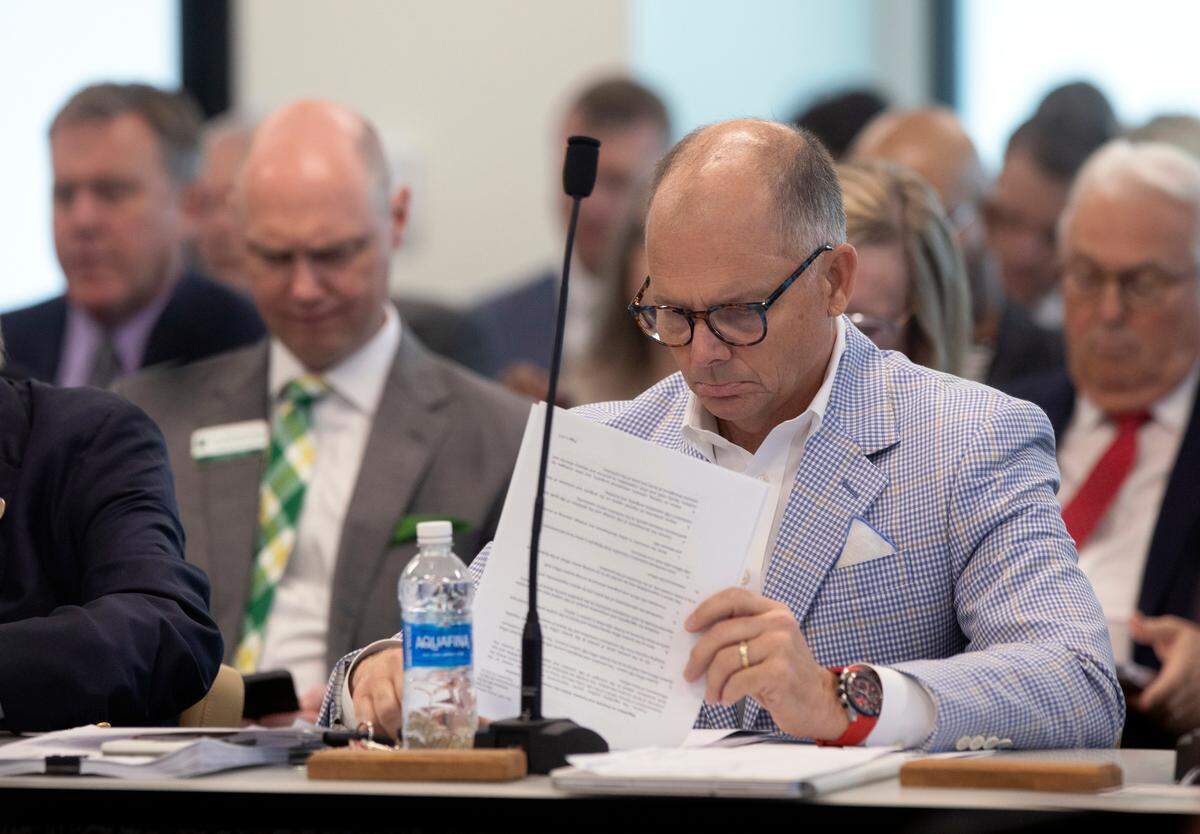
Woody White, a UNC Board of Governors member, is chairman of Opportunity for NC, which formed last year. The nonprofit paid his travel expenses to Paris too, according to a report filed Oct. 30 with the secretary of state’s office.
The group operates “fully within the letter and the spirit of the law,” White, a former state senator from Wilmington, said in an email message.
Opportunity for NC is among the social welfare nonprofits – labeled 501(c)(4)s in the federal tax code – with close ties to North Carolina politicians and political parties. Many of these groups were launched after the U.S. Supreme Court’s Citizens United decision in 2010 opened the floodgates for undisclosed corporate and special-interest group donations in politics.
This year outsiders opened peepholes into the activities of two North Carolina groups, revealing that they hosted out-of-state trips with influential state lawmakers.
Business North Carolina broke news of the Opportunity for NC Paris trip. And a state complaint shows that state lawmakers, lobbyists and others were in Louisville, Kentucky, during an April trip sponsored by Greater Carolina.
Word of that trip first reached the public after a person identifying as a Louisville distillery worker on Reddit accused unidentified North Carolina legislators and government officials of unruly, rude and drunken behavior.

At least 20 of these groups with political ties are active in North Carolina, according to federal tax filings published by the national news organization ProPublica.
They include Democracy Project II, formed by Democratic consultants Scott Falmlen and Morgan Jackson, which challenges Republican redistricting of state and federal legislative seats. Another is the Carolina Leadership Coalition, which was formed by people close to GOP House Speaker Tim Moore and pushes a conservative agenda.
The groups can work to help elect or defeat state, federal or local candidates so long as they do not expressly advocate for or against them. Some conduct issue-oriented polling or publish fliers that promote a stance on political issues without endorsing a candidate.
Opportunity for NC and Greater Carolina have strong Republican connections. State Republican party Finance Director Sarah Newby is registered with the N.C. Secretary of State as a fundraiser for Opportunity for NC and was listed as the contact for those registering for Greater Carolina’s event in Louisville. Both organizations also referred a reporter’s questions to Republican consultants.
Greater Carolina is now the subject of a complaint filed with the N.C. Secretary of State, State Ethics Commission, state Legislative Ethics Committee and IRS. It alleges lobbying, ethics and federal tax law violations. Filed by Blair Reeves, who leads the Carolina Forward progressive nonprofit that is itself a 501c4, the complaint includes documentation showing Greater Carolina’s ties to prominent Republicans and veteran lobbyists.
Free trip for legislators with lobbyists
Greater Carolina was founded in 2018 by Clark Riemer, a former aide to Jason Saine, until recently a powerful Lincoln County Republican state lawmaker who pushed to expand legal gambling in North Carolina. The sole information on its website is a survey and market analysis it paid for supporting expanded gambling in the state.
Riemer is a registered lobbyist with at least two gambling organizations, Rush Street Gaming and Sports Betting Alliance, among his clients. Saine, the former chief House budget writer, initially declined to talk about the Kentucky trip but later confirmed that he attended.
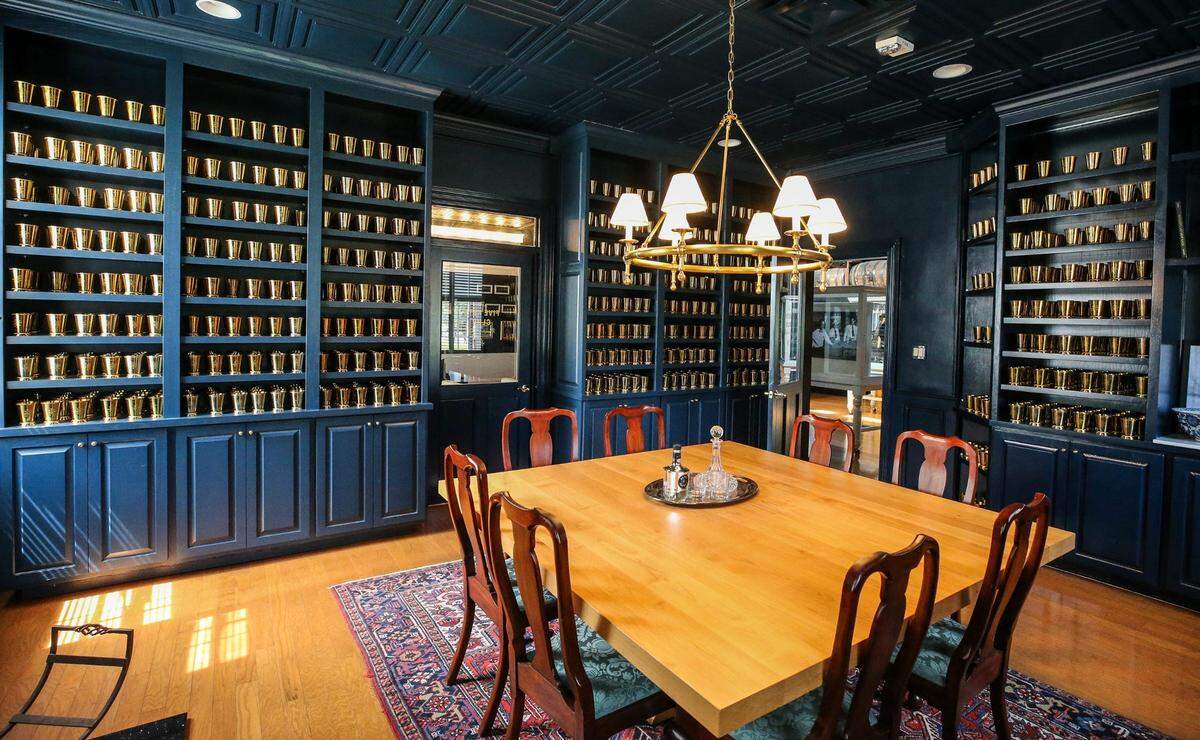
Greater Carolina’s “Kentucky Bourbon and Churchill Downs” event in Louisville ran from April 25-27. Reeves’ complaint includes credit card receipts for purchases at the Stitzel-Weller Distillery in Louisville on April 26. It also alleges lobbyist Kevin Wilkinson invited people to the Louisville event and lobbyist Anna Scott Marsh as a contact for an earlier Greater Carolina event.
Receipts in the complaint show that at least two state legislators were at the distillery on that date: Republican Reps. Kyle Hall, a budget chairman representing Forsyth and Stokes counties, and David Willis of Union County, who sits on the House alcoholic beverage committee. So was one of Saine’s legislative staffers.
The receipts also show purchases at the distillery by Newby, the state Republican Party finance director, Russell Peck, a former lobbyist and onetime state GOP executive director, and lobbyists Riemer, Robert Doreauk, Douglas Miskew, and Alexandra Warren.
Miskew, Walsh and Wilkinson also have clients in the gambling industry, lobbying records with the N.C. Secretary of State’s office show.
The number of clients each lobbyist represent vary widely. Wilkinson has more than 30, according to his filings with the state Secretary of State. In addition to the gaming industry, they collectively represent businesses such as Lenovo, AT&T, builders, the kratom (opioid alternative) industry and entities related to law enforcement, education and local government.
Jonathan Felts, a Republican political consultant who was then Greater Carolina’s spokesperson, in August told The News & Observer that the nonprofit followed the law and accused Reeves of filing a politically motivated complaint.
Neither he nor Saine has disclosed who paid for the Kentucky trip. Unlike Opportunity for NC, Greater Carolina has not filed a spending disclosure report with the Secretary of State’s office, spokesman Tim Crowley said, adding that Reeves’ complaint prevents the office from discussing whether the trip should have been reported.
Reeves’ complaint requests that the IRS and state agencies investigate Greater Carolina and its director David Coble, Saine, Peck and lobbyists Riemer, Marsh and Wilkinson for failing to follow the state’s laws regarding gifts to lawmakers, disclosure of lobbying expenses and charitable solicitation.
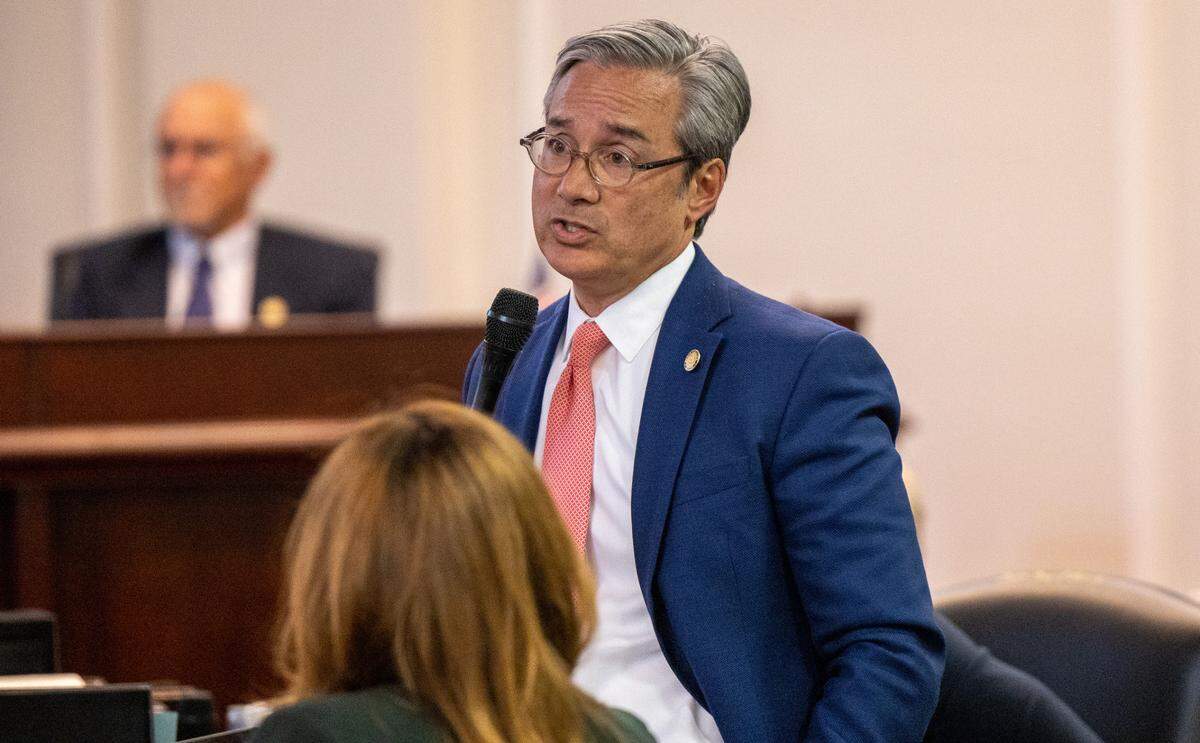
Hall, the state House member, attended the Paris trip three months later with Berger, Lee and fellow Republican state Sens. Bill Rabon, Danny Britt and David Craven.
Democratic House and Senate leaders say none of their members were invited to either trip. Until the November election, Republicans starting in 2023 had supermajorities in both chambers, which allowed them to run the legislature with little Democratic input.
Travel to Paris for the Olympics
White, Heath and others were listed as original board members when Opportunity for NC was created in August 2023, according to its charity license application filed with the Secretary of State’s office.
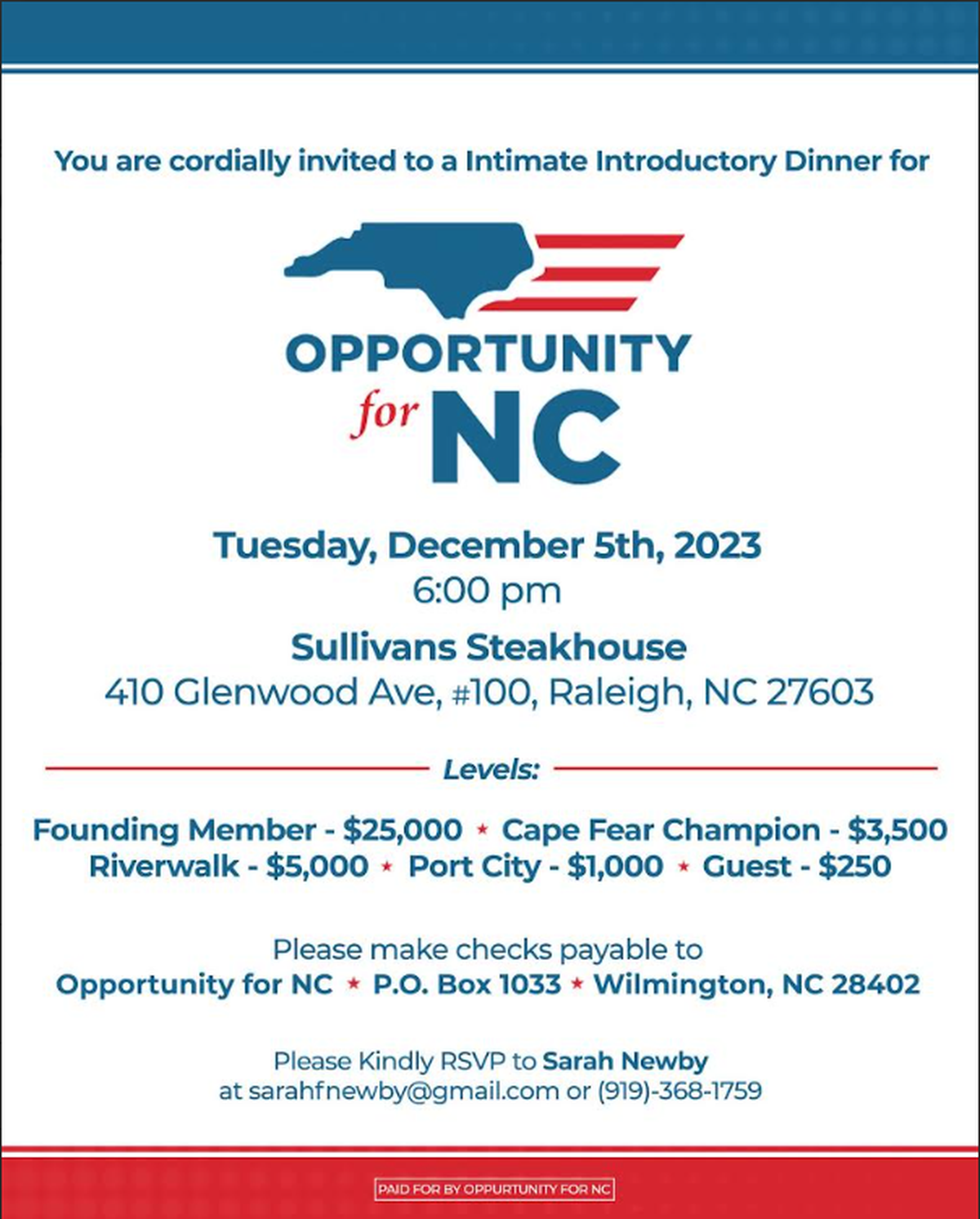
Months before that, the nonprofit held a fundraiser at the upscale Sullivan’s Steakhouse in Raleigh on Dec. 5, 2023, seeking sponsorships ranging from $250 to $25,000. An email invite sent by Newby, obtained by The N&O, described the event as the nonprofit’s “introductory dinner” with Sen. Lee in attendance.
The Paris trip was a fact-finding mission, said Berger and Craven, a Randolph County Republican. Participants met with experts in Paris to discuss transportation, security and housing during the Olympics, the Senate leader said.
“It just seems to me that if North Carolina is going to have other large sporting events that we ought to know what the problems are and what the strategies might be to deal with those problems,” Berger said.
Berger would not disclose who accompanied lawmakers on the trip. He said he did not know who donated money to Opportunity for NC to help fund it.
Lauren Horsch, Berger’s spokeswoman, said the Senate leader had “no public records” to release about that trip. Last year, state lawmakers exempted themselves from the state’s public records law. They now decide whether a record is public or can be destroyed.
Lee, the state senator closely affiliated with Opportunity for NC, told The N&O that he would make himself available to talk about the nonprofit and the trip, but did not return subsequent requests.
Heath, the registered lobbyist who is Opportunity NC’s vice chairman, referred all questions to Michael Luethy, a longtime Republican political consultant. Luethy did not respond but White, the former state senator from Wilmington, did via email.
The other UNC board of governors’ member on the trip was Jimmy Clark, a Greensboro businessman. He declined to comment and Powers could not be reached. Hayes, a former chief of staff to former House Speaker Thom Tillis, referred all questions to White.
Little public disclosure
Oversight of social welfare groups with political links is limited nationwide. ProPublica in 2019 reported that Congress has largely stymied the IRS from regulating them by understaffing the agency. The IRS took a heavy backlash six years earlier from those on the right who accused it of targeting conservative nonprofits.
Social welfare groups must file tax returns with the federal government and register with the N.C. Secretary of State’s Charitable Solicitation Licensing Division. But the required public reporting doesn’t identify their donors or what they pay for.
“It raises a lot of questions about the transparency behind gift giving and whether or not it is a system that we want to have where basically anybody can give gifts to lawmakers kind of using the shield of the 501(c)(4),” said Delaney Marsco, ethics director of the nonpartisan Campaign Legal Center in Washington.
In North Carolina, lobbying regulation falls upon the ethics commission and the Secretary of State’s Lobbying Compliance Division. Both have small staffs. Ten people work for the commission, while five work for the lobbying division.
After Republicans took the majority of seats in the state legislature in the 2011 session, they cut the lobbying division from nine positions to five, said Crowley, the N.C. Secretary of State’s office spokesman. That curtailed systemic reviews “and any resulting enforcement actions that might result,” he said.
When lawmakers go on trips of more than $200 that are allowed under the ethics law, the travel has to be reported, either to the ethics commission or the secretary of state.
Laws expanding transparency, such as requiring donor disclosure, and limits on how much could be donated would prevent special interests from using 501(c)(4) groups, Marsco said.
“It should not be this situation where lavish trips are being given in the dark,” she said. “It’s like that saying: There’s no such thing as a free lunch. Nobody gives lavish gifts of travel out of the goodness of their heart.”
A change of plans for Paris trip
Opportunity for N.C. had intended to let the U.S. Performance Center, a for-profit company looking to expand Olympic sports in North Carolina, to pay for the trip, White said, but feedback the group sought from the State Ethics Commission prompted a change.
Kathleen Edwards, the commission’s executive director, counseled that the nonprofit “should take care to eliminate USPC’s influence over the trip’s activities and benefits provided to attending legislators” in an email to the nonprofit six days before the Paris trip.
All six lawmakers on the Paris trip had voted to approve state budgets that gave $55 million to Charlotte-based U.S. Performance Center and an affiliated nonprofit, the N.C. Sports Legacy Foundation, over the past three years.
Those earmarks are among several unusual expenditures state lawmakers have made to businesses, nonprofits and government entities in large spending bills that The N&O has reported on in its Power & Secrecy investigation.
In the case of the performance center and the legacy foundation, lawmakers required them to spend the money on “capital needs.” But a state agency audit last month identified more than $6 million in “unallowable” expenses.
After receiving the ethics official’s guidance, Opportunity for NC reimbursed U.S. Performance Center and paid for time its staff spent helping plan the trip, White said. The nonprofit “went so far as to segment its own accounts to make certain that zero contributions from lobbyists or lobbyist principals paid for any part of the educational trip,” he said.
Opportunity for NC had planned to spend $175,000 on “educational meetings with government officials to promote international sport competition events,” according to a report submitted in August to the N.C. Secretary of State and obtained by The N&O.
Opportunity for NC’s report on the Paris trip showed it spent $61,000 on travel and lodging; nearly $43,000 on “entertainment, meetings and events”; and $5,200 on food and beverages. It filed the expense report under a law that requires reporting of expenditures of more than $200 to a lawmaker or other state official covered by the state’s lobbying laws from an entity that is not covered by the law.
Neither Heath, the Opportunity for NC vice chairman, nor his lobbying clients helped pay for the trip, and the ethics commission cleared his travel with the lawmakers, White said.
When The N&O asked for the written exchanges between Opportunity for NC and the commission, the agency had no public records to share, Edwards said. State law keeps some ethics commission correspondence confidential.
White did not respond when asked if anyone else was invited to the Paris trip besides the six lawmakers.
Power & Secrecy is a News & Observer investigative series exploring both in North Carolina state government, especially the N.C. General Assembly since 2011, when Republican lawmakers won control of both chambers. Find stories at newsobserver.com/topics/power-secrecy.
This story was originally published December 13, 2024 at 5:30 AM with the headline "NC groups host desirable trips where NC lawmakers, lobbyists can mingle. Who pays?."