Q&A: New Charlotte councilman on ‘Tariq-gate’ and hard-to-measure skill in CMPD chief
The Charlotte City Council’s newest member is no stranger to local politics, but he’s coming back on board at a chaotic time in local government.
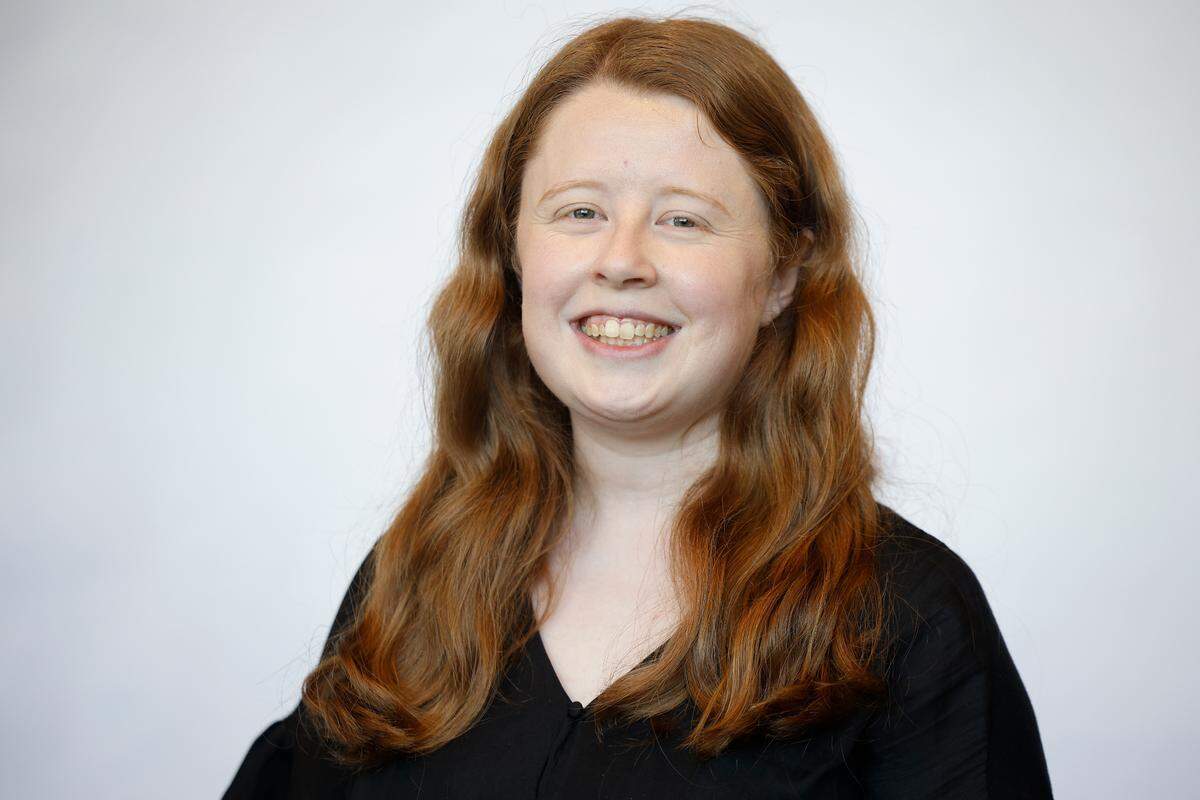
Republican Edwin Peacock III took office in early June to finish out the final term of Tariq Bokhari, who stepped down to take a job in the Trump administration. Peacock, who previously served two terms as an at-large council member and ran for mayor, will represent south Charlotte’s District 6 until December.
Mayor Vi Lyles broke a 5-5 tie among council members to appoint Peacock over Tariq Bokhari’s wife, Krista Bokhari, who sharply criticized the city’s handling of police chief Johnny Jennings’ exit. Jennings’ departure and a six-figure separation deal allegedly stemmed from conflict with Tariq Bokhari. Peacock also came in just as fellow council member Tiawana Brown was indicted on federal fraud charges.
Though he’ll only be in office for about six months, Peacock is optimistic he can foster better relationships among council members and help with Charlotte’s plan to overhaul the region’s transportation system.
He talked to The Charlotte Observer about his priorities, his take on the transit plan, recent turmoil and whether he’ll weigh in on the District 6 election later this year. This conversation has been lightly edited for length and clarity.
Charlotte City Council member Q&A
Question: This is not your first time in office, and I know your family has a little bit of a political legacy, too. Tell me a little bit about that and how you got involved in local politics originally.
Answer: My dad, Ed, served on the Mecklenburg Board of County Commissioners from 1974 to 1980. He was the chair of the board from 1979 to 1980. He won as a Republican a few months after Watergate. So I was 4 years old, and I followed my dad around. I did some of the door knocking for him as a kid. You just never know what example is being set for you in those very moments. And then in 1981, he joined the Charlotte City Council. Then in 1983, he ran for mayor, and lost to a mayor named Harvey Gantt. He thinks it still holds that percentage wise, it was the highest turnout that we’ve seen in a Charlotte mayoral race. It was a very transformative race, and changed, obviously, our whole family’s life. I was a young man at that time and influenced by that experience.
Fast forward to me in 2007, and I just sort of knew rule one in politics is you want to run for a seat when there’s a vacant one. So I jumped on the City Council and ran in my first race in 2007. Council member Pat Mumford had announced that he was not going to run again. Mayor Pat McCrory was in place. I admired and liked him, and saw an opportunity. I won my first election by, I want to say, 370 votes in an at-large race, and got really lucky. That put me on for the next two years. Then Mayor McCrory was out: he went to run for governor, and he lost. Mayor Anthony Foxx was in, and I served one term with him.
And then in 2011, not really massive issues on the ballot, but the Democratic Party was getting the band warmed up for 2012 for President Barack Obama’s reelection. And we later learned that the operatives with Obama’s team were very good at mobilizing in small elections, and they were trying to test strategy. Raleigh, Phoenix, Charlotte were kind of on their hit list, and they swept. I was on that down ticket and got taken off the City Council. And it was a bit of a surprise, but I was like, ‘Hey, things happen for a reason.’
Q: What made now the right time to come back?
A: A vacancy (laughs) I’m in a different phase of my life where my wife and I have kids that are out of the nest for the most part, in college. So I just knew that six months is doable. I dove in, and obviously I also knew that it’s going to be a really short campaign, because I need to focus on only 11 people, the council members and the mayor. I’ve never really talked to the mayor, but I’ve known her for a while, and I’m most appreciative for her tie-breaking vote.
Charlotte transit plans
Q: It’s such a short stint, just six months. What’s the strategy there? What’s your plan to make the most of that time?
A: I think what compelled me to submit my application had a lot to do with what I noticed at the time, which was obviously some of the bad behavior that kind of led to current situations.
The priority in six months — I’m just talking about my role on the board — is just hopefully to bring some element of bridge-building and sort of hopefully relationship-forming element to what I see as a divided board. They have, like all boards, their own divisions and factions. And I’m noticing that those are a little bit stronger than I thought.
Then, depending on what comes out of Raleigh on the transportation side, that did interest me as well. In 2007 when I ran, we had a ballot initiative to remove the sales tax, the half cent that had been on since 1997. A group of conservatives thought this light rail thing was a boondoggle, and they wanted to have it repealed. And so the community kind of stood at attention and said, ‘No, we need to keep the half cent going.’ And as a result, it became the issue of the race.
Just very recently, I was asked to moderate a panel with former Gov. McCrory, who was mayor then. You really sort of felt it, at least in my stance, that I can’t believe how much time has passed. You’re sitting here going, it’s been 18 years since that moment, and now we get a chance to see the impacts of our decision to keep the half cent. Then the question is, if we put another cent on, how are we going to get that through?
I’m growing to be skeptical right now about whether the public has got a whole lot of appetite to vote positively for it. It’s something we already have. And so trying to sell them on the need, I just don’t think the community is really behind it right now. We’ll see, but we’re not talking about it. So I thought, I could be a part of that. I can help the public to understand that when you make a decision today, it’s going to impact you 25 years from now. I’m witnessing it, and I’m going, ‘Hey, it’s real.’
Q: There’s been a lot of talk with the transit bill about the whole “great state of Mecklenburg” thing and the fact that it’s a very Democratic City Council and a very Republican state legislature. The issues that creates, and the need for people like yourself, who are Republicans from Charlotte, to maybe sort of step up and do some lobbying. Is that something you’re on board with?
A: Absolutely. I have some relationships in Raleigh. They’re familiar with me, and I might be familiar with a few of them. I don’t know state House Speaker Destin Hall. I don’t know state Senate leader Phil Berger. But I feel like obviously that’s an advantage when you’re in their party. They don’t look at me suspect. They look at Mecklenburg suspect. I think that obviously helps.
Charlotte City Councilman Ed Driggs has really developed the relationships up there, and he knew that’s a very important part of what you’re doing on council. And when Mayor Lyles got on board to have the Republican National Convention brought here in 2020, she took a lot of heat for that, but she made what I call a Charlotte decision. That really helped her, and it engendered her to Raleigh. Raleigh didn’t view her as an enemy.
‘Tariq-gate and Tiawana-gate’
Q: Are there any other particular policy issues that you’re passionate about?
A: I’ve always been passionate about public safety, and I think that we’re also at an intersection there that I didn’t anticipate until I got here. We’ve got what I’m now calling the twin towers, Tariq-gate and Tiawana-gate. The second one has its own separate track, but everything related to Tariq, that’s what I’m stepping into. That obviously connects to public safety and what will happen with the beginning of the search for a new police chief. I’m interested in that. I was on council when we hired police chief Rodney Monroe, so I watched that process. It’s not me that’s making the hire, but you’re a part of the selection process.
Q: What are some qualities you’d like to see in a new police chief?
A: A good communicator. The respect of his peers, meaning that he’s obviously walked the very beat that they walk.
The other thing, too, is that he needs to recognize that you’ve got to cover the proactive side of law enforcement and the reactive side of law enforcement. Quite frankly, one of the skills that’s really hard to measure as a council is that first one, which is what I consider to be a lot of the soft skills of community building. That is a really important role that a police chief plays. And that always comes into light if we have a very serious incident. You all of a sudden get a chance to see how he’s going to make people feel on camera. That’s not necessarily something that we can hire for, but you’ve definitely got to understand what their background has been.
Q: As you alluded to, it’s been a bit of a chaotic stretch for the council as a whole, a lot of changes, a lot of controversies. What has it been like stepping into the middle of that? And how are you navigating all of that swirling around you as the new-old kid on the block?
A: I’ve been in controversies like this before. You’ve got to take the long view. You’ve also got to recognize when you’ve got a board member who’s been indicted, and you’ve got sort of the residue that comes from inappropriate behavior by a previous board member, you have to move forward. You have to look to find ways to just put it behind you and realize that you’re going to need to work together.
I tried to stress, even in the very first time that I spoke in front of the council, people are going to remember how you made them feel as a board member. And we tend to forget that. They tend to get really narrowly focused as a board member, and you don’t realize you’re gonna probably need the member you have something that you’re really angry about with right now. You’re gonna need them three months from now.
2025 Charlotte election
Q: You’ve said that you don’t plan to run for a full term later this year. The punditry and the people like me out there are expecting a pretty crowded field for District 6. It’s really one of the few competitive races in the general election left. Any thoughts yet on whether you’ll make an endorsement in the primary, or are you just going to keep your oar out of the water?
A: In Republican primaries, my stance has always been to not make an endorsement, primarily because I think it’s unfair to the members of my party to do that. I’ve made some exceptions before when I’ve got a particularly close relationship with somebody, but I try to stay out of endorsements. I also just believe that it’s really hard to correlate whether an endorsement really makes a difference.
This is going to be a competitive race in District 6. I predict somewhere between four to eight candidates will run for it. District races have become ridiculously expensive, so you have to have somebody who knows how to raise money, somebody who knows how to do a ground game.
I’m curious how the Democratic Party will look at this. Do they have a candidate ready to go? Will they pick up Stephanie Hand again? I don’t know her, but she came very close to beating Tariq. You don’t want a 10-1 city council. That could very much happen. So I think that’s really where Charlotte needs to recognize we’re on an imbalanced path right now. If there’s anything I’ve been preaching for its good government and to see a more balanced dynamic on the council. Right now, I’m seeing the mistake of having a one-party council.
This story was originally published June 9, 2025 at 5:00 AM.