
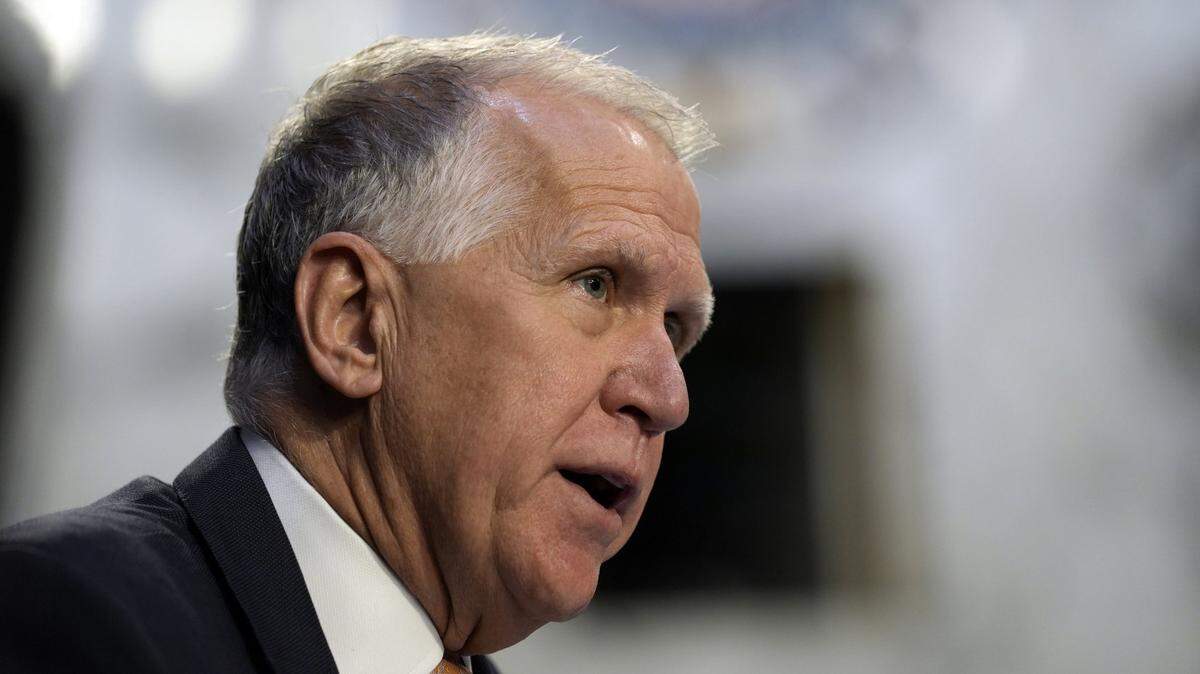
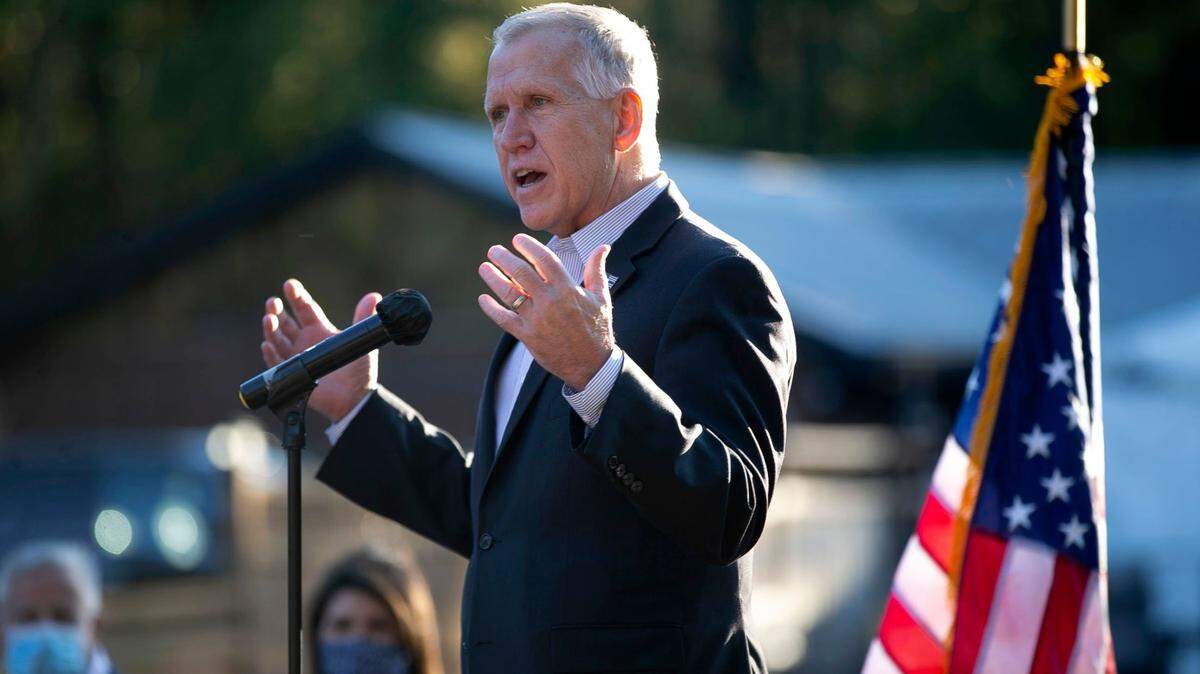
With Sen. Thom Tillis retiring, what happens to his $4 million campaign haul?
AI-generated summary reviewed by our newsroom.
- Sen. Tillis ends reelection bid with more than $4 million in campaign funds.
- FEC rules require refunds for general election donations, totaling 338 gifts.
- Remaining funds may support charities, parties, PACs or future political runs.
READ MORE
US Sen. Thom Tillis & NC Senate race
U.S. Sen. Thom Tillis, a Republican who has represented North Carolina in Washington for a decade , announced June 29, 2025, he won’t seek reelection amid dissent with President Donald Trump. The Huntersville resident, a former speaker of the state House of Representatives, was first elected to the Senate in 2014. Here is coverage of the announcement and what it means for the 2026 Senate race.
Expand All
Over five years, U.S. Sen. Thom Tillis raised more than $5 million toward his reelection campaign, according to Federal Election Commission data.
But despite that haul — more than 13,000 individual campaign contributions — the North Carolina Republican announced Sunday he will not seek a third term next year.
After his campaign spending, Tillis had just over $4 million in the bank as of March 31.
There are strict rules for raising and spending campaign contributions. But If Tillis’ reelection campaign ended before it even really started, what will happen to that $4 million?
Where Tillis’ funds could go
Tillis’ campaign has raised money since 2021, when Tillis entered his second term in the U.S. Senate.
Tillis’ campaign treasurer, Collin McMichael, did not respond to inquiries into how the campaign funds will be spent and distributed now that Tillis plans to retire.
Donors can give only up to a maximum amount, $3,500, per election, but can give that amount twice — once for the primary and once for the general election.
And Tillis is required under FEC rules to refund all contributions that were meant to go toward the general election, according to Brett Kappel, a campaign finance lawyer. Of Tillis’ 13,209 individual campaign contributions, 338 were filed as general election donations.
From there, committees can use funds from primary-election donations to pay off debts and “wind down,” the campaign, Kappel said. Tillis’ campaign does not have any outstanding debt listed on its FEC profile.
After that, there are five FEC-approved routes campaign committees can take to distribute leftover funds:
- The campaign can give funds back to the original contributors, although Kappel said this rarely happens;
- It can contribute to its national party;
- It can donate to charities or nonprofits, which Kappel said is becoming increasingly common;
- It can give up to $2,000 to other state or federal candidates per election;
- And it can contribute up to $5,000 per year to a leadership PAC, which a candidate controls, or an unlimited amount to a super PAC, which unlike traditional PACs can only spend independently of campaigns and cannot directly donate to candidates.
There are two scenarios in which the leftover funds could be used to help Tillis continue his political career. He can create a super PAC that can raise money toward a political agenda, or he could re-allocate his Senate campaign’s funds to a new campaign for office. If Tillis decides to run for any office in the future — including president — he can keep these funds stashed for that purpose.
Campaign committees can shut down once leftover money is gone, but many stay open past the FEC’s two-year suggestion for winding down campaigns.
“There are campaign committees of people who retired or lost elections more than a decade ago that still exist,” Kappel said. “The former members still use [the committees] to make campaign contributions.”
As long as the committees keep up with quarterly deadlines to report their totals, Kappel said these funds can sit untouched indefinitely.
Candidates are not allowed to make personal use of campaign funds, which is a fineable offense.
Who gave to Tillis?
Zoom’s CEO, Microsoft co-founder Bill Gates and two Olympian rowing brothers involved in the early development of Facebook are among Tillis’ biggest campaign contributors, according to FEC filings.
Among those who donated the $3,500 maximum to Tillis’ would-be primary election are former state representative and former state budget director, Art Pope; former state Rep. Grey Mills; and UNC-Chapel Hill Board of Trustees chair John Preyer.
One of North Carolina’s richest people, SAS Institute CEO Jim Goodnight, also donated $3,300 to Tillis this year.
Tillis’s next report is due July 15, covering his fundraising between April and June.
This story was originally published July 2, 2025 at 12:46 PM with the headline "With Sen. Thom Tillis retiring, what happens to his $4 million campaign haul?."

.jpg)