2 months in, is east Charlotte’s ‘Councilman JD’ experiencing the AOC effect?
AI-generated summary reviewed by our newsroom.
- City Councilman JD Mazuera Arias doesn’t go by his last name on council like his peers.
- Experts say that follows a familiar pattern of bleaching Latino names for comfort.
- Mazuera Arias said it doesn’t bother him but is in the back of his mind.
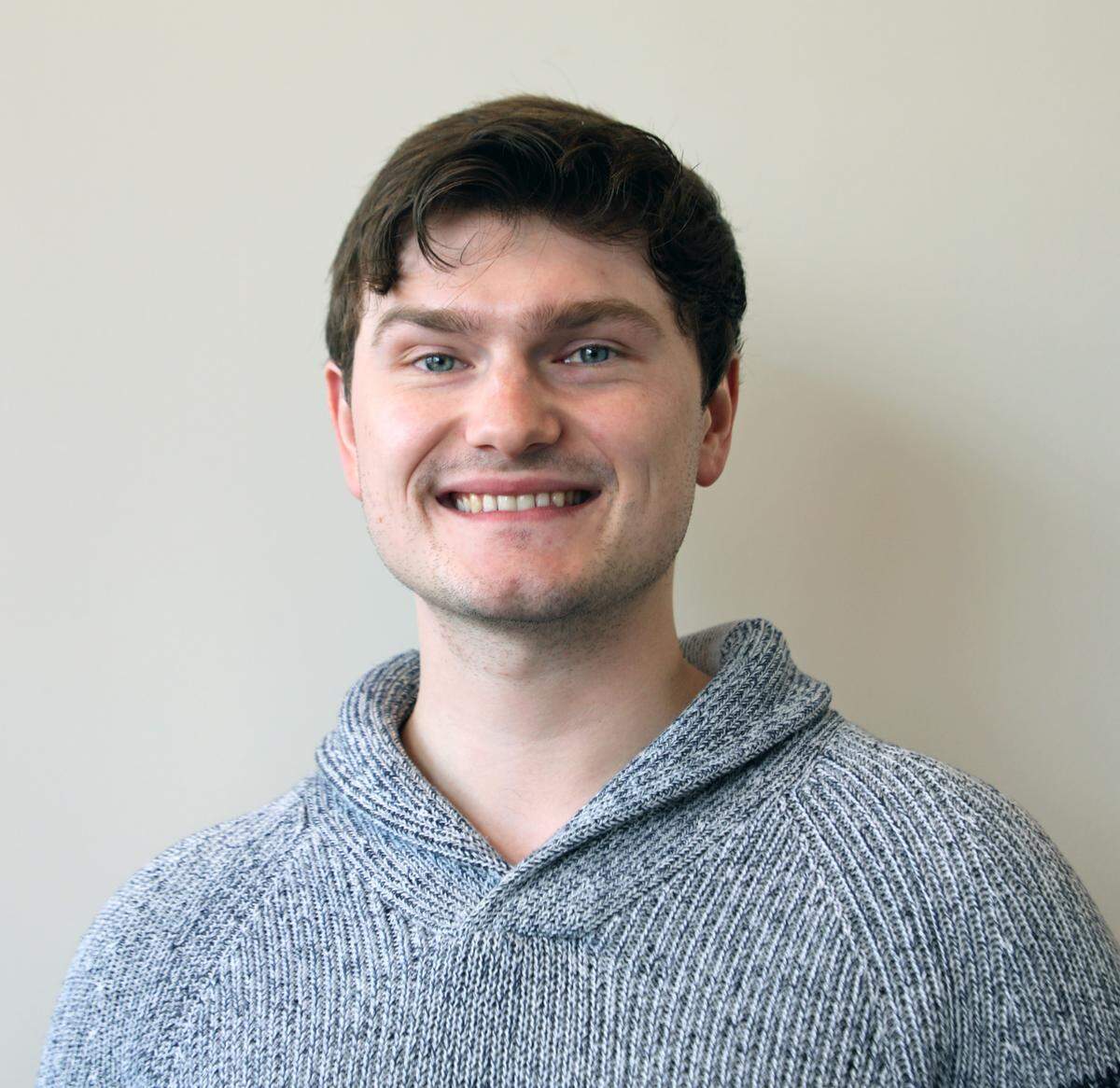
JD Mazuera Arias is an outlier on Charlotte City Council: He’s the first Gen Z councilman. The first Latino. The first formerly undocumented immigrant.
But keen ears might catch another distinction that separates him from his peers at the dais: He’s the only council member not habitually referred to by his last name.
Rather than Councilman Mazuera Arias, which would follow long-established customs on addressing council members by their title and last name, he’s Councilman JD. Or, sometimes, he’s just JD.
He doesn’t take it as a slight or think his colleagues are being disrespectful, he said. He quietly wishes it could be different, though.
“It’s not something that particularly bothers me, but it is something that’s often in the back of my head,” Mazuera Arias said. “Is it something I’m willing to die on a hill for? No.”
Mazuera Arias called it “the AOC effect,” in which leaders of color such as U.S. Rep. Alexandria Ocasio-Cortez have their multipart names abbreviated for the ease of others. Coincidentally, he once worked for Ocasio-Cortez’s office.
There’s some truth to that pattern, said Jonathan Rosa, a linguistic anthropologist and associate professor at Stanford University. His work focuses on language as a form of social action.
People “bleach” or Anglicize Latino names to make themselves more comfortable, Rosa said. And oftentimes, they do it without even realizing.
“These aren’t nefarious. It’s not as though the other members of the council got together and said, ‘We’re going to, as a strategy, undermine this person’s legitimacy,’” Rosa said. “This is why it’s important to pay attention to language in these ways.”
Nefarious or not, Rosa said city leaders should extend the same professional courtesy to Mazuera Arias.
“If you’re going to address all the rest of the City Council members in this way, then a very basic expectation is to address him in the way you address everybody else when you’re in a professional setting,” Rosa said. “That should be a non-conversation.”
For Latin Americans, what’s in a name?
Juan Diego Mazuera Arias was born in Colombia before immigrating to the United States as a baby. He adopted the acronym JD in 2017 while working at the Apple Store because customers couldn’t get his two-part first name right, he said.
“Nobody would say Juan Diego, but everybody would be able to say Mary Anne,” Mazuera Arias said. “It’s a constant struggle I’ve had.”
City leaders have fumbled the pronunciation of Mazuera Arias or paused and stopped themselves before even attempting. His biggest peeve is when somebody calls him “Arias,” which cuts out half of his surname.
The z in Mazuera sounds like an s, and Arias is pronounced AH-i-rias.
“I’ve given my fellow council members permission to call me JD. I’d rather hear JD than my name butchered,” Mazuera Arias said.
Having four names is common in some Latin American countries, said Salma Villarreal Barraza, a first generation Mexican American and the interim director of ourBRIDGE, a nonprofit that provides culturally sensitive services for refugees and immigrant families.
There’s care in trying to say a name correctly even if pronunciation isn’t perfect, Villarreal Barraza said. In one of the first activities each year, ourBRIDGE has children learn the origins of their names and share it with their class.
“It’s a way to share their identity and who they are, and for us to celebrate it,” Villarreal Barraza said. “Names are going to look different. Names are going to be different, and it might not be what we see on TV, but it’s still beautiful.”
Surnames in many Latin American countries are composed of two parts: The first is taken from the father, the second taken from the mother. Both are equally important because they recognize a person’s lineage, and together they form the “last name,” as it is called in the United States.
People in the U.S. often take just one last name. Non-Latinos sometimes use this standard to incorrectly pick a single part of a person’s name to refer to them, Rosa said.
“When you address someone as though some of their names are optional ... it’s a form of disrespect,” Rosa said. “It comes from ignorance.”
Mazuera Arias wants to embrace his Latin heritage
Mazuera Arias underwent a cultural reckoning in recent years as he navigated his identity.
He moved to Washington, D.C., for a policy fellowship with the Congressional Hispanic Caucus Institute in 2020, then to a predominant immigrant community in New York City while pursuing his master’s degree.
After returning to Charlotte, Mazuera Arias ran for City Council amid President Donald Trump’s crackdown on immigration. As councilman-elect he was a loud opposition voice against Operation Charlotte’s Web, the federal immigration surge that rattled the city in November. The Charlotte Observer named him one of its emerging leaders in 2026 for his rapid rise in local advocacy.
Seeing Puerto Rican superstar Bad Bunny win album of the year at the Grammys — the first Spanish album ever to do so — and perform entirely in Spanish at the Super Bowl this month gave him his latest boost of courage to be unapologetically Latino, he said, and to be proud of where he came from.
He won’t correct anybody for calling him JD while at the dais. But he would gladly embrace his last name, too.
“I’ve been reconnecting with my Latin and Colombian roots more than ever before, and I’m undoing a lot of harmful assimilation that was placed upon me by societal standards,” Mazuera Arias said. “Each moment of those stages of my life have led me to be more proud and more respectful of my culture, my heritage.”
This story was originally published February 17, 2026 at 5:00 AM.