Charlotte Mayor Vi Lyles announces surprise resignation 6 months after reelection
Longtime Charlotte Mayor Vi Lyles plans to step down less than halfway through her latest term leading the nation’s 14th-largest city.
The five-term Democrat will resign June 30, spokesperson LaToya Evans said in a statement. Lyles will not run for another term in 2027, according to a news release.
“Serving as Charlotte’s mayor has been the honor of my life,” Lyles said in a statement. “I am proud of our record navigating various challenges, strengthening our economy, investing in our neighborhoods, and building a foundation for Charlotte’s continued success during a time of rapid growth. Now, it is time for the next phase of my life, to spend more time with my grandchildren and for someone new to lead us forward.”
The news release did not specify why she is leaving office.
“As in all things politics, I am sure there will be speculation as to why I am making this decision now. Simply put, I am going to spend time with my grandchildren,” Lyles said. “Like many of us, I have missed some moments with them and intend to not miss anymore!”
Some wondered whether Lyles, 73, would run for reelection in 2025. But she ultimately mounted a campaign and easily defeated her primary and general election opponents. Her departure is likely to trigger a crowded field of mayoral candidates in 2027.
It will be up to the Charlotte City Council to decide who finishes out Lyles’ term in office.
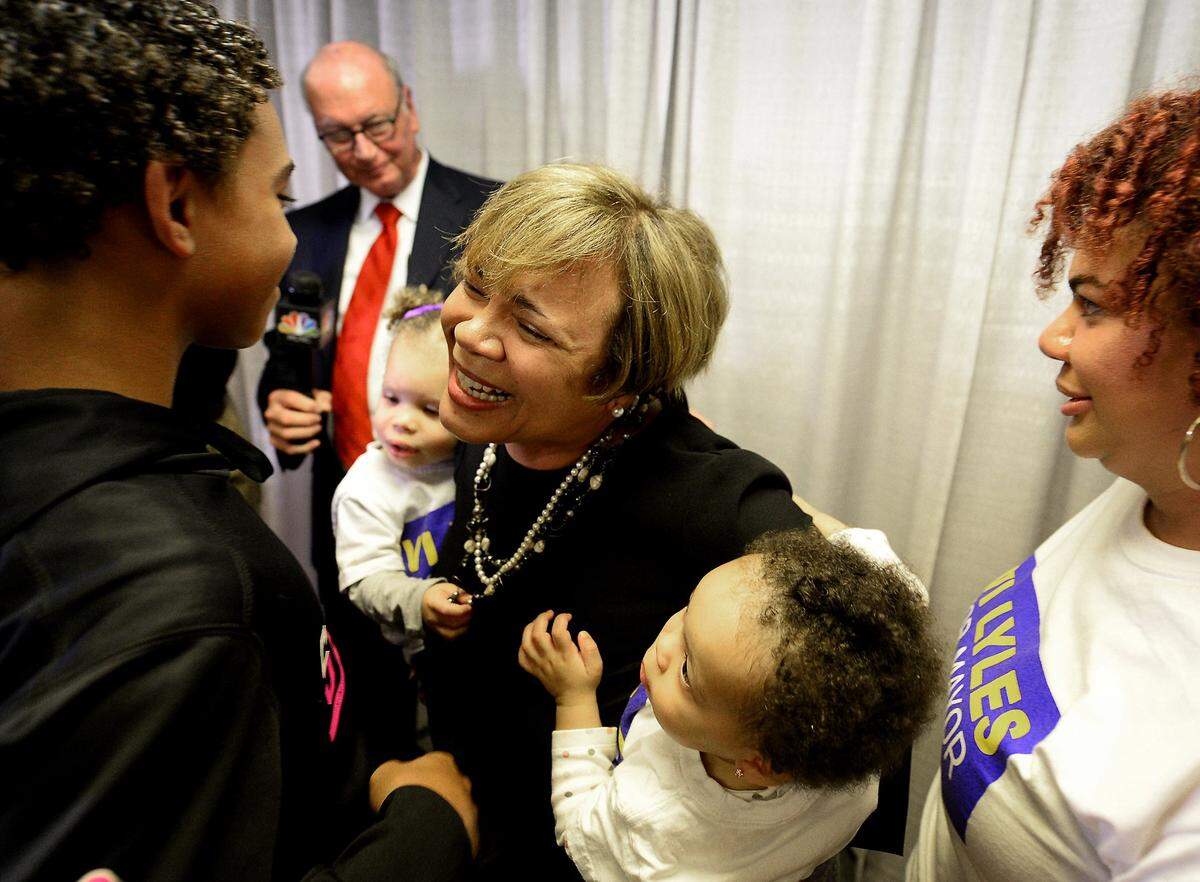
A sudden rise in Charlotte leads to a lengthy tenure
Lyles made history in 2017, becoming Charlotte’s first African-American female mayor when she unseated incumbent Jennifer Roberts in a heated Democratic primary then defeated a Republican general election opponent.
Her time in local government began long before then — though not in the spotlight.
Raised in Columbia, Lyles arrived in Charlotte in 1970 to attend Queens College, now Queens University of Charlotte. She received a master’s in public administration at UNC Chapel Hill before starting her career in municipal work.
That brought her back to Charlotte, where she began her time with the city as a budget analyst.
She worked her way up to budget director and assistant city manager before running for office in 2013. She won an at-large City Council seat and was chosen as mayor pro tem from 2015 to 2017.
Elevated by backlash stemming from Roberts’ showdown with the General Assembly over LGBTQ+ rights and questions about the then-mayor’s handling of the Keith Lamont Scott protests, Lyles upset the incumbent in the 2017 Democratic mayoral primary.
Lyles went on to defeat Republican Kenny Smith in the general election by a margin described by the Observer at the time as stunning.
She hasn’t faced a truly competitive race since — a marked shift from the stretch from 2013 to 2017 when the city went through six mayors.
But Lyles’ nearly decade-long tenure hasn’t gone by without tests and controversies.
She led Charlotte through the COVID pandemic and controversial decisions on a major overhaul of the city’s development ordinances, the 2020 Republican National Convention and a $650 million investment in Bank of America Stadium.
Lyles also helped shepherd a sales tax referendum for long-awaited road, bus and train projects across Mecklenburg County to passage last year.
More recently, she faced questions about transparency in the aftermath of a controversial six-figure payout to now-former Charlotte-Mecklenburg Police Chief Johnny Jennings’ as part of a secretive separation agreement. The mayor also took criticism over the city’s handling of crime and public safety after last year the fatal stabbing of Iryna Zarutska on the Blue Line light rail.
Lyles is Charlotte’s second-longest serving mayor, behind only Pat McCrory.
Twice widowed, she survived breast cancer in the early 2000s.
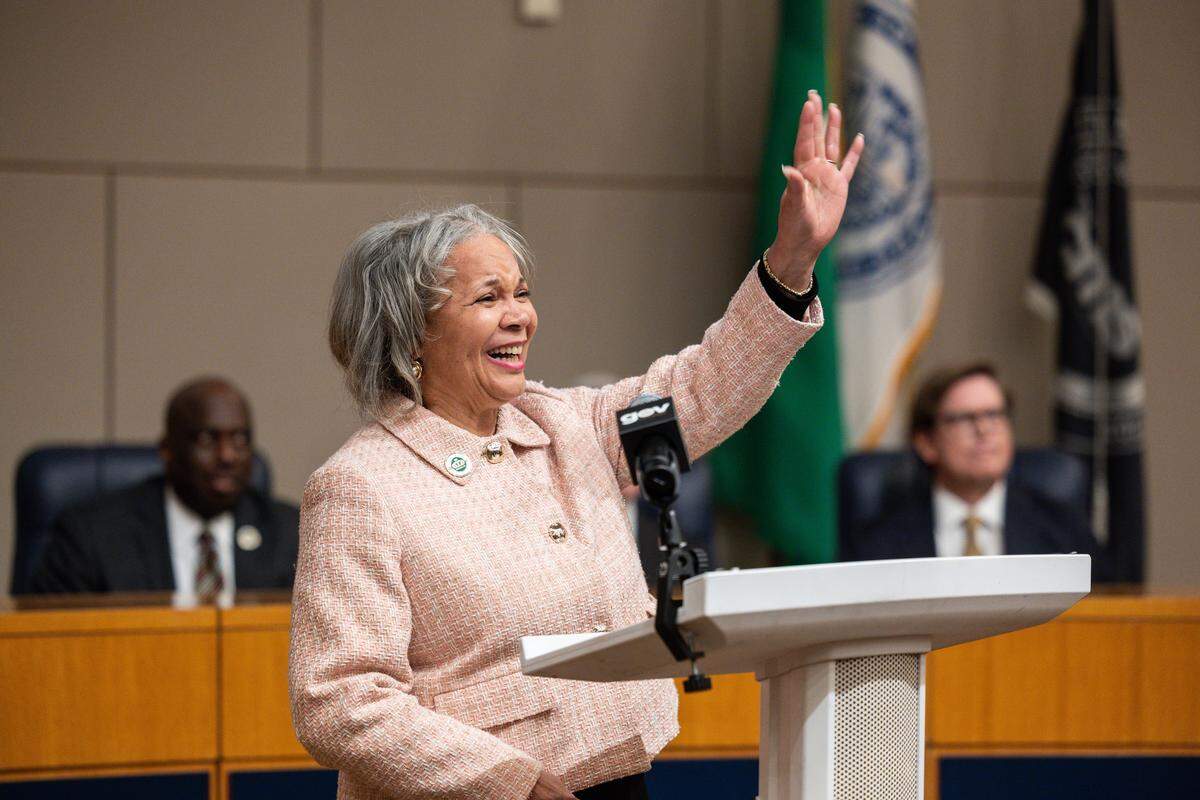
Charlotte reacts to Lyles’ announcement
Elected officials, former political leaders and community figures were quick to comment Thursday on Lyles’ announcement.
Former Republican Mayor Pat McCrory — the only person to win more terms than Lyles and a former North Carolina governor — told The Charlotte Observer he admired Lyles’ steadiness and floated the idea of lending her name to the Charlotte-Mecklenburg Government Center.
“I want to thank her for public service, her attributes of her incredible professionalism and maturity and dignity came at a time when our city needed it most, and I totally respect her decision to spend time with her family. She deserves it, and ... as a friend, I wish her nothing but the best,” he said.
Current City Council member Malcolm Graham, considered a potential candidate to succeed Lyles, credited her with bringing stability to city government.
“I’ve known this lady for well over 35 years, and her commitment to the city of Charlotte and its growth and its development is second to none,” Graham said. “She was there when Charlotte needed her to be there.”
Who will lead Charlotte after Lyles’ departure?
Lyles’ departure will leave a vacuum at the top of city government.
The position does not default to the mayor pro tem, a position held by Council member James “Smuggie” Mitchell. State statute says the council can delegate some of the mayor’s responsibilities to the mayor pro tem in the elected mayor’s absence, but they’re required to appoint someone to finish out Lyles’ current term, slated to end in December 2027.
The council had to make similar appointments when Patrick Cannon stepped down in 2014 after he was indicted on public corruption charges and in 2013 when Anthony Foxx left the city to become the federal secretary of transportation.
The appointee has to be a Charlotte resident and a Democrat, state statute says, since that’s Lyles’ political party.
Many local Democratic elected officials and well-known names will be expected to consider running in 2027 for a full term as mayor.
Lyles “will not make any immediate endorsement of a potential successor,” according to the news release announcing her departure.
“I am very proud of my record as mayor, but I also firmly believe that true leadership includes knowing when it is time to let the next generation of leaders take over,” she said. “By leaving early, the voters will have more time to learn about their candidates.
“Our city is strong, our trajectory is positive, and now is the right moment for someone else to build on our progress from the past few years.”
Observer reporters Nora O’Neill and Nick Sullivan contributed to this article.
This story was originally published May 7, 2026 at 8:00 AM.