
Absentee ballots continue to narrow margins in uncalled NC elections
North Carolina voters are waiting for six statewide races to be called as elections officials meet to pore over absentee ballots.
Boards of elections in all 100 counties will collect ballots with a Nov. 3 postmark through 5 p.m. Thursday. Then the boards will meet to finalize North Carolina’s election results.
There are 24,300 absentee ballots that have been accepted by county boards after Election Day and 20,140 provisional ballots that haven’t been disqualified which could ultimately be counted toward the results, the State Board of Elections said in a written statement Wednesday.
As boards continue to count the absentee ballots, the margins have narrowed between candidates in many of the uncalled races.
As of Wednesday there were about 92,000 outstanding absentee ballots. Many of those ballots won’t be returned, and some might not be counted.
Election Day was Nov. 3, but the margins between some candidates were too close for a winner to be declared.
The Associated Press declared U.S. Sen. Thom Tillis the winner in North Carolina’s Senate race on Wednesday, a day after Democratic challenger Cal Cunningham conceded. After news of an extramarital affair by Cunningham emerged, Tillis made Cunningham’s personal life the focus of his closing arguments in the campaign, while Cunningham hammered Tillis on health care. But following a call to Tillis from Cunningham to make the concession, both men took to social media and wished each other and their families well.
The AP has yet to declare a winner of the presidential race in the state. Also uncalled: North Carolina’s attorney general, labor commissioner, auditor, Supreme Court chief justice and a second seat on the Supreme Court bench.
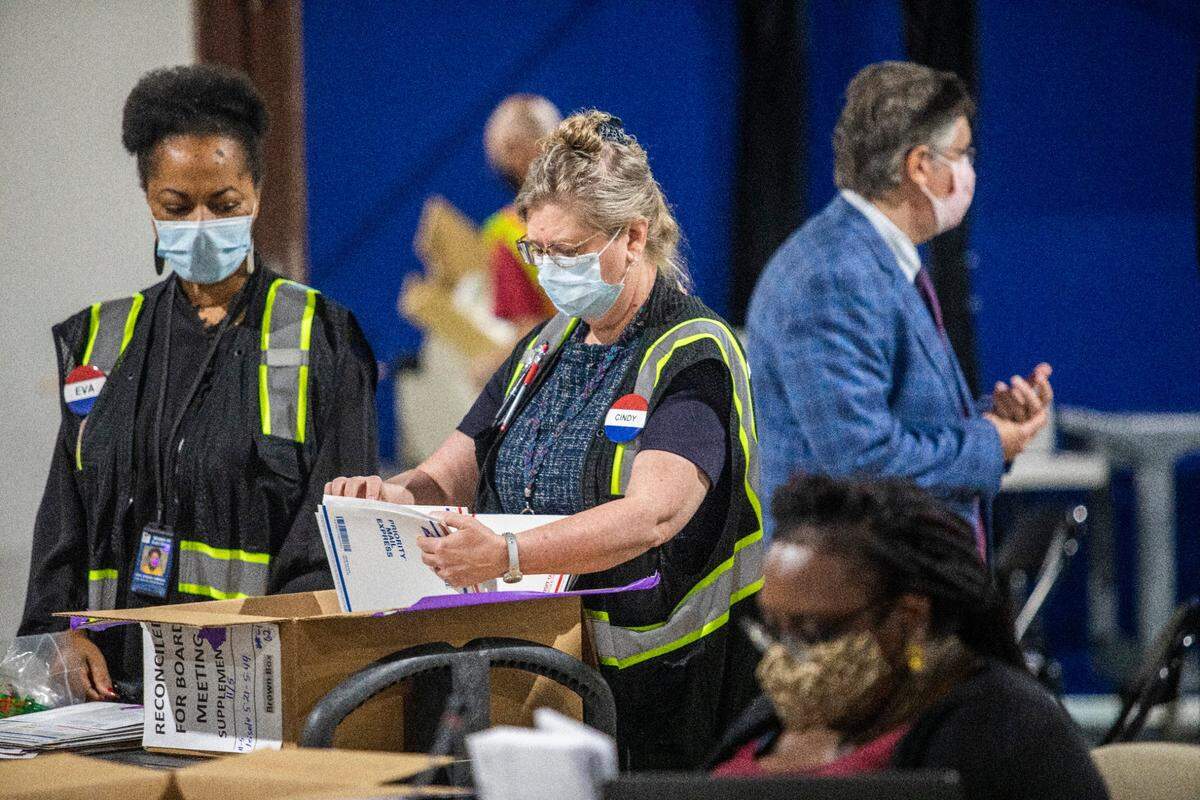
North Carolina was one of the states expected to make or break a presidency, but with mailed-in ballots being accepted through Nov. 12, other states helped decide the winner without North Carolina’s total.
The AP declared president-elect Joe Biden the winner on Saturday after taking Pennsylvania, which pushed him past the 270 electoral votes needed to win.
On Wednesday, President Donald Trump was leading in North Carolina by 73,178 votes, and expected to soon be declared the winner.
North Carolina Republican Party chairman Michael Whatley said on Friday that the party had begun meeting about fundraising for a possible recount in the race for chief justice of the state’s Supreme Court.
North Carolina allows for recounts in statewide races if there is less than a 0.5% margin between the candidates.
As votes continue to be tabulated, the margin between Justice Paul Newby, a Republican, and incumbent Chief Justice Cheri Beasley continues to grow tighter. There’s currently a 0.02% margin or 818 votes between the two justices with Newby leading. There had been 3,700 votes between the two candidates on Friday.
Deciding on absentee votes
Wake County did a hand count of a sample of ballots Tuesday to compare them to the machine’s count, and the hand count matched, according to elections director Gary Sims.
Because of COVID-19 precautions the board met in person but limited the number of audience members present. To allow for more viewers to join the meeting they made a live stream available by Zoom.
Sims told the board it would be reviewing 5,650 absentee ballots Tuesday. Those ballots were cast by 5,440 civilians, 90 military personnel and 150 overseas residents.
Sims said the post office had been good about quickly turning over ballots to the boards of elections, sometimes in less than 24 hours.
Board members learned early in Tuesday’s meeting that a post office practice could have forced them to reject some ballots. A postal worker informed the board that when the post office is getting ready to close, postal workers will adjust their timestamp to read the next day’s date.
A postal worker flagged a series of ballots that had been marked as being accepted on Nov. 4 but had been given to postal workers on Nov. 3, the deadline for an absentee ballot to be sent by mail. The board chose to accept those ballots.
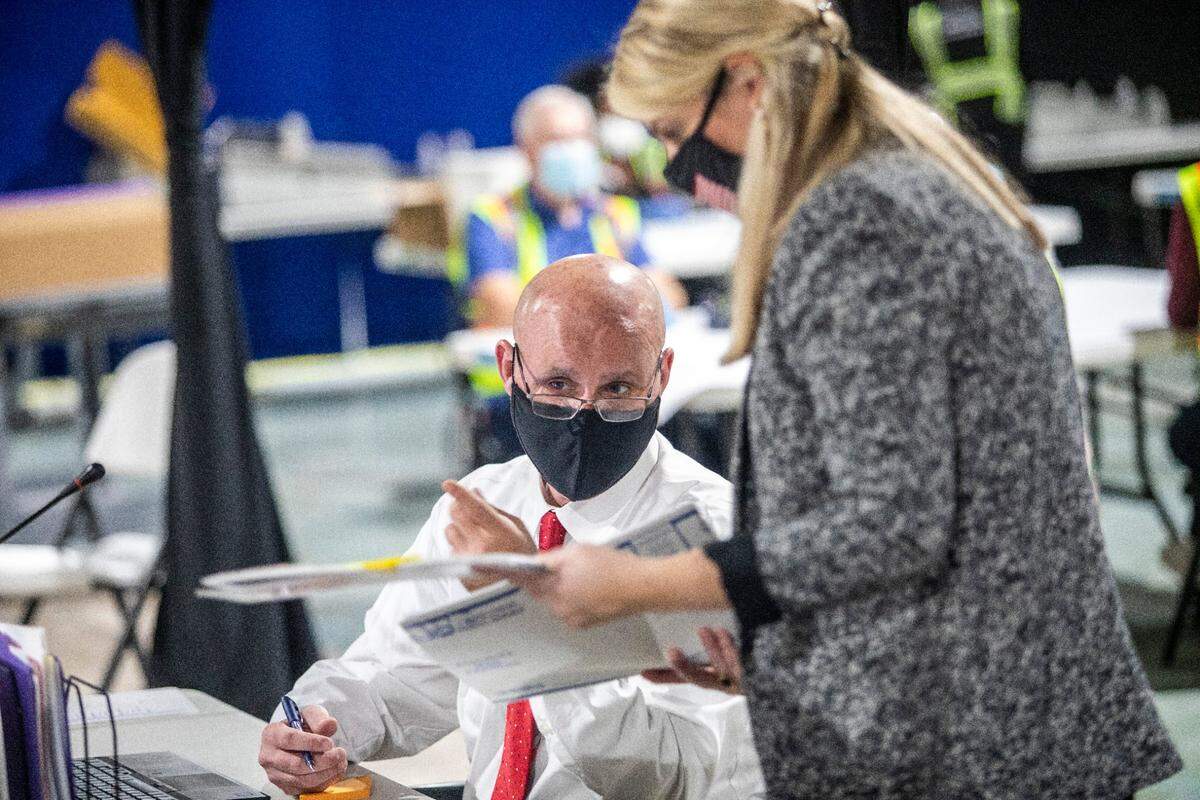
They also discussed whether to accept a ballot that was mailed to the voter’s daughter before the election but did not get to her daughter’s house until Saturday. The daughter hand delivered it to the board of elections and asked that it be counted. The board rejected the ballot but upon opening the envelope learned that the voter had also mailed her prescription information to the board. They voted to call the voter and mail back the latter.
North Carolina election rules allows voters to submit their absentee ballots in person at a board of elections office by 5 p.m. Nov. 3 or at any post office on Election Day.
Those rules stated that the boards of election could continue counting absentee ballots carrying an Election Day postmark until Nov. 6, but a last-minute court ruling extended the acceptance date through Nov. 12.
.png "Election Timeline Presentation (2).png")
The State Board of Elections said five county boards met throughout Wednesday to consider 1,300 absentee ballots. That comes a day after 17 other county boards met to consider around 7,200 absentee ballots.
As of 1:30 p.m. Tuesday, the counties had collected more than 1 million mailed-in absentee ballots for a total of 18% of ballots cast.
Canvassing is held Friday by the counties and will ensure every accepted ballot is counted in the election totals.
Election results will be certified by Nov. 24.
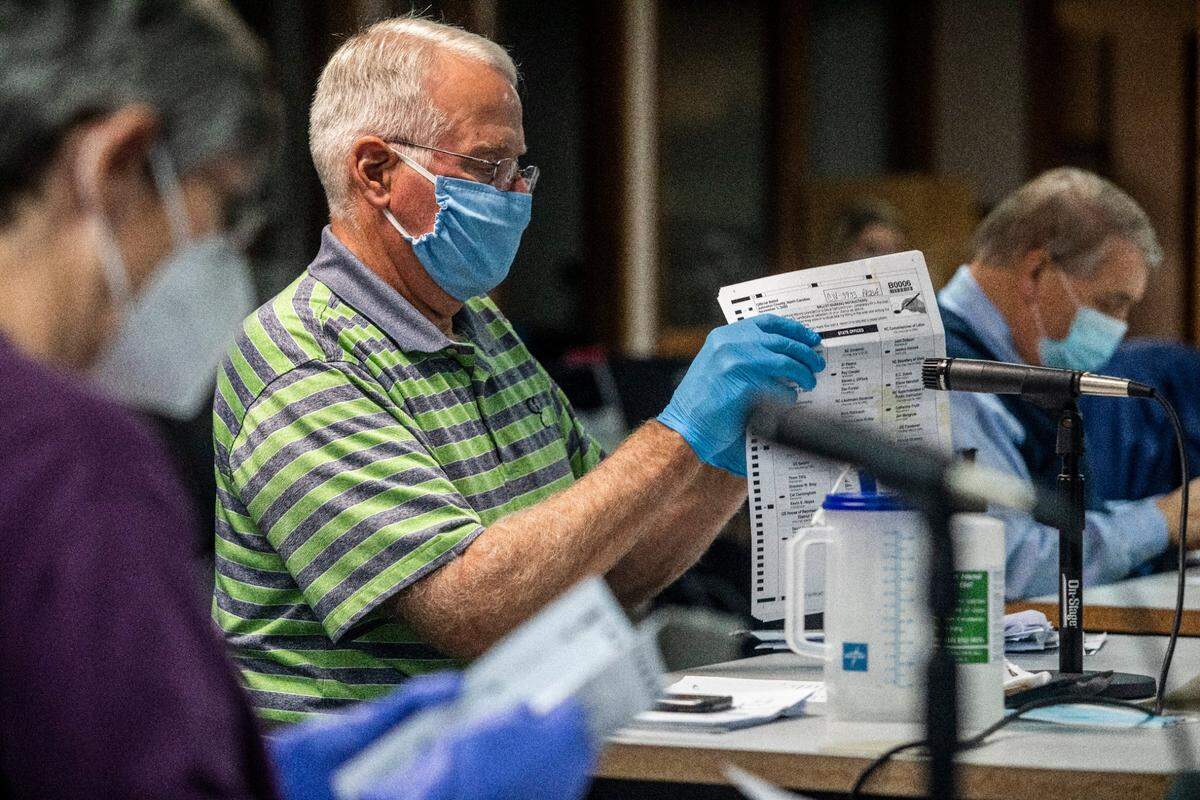
Uncalled races
▪ Two Court of Appeals judges, Lucy Inman and Phil Berger Jr., both ran for a position on North Carolina’s Supreme Court. Berger, a Republican the son and namesake of the state’s Senate leader, has been ahead of Democrat Inman by narrow margins. On Friday, Berger led by around 74,000 votes. That margin has shrunk to 71,374 votes as of Wednesday.
▪ Since election night, Democratic Attorney General Josh Stein has led his opponent, Forsyth County District Attorney Jim O’Neill, a Republican, to retain his seat. On Friday, Stein led by around 10,800 votes but Stein has since increased his lead to 13,767 votes. The two candidates are within 0.26% of one another.
▪ The state will have a new labor commissioner regardless of who wins the race. Cherie Berry has led the office since 2001 but chose to retire at the conclusion of her current term. Rep. Josh Dobson, a Republican, is ahead of his opponent, Democratic Wake County Commissioner Jessica Holmes. The margin between the two candidates has barely decreased since Friday when there were around 91,000 votes between the two. On Wednesday, that margin dropped to 88,977 votes.
▪ Democratic State Auditor Beth Wood has maintained a narrow margin over Republican Anthony “Tony” Street. She leads Street with 93,454 ballots, up from the 90,034 votes she led by on Friday.
Four of North Carolina’s state House and Senate seats have also been too close to call:
▪ Sen. Harper Peterson is at risk of losing his seat to Michael Lee, who secured 50.6% over Peterson’s 49.4%. Peterson, a Democrat, currently represents New Hanover County. There are 1,468 votes between the two men.
▪ Republican Rep. Perrin Jones, who represents Pitt County, is also at risk of losing his seat to Brian Farkas. Farkas, a Democrat, secured 51.1%. Farkas is leading by 814 votes.
▪ Rep. John Szoka is currently holding on to his seat with 50.88% of the vote in a race with Frances Vinell Jackson. Szoka represents Cumberland County. There are only 699 votes between the two candidates.
▪ Rep. Stephen Ross is battling Ricky Hurtado to retain his seat. Hurtado, a Democrat, is leading Ross with 50.6% of the votes. Only 471 votes separate the two men. Ross currently represents Alamance County.
This story was originally published November 10, 2020 at 6:57 PM with the headline "Absentee ballots continue to narrow margins in uncalled NC elections."