In the national and statewide fight for abortion, what can local elected leaders do?
READ MORE
It will get harder
For many people seeking abortions in North Carolina, the procedure is already difficult to obtain. As more Southern states restrict access, the state will feel pressure on its abortion clinics, while the newest budget puts taxpayer money into pregnancy centers that steer clients away from abortion. Looking ahead to the 2022 elections, battleground districts near Raleigh and Charlotte could decide the future of abortion in NC. What can local leaders do to protect clinics, and what does this all mean for those who need care?
Expand All
.jpg)
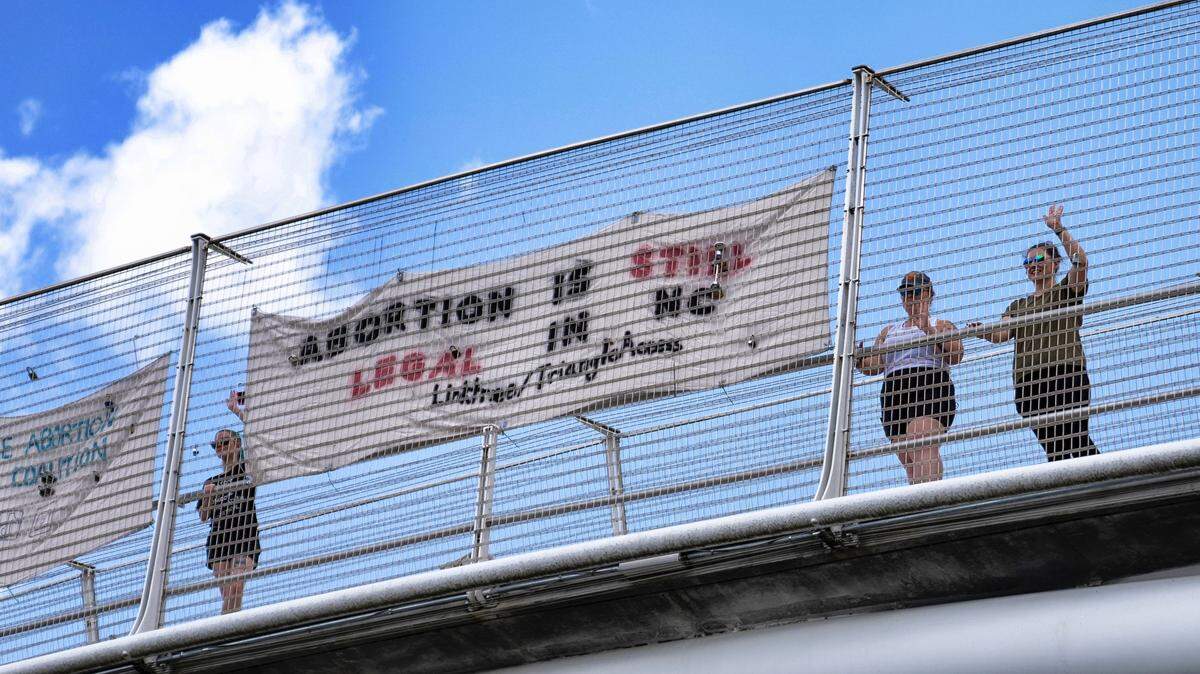
As the fight for and against abortion now plays out on a state level, some activists are asking local elected leaders to do more.
There are 14 abortion clinics across North Carolina located in just nine cities. Raleigh has two of them.
Activists who support abortion rights want the Raleigh City Council to create a safe haven for people seeking abortions and to follow the lead of some other North Carolina cities.
The council is listening to the concerns, and the city attorney is reviewing what the city can legally do, Mayor Mary-Ann Baldwin told The News & Observer.
“Right now, it is legal to perform abortions in our state,” she said. “And we have to follow the laws, and we will follow the laws. But I will say that, for me, I felt that the Supreme Court went too far in its actions. And really, I feel like we’re back 50 years in time.”
A request to limit noise
Abortion rights advocates, like Kristen Havlik, have called on the city to adjust its noise ordinance to prevent amplified noise around abortion clinics.
City Attorney Robin Tatum responded during a June council meeting, confirming Raleigh could pass some rules.
“There are certain regulations that a city can potentially legally enact that relate to activities at reproductive care clinics,” she said. “However, a lot of times the activities that people are asking you to regulate are protected by the First Amendment. And as we know, we can’t pass laws that are not consistent with the Constitution.”
Activists repeated their requests at the July 5 council meeting.
Raleigh reached out to the clinics’ attorney, Tatum said, but hadn’t heard back by the the city council meeting as of early July.
Representatives from both the clinics told The N&O they hadn’t heard from the city.
“A couple of years ago, we did have a conversation with a city attorney about the possibility of what a buffer zone might look like,” said Amber Gavin, vice president of advocacy and operations of A Woman’s Choice, which has clinics in Charlotte, Greensboro and Raleigh. “But, honestly, the conversations, I don’t think it went very far.”
In 2020, there were 6,752 abortions performed in Wake County and 3,313 Wake County residents had abortions, according to the latest state data.
What Raleigh leaders say
A majority of Raleigh City Council members contacted by The N&O described themselves as “pro-choice” or said they believe in a person’s “right to choose.” They differed on what the city could or should do.
- Jonathan Melton: “I’m pro-choice; I think abortions should be safe, legal and accessible. I want us to do everything within our authority to protect abortion access within the city, including establishing buffer zones and noise ordinances, which I have been working on with the city attorney.”
- Nicole Stewart: “My stance on abortion is irrelevant. Raleigh has no jurisdiction on this topic and does not legislate health care. What we do legislate is zoning. To that end, before Roe v. Wade was even overturned, Council was working with our attorney to establish buffer zones and noise ordinances around clinics.”
- Patrick Buffkin: “I am pro-choice and believe that our state should codify the protections of Roe v. Wade. Raleigh, like other municipalities in NC, has little authority to directly protect abortion access, but we have ongoing work with our local clinics to ensure that patients are safe and free from harassment and intimidation.”
- David Cox: “I very much support the decision regarding abortion to be with a woman (rather) than with the state. I will support every measure that we can to protect a woman’s right to make those decisions and to have safe access to medical care, including abortion free of threats and harassment. I support the City actively lobbying the legislature to protect these rights for women. I’m disappointed that as a body Council hasn’t done more.”
- Corey Branch: “I do believe a woman has a right to make the decision for herself. Maybe there is a way (to hide) provider’s private contact information, like some states do for judges, to lower the chance that they will be threatened at home like we have seen with the Supreme Court justices. Ensure facilities are safe from those who might harm or scare patients or staff. So, a buffer zone around clinics, as some have suggested, seems like the right idea to me. That buffer zone would include a noise limit too. We will have to work with facilities to coordinate a buffer zone.”
- Stormie Forte: “My stance on abortion is I believe it is a woman’s right to make any decision about anything regarding her body. Further, I view the right to privacy as fundamental and think it should be protected. As for the city of Raleigh, the City Attorney’s office is reviewing the legality of buffer ordinances for clinics. Once we receive the results of their research we will know how to proceed in the wake of the Roe decision.“
- David Knight: “I support a woman’s right to choose. The city needs to be doing everything it can to protect access to legal abortions. I support Gov Cooper’s (executive order) and approach to this issue.”
‘Just really horrifying’
A buffer zone to separate patients and protesters outside clinics could help people seeking abortions immensely, Gavin said.
“The intimidation, harassment and invasion of privacy that our patients and our staff experience is really unimaginable, especially considering that abortion is health care,” she said.
A Woman’s Choice clinic in Raleigh is on a circular road that can be confusing to people visiting for the first time.
Anti-abortion protesters frequently stand near the driveway and along the circular street. Some silently pray. Some sing. Entire church services are held with congregations marching to the clinic. Others shout and promise support patients could consider instead of an abortion.
Some have mimicked the cries of babies and ask why their mothers would abandon them.
What other cities have done
In 2019, the Charlotte City Council approved a buffer zone and prohibited loudspeakers, bull horns and megaphones within 150 feet of a school, place of worship or medical facilities, including abortion clinics.
Earlier this year the city of Durham adopted a resolution proclaiming the city a “Reproductive Freedom City.” After the Dobbs decision, Durham County Commissioner Nida Allam called on the county health department to offer abortions, but the Durham County Board of Health says the federal government prohibits recipients of Title X funding from offering them, The News & Observer previously reported.
Proclamations supporting abortion can help ease the stigma around the procedure, said Tara Romano, executive director of Pro-Choice North Carolina.
Raleigh’s history
This isn’t the first time abortion has been brought before local leaders.
The Raleigh City Council rejected Hand of Hope Pregnancy Resource Center’s rezoning request to move into a house next to A Preferred Women’s Health Center, which provides abortion services. Hand of Hope, a religious center that offers ultrasounds, counseling and classes, was located nearby across the street.
Hand of Hope sued the city before Raleigh and the center reached a settlement that allowed the group to move into the house next door and included a $25,000 payment to the anti-abortion group.
In 2019, anti-abortion speakers repeatedly attended City Council meetings calling on city leaders to make the city a “sanctuary city for the unborn.”
The Raleigh City Council is on a summer break and won’t meet again until August.
Havlik plans to be there.
“It takes them a long time to (work on) things that are a little more minor to them,” Havlik said, pointing to how long it took the city to adopt a nondiscrimination ordinance that protected LBGTQ residents and others.
“I don’t want this to take years,” she said.
This story was originally published July 22, 2022 at 6:00 AM with the headline "In the national and statewide fight for abortion, what can local elected leaders do?."