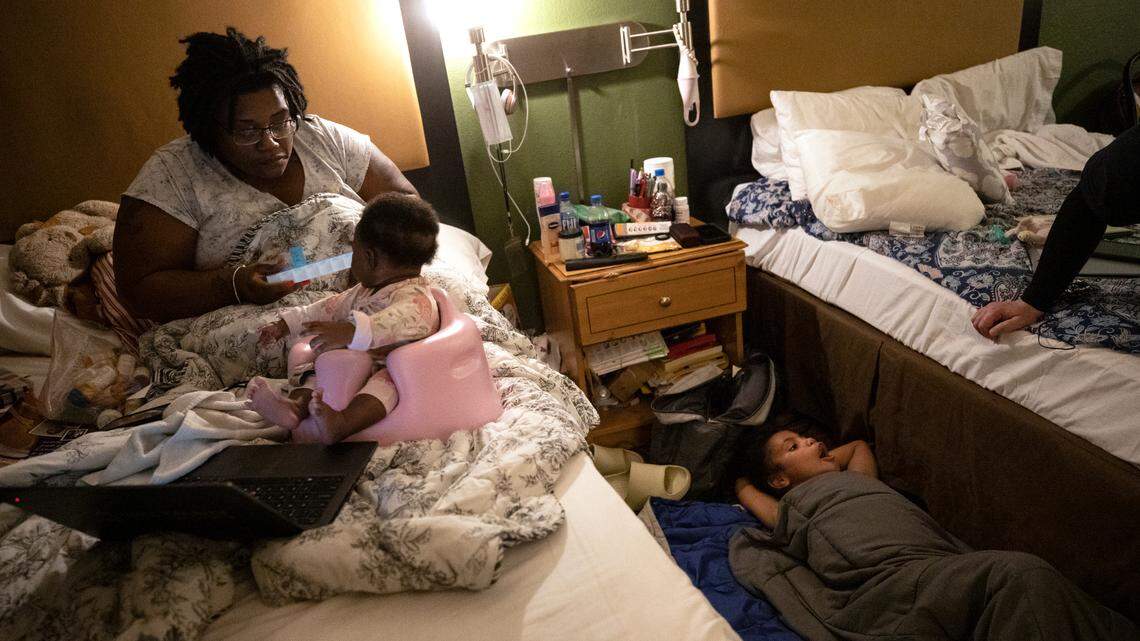
Stable housing a foundation for success, but single moms need more, cheaper options
READ MORE
Women and Children First?
Single mothers raising children under the age of 18 make up more than a third of the families meeting the federal poverty definition in North Carolina. That’s $20,030 a year, before taxes, for a mother with two children working 40 hours a week. This new project brings together advocates, public policy experts and others, while giving moms across the state a platform to tell their stories. Over the coming months, we hope to identify policies that N.C. and local government can enact to help families in need, including those that the official poverty definitions miss.
Expand All
UPDATE: The story was updated at 7:21 p.m. Nov. 18, 2022, in response to the Eno River Association’s decision to table the land transfer and meet with its tenants.
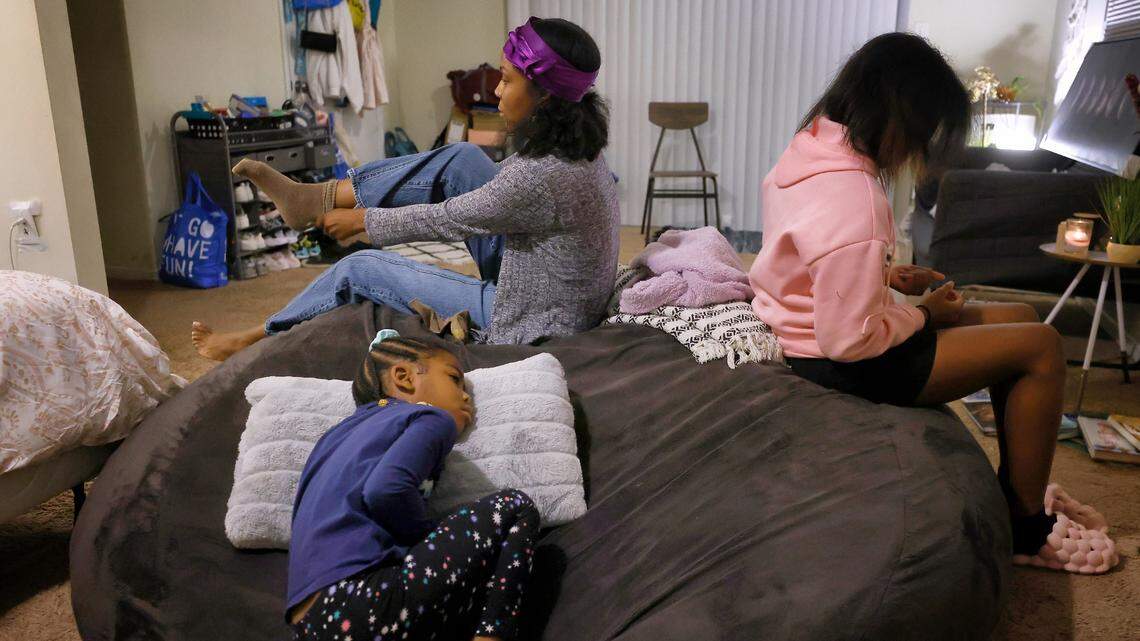
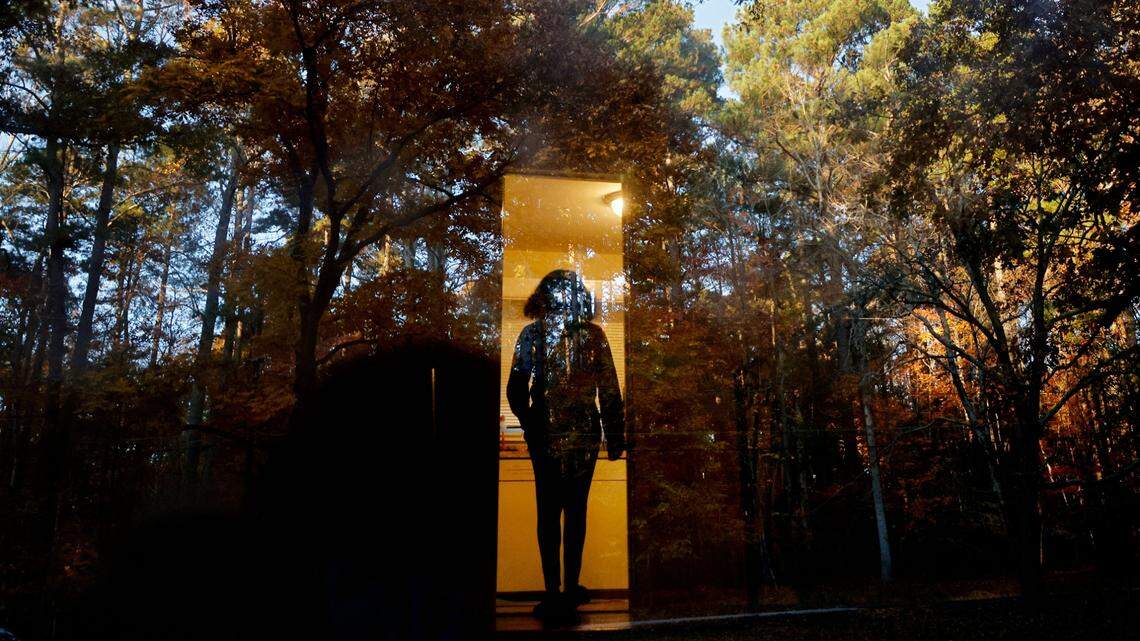
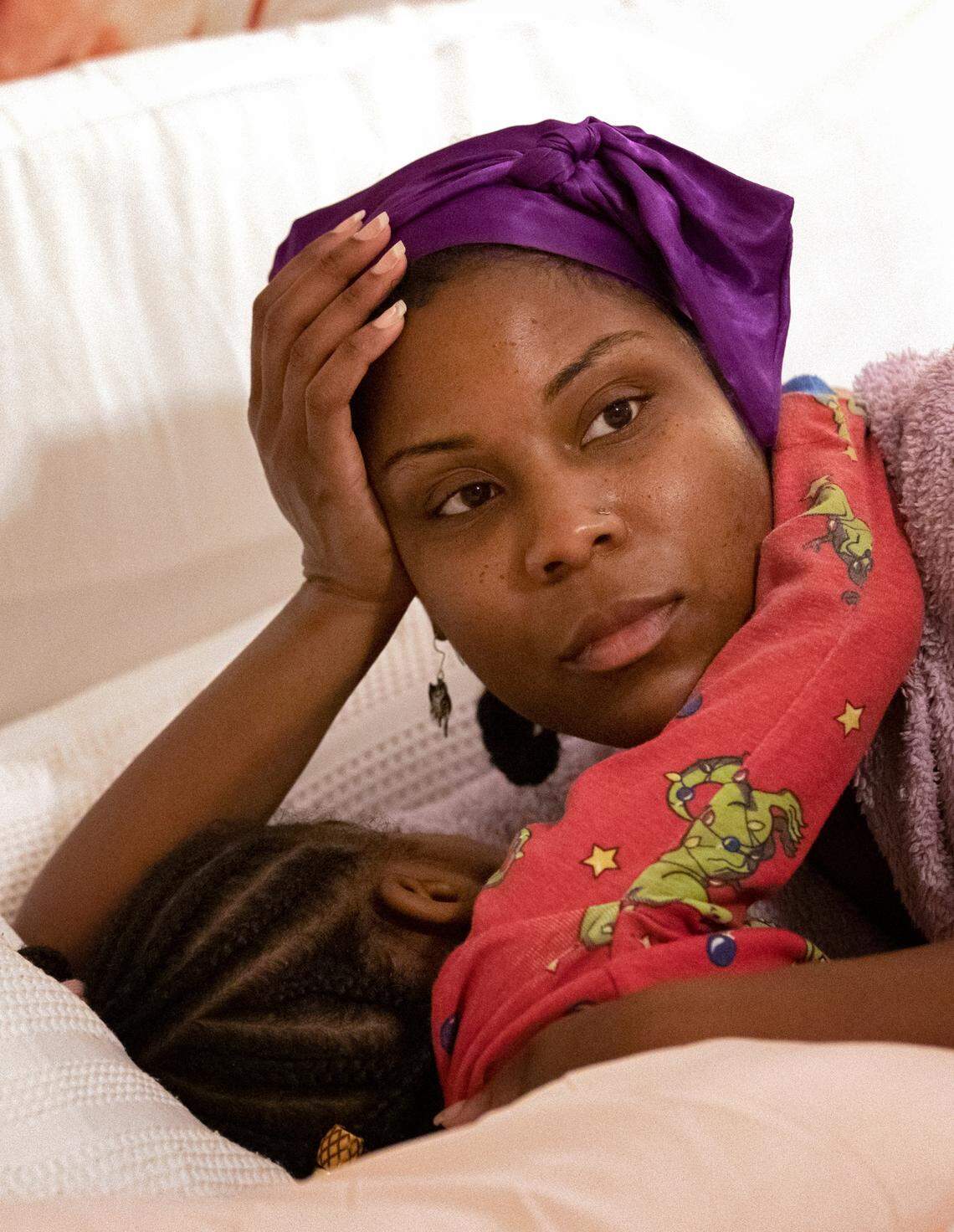
When she moved her family into the brick, split-level house just north of the Eno River in 2020, Sheba Everett thought they had found a home for years to come.
The rent was only $1,460 a month, and though surrounded by woods the house was only a short drive from schools, shopping and Everett’s job at Branches Community School in Durham.
It was a fresh start after leaving a toxic marriage with her daughters, ages 5 through 19, said Everett, 36. In February, it also represented stability when her youngest brother was murdered.
“The peace … has gotten me through everything,” she said. “I have a big sustainable garden in the back, so much space, hammocks and trampolines and swings. It’s just a paradise.”
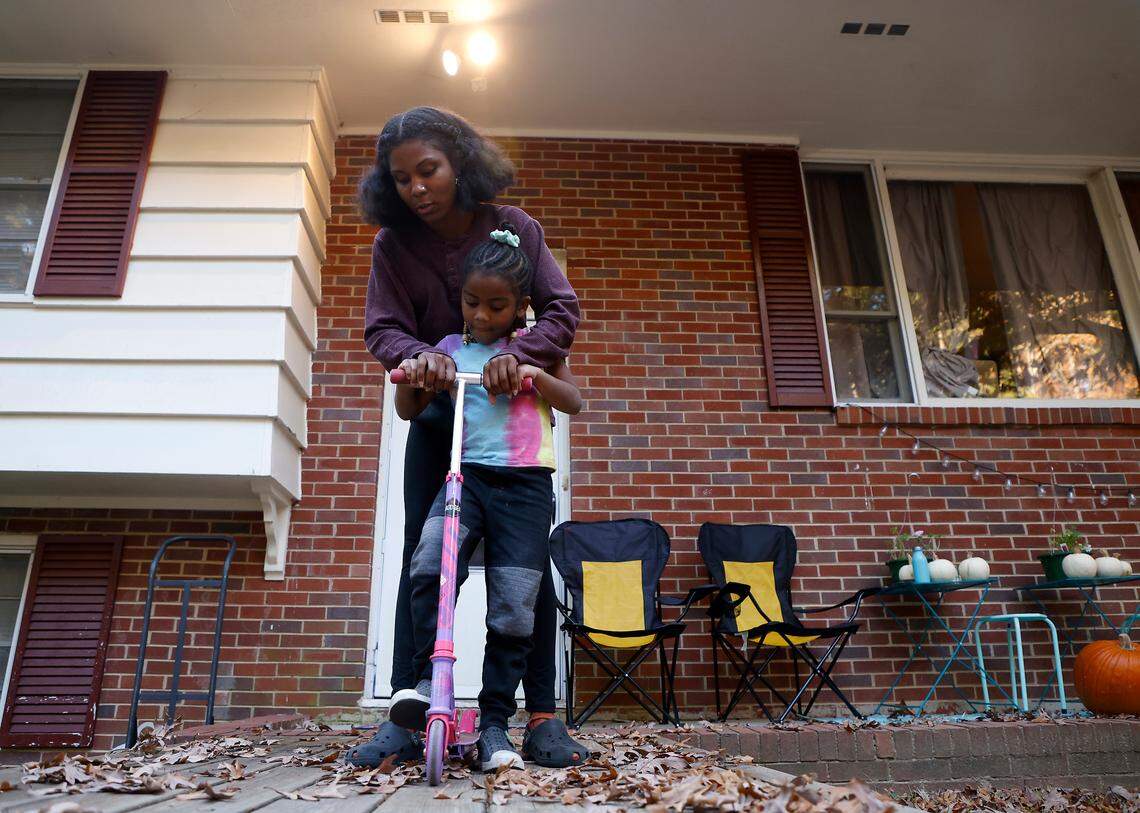
But on Sept. 7, Everett and neighbors in six more homes got eviction letters from the property manager for the Eno River Association, which owns the land and is selling it to the state park system. An Oct. 11 email from the ERA, which was given to The N&O, said the homes will be used as a job perk for park staff at little to no cost.
“We are providing affordable housing in this manner to Durham residents, but we’re providing it to Eno River State Park staff (maintenance, administrators, rangers, etc), ERA executive director Jessica Sheffield said in the email. “That’s been our intention with these properties, and we’re bringing that to fruition in the coming months. State Park staff aren’t paid at a level we believe is fair, and we are glad the park will offer them this housing as part of their compensation package.”
Late Friday afternoon, Sheffield sent an email to The News & Observer in response to this story, which was published online Friday morning, with an update.
“The Eno River Association has tabled the sale to the state parks system and is planning to employ a professional mediator “to find equitable outcomes for the people who live in these homes,” Sheffield said in the email Friday.
“We have made mistakes throughout this process,” Sheffield said. “We followed a traditional land trust model, whose practices focus exclusively on land resource protection. We apologize that we did not prioritize our tenants from the beginning. We are committed to doing better.”
Sheffield responded to The N&O’s request for more information in a phone call Friday evening.
The association will spend the next few weeks inspecting the homes, securing a third-party mediator and learning what each family needs, whether that’s relocation support, home repairs, or if possible, if they can stay in their homes, she said. Nothing is off the table, and they have formed a task force of board and staff members to look more closely at the issues and solutions, she added.
“Staff is talking to a variety of different land trust models, home improvement groups. We’re throwing it all out there. What I’ll bring together is a menu of options and we’ll see what works for folks, but the first thing we need to do is these home inspections.”
For Everett, the eviction in September came “out of just nowhere, thin air,” said the teacher and part-time tutor who earns $40,000 a year.
Her neighbors — in all, 26 adults and children, many low-income and people of color, some with disabilities, a veteran and older adults — are in similar straits, they said in a letter to the ERA. Some have lived there for over 15 years, investing in repairs that they said the management never made.
They formed a tenants association, started a petition and shared their demands at the ERA’s Oct. 23 meeting: rescind the evictions, repair the houses and sell them to the tenants using a shared-equity land trust model to keep the houses permanently affordable. The state could buy the undeveloped part of the land, they said, or turn it over to Indigenous stewardship.
When asked Friday about the ERA’s announcement of tabling the sale of housing to the state parks system, the tenants association spokesperson Leslie Dreyer said, “Jessica (Sheffield) sent an email to the tenants 27 minutes ago. This is the first we’ve heard of it.”
The tenants were still processing what the latest development means, she said later Friday in an email. Everett, who responded in a text Friday night, said she is “so happy and thankful for all that is happening right now.”
Living wage, homes needed
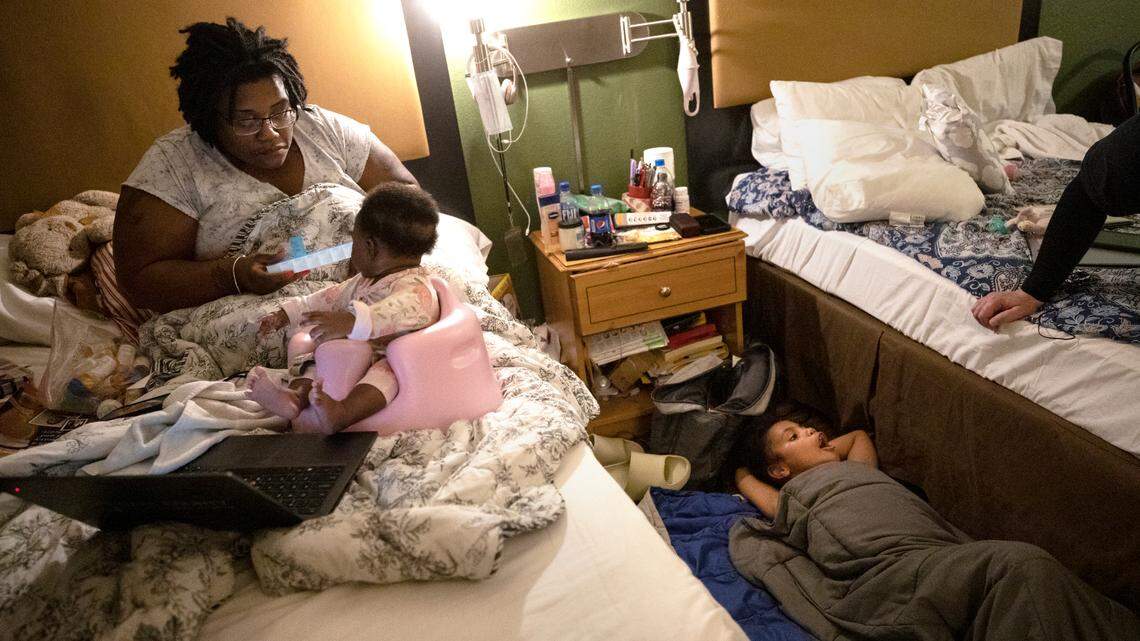
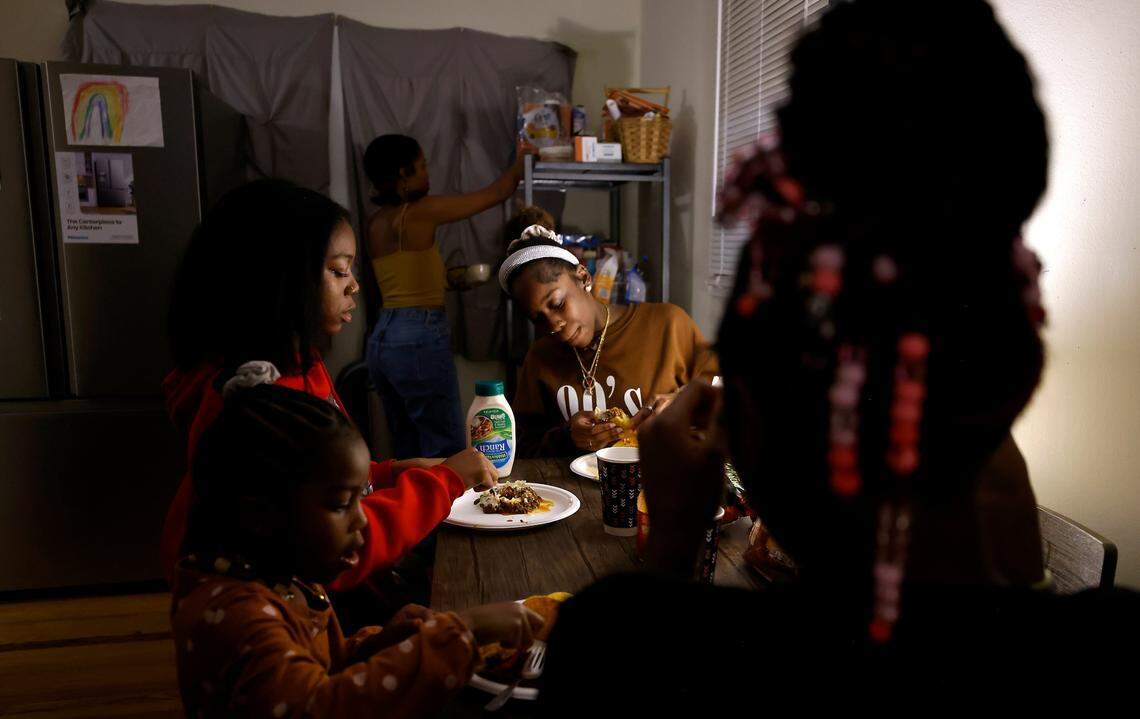
Everett’s path may not be typical, but thousands of North Carolina families fight every day to find and keep safe, affordable housing, advocates say.
It can be especially daunting for single moms in low-wage or part-time jobs, or who rely on financial assistance. Statistics show single moms in North Carolina are nearly six times more likely than married couples with children to meet the federal definition of poverty, which is far below the living wage required to be financially stable.
This year, the federal poverty wage for a family of three — the income that qualifies for assistance — is $23,030 a year. The N.C. living wage for that family — enough to just make ends meet — is over $60,000 a year, says the nonpartisan N.C. Budget & Tax Center.
Meanwhile, the average rent for a two-bedroom apartment in North Carolina is $1,453, up nearly 33% over last year. In some cities, including Raleigh, Durham and Greensboro, the average rent rose more than 50%, The N&O has reported.
That leaves more than 1 in 3 single moms choosing each month between paying the rent and putting adequate food on the table or gas in the car to make it to work, school and appointments. An expensive repair or a lost job could easily push these families into eviction, homelessness, and even more instability.
The other challenge is the national shortage of 7 million affordable homes, according to the National Low Income Housing Coalition. It estimates only 36 homes are available for every 100 families earning under 30% of the median income where they live. In North Carolina, that’s a family of three earning $21,400 a year.
Financial experts consider a family that spends over 30% of its income on housing and utilities “cost-burdened,” while one that spends over half its income is “severely cost-burdened.”

“When those households don’t have affordable options, of course, it hurts them, because they are paying 50, 60, 70% of their income on rent, but it also means they are competing for the same units with people who make relatively higher incomes, and that pushes up rent for everybody,” said Sarah Saadian, with the National Low Income Housing Coalition.
Housing discrimination
Better options also could mean safer options, housing advocates say, since families who struggle to afford housing can end up living in substandard conditions, afraid to confront landlords about mold, broken appliances, or plumbing and heating issues.
U.S. women only gained significant financial freedom in 1974, when the Equal Credit Opportunity Act let them apply for credit without a husband’s permission and banned discrimination in lending based on sex, race, age, nationality or marital status.
Since then, the share of single and married U.S. mothers who are their family’s breadwinner has doubled, to 41% in 2017, according to the nonpartisan Center for American Progress. Black mothers are more than twice as likely as white mothers and more than 50% as likely as Hispanic mothers to be the breadwinner, and more female breadwinners overall were lower income.
Still, single moms face discrimination, especially from landlords who respond in ways that avoid violating federal laws prohibiting bias based on race, religion, sex, national origin, family status or disability, said Elizabeth Kurtz, chief housing resource officer with Charlotte Family Housing in Mecklenburg County.
One way is by not returning calls from single moms or telling them a vacant apartment isn’t available, Kurtz and other advocates said. Or a landlord may agree to meet a potential tenant, but back out later because she has “too many children” or “unruly children” or children with disabilities, according to MomsRising members who shared their stories.

The search for stable housing can be even more difficult for Black, Hispanic and Native American workers, who are more likely to have a low-wage service or production job, and earn disproportionately less than white workers across all industries, according to the National Low Income Housing Coalition’s 2022 report, “Out of Reach: The High Cost of Housing.”
It’s a reflection of systemic racism and “structural barriers,” such as economic exploitation and bias in hiring and promotions, it said.
Government statistics show about two-thirds of families headed by single mothers live in rental housing, and roughly 46% of those who get federal rental assistance are Black, while 29% are white and 19% are Hispanic. Roughly 63% are women.
Black families also face a wealth gap with white families due to redlining, restrictive neighborhood covenants and the denial of GI Bill benefits to Black World War II veterans that kept them from buying homes and building generational wealth like white families did.
Vouchers help restore some of that equity, advocates say, by letting families choose where to live and raise their children. Studies show that low-income children who grow up with friends from higher-income families experience more economic mobility as adults.
Now, however, low-income families relegated to historically Black neighborhoods are being pushed out by white, wealthy home buyers, said Stephon Whitley, with One Wake, a coalition of churches, faith groups and nonprofits.
“People don’t understand,” Whitley said. “You don’t get pushed out to another side of Raleigh anymore. You’re probably more than likely going to get pushed out of Wake County altogether, because it’s that difficult for people to get housing, especially with a housing shortage.”
Push for more rental assistance
Before the pandemic, the federal government spent roughly $50 billion a year on low-income housing assistance programs. That nearly doubled to $90 billion in 2021, and President Joe Biden has since asked Congress to allocate more money to affordable housing.
Currently, about 4.4 million households nationwide live in public housing or receive Housing Choice or Section 8 rental vouchers from the U.S. Department of Housing and Urban Development, according to the nonpartisan Center for Budget and Policy Priorities.
Vouchers typically require families to pay up to 30% of their income toward rent and utilities.
The U.S. Department of Agriculture provides other assistance through the Rural Rental Assistance program, which pays for USDA-financed rural rental housing or farm labor housing.
It’s not difficult to apply for help, but it does take time and patience, single moms told The News & Observer. Federal programs are not open to immigrants without legal status or to tenants who have drug and some criminal charges.
Once a family is approved, the wait for a voucher or public housing can take months or years. Even then, a family may not find a landlord willing to take its voucher.
The Center for Budget and Policy Priorities estimates 5.3 million eligible families nationally lack money for stable housing, putting their children at risk for poor outcomes, including behavioral, mental and physical health problems.
The pandemic showed more money can lift millions out of poverty, while giving local governments time to work with public and private developers to build more housing, Saadian said.
“Only about one in four people who are eligible for rental assistance get it, which means that the other three in four are left to fend for themselves,” Saadian said.
The Congressional Budget Office estimated in 2015 that the cost to provide vouchers to every person or family who qualifies could be about $410 billion over 10 years, or roughly $460 billion today. It’s still less than this year’s $777 billion U.S. defense budget, Saadian said.
The NLIHC’s 2022 report also advocated for more federal Housing Trust Fund dollars and more money to repair and redevelop public housing communities. Longer-term solutions will take bipartisan support and creative public-private partnerships, the NLIHC and other housing advocates said.
State, local government housing efforts
In North Carolina, some local governments have started or talked about starting land banks — buying and holding onto land for future housing projects — or working with public and nonprofit developers to leverage resources and qualify for more housing tax credits.
Local governments also have asked voters to approve multimillion-dollar housing construction bonds, and enacted or considered changes to local zoning that give property owners a way to earn income by building rental housing on existing land.
In 2015, Chapel Hill, UNC, residents, and Durham-based nonprofit Self-Help Ventures Fund launched the Northside Neighborhood Initiative, a $3 million, 10-year, no-interest loan to slow the gentrification of a historically African-American neighborhood near campus.
Wake County officials announced a similar initiative recently involving Self-Help, the city of Raleigh and three national banks. The $61.5 million loan fund could preserve 3,170 affordable homes over the next 15 years, officials said.
This year also was “a banner year for housing” in the state budget, Scott Farmer, executive director of the N.C. Housing Finance Agency, said. The legislature passed its largest appropriation ever this year, including $190 million for a workforce housing loan program that will advance 95 approved housing projects statewide.
“They should have been under construction right at the start of the pandemic, but everything stalled out, and then lumber prices went up about 150%, and labor became scarce,” Farmer said. “It was the perfect combination of problems to hit, and unlike market developers who can borrow more money and increase their rent to cover the additional debt, these properties, the rents are kind of maxed out already.”
The General Assembly also allotted $10 million in one-time funding to the state housing trust fund, he said. The trust fund, established in 1987, already provides the N.C. Housing Finance Agency with $7.66 million each year to help pay for rental and supportive housing construction, home rehabilitation and other programs.
But available resources only go so far, so more people need to talk about housing solutions, Farmer said.
“Whether it’s us or whether it’s somebody else, if there’s somebody who can help a few folks into a better housing situation, we’re all better served for it,” he said.
Park expansion plan, tenant questions
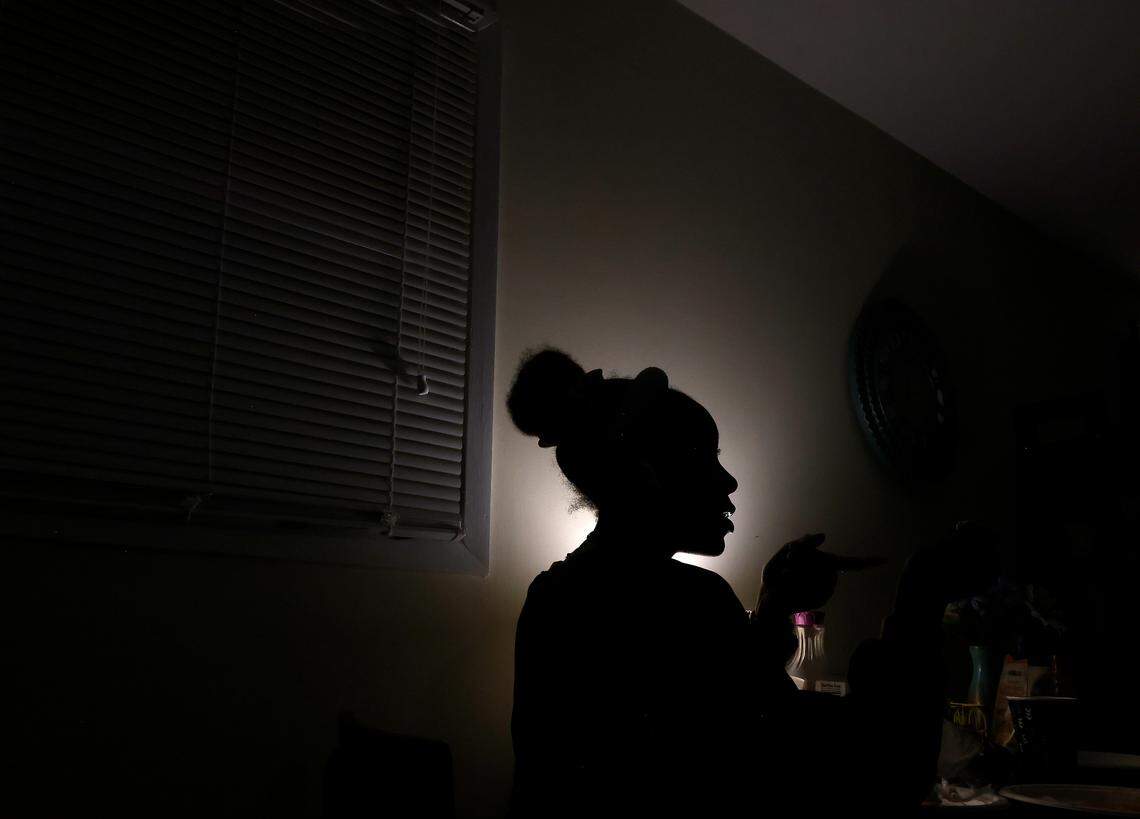
Everett has long supported the ERA’s mission to preserve the river, she said, but this experience left her feeling deceived.
No one mentioned plans to sell the land when they moved in or when their annual lease became a month-to-month lease earlier this year, she said. When she asked about the change, she was told it would help families still facing pandemic-related issues, she said.
In July, the property manager brought state park rangers in to inspect the homes but still didn’t mention the pending sale, Everett said. She learned about the reason for the visit in October, when the Indy Week newspaper published a story about the evictions, she said.
“It was just disgusting,” she said, recalling how her family had proudly shown off their home and garden to the visitors. Her view changed once she realized the real purpose of the visit, she said, calling it more white colonialism against people of color.
“You don’t do things like that. You don’t have people come into someone’s house, don’t tell them anything about it, and basically come size them up,” Everett said.
“When you’re dealing with people of color, and the history, you have to be sensitive. You don’t get the right to just do the things you think you want to do,” she said. “Do you know what that looks like to come in and just pick what you want? I just feel — that burned me up.”
BEHIND THE STORY
MOREWhy we're doing this project
Single mothers raising children under age 18 make up more than a third of the families meeting the federal poverty definition in North Carolina. That’s $23,030 a year, before taxes, for a mother with two children working 40 hours a week.
The News & Observer’s “Women & Children First?” project will bring together advocates, public policy experts and others, while giving moms across the state a platform to tell their stories. We hope to identify policies over the coming months that North Carolina and local governments can enact to help families in need, including those that official poverty definitions miss.
If you think we are missing something, have information to share or ideas for our next stories, contact reporter Tammy Grubb at 919-829-8926 or tgrubb@heraldsun.com or deputy metro editor Mark Schultz at mschultz@newsobserver.com.
The ERA paid over $500,000 to buy the properties between 1984 and 2001, to hold it until the state could buy it for Eno River State Park, said Sheffield, the association’s executive director. It’s not a written agreement, she said, and the sales price will be set after an appraisal.
“This is just the way we’ve done business, and usually the contract about it doesn’t get written until the land transfer is happening, so any holdings that we have in the interim are just under that longstanding partnership that we have with the N.C. State Parks,” she said.
Sheffield has directed questions about the transfer timeline and future land uses to the state. An N.C. State Parks spokeswoman acknowledged an Oct. 26 email from The N&O asking for an interview, but did not follow up or respond to additional outreach.
On Friday, the State Parks office sent a statement to The N&O in an email. The state has been talking with the ERA about buying land to expand Eno River State Park, parks spokeswoman Katie Hall said, but there is no final land agreement or sale at this time.
“We would consider property sales price, availability of funding, and other factors before any property acquisition by the state could move forward,” Hall said. “In a case such as this, we would also take into account community input.”
She noted that the Parks and Recreation Authority board also would have to approve the purchase. The earliest that could happen is next year, Hall said.
Sheffield acknowledged in an earlier interview that the decision to sell the land “has clearly been more of a shock to our residents than we anticipated.” The ERA is looking into allegations its management company, V.S. Rich Property Services, didn’t tell tenants about a possible sale, threatened rent hikes and ignored requested repairs. ERA stopped collecting rent from its tenants in September.
“Our mission is to conserve and grow the natural resources in the basin,” Sheffield said. “Our customary role isn’t that of a landlord, so we have been relying on third-party property management to fulfill the bulk of those duties, and here we are.”
In October, three families, including Everett’s, were given until May 31 to move, and the ERA is sharing each family’s needs with its members and looking for more community resources, she said. Leases for the four remaining tenants expire July 31, 2023. It’s unclear whether the ERA now plans to change those dates.
If they are evicted, Everett said she hopes to find something in East Durham, where she grew up. Her employer started a GoFundMe campaign to help.
“It’s more than just a home for me,” Everett said. “I was born and raised here, my parents, grandparents, great-grandparents and so on for many generations before me were from East Durham, and this is my home. … To live somewhere else, especially a different city altogether, would really honestly be devastating. I couldn’t imagine it.”
Read more stories from the “Women and Children First?” project at newsobserver.com or heraldsun.com.
This story was originally published November 18, 2022 at 6:00 AM with the headline "Stable housing a foundation for success, but single moms need more, cheaper options."