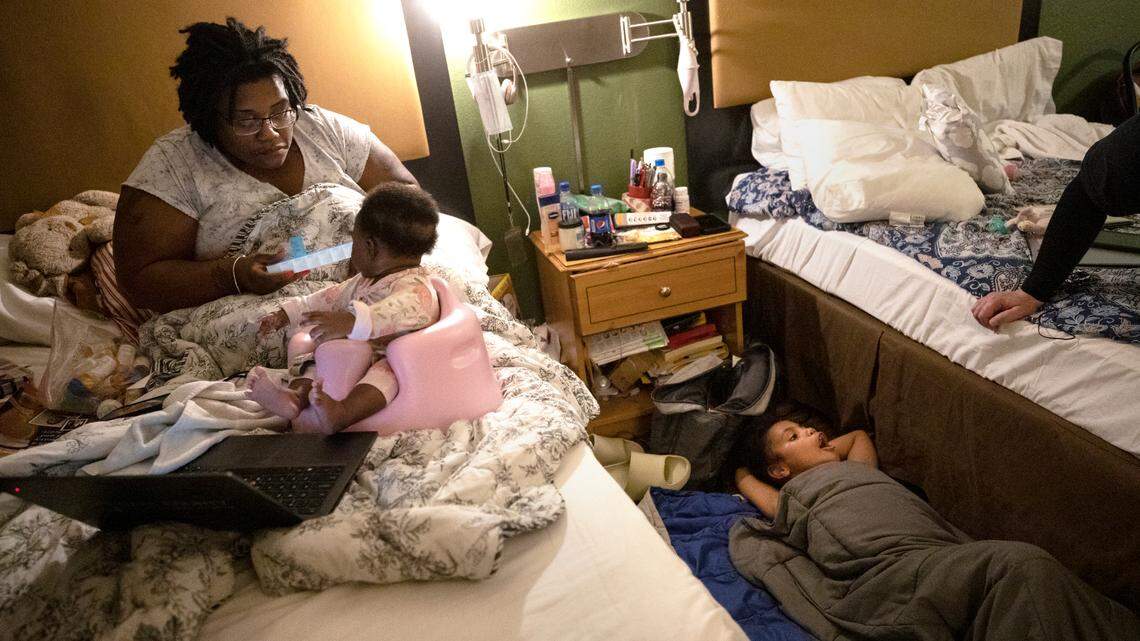
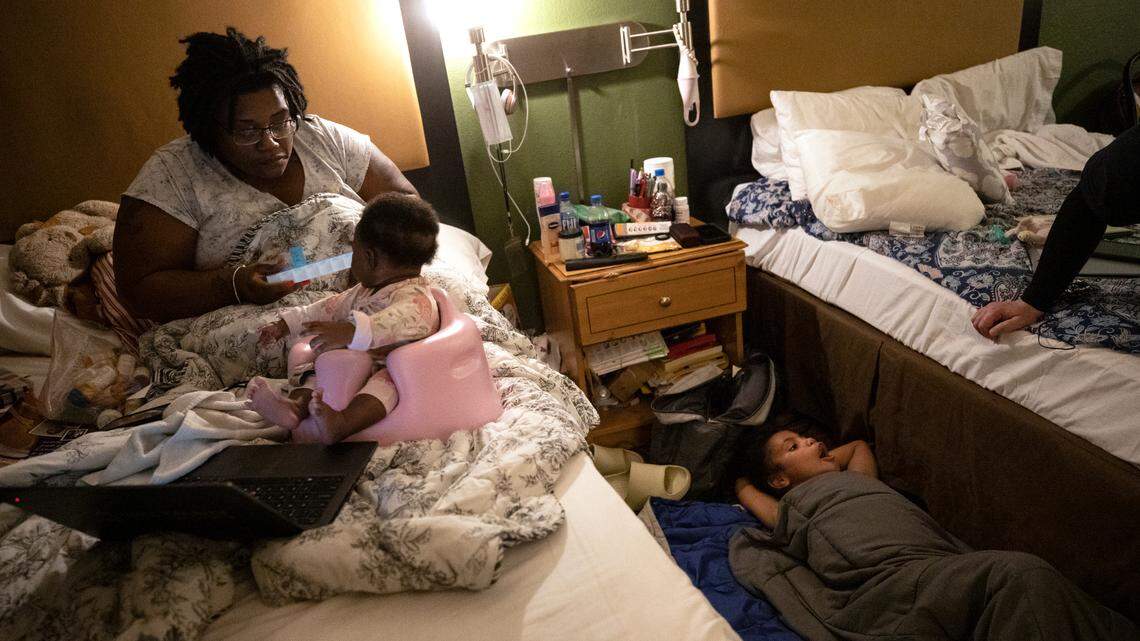
Paying landlords to rent to families? Charlotte agencies find success in partnership.
READ MORE
Women and Children First?
Single mothers raising children under the age of 18 make up more than a third of the families meeting the federal poverty definition in North Carolina. That’s $20,030 a year, before taxes, for a mother with two children working 40 hours a week. This new project brings together advocates, public policy experts and others, while giving moms across the state a platform to tell their stories. Over the coming months, we hope to identify policies that N.C. and local government can enact to help families in need, including those that the official poverty definitions miss.
Expand All
A Charlotte nonprofit is giving developers and landlords an incentive to be part of North Carolina’s solution to affordable housing and homelessness.
“It’s not rocket science, what we’re doing, but it is radically simple, and it’s taking a look at what are all the roadblocks — economic and perception — that exist on someone’s path to finding a safe, stable, quality place to call home,” said Beth Silverman, executive director of Lotus Campaign.
The nonprofit organization guarantees landlords against lost rent and helps tenants to pay renter’s insurance, inspection and application fees. It works with nonprofit partners to cover costs that a tenant’s wages don’t pay, typically through vouchers, Social Security and disability income, and public and private donations.
The Lotus Campaign has helped 372 people find housing since 2018, Silverman said. At least 262 bought a home, leased another apartment, or renewed their existing lease after completing the program, she said.
And the cost per family is dropping, because landlords have seen that low-income families also can be reliable tenants, she said.
“I think that’s a testament to if you give the real estate sector an easy way to say yes, to being part of the solution, they will,” Silverman said. “Something most people don’t think about is property managers are ground zero of seeing the housing affordability and homelessness crisis. They are definitely the pulse of what is going on in communities and understanding the dynamics.”
The program is similar to a master leasing program created in 2018 by the Chamber for a Greater Chapel Hill-Carrboro and Charlotte developer Grubb Properties, which owns the Glen Lennox community off N.C. 54.
The nonprofit Community Home Trust works with Grubb Properties to administer the program, and the town provides subsidies that help a small number of families with monthly rent, security deposits and utilities for up to two years.
Seven Charlotte landlords have joined the Lotus Campaign program so far, agreeing to waive security deposits, and employment and credit record checks. The program gives the campaign and its nonprofit partners at least 30 days to work out any issues with a tenant.
If problems remain, Lotus Campaign supports the landlord’s eviction court proceeding.
That’s rare, Silverman said, although she acknowledged that some landlords were skeptical at first, including Red Hill Ventures, which owns 600 apartments in Mecklenburg County. Red Hill initially offered to put five apartments in the program but expanded to 80 in just six months, she said.
“No one ever wants to have to evict someone. It’s really a last resort,” she said.
BEHIND THE STORY
MOREWhy we're doing this project
Single mothers raising children under age 18 make up more than a third of the families meeting the federal poverty definition in North Carolina. That’s $23,030 a year, before taxes, for a mother with two children working 40 hours a week.
The News & Observer’s “Women & Children First?” project will bring together advocates, public policy experts and others, while giving moms across the state a platform to tell their stories. We hope to identify policies over the coming months that North Carolina and local governments can enact to help families in need, including those that official poverty definitions miss.
If you think we are missing something, have information to share or ideas for our next stories, contact reporter Tammy Grubb at 919-829-8926 or tgrubb@heraldsun.com or deputy metro editor Mark Schultz at mschultz@newsobserver.com.
Single moms need family housing
Elizabeth Kurtz, chief housing resource officer with Charlotte Family Housing, said the group works closely with Lotus Campaign, especially as they attempt to house a growing number of single mothers with children.
Lease renewals with hefty rent hikes have displaced more Charlotte families than evictions in the last 18 months, she noted.
“Even if they can find a lower rent, there’s going to be an offset to that in their commuting costs, and in just the cost of the upheaval to moving the kids far away from their natural support systems, changing school districts, all of that,” Kurtz said.
Charlotte Family Housing families first move into a 15-bedroom group home that provides them with designated kitchen space and areas for study and daily living. Parents work with counselors to develop a budget, and children also learn about money and life skills.
“They can kind of take a minute, triage, know that when they come home from work, the lights are on, there’s no scary notice on the door, there’s food in the fridge,” Kurtz said.
From there, families get help moving into an apartment. They are expected to pay 30% of their income toward housing, which also allows them to save money and be financially stable after one or two years in the program, she said.
In the last four years, more than 70 families have been approved for mortgages and more than 50 families have bought and moved into a new home, Kurtz said. The program serves between 200 and 240 families a year, with about 100 in the program at any one time.
Building apartments, expanding
The Charlotte Family Housing model is just one way Lotus Campaign’s partners are tackling the problem, Silverman said. Another is a development program launched in 2019 with real estate developer Jonathan Rose Companies, which specializes in projects that are sustainable and focused on creating thriving communities.
The partnership bought Sharon Crossing, a 144-unit apartment building, using cash, a loan and equity partner contributions. The developer’s return depends on their expectations, said Philip Payne, a developer who co-founded Lotus Campaign and now serves as board chairman. Jonathan Rose Companies took a slightly less-than-market return, he said.
Roughly 20% of the units are leased at a rate affordable for families earning up to 60% of the area median income — $50,880 for a family of three. That’s rent up to $1,200 a month for a family spending 30% of its annual income on housing.
The gap between an affordable leasing rate and the market leasing rate is offset by having fully occupied units and tenants who pay on time every month, Payne said.
Lotus Campaign’s development partners are “committed to responsible property investment, social change and creating a community where tenants at all socioeconomic levels thrive,” Silverman added.
“It is a real-life example of leveraging private capital for good,” she said.
The organization is considering a pilot program that could provide rental guarantees for six months and one year of renter’s insurance.
“Part of what we’re also trying to do is lead by example — (to show) that you can use profit and capital as a tool for good and you can do this type of development without subsidies,” Silverman said. “We hope as we grow and raise more capital that we can do more of that.”
Read more stories from the “Women and Children First?” project at newsobserver.com or heraldsun.com.
More about Lotus Campaign
Website: lotuscampaign.org
Highlights: The Lotus Campaign was founded by four people with experience in development, impact investing, public policy and social services. It serves as a bridge between landlords, developers and nonprofits who specialize in housing insecurity and homelessness.
Ways to get involved: Donate or invest in Lotus Campaign’s work. Join their network of landlords, developers and nonprofit agencies working with homeless families.
More about Charlotte Family Housing
Website: charlottefamilyhousing.org
Highlights: Charlotte Family Housing works with over 70 housing providers to move families from the street and shelters to stable housing in Mecklenburg County. In addition to housing help, the organization provides supportive services for adults and children, from financial counseling to employment, health and education services.
Ways to get involved: Donate money or in-kind items, such as clothing, furniture, appliances and toys. Help fill Welcome Baskets and Happy Home buckets for families moving into their first home.
This story was originally published November 18, 2022 at 6:00 AM with the headline "Paying landlords to rent to families? Charlotte agencies find success in partnership.."
CORRECTION: The Lotus Campaign plan for another housing partnership in Pensacola, Florida, was removed from the story, because the plan is no longer on the table, according to Lotus Campaign officials.