Endorsement: The Editorial Board’s choices in North Carolina Supreme Court races
READ MORE
Charlotte Observer Endorsements 2022
The Editorial Board’s endorsements for North Carolina’s midterm elections on Nov. 8.
Expand All
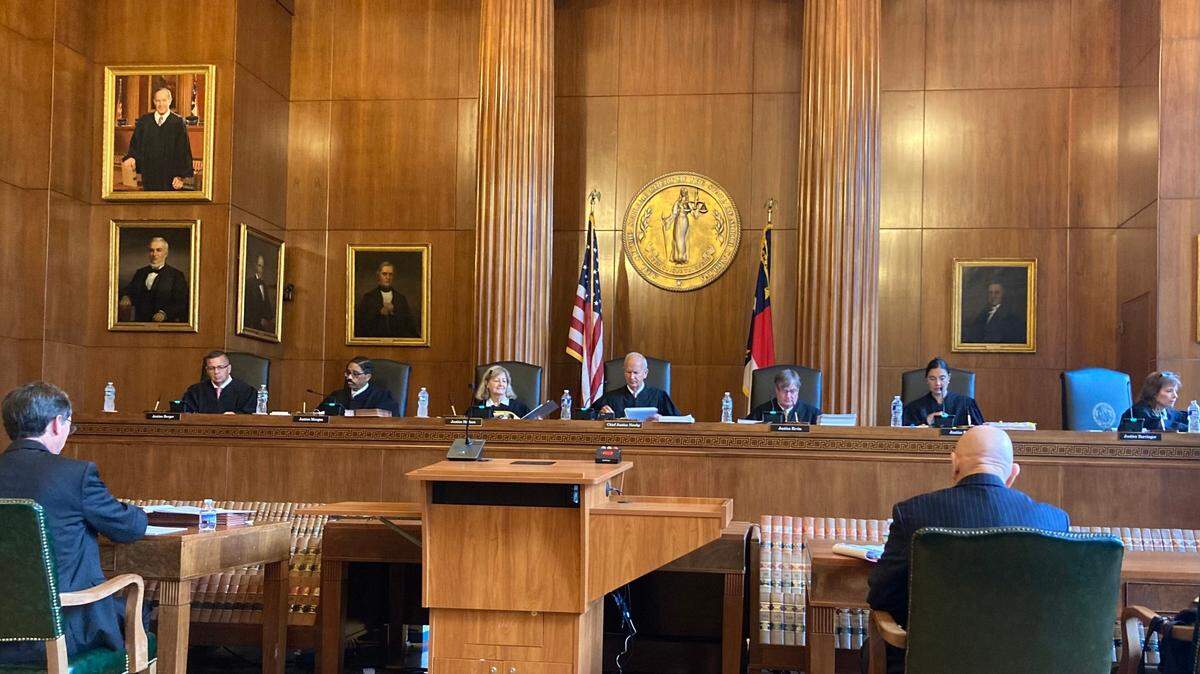
Two North Carolina Supreme Court seats appear on this year’s ballot, in statewide races with high political stakes. It’s one of the state’s most important midterm elections — but it’s also among the quietest.
The N.C. Supreme Court currently has a 4-3 Democratic majority, but both seats up for election this year are held by Democrats. Republicans need to win just one of the races to retake the majority for the first time in six years. If that happens, the court would have a Republican majority until at least 2028 (the next election in which a GOP-controlled seat is up for grabs).
The Editorial Board believes that partisan judicial elections — reinstated several years ago by the N.C. General Assembly — are a bad idea. The increased politicization of the judiciary is largely why public confidence in the courts has waned, and why justices themselves have grown increasingly divided.
The circumstances of this election are not normal, and like many North Carolinians, this Editorial Board is concerned about the future and the preservation of our fundamental rights. Issues like abortion access, gerrymandering and voting rights are also on the ballot this year — and the next Supreme Court will likely decide their fate. In addition to considering individual candidates and their qualifications, the Board has also taken the makeup of the court under consideration, including the broader implications that this election could have for our state.
Here’s how we see the two races:
Seat 3
This is an open seat vacated by Associate Justice Robin Hudson, a Democrat who is retiring after two terms on the bench. Two N.C. Court of Appeals judges, Lucy Inman and Richard Dietz, are seeking to replace her.
Inman, a Democrat who ran unsuccessfully for the Supreme Court in 2020, is sharp-minded, with a particularly impressive grasp of racial justice issues. She emphasizes the need for justices to be impartial and “leave politics at the courthouse steps.”
Dietz, a former appellate lawyer, is a highly regarded jurist with a strong reputation for being thoughtful and independent. He similarly told the Editorial Board that he believes justices should focus on leadership, not politics, which is why he largely refrains from acting like a politician on the campaign trail.
Voters have two strong candidates in this race. Both are highly regarded within the legal community, and have received praise from Democrats and Republicans alike. But given how much is at stake in this election, we are more confident in where Inman would stand on critical issues like voting rights and abortion — she’s spoken forcefully about the importance of voting rights and health care access in the past.
We give the nod to Inman.
Seat 5
In this race, incumbent Justice Sam Ervin IV is seeking a second Supreme Court term. His opponent is Republican Trey Allen, current general counsel to the Administrative Office of the Courts.
Ervin has been a strong presence on the court, with a record of being fair and collegial. He also has a breadth of experience as both a lawyer and an appeals court judge, which he cites as an asset. Ervin has proven himself to be a justice who stays above the fray of ideology and party affiliation, which is critical to maintaining the court’s integrity.
Allen has no experience as a judge, with the bulk of his legal career having been in private practice and academia. He describes himself as an originalist and once clerked for Chief Justice Paul Newby, who also appointed him to his current role as general counsel to the court system. Newby encouraged Allen to run for the Supreme Court and has shown support for him throughout the campaign, but Allen insists he “can and does approach the law independently.” We appreciate that, but we think Ervin’s experience on the bench makes him the clear choice in this race.
We strongly recommend Ervin.
BEHIND THE STORY
MOREHow we do our endorsements
Members of the combined Charlotte Observer and Raleigh News & Observer editorial boards are conducting interviews and research of candidates in municipal and state elections. The combined board is led by N.C. Opinion Editor Peter St. Onge, who is joined in Raleigh by deputy Opinion editor Ned Barnett and in Charlotte by deputy Opinion editor Paige Masten. Board members also include Observer editor Rana Cash and News & Observer editor Nicole Stockdale.
The editorial board also talks with others who know the candidates and have worked with them. When we’ve completed our interviews and research, we discuss each race and decide on our endorsements.
This story was originally published October 25, 2022 at 6:00 AM.