
Charlotte City Council should stop playing games with transparency | Opinion
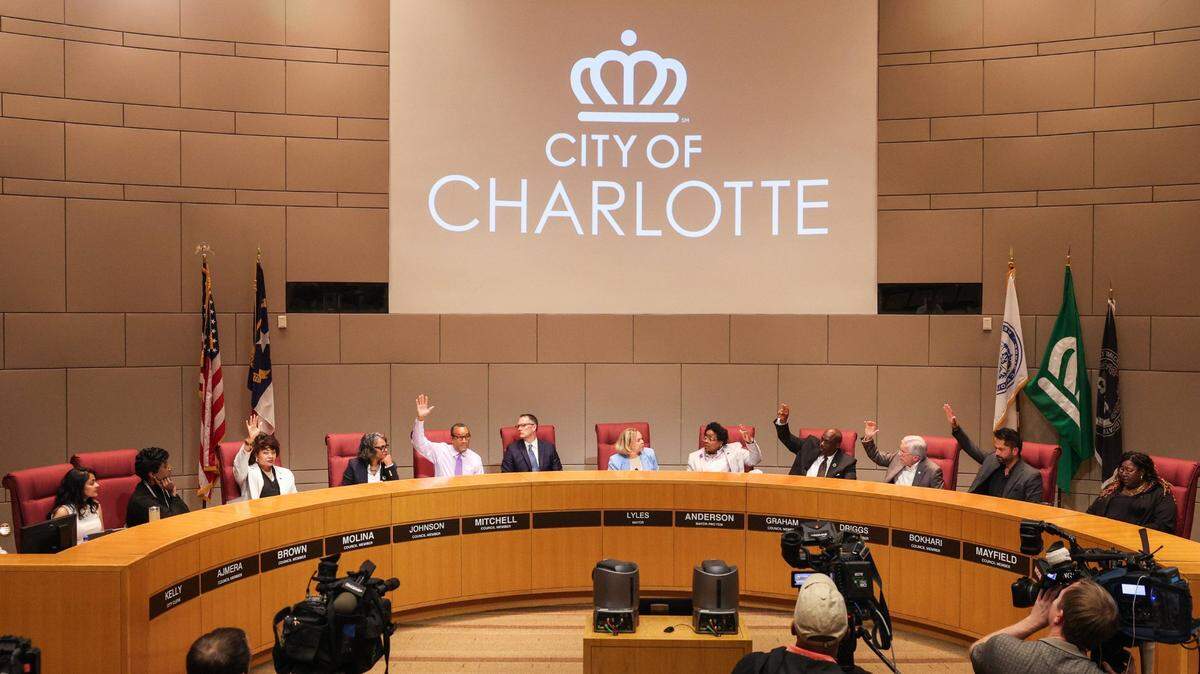
Charlotte city officials have been toeing the line of North Carolina’s open meetings law with small group gatherings that technically don’t meet the attendance threshold for declaring a public meeting but still involve public business.
As The Charlotte Observer reported this week, experts aren’t convinced that the practice is even legal. What’s especially concerning is that it’s occurred with two of the biggest decisions that the city council has made in recent years.
When the city first introduced a plan to renovate Bank of America Stadium using hundreds of millions of taxpayer dollars last year, it didn’t seem like something council members were hearing about for the first time. It felt like it was already a done deal, despite the public skepticism and opposition to the proposal that came after.
What we do know is that there was at least some discussion happening behind the scenes. All 11 members of Charlotte City Council, as well as Mayor Vi Lyles, toured Bank of America Stadium months before approving the $650 million public contribution to its renovation. The city maintains that the tours didn’t count as public meetings because they occurred in groups of four.
Legal or not, the ethics remain questionable. It speaks to a larger concern we expressed then and still have now: it was a process that felt rushed, secretive and not considerate enough of public input. The council ended up voting on the deal less than three weeks after its introduction, despite unanswered questions and unaddressed concerns from some council members and the public.
This isn’t the only time these small group gatherings have been used for what is seemingly public business. Some council members also received regular briefings from City Manager Marcus Jones as he negotiated legislation to put a sales tax increase on Mecklenburg County ballots that would fund a multibillion dollar transit plan. The subsequent decision to purchase tracks for the Red Line and approve proposed legislation for the sales tax increase also felt rushed, at least to the public, which wasn’t privy to the details and discussions happening behind the scenes.
Ironing out the kinks of a proposal behind the scenes before presenting it to the public may seem reasonable, but not if it’s done in a way that might violate the law. There’s a difference between city staff briefing a few council members on an issue they’re unfamiliar with and deliberative discussions that involve matters of policy. The latter should be open to the public, no matter how many council members are participating.
It’s not just that the public has a right to know what their elected officials are doing. It’s also that transparency can yield results that are better for everyone. When too much deliberation occurs behind the scenes, the final result is something that was created with little to no public input. That can create hiccups when there’s unforeseen public backlash or other problems that force the city to delay or reverse action.
To be clear, this problem is not limited to Charlotte, nor is it limited to this city council. Transparency is a regular issue with public bodies everywhere, including the Charlotte-Mecklenburg Board of Education, which has been cited for violating open meetings law in the past. But the city’s struggles with transparency have felt increasingly pronounced over time, including with public records that take years to obtain.
Transparency is not just a legal requirement. It’s also a meaningful one. A public body should not conduct the public’s business outside of the public eye. It fractures the relationship between public officials and the community they serve. Council members say they want to be a more “efficient” body, but efficiency should never come at the expense of transparency. The council should keep that in mind.
BEHIND THE STORY
MOREWhat is the Editorial Board?
The Charlotte Observer and Raleigh News & Observer editorial boards combined in 2019 to provide fuller and more diverse North Carolina opinion content to our readers. The editorial board operates independently from the newsrooms in Charlotte and Raleigh and does not influence the work of the reporting and editing staffs. The combined board is led by N.C. Opinion Editor Peter St. Onge, who is joined in Raleigh by deputy Opinion editor Ned Barnett and in Charlotte by deputy Opinion editor Paige Masten. Board members also include Observer editor Rana Cash and News & Observer editor Nicole Stockdale. For questions about the board or our editorials, email pstonge@charlotteobserver.com.