
Tricia Cotham might have just saved Charlotte’s transit plan — and her legacy | Opinion
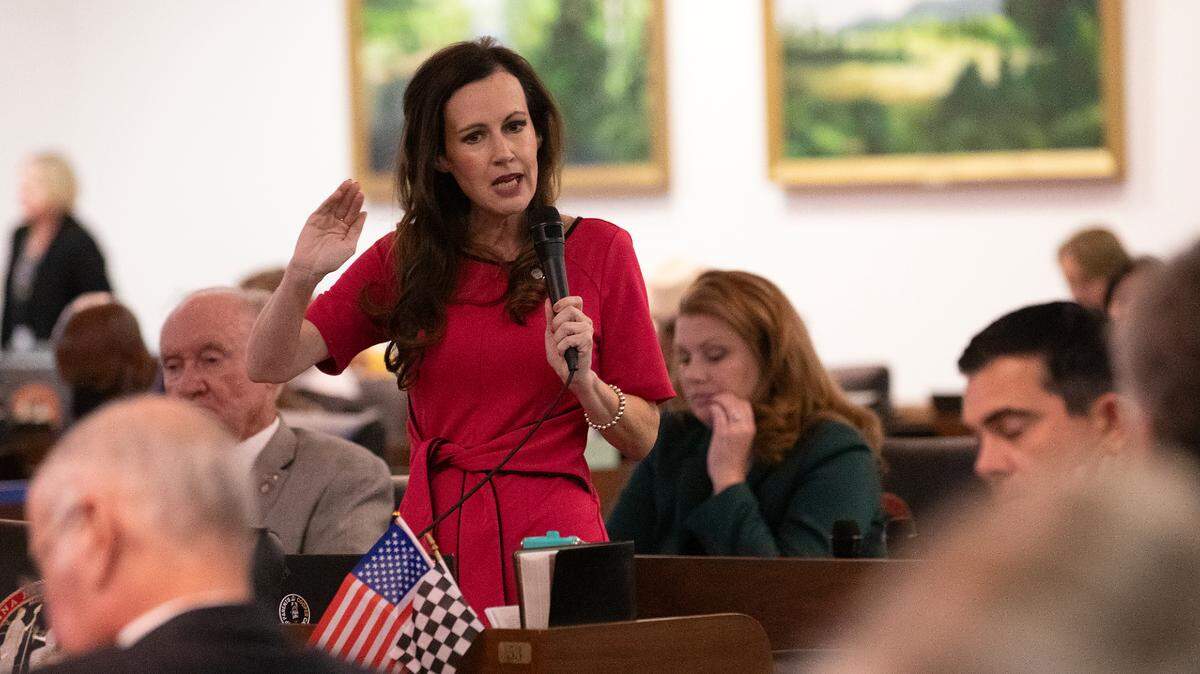
There was a time when the name Cotham was the gold standard in Mecklenburg County politics.
For more than a decade, Pat Cotham dominated at-large county commission races, known for her hands-on service — bringing blankets to the homeless, showing up at precinct meetings, being present where others weren’t.
Her daughter Tricia rose through the ranks in Raleigh as a sharp, outspoken Democrat focused on public education. Together, they represented a vanishing kind of politics — grounded in service and deeply woven into the civic fabric of Charlotte.
But sadly, that family name has taken quite a beating.
When Tricia Cotham switched parties in 2023, handing Republicans a supermajority in the General Assembly, the backlash was swift and brutal. Protesters branded her a “traitor” and confronted in grocery stores. Even her children were dragged into the fray. She held onto her Matthews-area seat, but a target remains on her back.
Her mother wasn’t so lucky. Pat Cotham was bounced from her seat on the county commission in last year’s Democratic primary. Twelve years of service gone because of a last name.
That’s the political climate we live in now: little room for nuance, no tolerance for independence. Just hard lines and collateral damage.
Tricia Cotham won’t be welcomed back into Charlotte’s Democratic circles. That door is closed. But legacy is a different thing.
And with the filing of the PAVE Act, she may have just cemented hers.
Why the PAVE Act is different
The “Projects For Advancing Vehicle-infrastructure Enhancements” Act is the most realistic effort yet to advance Charlotte’s $13.5 billion transit plan. The basic premise is familiar: let Mecklenburg voters decide on a 1-cent sales tax to fund major infrastructure investments.
But previous versions of this idea fell apart quickly. They were too city-centric, too vague, and too dismissive of the concerns of lawmakers outside Charlotte. They read more like a gesture than a strategy — something to check a box, not change the calculus. They didn’t move because the political math never worked.
Cotham’s bill, though, seems to accomplish something incredibly difficult: Finding a path between the city’s ambitions and the legislature’s hard political limits.
It also fixes real policy problems.
The bill keeps a 60/40 split between transit and road funding, but removes the caps that handcuffed rail investments in earlier versions. Matthews, left behind in previous plans, is now included. Micro-transit and autonomous vehicle technology are finally part of the mix — an overdue nod to where transportation is heading.
Most importantly, this bill is prescriptive. It doesn’t hand over a pile of money and hope for the best. It outlines how the money must be spent, forces real financial planning, and includes specific accountability benchmarks. It is, in many ways, a legislative attempt to save Charlotte from itself. No more vision statements masquerading as transit strategy.
That’s why the Charlotte business community jumped in quickly to endorse it. And it’s why leaders from across Mecklenburg County’s municipalities are lining up behind it, too.
The bottom line is this: Cotham’s bill has a chance to succeed where years of lobbying and posturing failed.
What comes next
The PAVE Act won’t move on its own. Big, controversial funding bills rarely do. The real action will come in the state budget.
The Senate will release its version first. Don’t expect to see the PAVE Act language in there — that’s not where the support lies. The House version is what matters. That’s where Tricia Cotham has influence, and where this bill has its best shot at being inserted. It also seems to have some backing from leadership.
“Her leadership on transportation has been instrumental in giving this legislation real momentum,” House Speaker Destin Hall told me. “She understands the urgent need to invest in infrastructure in one of North Carolina’s fastest-growing regions, and she understands that it can be done in a thoughtful way that is based on data rather than politics.”
It’s not a done deal. But it might actually work. And if it does, it will be the most consequential thing any Charlotte politican has done in decades.
Decades from now, when the Red Line finally rolls toward Lake Norman and when Matthews has a stop on the Silver Line, people won’t be talking about party switches or protest signs.
This isn’t a comeback story. It’s something rarer in politics: the beginning of a legacy that lasts.
This story was originally published April 14, 2025 at 7:48 AM.