The ACC tournament used to matter. How did North Carolina’s holiday lose its shine?
READ MORE
From the Old Barn to Brooklyn
The ACC men’s basketball tournament once was the jewel of North Carolina’s favorite pastime. What is its place now in the rapidly evolving, football-first world of college athletics? And how did the tournament become a shadow of what it once was? This is the N&O’s special report.
Expand All
Roy Williams arrived in New York City in March 2017 with one of the nation’s best college basketball teams, one that would go on to win a national championship.
Williams, then the head coach at North Carolina, had led the Tar Heels to a first-place finish in the ACC’s regular season. They were favored to win the league tournament, which for the first time was in Brooklyn.
One morning, as he often does, Williams went for a long walk. He set out across the Brooklyn Bridge and returned to the team hotel, where the bellman recognized him. That was not unusual, given Williams’ stature as a Hall of Fame coach.
The brief encounter with the bellman began with the kind of small talk that Williams, who retired last April, had to have experienced countless times during a career that spanned more than 40 years. Most of those exchanges undoubtedly faded from memory as quickly as they happened but five years later, Williams can still recall the back-and-forth. He recited it recently like this:
“Coach, how you doing?” the bellman asked.
“I’m doing great, how about yourself?” Williams said in response.
The bellman answered, then followed with a question that hung in the air like a stench:
“What are you doing here?”
The answer would have been only slightly more obvious if Williams had been wearing a shirt that said: HERE TO COACH IN THE ACC TOURNAMENT. It was happening not far away, at the Barclays Center, yet the bellman “didn’t even know the damn tournament was going on in Brooklyn,” Williams said, considering the tournament’s place and significance outside of North Carolina. “So come on now.”
For the third time in the past five years, and first since 2018, the ACC tournament is back this week in Brooklyn. Its return represents a continuation of the conference’s northward expansion, at least symbolically, in an effort to establish a niche in America’s largest city. When the league first brought the tournament to New York five years ago, the move prompted a long list of questions.
Most of them, though, were a variation of the same question that asked how the tournament, which for decades remained the ACC’s signature event, would find its place on the country’s most crowded stage. In 2022, more urgent questions have emerged: What is the ACC tournament’s place, anywhere, in the rapidly evolving, football-first world of college athletics? And how did the jewel of North Carolina’s favorite pastime become a shadow of what it once was?
The tournament is still the tournament, in some ways. It still provides the ACC’s only automatic bid to the NCAA tournament. It still results in the conference’s officially recognized champion. It still trades in the drama and intrigue of March. And yet to see what it has become “breaks my heart,” said Dave Odom, an Eastern North Carolina native who spent more than 20 years coaching in the ACC. He’s not alone in that sentiment.
A problem with geography
For North Carolinians of a certain age, the ACC tournament conjures vivid memories, nostalgia thicker than the haze of tobacco smoke throughout Reynolds Coliseum during the tournament’s earliest years. It was first played in 1954, in a building that came to be known as the Old Barn but one that was then considered a marvel.
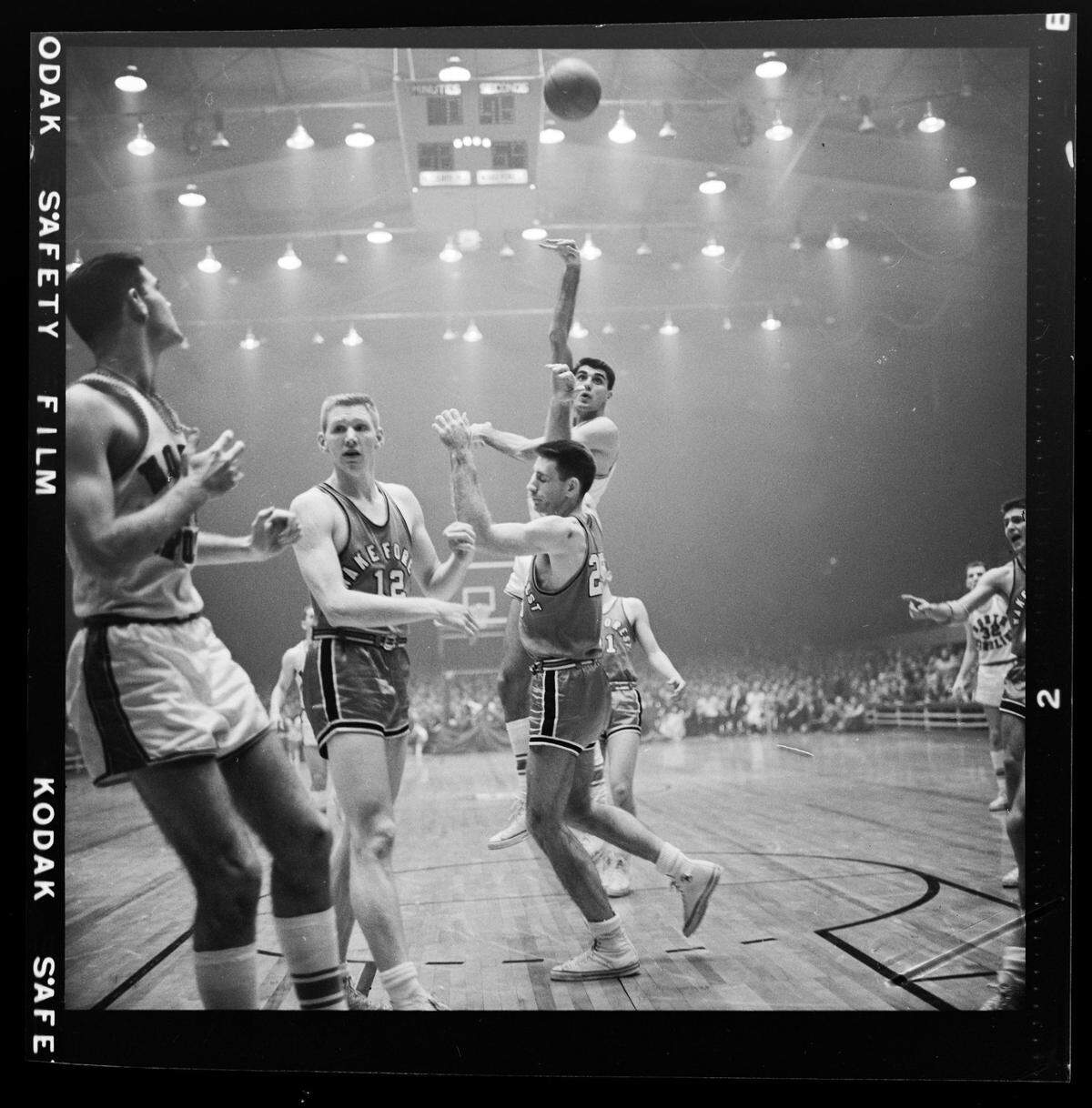
The number of people still around who experienced the tournament from the start, or near it, grows smaller year after year. Slowly, a connection fades. Those who grew up in North Carolina between the 1960s and mid-90s grew up in a time when the tournament mattered in a way that’s difficult to describe to non-natives, or those of a younger generation. For decades, the tournament transcended the boundaries of a basketball court and helped define the culture of a state.
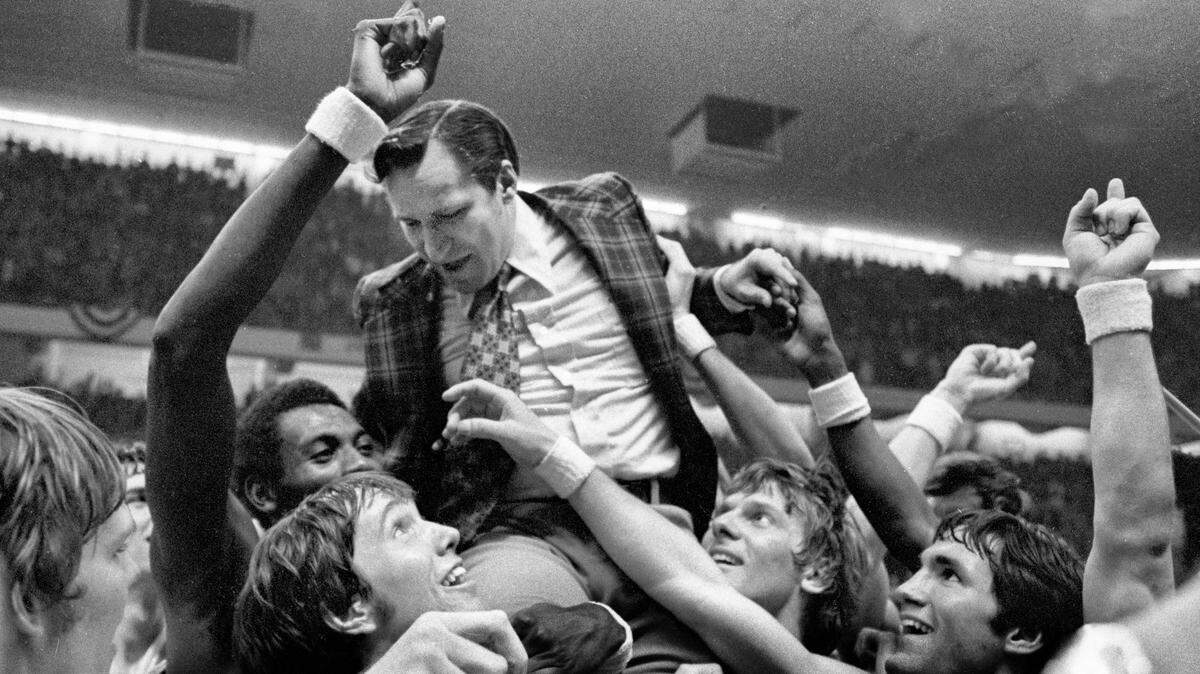
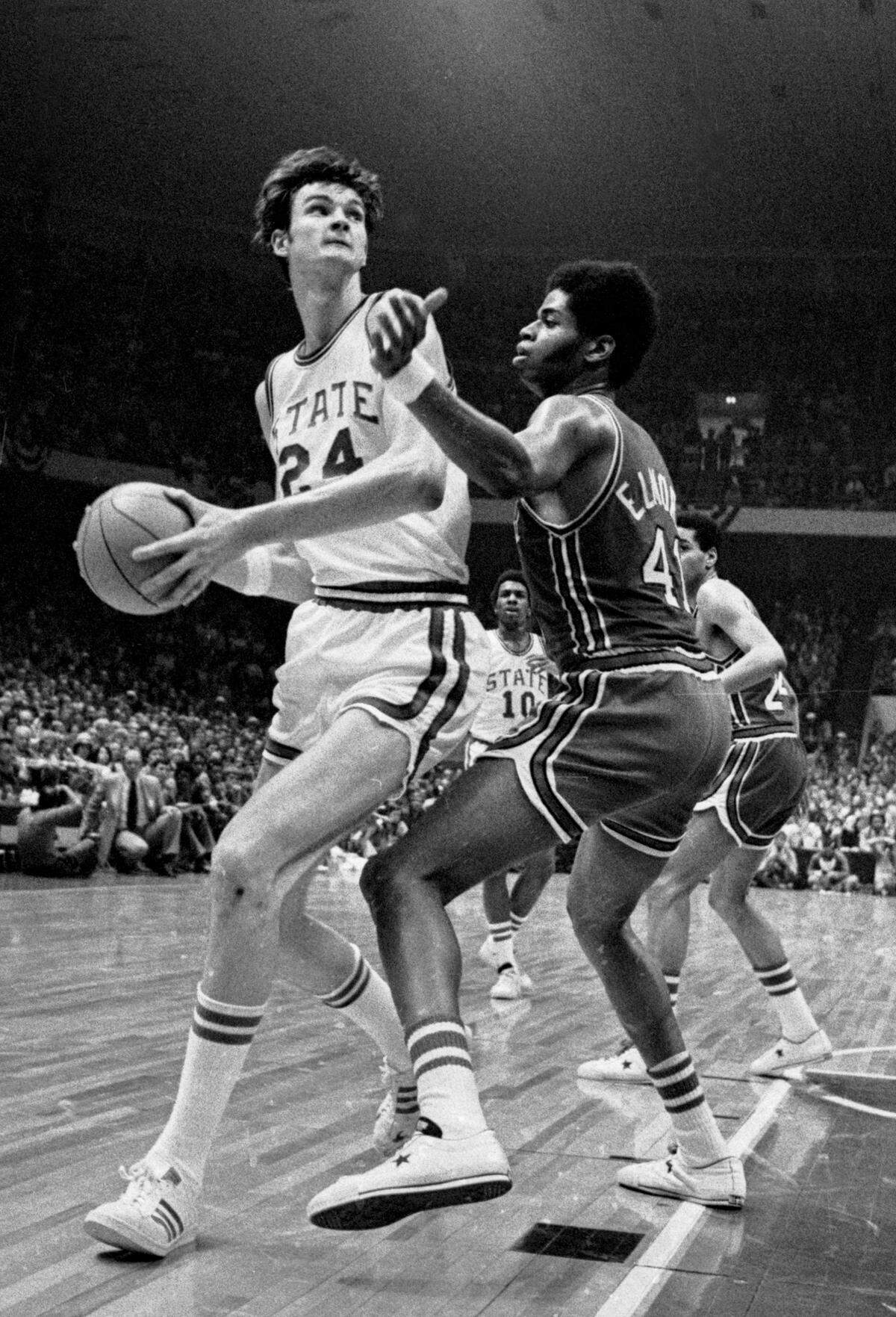
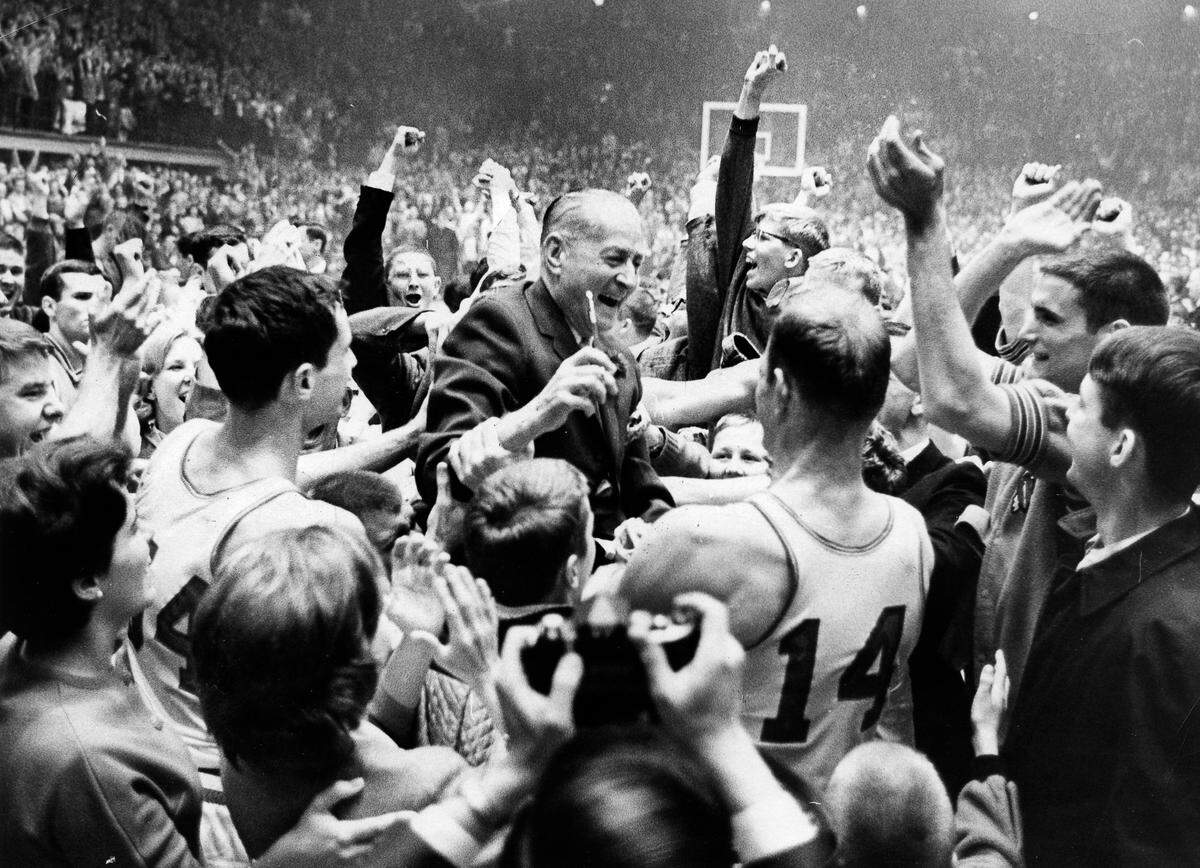
The tournament was Everett Case bringing big-time college basketball to the South in the 1950s. It was Dean Smith becoming a state-wide icon, and a leader of integration, in the late 1960s. It was maybe the Greatest Game Ever Played in the 1970s, David Thompson and N.C. State outlasting John Lucas and Maryland in ‘74.
It was the star power of the 1980s: James Worthy and Michael Jordan and Len Bias and everyone else. It was Randolph Childress in the 1990s, with the greatest individual performance in the history of the event in 1995. It was, beyond basketball, a connective thread throughout North Carolina; a cultural unifier that brought people together as much for the promise of watching their team prevail as the pleasure of watching their rival succumb.
“It was ours,” Dave Odom said recently, and he was not talking as the former head coach at Wake Forest, where he had a front-row seat for The Childress Show of ‘95, but as a 79-year-old North Carolinian, a native of Goldsboro who remembers what the tournament was and has lived to see what it is.
Odom did his most memorable coaching work in Winston-Salem, a short drive from Greensboro, which has hosted 28 ACC tournaments — more than any other city. The majority of the ACC’s membership could bus there in the old days and, even now, seven of the league’s 15 basketball-playing members are within 225 miles of the Greensboro Coliseum; five of those schools are within 150 miles.
The Barclays Center in Brooklyn, meanwhile, isn’t particularly close to any ACC school. Syracuse, in the same state, is 250 miles away. The closest is Boston College, at 211 miles away. Pittsburgh is the only other school for which Brooklyn is closer than Greensboro, and the difference is about 40 miles. Eight ACC schools are more than 500 miles away from Brooklyn; the two Florida schools are more than 1,000 miles away — or more than 400 miles farther than they are from Greensboro.
In Greensboro, Childress, who scored 107 points in three days to lead Wake Forest to the ACC tournament championship in 1995, remains a recognizable name, part of the city’s basketball history. When the tournament was in Brooklyn in 2017 and ‘18, he was just another frustrated commuter in New York City, stuck on a bus on the way to work.
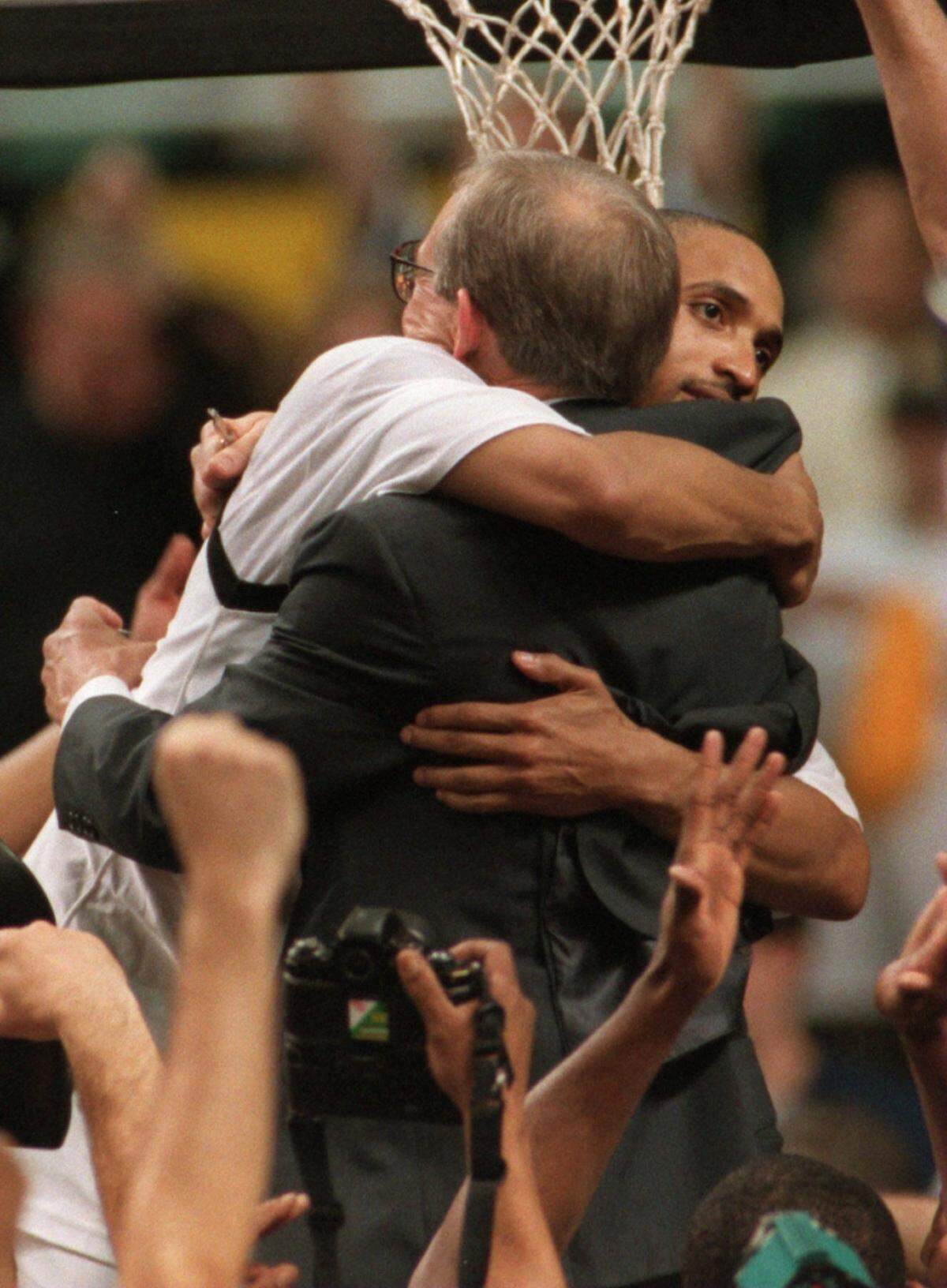
Childress then was an assistant coach at Wake Forest. For the tournament, the team stayed in Manhattan. Their hotel was not far from the Barclays Center, yet with city traffic, the bus ride lasted two hours, Childress said. Players napped. Maintaining focus was a challenge.
“If you’re not staying in Brooklyn,” Childress said of the commute, “it’s brutal. ... Like getting there, traffic was so bad. I mean, it would take us two hours — we were on the bus, God, you couldn’t keep them awake.”
“And then,” Childress said, continuing, “you think of New York, you think Big East basketball. And I know they’re in Madison Square Garden. I just believe the ACC tournament would be better if it remained in North Carolina, and maybe it needs to be in North Carolina three out of every five (years) and then the occasional rotation.”
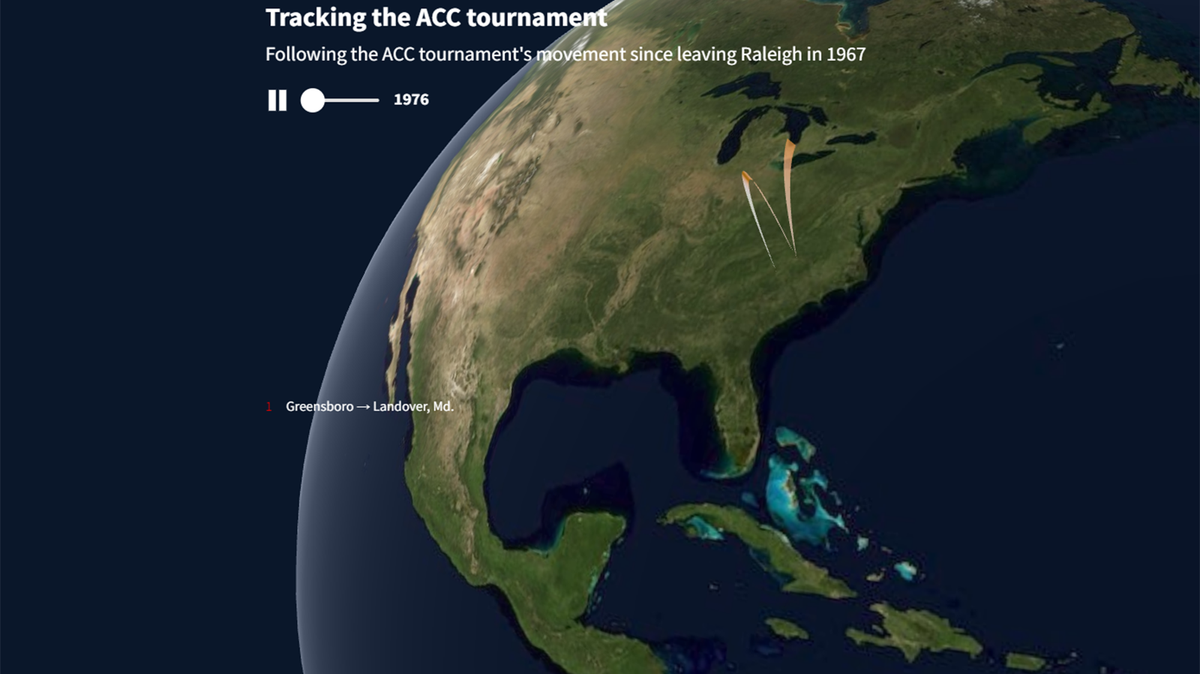
The idea has generally held over the past 20 years, a span in which the tournament has gone to Tampa (once), Atlanta (twice), Washington, D.C. (twice) and Brooklyn now for the third time. The other 14 years it has been in North Carolina, either in Charlotte or Greensboro, though Greensboro’s future as a host city beyond the 2023 tournament is in question given the uncertainty surrounding its long-term status as the home of the ACC’s headquarters.
There was a time when the thought of taking the tournament out of Greensboro was heresy.
“When that thing went to Landover, Maryland, in 1976 it was like they were taking it to the moon because it was leaving North Carolina,” said Wes Durham, a longtime ACC television and radio broadcaster whose father, Woody, was the radio play-by-play voice of UNC. “And I remember there being a lot of contention about it.”
Durham was a teenager then and not long after attended his first ACC tournament in 1979. His dad was behind the microphone on press row and Wes was a ballboy. He took a look around the Greensboro Coliseum, which then sat around 15,000 people, in the moments before the first game.
“Every seat was full,” he said, and that was another thing that had long changed.
ACC now favors football over hoops
Jim Phillips became the ACC’s fifth commissioner about a year ago, in February 2021, and when he appeared almost six months later at the league’s annual preseason football kick-off event in Charlotte, he made no secret of the ACC’s top priority: Improving its most important product was a must.
“As I’ve stated since my first day as ACC commissioner, football must be the number one priority for us, for all of us, our schools, the league, ACC Network, our partners, coaches,” Phillips said then. “We’ve been collaborating for months to ensure that ACC football has the mindset of 24/7, 365, and we’re working together to further elevate football in the ACC.
“We’re just getting started.”
Despite long-held perceptions that suggest otherwise, those rooted in the conference’s basketball history, Phillips’ comments last July did not mark the beginning of a football-first mentality. It was, instead, the continuation of a decades-long attempt to gain more football relevance.
The ACC was formed in 1953 because its original members, those that broke off from the Southern Conference, wanted to compete in major college football. The league expanded into Florida, with the addition of Florida State in 1992, to bolster football. That was the motivation, too, a little more than a decade later with the additions of Boston College, Miami and Virginia Tech.
For decades, it didn’t much matter that the league largely floundered nationally in football, or that Florida State overmatched its new conference rivals throughout the 1990s. The ACC had established itself as the country’s best basketball conference, after all, and for a long time, college basketball mattered as much to the financial bottom line as anything else.
As recently as 20 years ago, for instance, the ACC’s regular-season men’s basketball television rights were more lucrative than those for football. In 2002, the league received $28 million in TV revenue for its regular-season basketball games, according to a 2003 story in the Winston-Salem Journal. The ACC’s regular-season football games, meanwhile, generated $21.1 million in TV money.
Soon that changed and changed dramatically. The value of college football television deals began to boom in the mid-to-late 2000s, while college basketball settled into a prolonged identity crisis that persists. One sport became the dominant financial engine of big-business college athletics. The other became more and more relegated to an annual burst of relevancy in March and early April.
And now here we are, in a time when conferences are judged as much for their television contracts as anything that happens on the field. The ACC during the 2019-20 financial year generated $496.7 million in revenue, according to publicly available tax records. It was a league record, one largely owed to its football-driven TV deal with ESPN. And yet it lagged far behind the Big Ten ($768.9 million) and SEC ($729 million), because those conferences own even richer TV contracts, given their audiences’ devotion to large state schools — many with robust football cultures.
Phillips’ challenge, then, is to somehow close the ever-widening financial gap with the ACC’s rival conferences. It’s no easy task given that both the Big Ten and SEC will receive new TV deals in the coming years, while the ACC is locked into its contract until 2036. Sustained, nationally relevant football success, along with the dream of adding Notre Dame as a full, football-playing member of the ACC, appear to be the only options.
It makes for something of a sad irony: Just about every adult in North Carolina can tell stories of those ACC tournament Fridays years ago, when their teachers would wheel the TV cart into the classroom and turn on basketball. Now, given the financial realities tied to television revenue, it’s fair to wonder how much the tournament matters at all.
How ACC expansion has affected the tournament
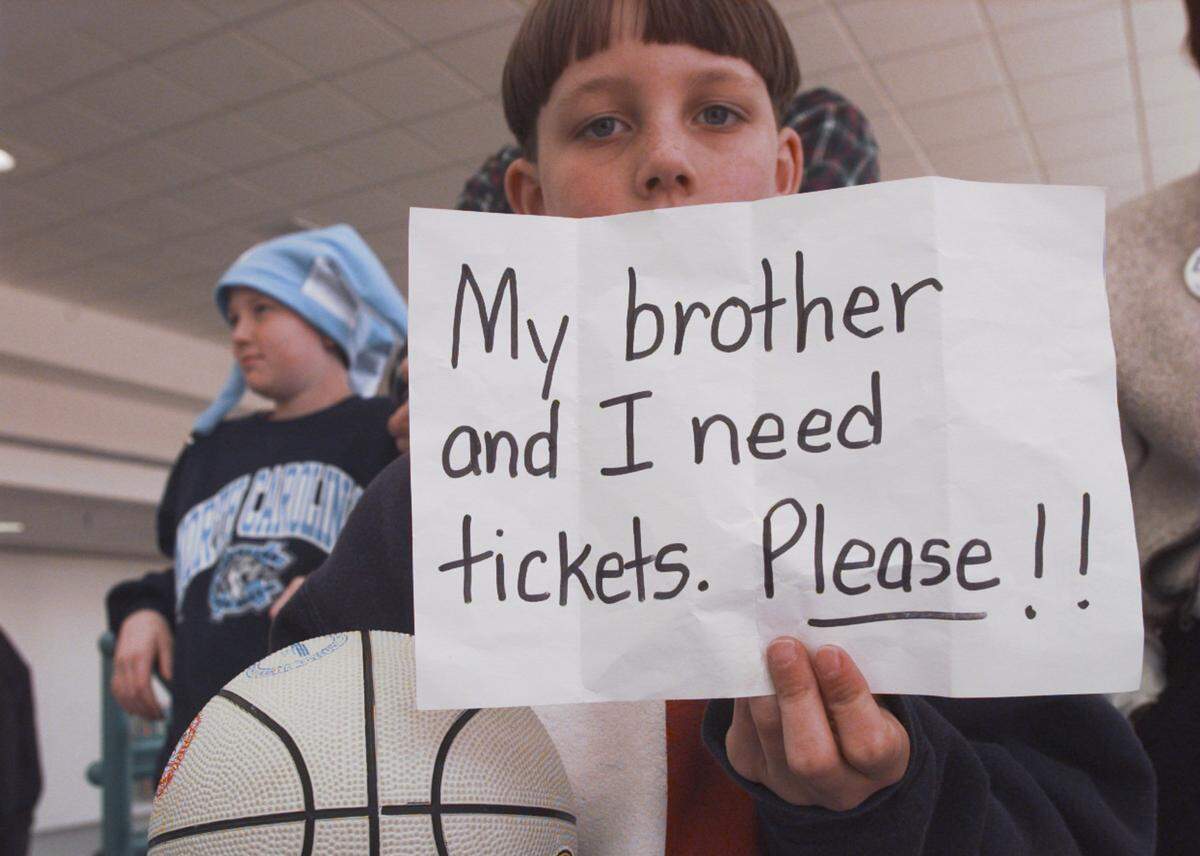
Securing tickets for the ACC tournament once required something like an act of God or an in with someone well-connected. Long before she became the athletic director at Maryland, and later at N.C. State, Debbie Yow was a college basketball fan growing up outside of Greensboro. When she was about 15, she said, “my dad somehow got tickets” though she didn’t know how.
“When you’re in high school, you don’t ask questions,” she said.
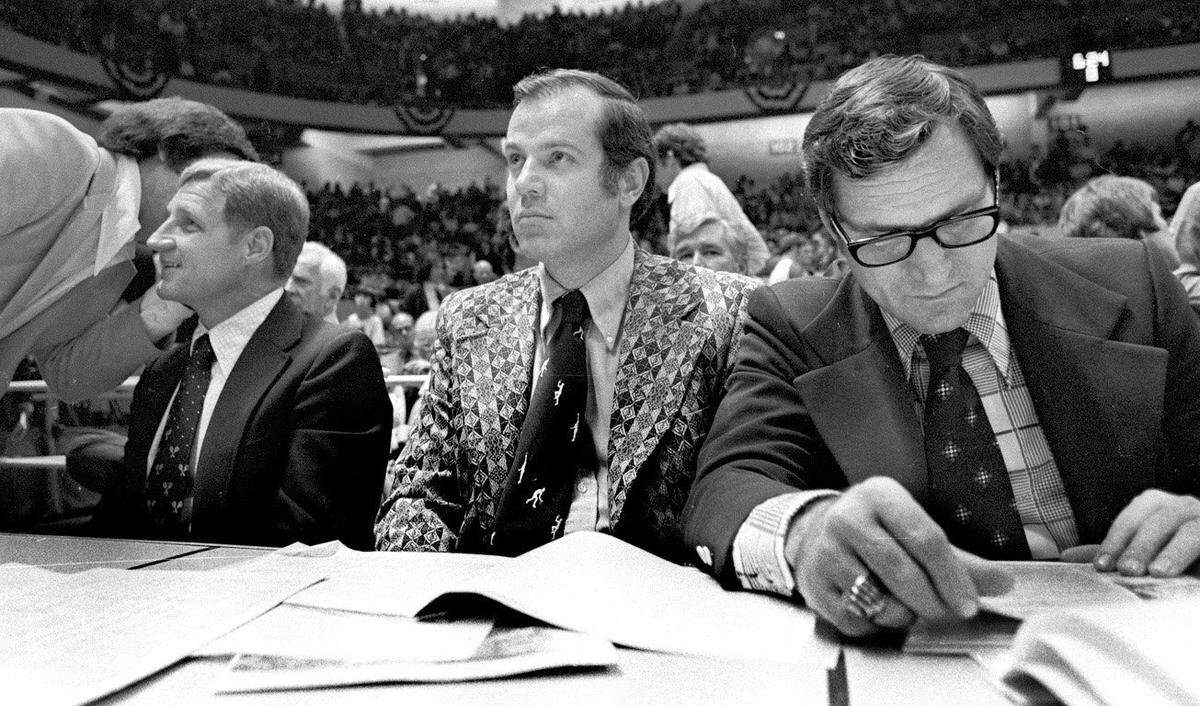
Yow came of age just as the tournament began to reach its peak of popularity. The event still held mystique when she became the athletic director at Maryland in 1994, and 10 years later she celebrated the Terrapins’ improbable run in 2004, when as the No. 6 seed they defeated three top-20 teams in three days on their way to the championship.
The 2004 tournament was the ACC’s last as a nine-team league, and arguably the last it still felt a bit quaint, like the old days. Miami and Virginia Tech entered the league the next season; Boston College arrived the year after that. The tournament expanded to include a full day of games on Thursday, and then grew again when the ACC became a 15-team basketball conference.
When Yow arrived in Brooklyn for the 2017 tournament, long gone were the days that anybody had to know somebody to get in. Good seats were available on StubHub, or outside the Barclays Center. An event that for decades had the power to bring North Carolina to a halt had arrived in New York City, ready for its close-up, but it was difficult to tell how much anyone noticed.
“The places that we went to eat and shop and whatnot — there was no buzz,” Yow said, repeating it for emphasis. “There was no buzz.”
Back when the teams went home but the fans stuck around
That the tournament felt like an afterthought in New York isn’t surprising. Yet even in Greensboro in 2020, there was no shortage of empty seats during the first two rounds, on a Tuesday and Wednesday, before the event’s abrupt cancellation near the beginning of the COVID pandemic. It has been a long time since ACC tournament tickets were a prized commodity, and arguably more in-demand than those for any event in the state.
Part of that was owed to the quality of basketball. Then there was the tournament’s culture.
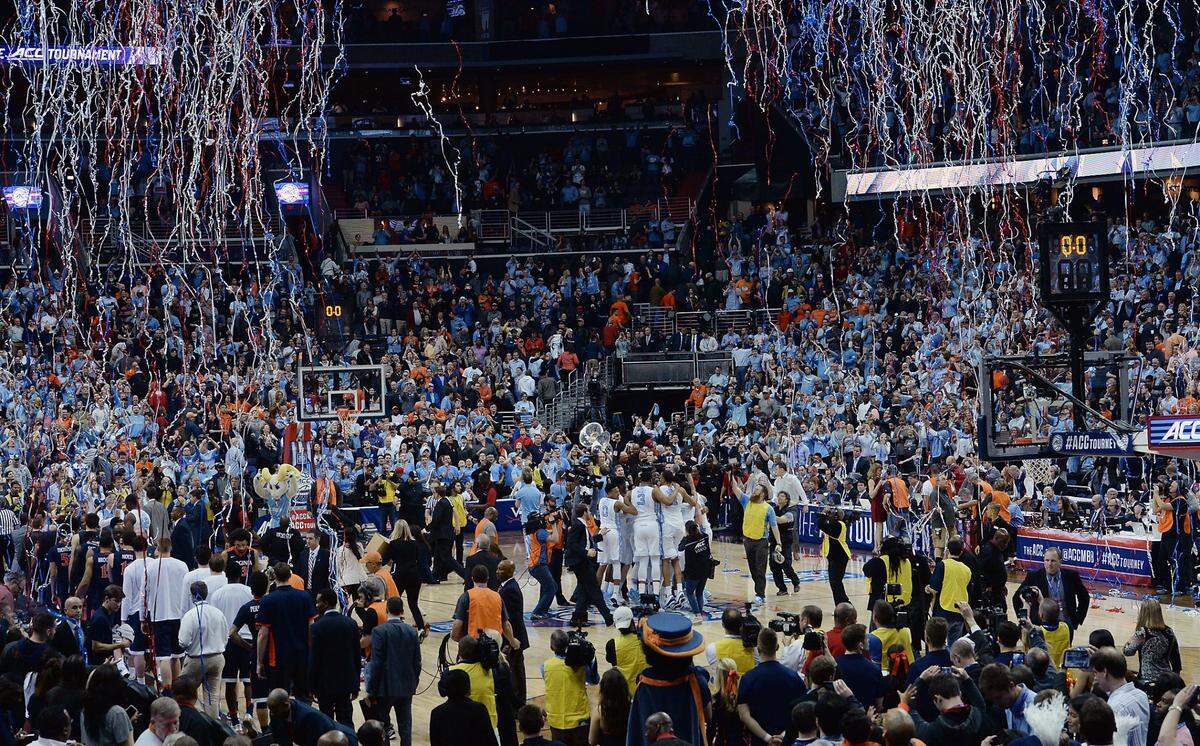
For a long time the event created “almost a family atmosphere,” Gene Corrigan told the Greensboro News & Record in 1995, when he was the league commissioner. “You see the same people year after year. And it’s remarkable the way people support it. You know, after the first day of games, half the teams are already on their way home, but the seats are still full.”
Corrigan’s son, Boo, became the athletic director at N.C. State in 2019, and during a recent interview he acknowledged the need to “reinvigorate” the tournament. These days, the tournament is reflective of a sport in flux — one still capable of providing memorable moments, even if they’re fewer than they used to be.
Duke’s 74-73 victory against North Carolina in the semifinals of the 2019 tournament remains one of the event’s best games in recent years, both because of the built-in rivalry between the schools but also because of their star power that particular season. Both teams earned No. 1 seeds in the NCAA tournament and Duke had Zion Williamson, by then a national phenomenon.
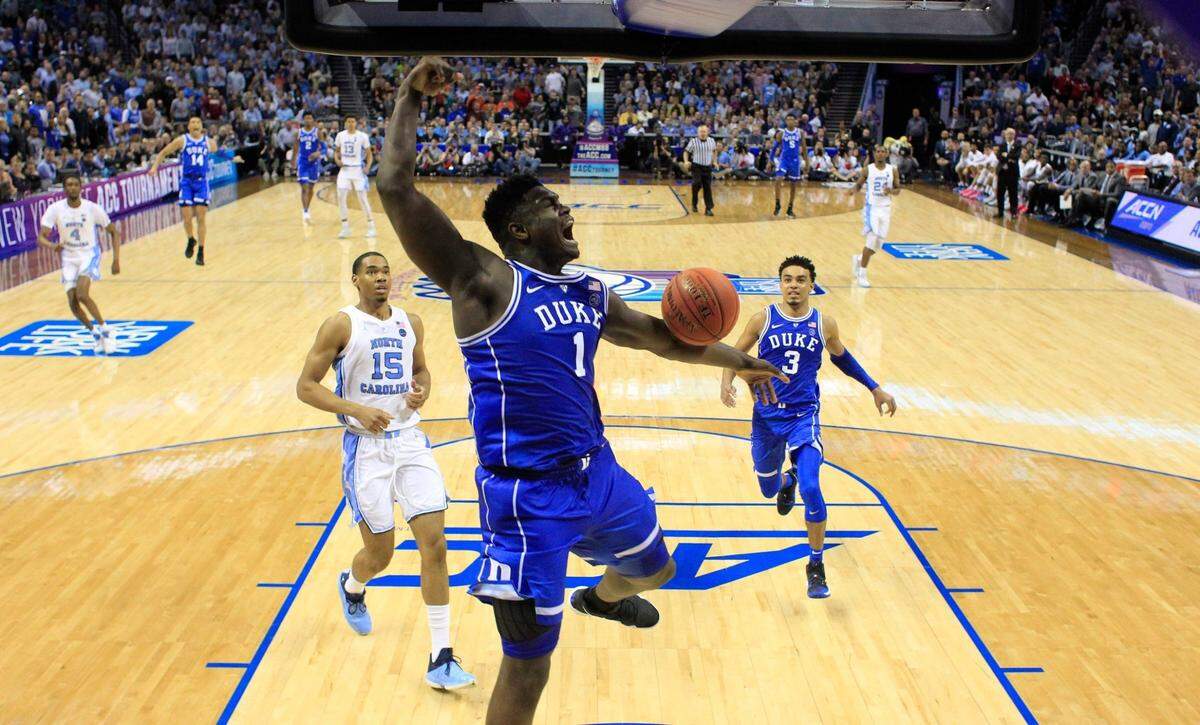
That the 2019 tournament was Williamson’s first and last surprised no one; it would’ve been shocking had he returned to college for a second season instead of entering the NBA Draft. But major college basketball has long become a revolving door, a cycle of one-and-dones and transfers that challenges even the most attentive observer’s ability to follow the sport.
Though it’s difficult to quantify, college basketball’s transient nature has undoubtedly contributed to football’s rise as the clear and dominant driver of major college athletics. And while there are schools in Power Five conferences that are known far more for basketball than football, the notion these days of a “basketball school” is arguably a myth given the money schools pour into football.
“The thing I would say is just because you’re emphasizing something doesn’t mean you have to deemphasize something else,” Boo Corrigan said, responding to Jim Phillips’ emphasis on football.
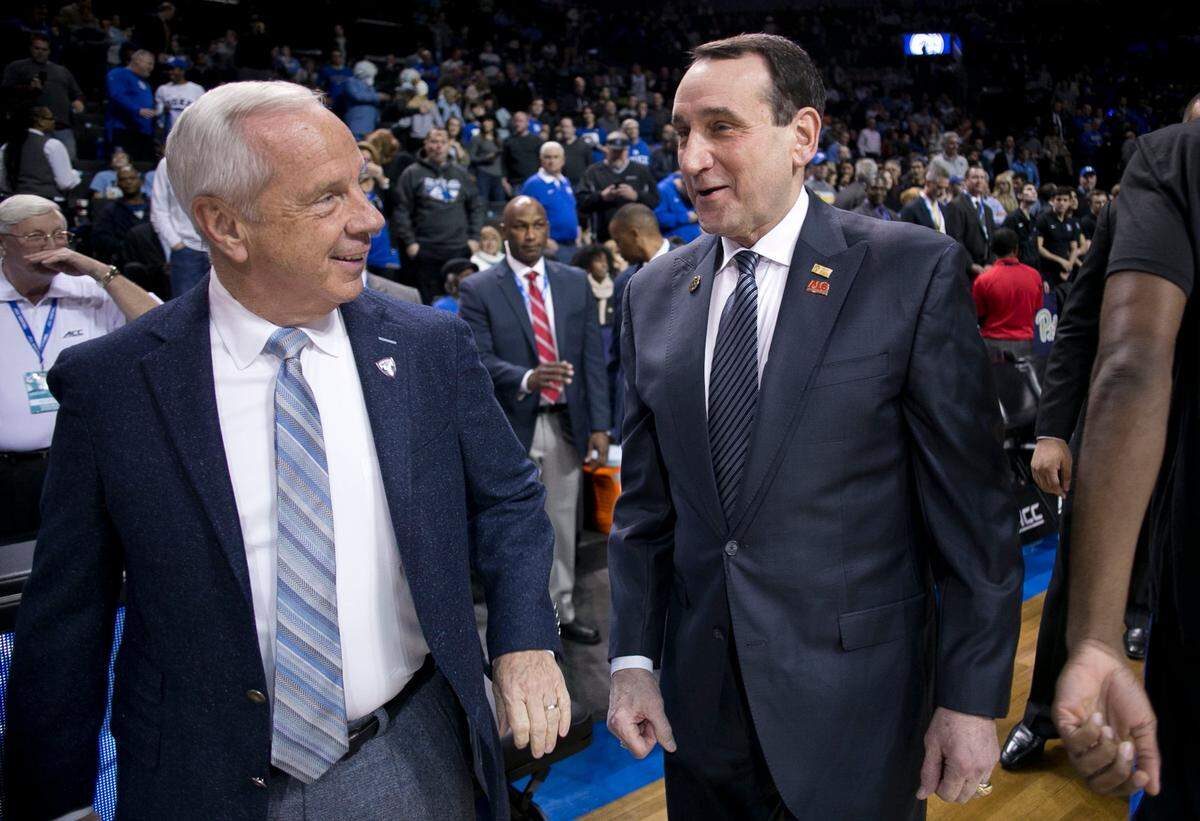
Phillips’ arrival in the conference, and his mandate that the league prioritizes football, has coincided with a period of transition for ACC basketball. The conference is in the midst of one of its worst seasons, with only Duke as a mainstay in the national rankings. Roy Williams retired last season, while Mike Krzyzewski will retire after this season, whenever the Blue Devils’ season might end.
Krzyzewski began coaching at Duke in 1980, when Dean Smith was perhaps the most beloved figure in the state, when ACC basketball was as much a part of North Carolina as a booming tobacco industry. Things have changed, but “you can’t take for granted really the lynchpin for ACC athletics, which is men’s basketball,” Krzyzewski said recently.
“It’s been the key thing for our conference. And you have to keep renewing your commitment to the culture, and the nuances and stay as current. And again, I don’t think we’re in trouble or anything, but I think you have to stay ahead.”
Krzyzewski will arrive this week in Brooklyn with another Duke team that enters the ACC tournament as the favorite. That’s one thing, at least, that’s not all that different. It’ll be Krzyzewski’s last conference tournament, 41 years after his first, and the league back then included some of its most memorable coaches: Smith at UNC, Terry Holland at Virginia, Lefty Driesell at Maryland. Jim Valvano was in his first year at N.C. State.
It was the ACC of the glory days, which perhaps felt like they might last forever, and which Odom, the former Wake Forest coach, recently went back to in his mind. He wondered what some of those coaches might say nowadays if they were around to see the ACC tournament become just another conference tournament.
“Everett Case would be aghast if he had to look at empty seats in the ACC tournament,” Odom said. “And I feel the same way. I do. I mean, it breaks my heart. It breaks my heart.
“Basketball in the ACC is special. It always will be and until people my age die out. And the fervor and the heat, and the passion for the tournament burns out.
“When our generation goes, it will burn out.”
This story was originally published March 6, 2022 at 5:00 AM with the headline "The ACC tournament used to matter. How did North Carolina’s holiday lose its shine?."