NC athletes are leaving home for pop-up schools that focus on basketball over academics
READ MORE
Star athletes are leaving traditional high schools for more exposure. Is it worth it?
Are high school student-athletes taking risks by leaving their neighborhood schools for new schools that promise more travel and exposure?
Expand All
NC athletes are leaving home for pop-up schools that focus on basketball over academics
Once a pioneer for HS transfers, Jeff McInnis says ‘It’s just a different time now’
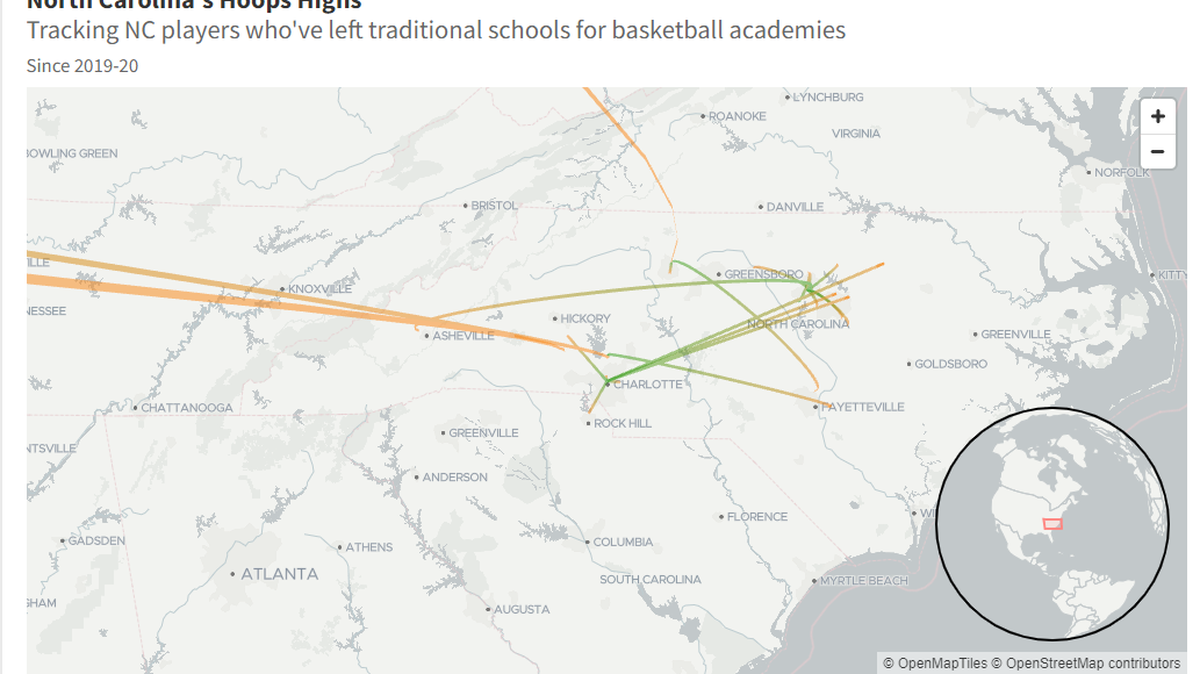
Which North Carolina basketball players transferred to academies? View interactive map
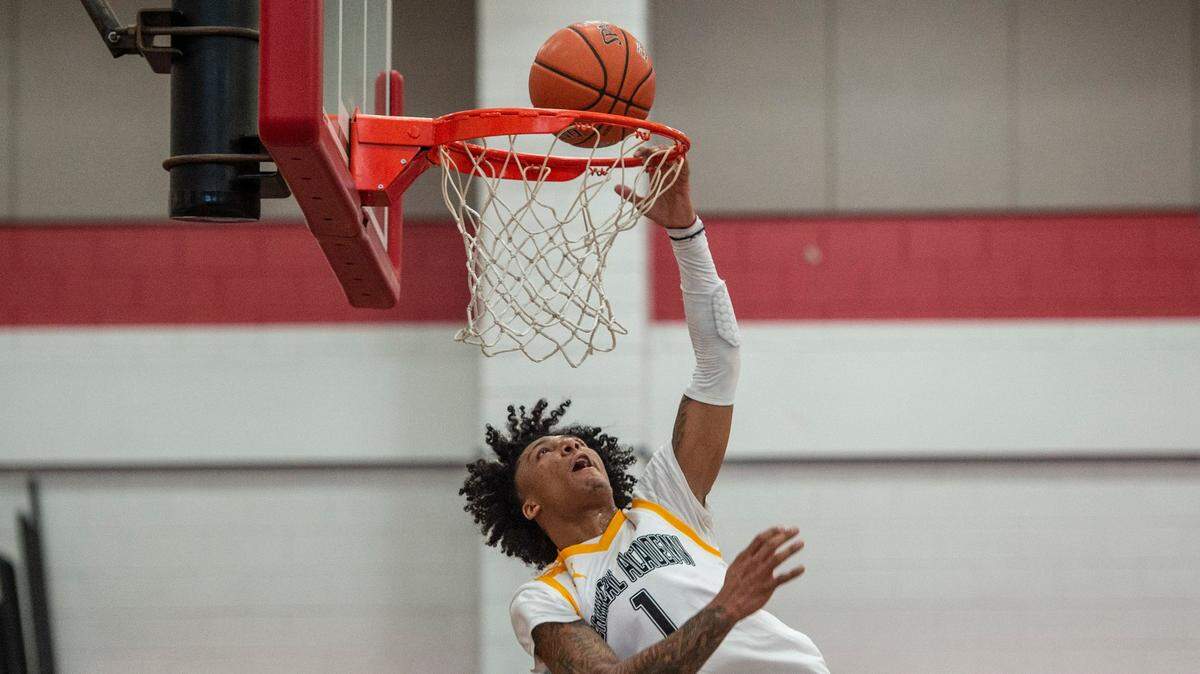
Mikey Williams may be the best basketball recruit in NC but UNC, Duke won’t bite. Why?
One of North Carolina’s best basketball players left one of the state’s top public schools this summer — to move three hours from home to attend school somewhere most people have never heard of.
Silas Demary Jr. left Raleigh’s Millbrook High, a large, traditional public institution, for Charlotte’s Liberty Heights, where players live in two homes near Lake Wylie. Liberty Heights players practice in the mornings and take online classes in the afternoon with an accredited Florida-based academy that’s been in business for 15 years.
“I knew it was a little bit of a gamble,” Demary Jr. said recently, a few months after he became yet another top-level player to make the jump to a non-traditional school.
Moves like the one Demary made are becoming more common. Eight of North Carolina’s 20 best players in the class of 2022 — and seven from the class of 2023 — have left their traditional public and private schools to enroll in alternative institutions that make basketball the focus over education. They offer longer seasons, more travel and better competition.
But is there a risk?
Five years ago, a 7-footer from Turkey named Mumin Tunc moved to South Carolina to play for a new startup, 22FT Academy, which promised to get players college scholarships. Tunc spent almost a week in a York County jail on immigration charges. His student visa was not up to date.
While he was in custody, his interview with federal agents led to the arrest of his coach, Michael Rawson. Rawson, the founder of the school, later pleaded guilty to conspiracy to commit visa fraud.
Deadspin chronicled the world of pop-up prep schools in 2017, telling stories of players who paid tens of thousands of dollars to attend, often to find poor living conditions, sometimes with a lack of quality academics that jeopardized their NCAA eligibility.
When Demary thought about leaving a well-known, high-academic public school to enroll at a pop-up basketball academy in the fall of 2021, he knew he was taking a road potentially full of potholes.
On top of the world, then not
Demary led Raleigh’s Millbrook High School to its first N.C. 4A state championship a year ago, scoring his team’s final six points. He was heading into a summer of travel basketball with Stephen Curry’s Team Curry organization, based in Charlotte. He was sure his high school resume and his summer exposure would lead to a scholarship offer from a big-time college basketball program.
It quickly became clear that Demary, as good as he was, was going to have to find a different path.
Due to COVID, the NCAA granted an extra year of eligibility to college athletes and the number of available scholarships to high school players was going to be limited.
“They were like, ‘Going to the (graduating class) of ‘23 would help (you) with (your) recruiting,’ ” Demary Jr. said. “Coming here (to Liberty Heights) also helped me with playing a national schedule and showed I can be a national-level kid.”
Before he enrolled, Demary researched his options. He knew he wanted to reclassify, which would allow him to graduate in 2023 and take advantage of more college scholarship opportunities. He couldn’t do that at Millbrook, but knew about Liberty Heights from a friend.
Jonas Aidoo, a 7-foot center, had grown five inches just before his sophomore year. He was a late bloomer who averaged 11 points and six rebounds as a senior at Durham’s Voyager School. After Aidoo graduated, he did a prep year at Liberty Heights.
In Charlotte, he blossomed from a relatively unknown recruit into a top-25 prospect. He’s now a freshman playing for Rick Barnes at Tennessee.
And when Demary asked Aidoo about Liberty Heights, he got an earful.
“That’s what mainly helped me make this decision,” Demary said. “He was like, ‘It’s a program you’re going to really like. Not too many people know about it, but it’s a program on the come-up.’ He said Liberty Heights had a great culture and it’s somewhere I’d love to be, and he said the guys around you are going to be your brothers for life.”
Charlotte phenomenon grows, led by Mikey Williams
Schools like Liberty Heights are popping up all over Charlotte and across North Carolina. Some offer online classes; others allow students to attend their regular schools and play for what amounts to a summer travel team. Tuition can range from a few thousand to more than $40,000 annually, though scholarships are sometimes available.
Charlotte Hornets star LaMelo Ball started 1-of-1 Academy, which has boys and girls basketball teams. It doesn’t have a gym or building and some players take online classes, but it has attracted a top 20 national recruit in the girls sophomore class, Ella Hobbs, whose father is principal at Concord’s Jay M. Robinson High School, where Ella still attends.
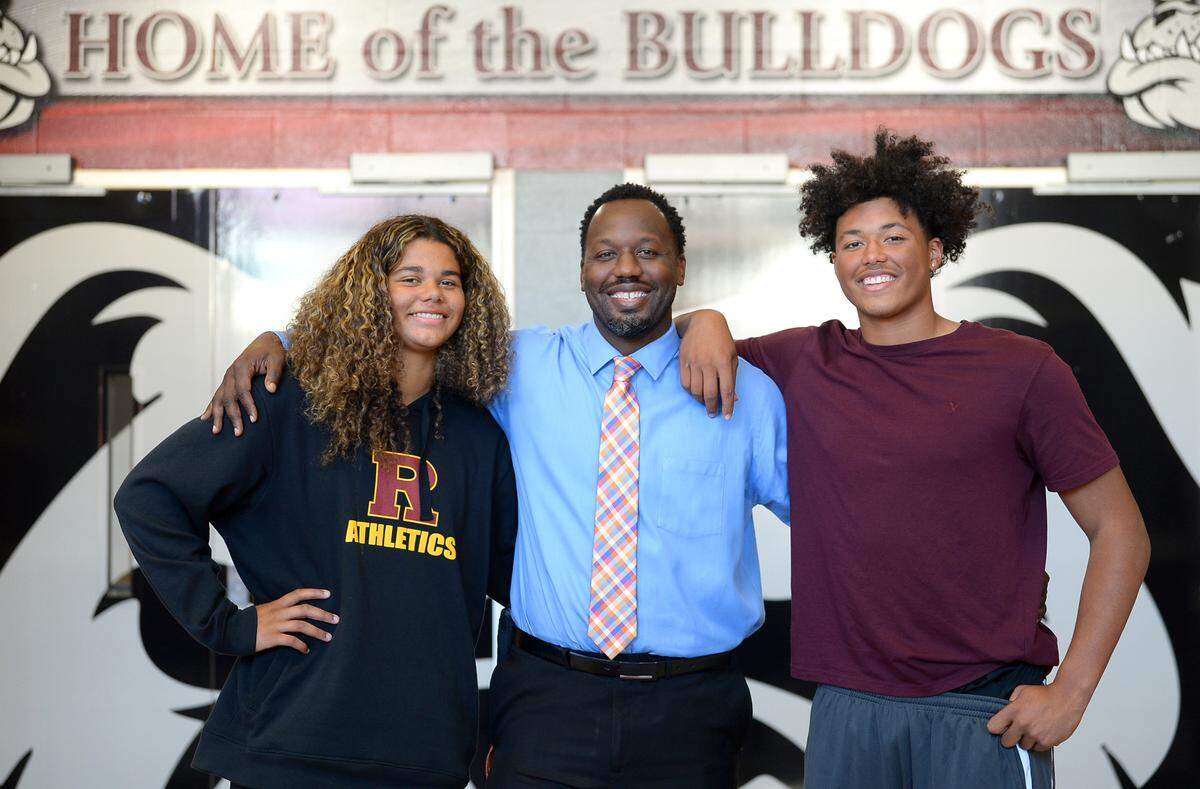
“It was a tough decision,” Dennis Hobbs said about having his daughter play for another program, “but it’s kind of figuring out what’s the best situation for her right now, and what she needed to do for her growth, and putting her where she feels she can develop most. It was a hard decision, but at end of the day, it was the best decision for her.”
In one of the most talked about moves to a pop-up school, Hickory’s Robert Dillingham, a five-star recruit, left nationally ranked Combine Academy in Lincolnton last fall to play for a new school in California — Donda Prep, started by rapper Kanye West. Dillingham, a junior point guard, later committed to N.C. State. Two of his teammates went to California with him — former Independence High star Omarion Bodrick and Bryce Alfino, who are both seniors.
Bodrick had committed to Youngstown State. Last week, he announced his recruitment was open again, which is late in a senior’s recruiting process. Alfino has committed to Old Dominion.
In just the past three years, several of North Carolina’s top prospects have left the state for non-traditional schools:
▪ Former Lake Norman Christian star Trey Green, a junior point guard ranked among the nation’s top 100, is playing for a new high school team in Missouri, Link Academy.
▪ Oak Hill (Va.), a longtime national power, has three Division I prospects from the area: Former Cannon 7-foot center Christian Reeves (Duke commit), former North Mecklenburg 6-7 forward Jeremy Gregory (East Tennessee State) and former Hickory Ridge star Caleb Foster (Duke).
▪ McDonald’s All-American Jaden Bradley (Alabama) left Cannon School two years ago to play at IMG Academy in Florida.
▪ Jalen Hood-Schifino (Indiana) left Combine Academy for Montverde (Fla.).
Unlike those players, Mikey Williams moved to the state two years ago.
Williams — who has millions of social media followers and a top 20 national ranking — attends Lake Norman Christian, a small private school in Huntersville. Williams, a junior, played for the school last season, but his father launched Vertical Academy this year. Mahlon Williams said Vertical Academy is owned and founded by him along with Kat and Landon Eckles. The Eckles founded Clean Juice smoothies six years ago in Huntersville and now have locations in 28 states.
Playing at a school not sanctioned by the NCHSAA or the National Federation of High Schools (NFHS) also offers Mikey Williams the chance to profit off his Name, Imaging and Likeness (NIL) — the kind of deals which most public school athletes are forbidden to sign. Williams has a shoe deal with Puma, which now makes uniforms for his Vertical Academy team, and he appeared in an ad with Boston Celtics star Jayson Tatum to promote the NBA 2K22 video game.
The NFHS has been vocal in its opposition to high school athletes profiting from NIL. Accepting an NIL deal makes an athlete ineligible to compete for most public and private high schools across the country, though legislation has been passed in California, New York, New Jersey, Nebraska and Alaska to allow it. If an underclassman attending a non-traditional basketball academy received money and later chose to leave the program — or if it were to fold — their options for where to play high school athletics next would be limited.
A different path — through Australia?
Mahlon Williams said Vertical Academy’s plan is different from most schools.
“I think a lot of people get it mistaken, thinking Vertical Academy is its own entity,” Mahlon Williams said. “We still attend and support Lake Norman Christian. The only difference is we’re a year-round club team. All of our students are safe from an academic perspective. All of our classes are transferable, NCAA-qualified, the whole thing.”
Williams said that not playing under a state association allows his team the freedom to start its season as early as August and run until April.
“They don’t get to regulate our games,” he said. “Let’s say you’re a pretty good high school team and you get to (conference play) and you give everybody a good beat down and go to the playoffs and try to win a championship. We don’t do that. We play all the top competition we can play ... We played (California national power) Sierra Canyon (where LeBron James’ son plays) before their high school season. Then we play all the prep schools.
“What’s great is we get to control our own destiny and our guys play against all the other top guys. So when they make the transition to college, it’s not that hard.”
Williams said Vertical Academy has a 41-game schedule, nearly twice as long as most N.C. public school teams will play, and said that more than 30 of them involve airline travel, which he feels helps the kids when they go to college, too.
“You leave on a Thursday, get there Thursday night, then shoot around and practice Friday,” Williams said. “You have a Saturday game and Sunday back on the airplane. Monday, you get to rest and get your body right and Tuesday it’s back to practice. It’s a grind, but that’s what the college grind is like.”
Williams said the current season — which will include only five or six games in North Carolina — will end with a series of games in Australia.
“We’re trying to make it an experience for these youngsters,” said Williams, who said he is fielding calls from players from around the U.S. and as far away as China and Lithuania about joining the team next year. “Think about it: you’re a sophomore or junior and you’re ending your season playing in Australia. That’s a beautiful thing.”
Williams said alternative situations like Vertical Academy and Liberty Heights are for the college-bound athlete, specifically one that’s heading for Division 1.
In 2021, a new Atlanta-based league, Overtime Elite, began to pay top-flight high school stars six-figure salaries in what it hopes becomes a professional developmental program. Eau Claire (SC) star Jazian Gortman took official visits to Wake Forest and Florida State but forfeited his college eligibility for a reported $650,000 salary with Overtime this season.
And there’s also the NBA G League Ignite, which is affiliated with the NBA’s G League, and takes high school grads and college players in a developmental environment. Three players from Ignite were selected in the most recent NBA draft, including No. 2 overall pick Jalen Green.
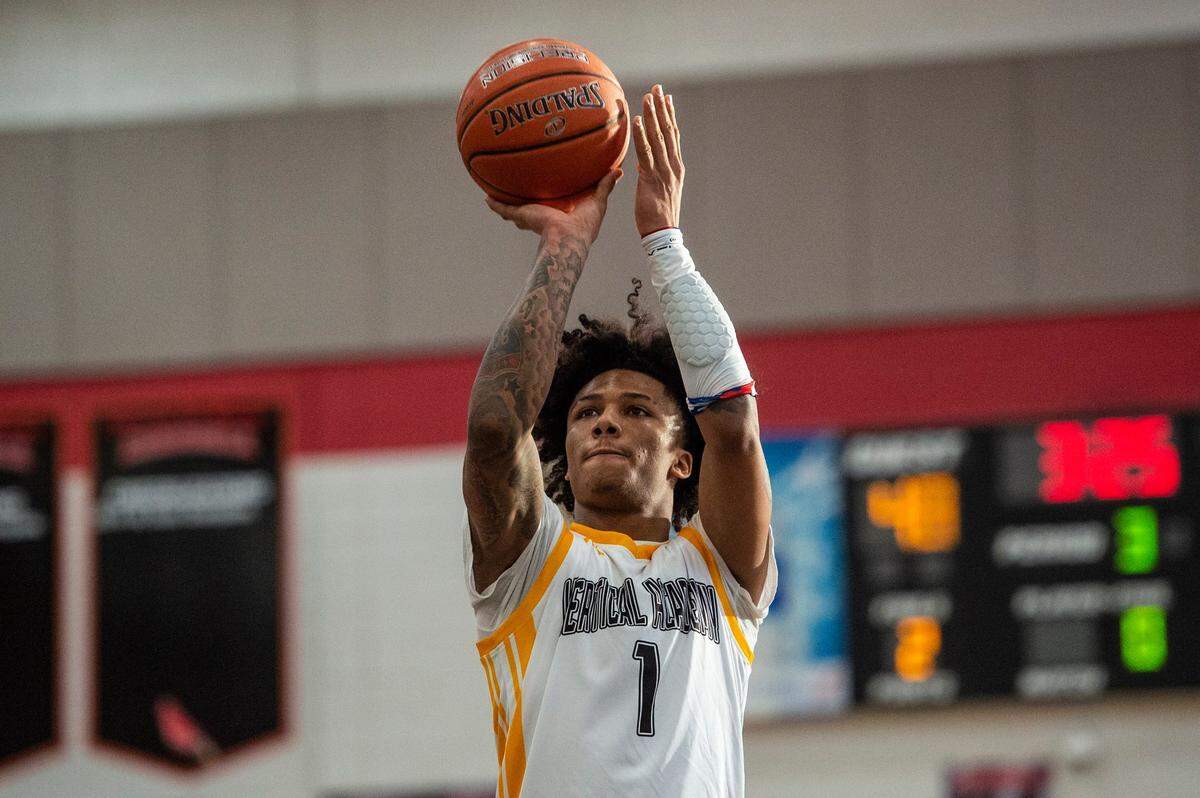
“High school has its place,” Williams said. “If it’s a guy who just wants a high school (playing) experience, I don’t think Vertical is for him. A lot of players are like that, players who want to put on their college application, under extracurricular activities, that ‘I was captain of the high school team.’ Nothing wrong with that, and that’s great, but what we’re trying to do is take the college-bound athlete and get him ready early.”
Bad knees and canceled games
Hough High coach Jason Grube said parents need to be careful when they send their kid to an alternative school.
“What are you being promised?” he said. “I can’t imagine with all the schools and all the kids getting scholarships and playing at the next level, that can’t be provided at an accredited school. My question, as a father, would be ‘why send my son to a school that doesn’t have any qualifications or sanctioning body to oversee it?’ ”
Grube said he gets what some of these programs, like Vertical, are trying to do, noting the European model of identifying top talent and sending them off to train. That route is what led former Hornets forward Nicolas Batum to the NBA from France.
He also pointed out that Vertical scheduled a game with Lincoln Charter at Hough that had to be canceled because state rules wouldn’t allow Lincoln Charter to play before the official start of the season last November.
“When you get into these situations,” Grube said, “you have a lot of other things that can go wrong. Some of these are well-funded. But in Europe they (have much more practice than games) and that’s why their skill level is so good. We go to the draft and our kids’ skill still isn’t there. The athleticism is there, and you see our guys and their knees are burned out because they’re playing so many games. These 23-year-old rookies are like 30-year-old players.”
N.C. High School Athletic Association commissioner Que Tucker runs the organization that handles sports for more than 400 more traditional N.C. public schools. Tucker worries that pop-up athletes miss out on the high school experience, including the classroom-based academics, the social life and playing in front of friends.
“I realize many students looking to these programs are the elite athletes who know or believe they can play at the next level, and this is to hone and sharpen their skills,” she said, “but students who have come through our program have shown they can elevate and thrive. Chris Paul is a great example of that. Stephen Curry didn’t play in an NCHSAA program but he played in an education-based high school (Charlotte Christian), went to Davidson and now he’s thriving. So I think where there’s that tie to educational-based athletics, that gives our kids the best chance of surviving once they become adults in whatever they do.”
‘It’s something I needed to do’
At Liberty Heights, Demary said he’s had no surprises. He knew he would be taking online classes with the Ogburn School in Florida. He knew he would be living with 12 other players in a house in southwest Charlotte, sharing a bedroom with a teammate, making his own breakfast.
He knew people would ask him why he would give up being the “big man on campus,” the returning state championship hero — playing in front of big crowds every night — to play at a school that doesn’t even have a gym.
Or a fan base.
“I get asked that a lot,” Demary said. “I feel it’s something I needed to do. Public school ball — not diss to it — but I wasn’t gaining anything from coming back for another year. I feel like coming here shows I can play on (the college) level. It doesn’t matter who’s out there.”
His parents had plenty of reservations about the move.
Demary has a twin sister, Sierra, and she had a tough time with him leaving. Family dinners, especially, are big in the Demary household, where there’s a weekly “Confession Session” where everybody can discuss anything with no judgment.
When Demary left for Charlotte, they propped an iPhone in his spot at the table and had confession on FaceTime.
“Did I want him to walk the halls of Millbrook as a state champion? Absolutely,” said his mother, Shanté. “But as I sit down and evaluate everything, we made the right decision.”
Shanté played basketball and softball in high school in Virginia, and she played in the band in college at Virginia State, where she met her husband, Silas Sr., who played on the football team. Silas Demary Sr. later had a 10-year Arena Football career that included being named Arena Football League player of the year in 2005 when he played for the Los Angeles Avengers.
Demary’s parents understand the grind of being an elite player, and they understood the sacrifices it might take.
Any concerns mom had about taking online classes at Liberty Heights, for example, went away last school year when Millbrook students were mostly in remote learning. Shanté said her son was always up and online on time and that now, when she speaks to his counselors at the Ogburn School, they gush about what a high-level performer he is in the classroom.
Demary Jr. has a 4.0 GPA, his mother said. On the court, he’s averaging 10.9 points, 3.5 rebounds and 3.5 assists.
Liberty Heights coach Mike Wright said getting former Wake Forest player Michael Wynn into his program helped jump-start Liberty Heights six years ago, but having a player like Demary for two years will put them on the map.
“Every kid we’ve had here, except one, has gone to college on a scholarship,” Wright said. “But Silas is different. Getting a big name like Silas, coming off winning a state title at a big school like Millbrook, it makes a difference. His family wanted to do it. They talked to a lot of college coaches and he’s here.”
Demary Sr. said Wright “soothed all of our fears,” and said he “can’t praise him enough.”
The Demarys feel their kid is in the right place.
Silas does, too.
Halfway through his second junior year, he said he has nine college offers from mid-major and high major schools, and he said he’s talking with coaches from Arizona State, Cincinnati, Florida, Georgia Tech and N.C. State.
“Is it risky to do this?” he said. “It kind of is, but you take that risk because you only live once. Do you want to better yourself, or do you want to be in the position where you’re staying the same?”
This story was originally published February 4, 2022 at 6:00 AM.