They fought with ‘class and toughness.’ Matt Rhule wears 2 pink ribbons for these women
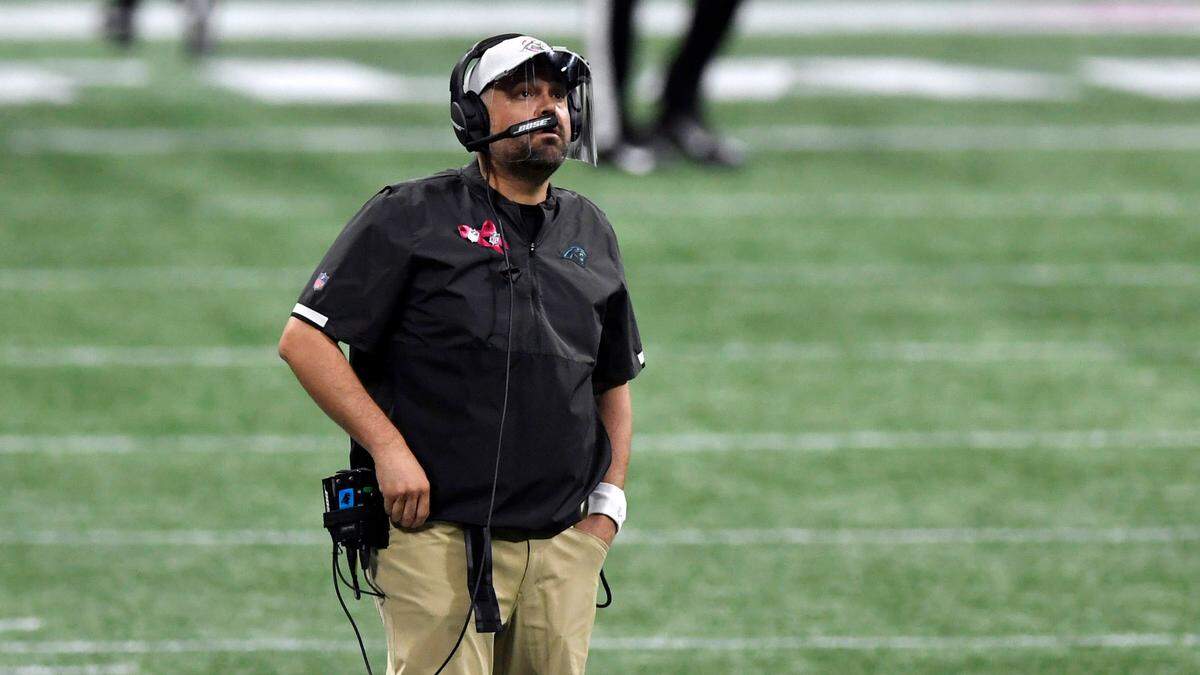
Two pink ribbons adorned Matt Rhule’s chest during the Panthers’ first two games of October.
At first glance, they may seem insignificant.
All 32 teams are supporting the NFL and American Cancer Society’s annual cancer initiative, Crucial Catch. The small graphics about the importance of cancer screening flashing on the bottom of the TV can be easy to read and forget; there’s a game to be played, after all.
But for Rhule and his family, the two pink ribbons symbolize far more than that — life and love, family and loss.
One ribbon is for Donna Nibert, Rhule’s mother-in-law, who passed away in 2012 after a five-year battle with breast cancer.
The other is for his mother, Gloria Rhule, who is a 16-year breast cancer survivor.
The ribbons don’t tell you that Donna was an amazing woman or what she meant to Julie Rhule, Matt’s wife, or the way that losing her to cancer intersected with unexpected life entering the Rhule household.
They won’t show how finding out his mother had cancer was the worst phone call of Matt’s life. How he sobbed when he heard the news.
Rhule wore the pink ribbons to honor the two women in his life who battled breast cancer with “class and toughness.”
“I’m only in the position I’m in, I’m the person that I am, because of many people, not the least of which is those two women,” Rhule said.
For the Rhule family, this is as personal as it gets.
A rock
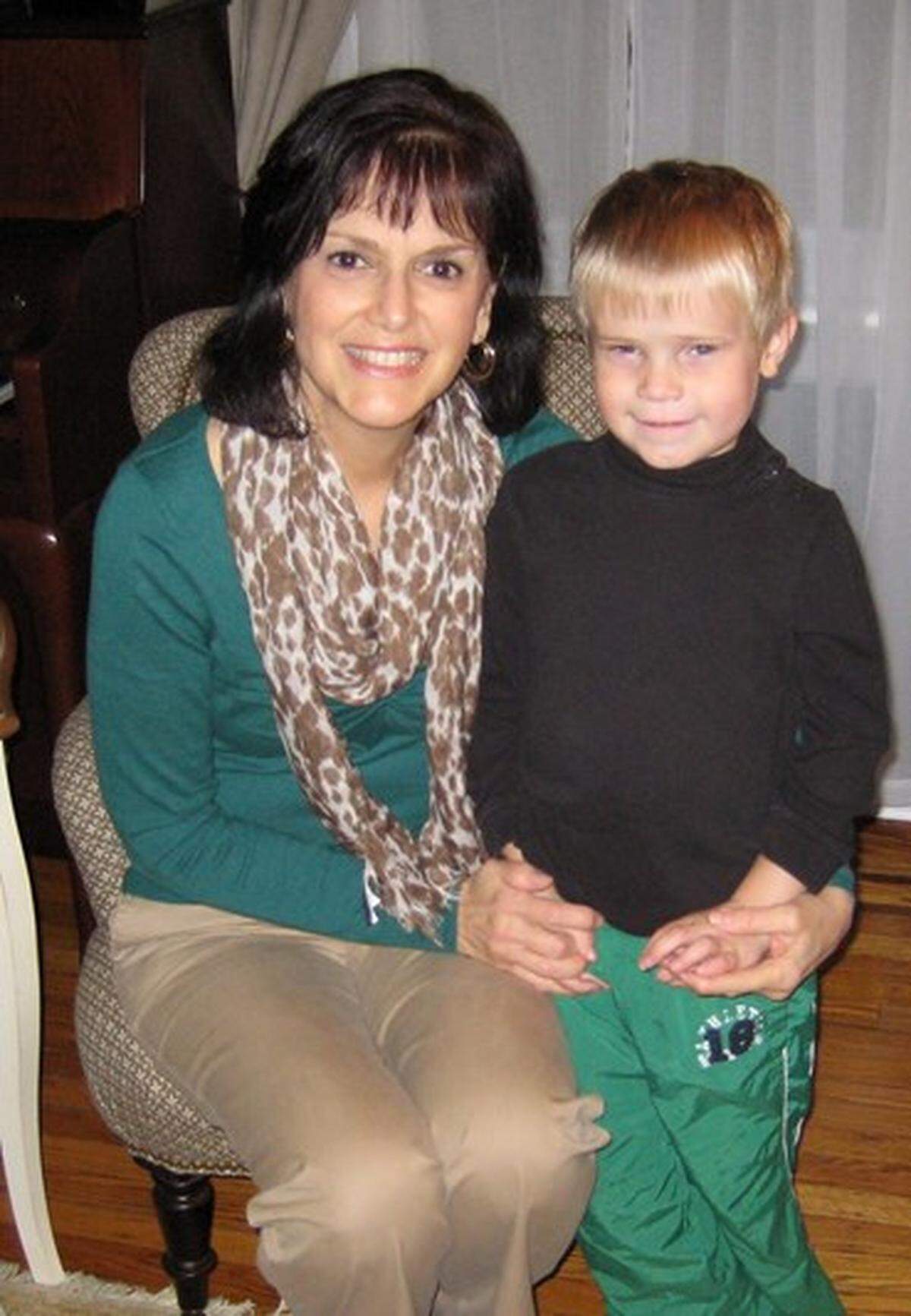
Donna Nibert wasn’t someone who was afraid to share her opinion or give advice, whether or not you wanted to hear it.
Julie describes her as being a “great sounding board” and offering both her daughter and Matt a different way of looking at things.
“She was one of those people that she wasn’t afraid to step in and say what she thought,” Julie said. “To (say to) both of us, ‘Hey have you thought about looking at it from this different vantage point or perspective?’ ”
Donna was a home economics major at West Virginia. She and Julie’s father, Donald Nibert, moved to Pennsylvania when he took a job as a professor of forestry at the Pennsylvania College of Technology in Williamsport.
They were always close as a family living in Montoursville, Penn., a small town of around 4,500 people just outside of Williamsport. When Julie was an undergraduate at Penn State, where she met Matt while working at a Chili’s restaurant together, she lived with her brother, John, who was a grad student at the school.
The Niberts experienced unspeakable tragedy in July 1996 when Julie’s younger sister, Cheryl, died on TWA Flight 800, which exploded over the Atlantic Ocean off the coast of New York, en route to Paris with her high school’s French club. The crash killed all 230 people on board, including 16 students and five chaperones from the small town.
“As a family, we were always close,” Julie Rhule said. “With the passing of a child, grief is sort of a tricky thing and watching my parents struggle with that was heartbreaking. Losing a sister was heartbreaking”
Julie describes Donna as her “rock,” there for her in the good and the bad times.
“She was just an amazing, just the most positive, the most … she was just an unbelievable person. She was a great friend to me” Matt Rhule said.
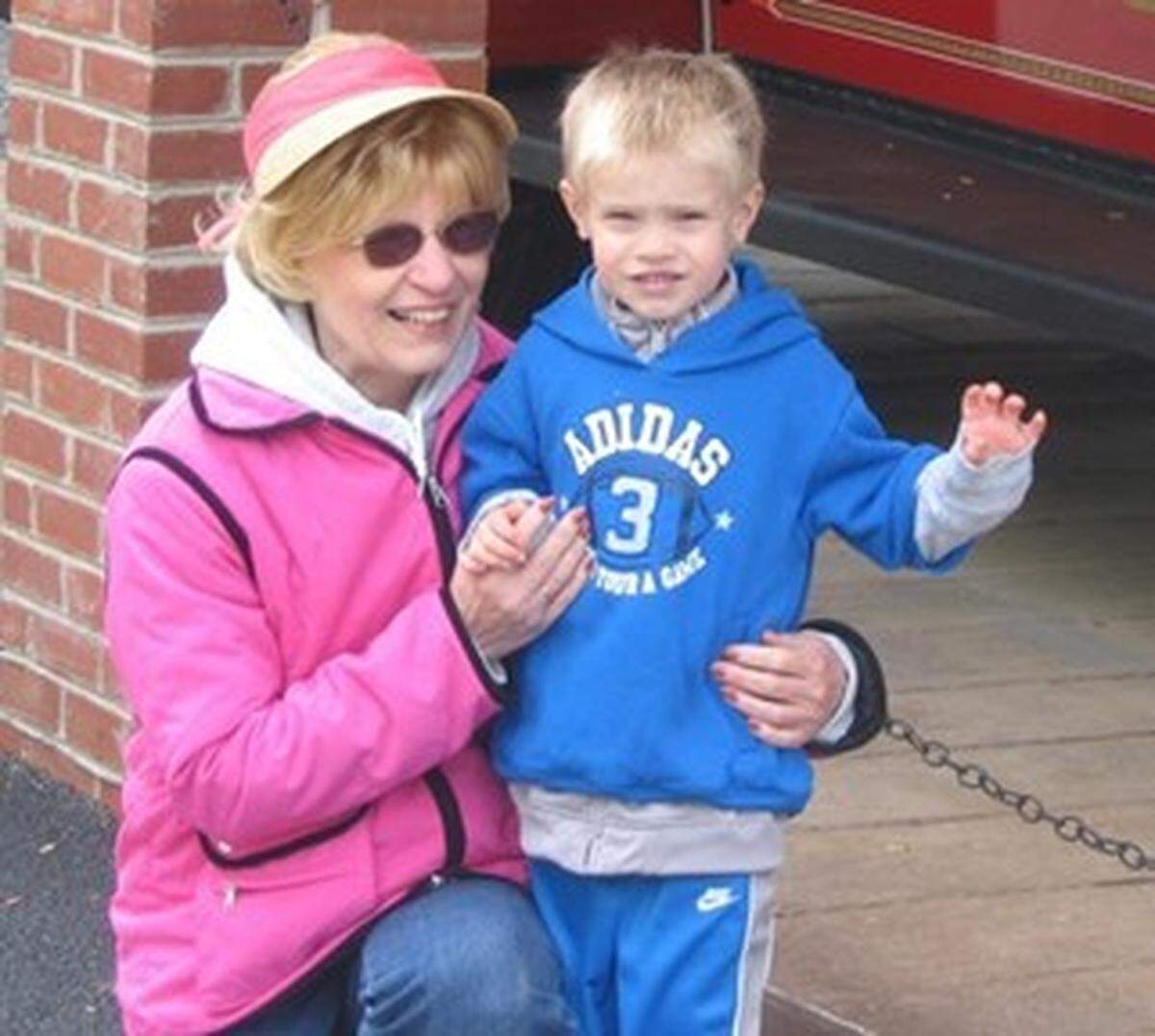
The Rhule’s oldest child, Bryant, 15, had a close relationship with his grandmother, and in the summer when he was younger, he’d spend weeks at his grandparents’ farm while Julie, a registered dietician who worked with Temple students, and Matt did their jobs.
“Grammy was a very, very important part of his life and growing up,” Julie said.
Matt and Julie thought Bryant would be the only child they would be able to have biologically.
Doctors told them “it was really sort of impossible for me to have any more children,” Julie said.
Donna had a history of cysts that had all been benign. But in 2007, she found one during a self-check and went to get a mammogram, which she had been doing routinely. But this time her doctor discovered cancer.
“Unfortunately, it’s just ... it’s crazy how quickly and swiftly it took over,” Julie said.
Nibert underwent a double mastectomy as the first step to fight the cancer. She battled the disease for five years with Julie and her family by her side for surgeries and procedures.
By August 2012, things had turned for the worse with Donna. But the Rhules also learned the impossible was possible and Julie became pregnant with their second child.
“We found out in August that this miraculous thing had happened. And I still go back to that moment thinking, ‘How did this happen,’” Julie said. “I sat down with my mom and I said, ‘You know mom, I feel like the universe is giving back. Unfortunately, I’m going to lose you. However, I just knew, but I know I’m getting a little girl, and that’s a gift that you’re giving me.’”
In March 2013, Vivienne Rhule was born. “Vivienne,” a name of French origin, means “alive.”
“I named her after life, because I felt like she was going to be that life for me,” Julie said.
The Rhule’s shared experience
Rhule’s mom, Gloria, also found something in her breast during a self-check. Just six weeks after she had received a clean mammogram, she felt a lump. Her doctor diagnosed her with breast cancer in 2004. Her cancer was detected early and with treatments, including removing a small tumor, she has been cancer-free since then.
“It was the worst phone call of my life. Getting that phone call was the most awful, most awful thing,” Rhule said of finding out his mother had cancer. “When our team talks, we talk to guys and we all find all these different things on our team like, well I’m old, I’m young, and divide ourselves by race, by age, by position.
“Then you start talking about cancer, and a lot of times breast cancer, and a lot of guys are connected because a lot of guys’, moms, grandmoms, wives, etc., have dealt with it. That feeling instantly comes back to you when I first heard about my mom, first heard about Julie’s mom.”
Throughout Rhule’s eight seasons as a head coach, he has seen his players and fellow coaches face a variety of hardships. During a year at Temple, two of his players lost their mothers to cancer.
Panthers quarterback Teddy Bridgewater’s mother, Rose Murphy, battled breast cancer, which Bridgewater brought up during the team’s Week 3 meetings when they made a conscious effort to get to know each other better.
“Teddy shared with the team, just about his mom, going through that,” Rhule said. “I’ve had a lot of players that this is a subject that comes up all the time. Breast cancer, but cancer as well. It’s obviously something that’s affected a lot of guys, and there’s nothing worse than seeing the woman in your life that you love being diagnosed with this terrible thing.”
You’ve got to go get checked
During the first few months of the COVID-19 pandemic, there was a decrease in the number of cancer screenings at Charlotte’s two major health systems -- Novant and Atrium. Delaying screenings can result in more advanced forms of cancer with less of a chance for early detection.
Susan G. Komen Charlotte saw an uptick in women who had already been diagnosed reaching out about their Treatment Assistance Program.
“A lot of women, who were diagnosed, lost their insurance coverage, they lost their jobs due to COVID,” Toni Lee Navigation and Programs Manager at Susan G. Komen Charlotte said. “Quite a few of them were struggling already prior to COVID, it just kind of compounded and made things worse for the breast cancer diagnosis.”
Since screenings resumed at the two health systems in May, Lee said that women began reaching out again about resources for preventative screenings in late June and early July. In terms of fundraising, the foundation decreased its goals, but has had successful virtual events.
Julie tested negative for the BRCA genes (BReast CAncer genes), which can increase the odds of developing cancer if a mutation is to occur. Getting mammograms and self-checking is still important for Julie, especially given her family history, but it’s not an easy process to undergo mentally.
“Personal care and health, it’s really, really critical clearly. While it can be scary and stressful, it is important to go and address those things,” Julie said. “To be honest, I get very anxiety-ridden. And I have to go just due to the family history. I still get really scared and nervous and I think as women and females we should support each other and be reminding and encouraging each other, you’ve got to go get checked.”
While Rhule was coaching at Temple, he got the team involved in the Susan G. Komen Race for the Cure in Philadelphia, having players give out water or running in the race themselves.
After Donna died, the first race after Matt became head coach at Temple involved Bryant running in the event and newborn Vivienne being pushed in a stroller.
“I will be uplifting and remembering my Mother all along the path,” Julie wrote at the time in an essay for owlsports.com. “Reminiscing about the year she came to Philadelphia to walk the Race with me together hand in hand.”
***
Whether in Philadelphia, Waco, Texas, or Charlotte, Julie likes to keep a picture of her mom near the kitchen, an area where the Rhule family spends a significant amount of quality time.
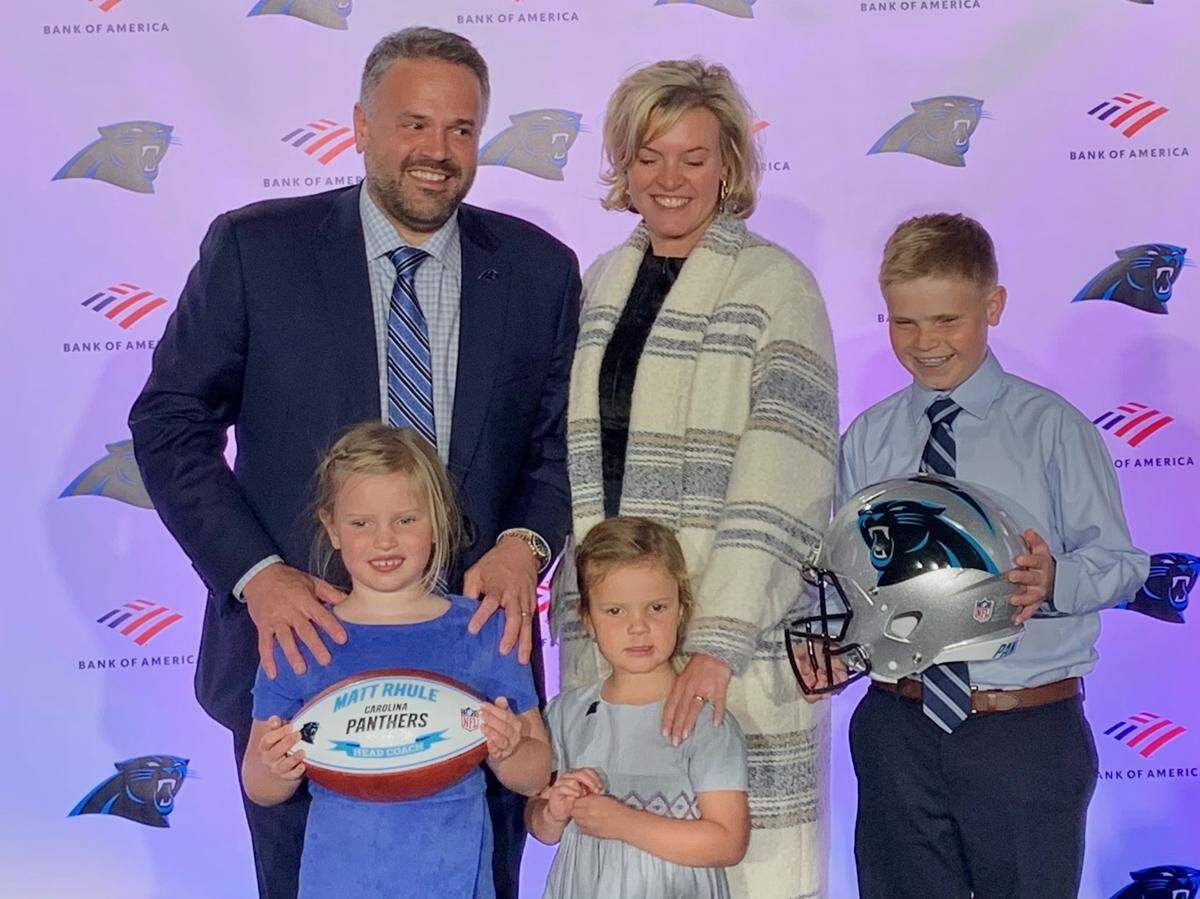
The Rhules now have two daughters with the youngest, Leona, being born in 2015. Like all families, COVID-19 has brought on its own challenges for the Rhules spending even more time together while isolating during the pandemic.
Julie reminds her kids how lucky they are they have each other. And for Leona and Vivienne, who did not get to meet Donna, keeping her picture close carries a different meaning for them.
“The girls know who (she) is (with the picture hanging in the kitchen),” Julie said. “I always do say to them, ‘Your Grammy is just looking down from heaven and she loves you so very, very much.”
This story was originally published October 22, 2020 at 1:47 PM.