Heroes rose — and flipped — as the Panthers streaked through first half of 2015
READ MORE
Super Men: The inside story of the 2015 Carolina Panthers
Expand All

Losing their star receiver to a season-ending injury could have been a major problem for the Carolina Panthers.
But “Superman” would soon come to the rescue.
With just over a minute left in the third quarter against Houston in the Panthers’ second game of 2015, the Panthers’ very own version of Superman — Cam Newton — officially landed at Bank of America Stadium in Charlotte.
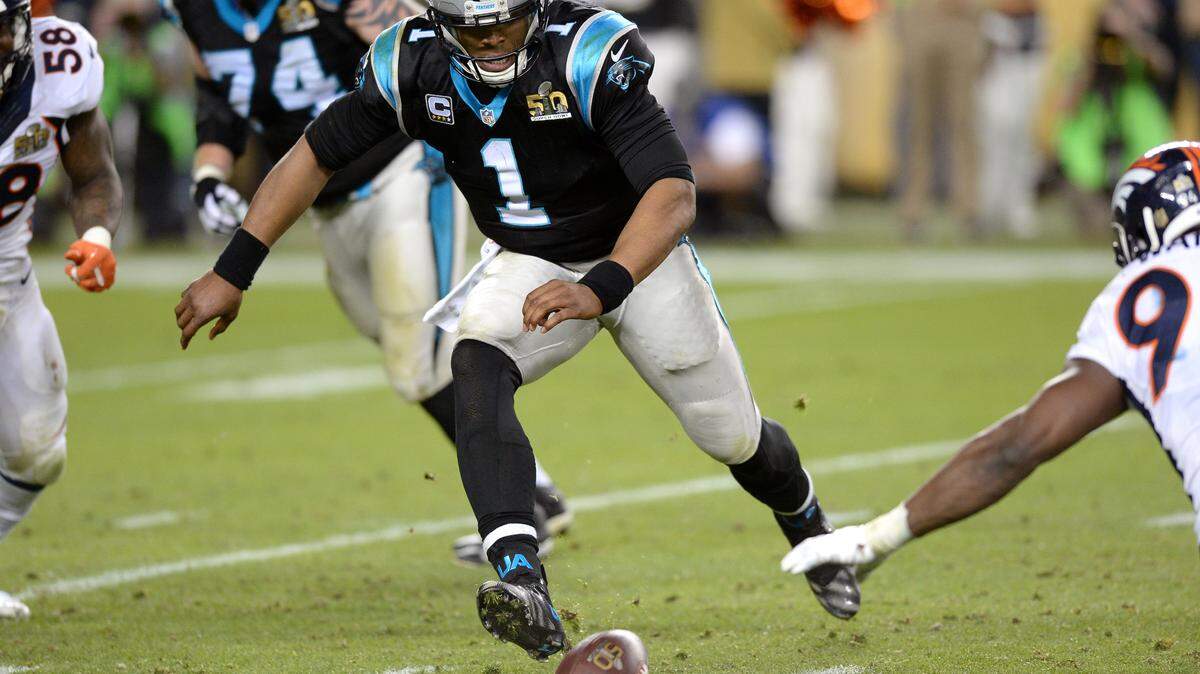
In a way, the image encapsulated everything about the 26-year-old quarterback: A gung-ho charge from two yards out, leaping skyward with the ball, flipping as he pinged off one Texans defender on his way up and ponged off another on his way down, not quite sticking the landing but still scoring a perfect 10.
Or, in this case, six points.
Before his body even came fully to rest in the end zone, Newton was grinning.
“It was like he did it on purpose,” teammate Luke Kuechly says.
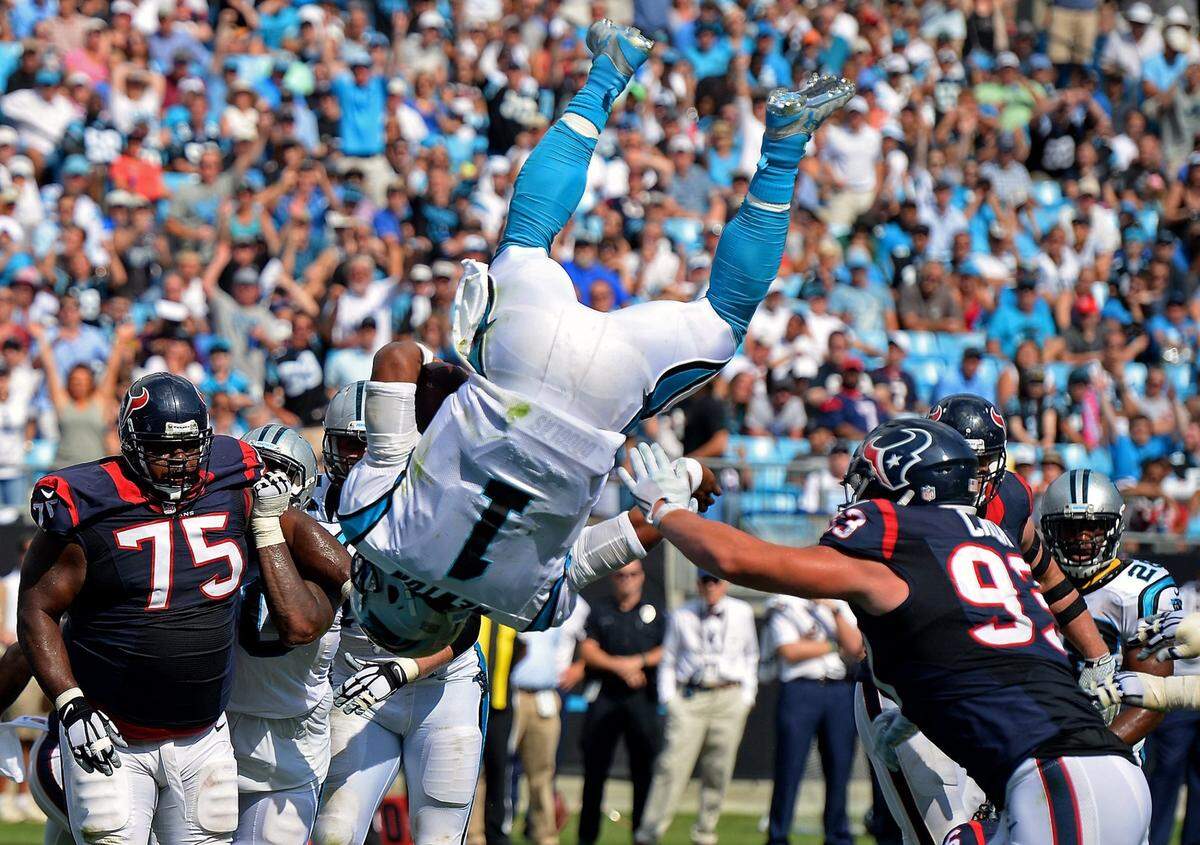
“My heart was in my socks,” Newton told reporters, with a chuckle, after the game. “I was like … I don’t know how this is gonna end, and then I’m coming down, I said, Hey, I can stick this! So I didn’t stick it, but I think I still got a good, high rating by the judge.”
Newton immediately leapt to his feet and busted a move — the dance move known as “hit dem folks,” which had become “a thing” in his hometown of Atlanta over the summer — as the home crowd roared as loudly as it had roared in years.
It was more than just highlight-reel-worthy material, though. It showed how well Newton could adjust on the fly, something he did here in a specific way but something he’d have to do all season with his corps of receivers after Kelvin Benjamin tore his ACL in training camp.
And it underscored the tale of two important lessons Newton was modeling for his teammates, perhaps without even really thinking about it.
For one, explains head coach Ron Rivera: “When you watch the way he plays — the way he plays with that type of reckless abandon — there’s an appreciation for it, there’s a respect for it, and his teammates had that respect. … As teammates, they believe they have to give their all. That’s something … plays like that signify. And it’s great that the guys looked at it and said, ‘Man, no matter what, he’s gonna lay it on the line.’”
Then just as importantly, says running back Jonathan Stewart (who after Newton flipped into the end zone made a beeline over to his QB so he could flash a grin while hitting dem folks, too): “It was just, you know, fun, man. …
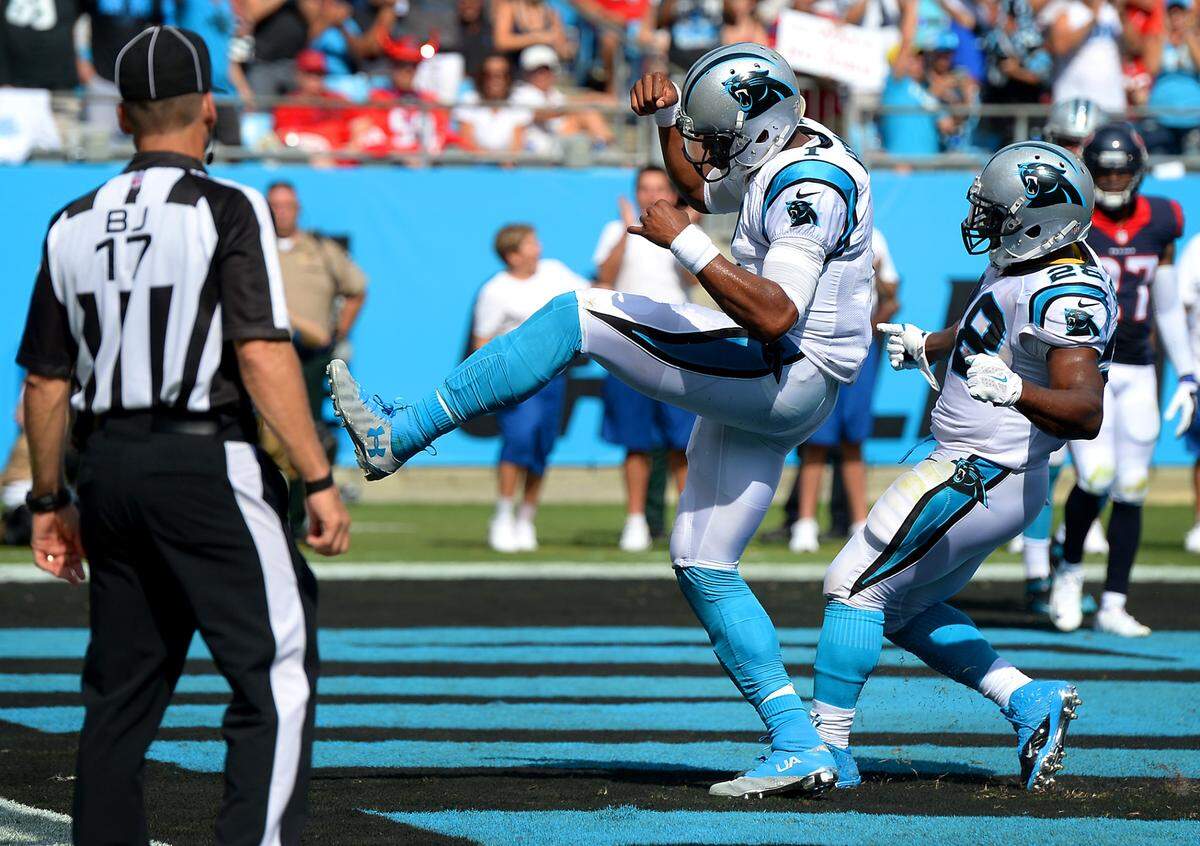
“And when things get fun, you stop thinking so much, and you just go out there and you just play.”
Coach Rivera gives Panthers ‘the recipe’
This had all been percolating for years.
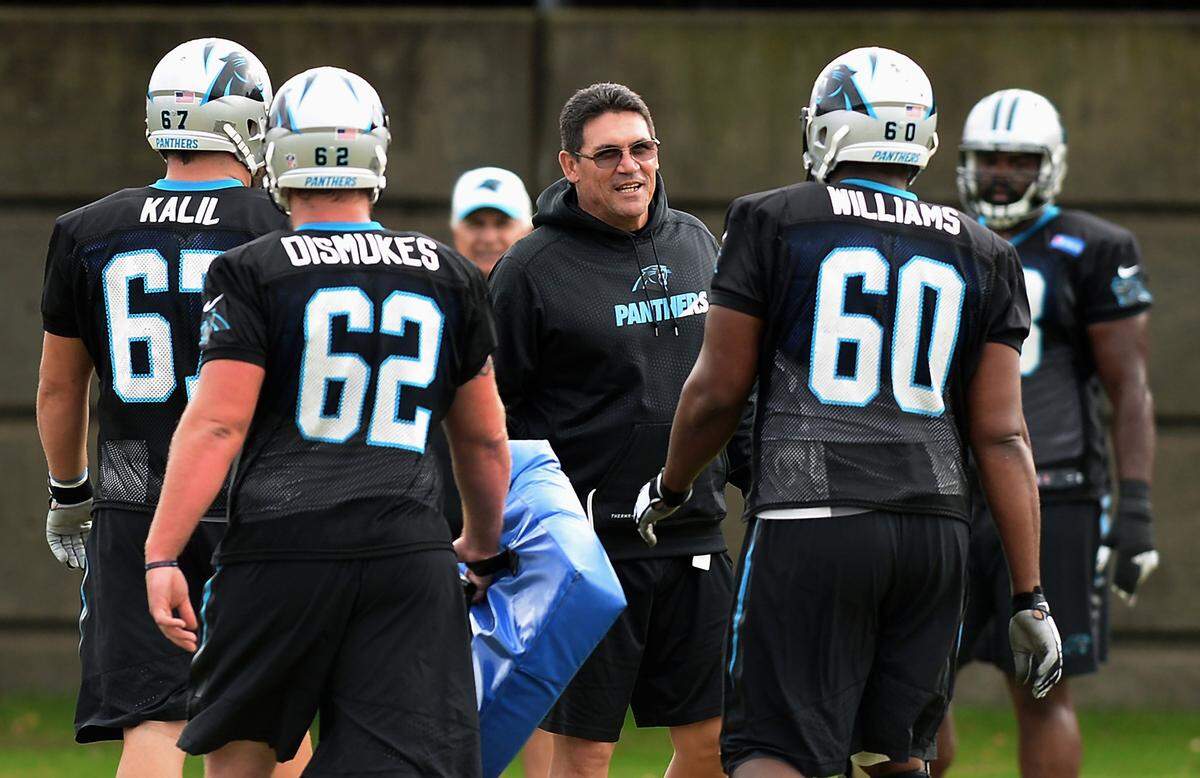
Newton had been gaining confidence. The organization had been gradually assembling a roster filled with elite talent, and keeping it happy. Rivera was increasingly encouraging the guys to be themselves, even if that meant dancing in their opponents’ end zone, or letting his quarterback tear apart an imaginary shirt on his chest in a nod to the Man of Steel.
“Under Coach Rivera,” Stewart says, “it was like this buildup of ‘this is how we do things,’ and he’s allowing us to do it this way. It’s like, ‘Am I allowed to go over that boundary? Am I allowed to touch that? … Am I allowed to have candy?’ And eventually you’re like, ‘Oh, I can have this in moderation.’ …
“So Rivera really gave us the plan. He gave us the recipe.”
On top of all that, team owner Jerry Richardson increasingly seemed to be loosening up his tie.
“Mr. Richardson really did give Cam and the rest of those guys space to do that,” says Steven Drummond, the Panthers’ director of communications in 2015, “instead of really pushing back against it, which many people expected him to push back hard against.”
As for exactly why the notoriously stuffy owner (who died at age 86 in 2023) would be more forgiving? Drummond has a theory.
It involves an (ultimately failed) effort Richardson just so happened to be spearheading for the NFL in 2015 into 2016 that was aimed at building a stadium south of Los Angeles to be shared by the San Diego Chargers and the Oakland Raiders.
His interest stemmed, in part, from close, personal relationships with the Raiders’ owners. And Drummond says that interest was acute.
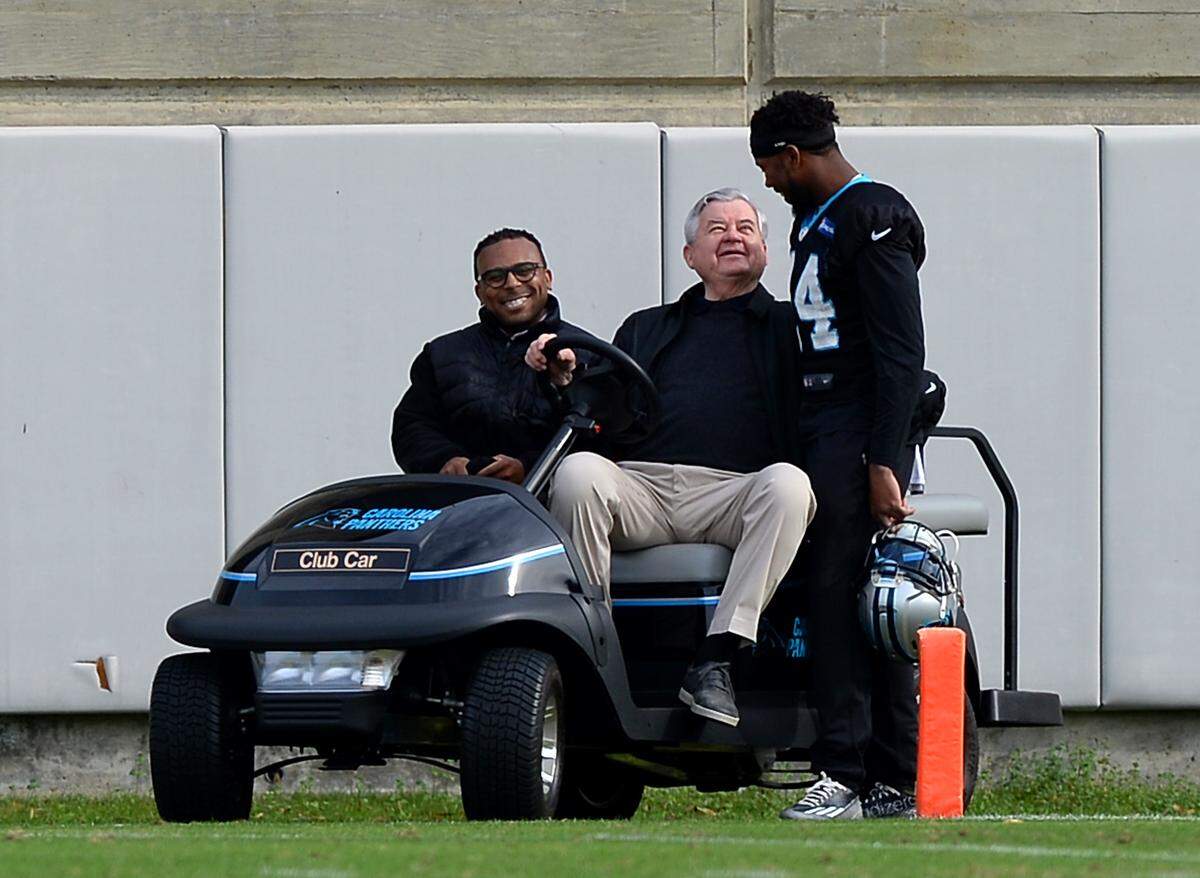
“He was engaged, he was at the games, but his mind was on trying to help his friends make that transition, possibly, to L.A.,” Drummond says. “That whole season … he had an eye on that project. And so a lot of the things that Cam got away with that year with the team would have never happened if he would have been completely locked in.”
A statement victory over the Seahawks
By the time the Panthers got to Seattle in October, they were 4-0.
But many on the team couldn’t help but think about another record it had going into that game: 0-5 against the Seahawks, dating back to 2010 — and including a playoff loss at Seattle in the NFC divisional round to end Carolina’s 2014 campaign.
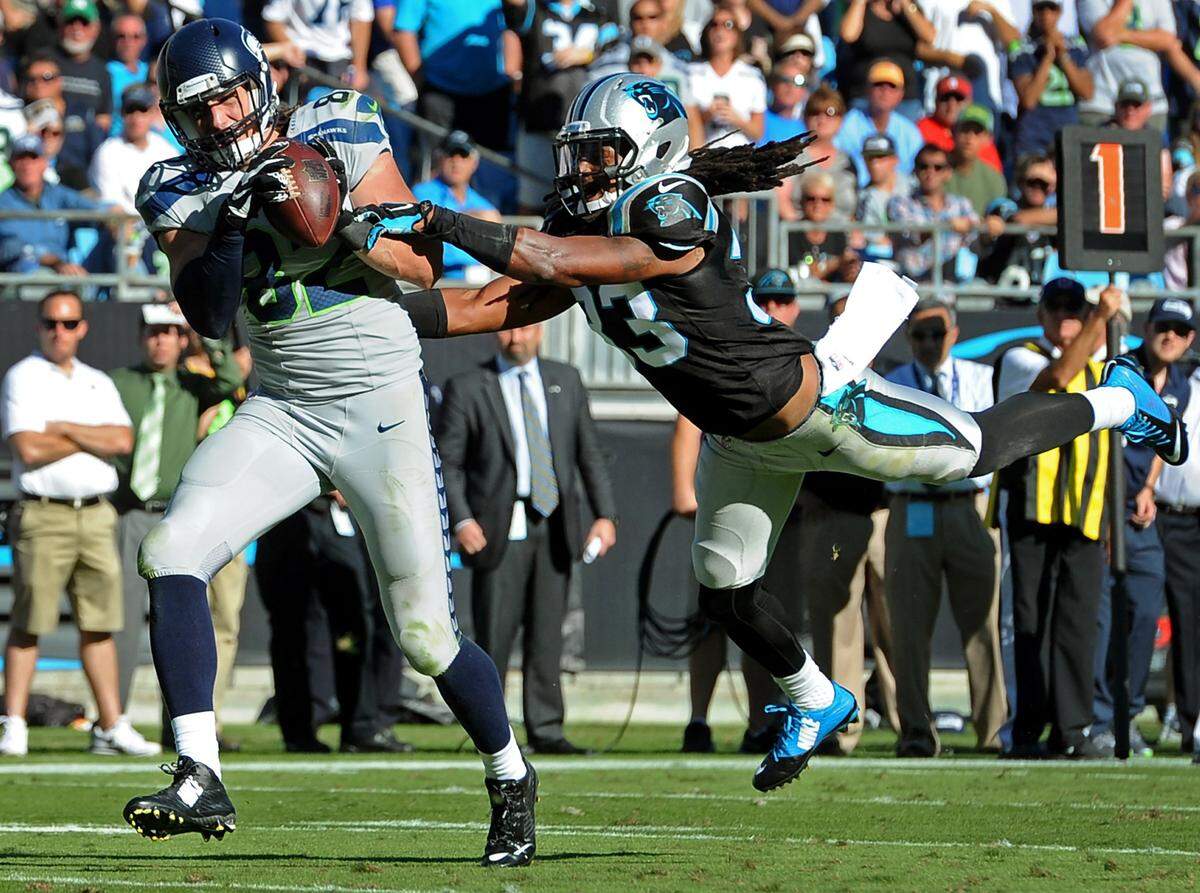
You could have called them the Panthers’ nemesis. Carolina linebacker Thomas Davis takes it a step further. “A damn nuisance. That’s what they had been.”
Even before they got out of bed on game day, Oct. 18, Seattle was annoying its foe. Two hours before sunrise, as the Panthers lay asleep in their beds at the team hotel, someone pulled the fire alarm.
“We just all felt like there was somebody from within the Seattle organization,” Davis says, “whether it was a fan, whether it was somebody that they got to do it, it was related. So you can look at it one of two ways. You can look at it as, Oh, I’m tired and I can’t believe that happened. Or you can look at it like, I’m pissed off, and I’m taking it out on them tomorrow.”
Carolina took the latter approach.
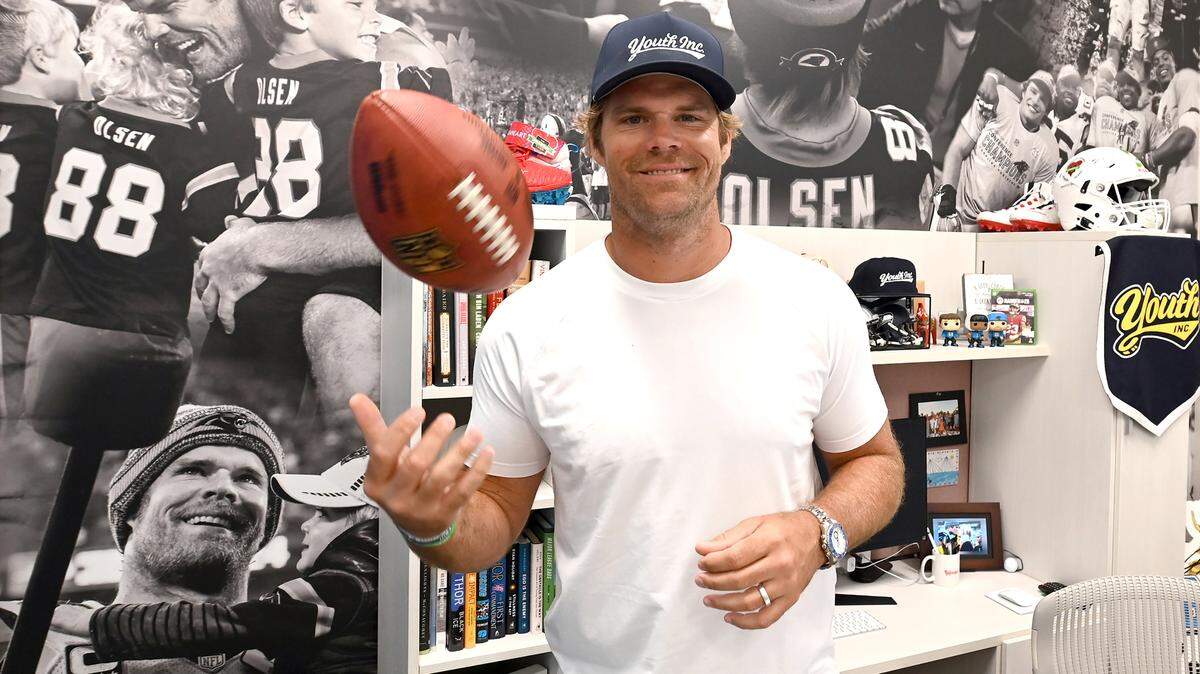
In the face of deafening crowd noise — “I remember coming in at halftime, and my ears hurt so bad; they were ringing so bad,” says tackle Mike Remmers — the Seahawks took a 23-20 lead into the final minute and seemed poised to break the Panthers’ fledgling win streak. Then Newton hit a leaping Greg Olsen with a 26-yard laser to wrestle the game back with 36 seconds left on the clock.
Boom. 5-0.
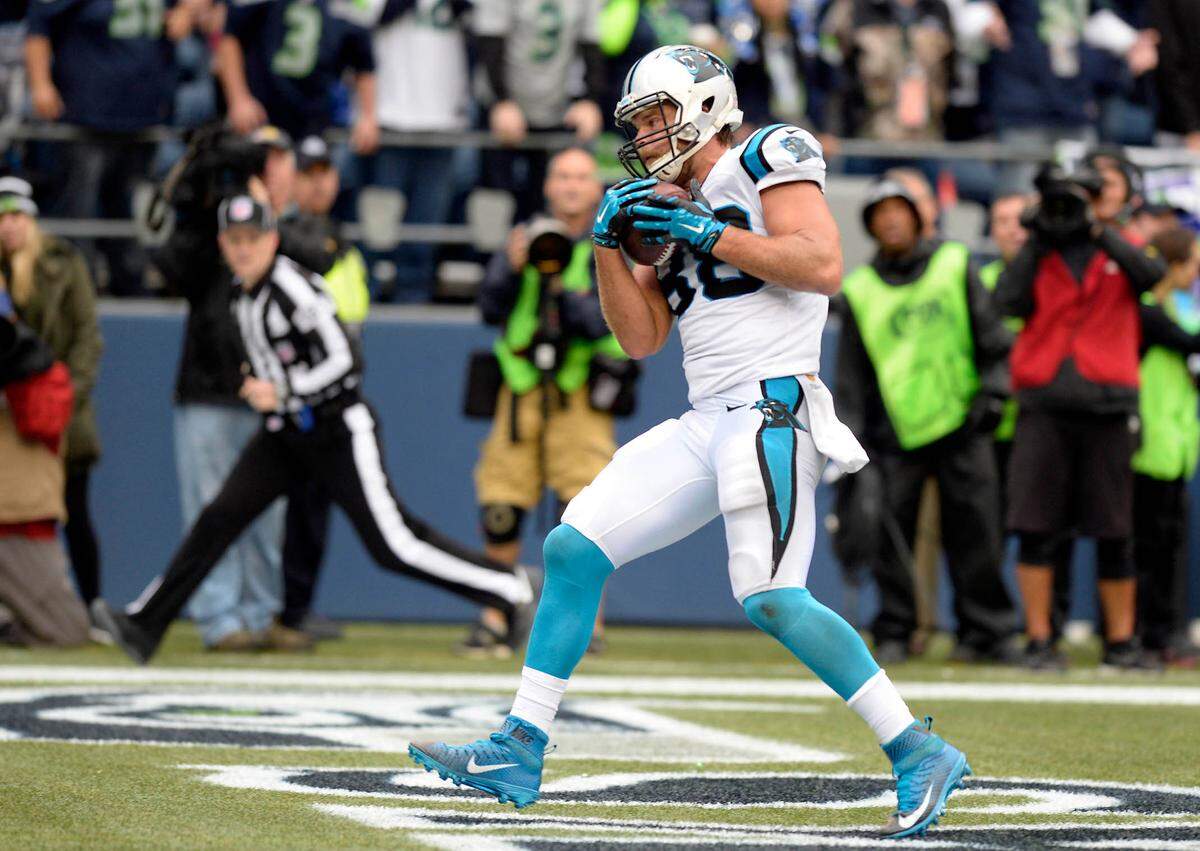
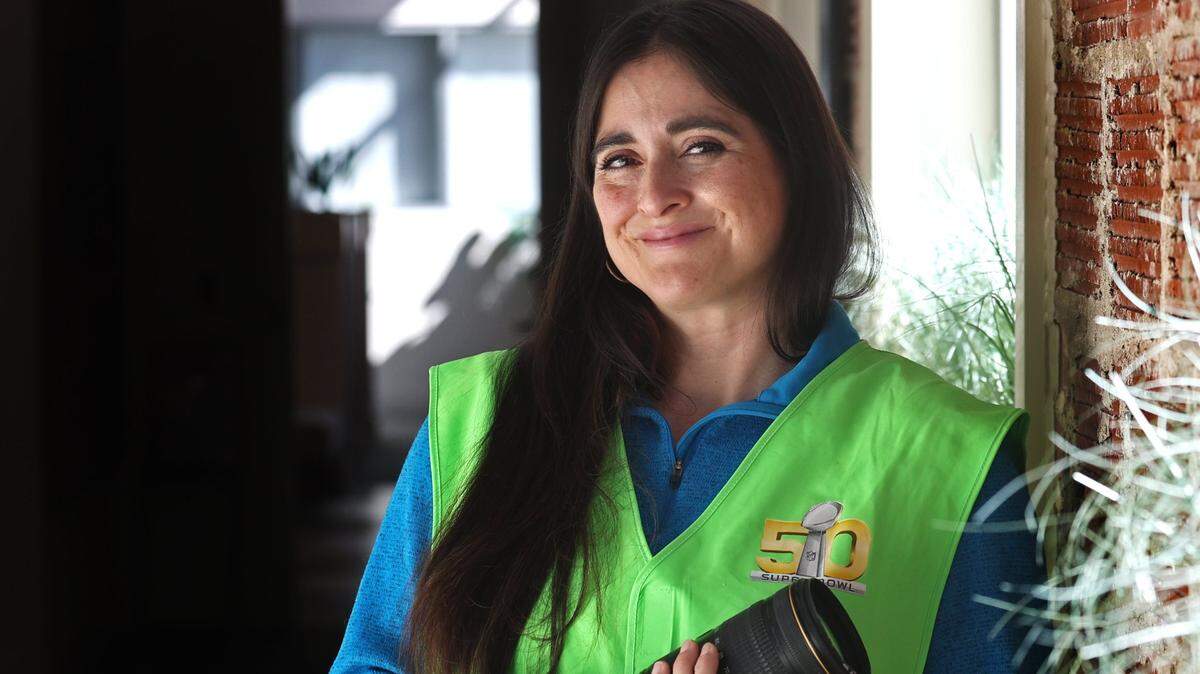
Olsen did not dance. But moments after the game ended, Panthers team photographer Melissa Melvin-Rodriguez spied the star tight end do something that was arguably even more satisfying. She recalls an infamous Seahawks fan, earlier, doing his usual harassing of opposing players from his perch above the visitors tunnel.
“He was saying stuff to Greg Olsen. He was like, ‘F--- you, man!’ And so when we beat the Seahawks, we were going in, Greg found that guy, he was like, ‘Hey, f--- you!’” Melvin-Rodriguez says, laughing. “It was fantastic. It was so good.”
(Says Olsen on this subject: “I mean, we might have had some choice words at the end.”)
And at this point, it was clear — at least to Carolina’s fans. The Panthers were for real.
The changing face of Panther tailgates
The Roaring Riot formed in 2008, in the midst of a 12-4 season that ended with a loss in the divisional playoffs.
In the years that followed, it grew into what is widely considered the largest organized Carolina Panthers fan club — although prior to 2015, the club lived through just one other winning season.
Roaring Riot co-founder Zack Luttrell recalls setting up for a whole lot of pretty modest tailgate parties during those years of mediocrity: “Two DJ speakers, a couple tents, a table, a Gatorade cooler full of mimosas. My friends would roll in around 11.” He also remembers times inside Bank of America Stadium when there was an overabundance of fans supporting the opposing team, making it a struggle to create some semblance of a home-field advantage.
The win against Seattle, then, was a tipping point. It seemed like everything changed after that.
“All of a sudden I had an army of people coming out to put up tents and to be out there,” Luttrell says, “and it kind of helped us slowly start to create that culture that we’ve seen in other cities, where people are more fanatical and people are getting dressed up, and people are starting earlier, and wanting to make a full day out of it, rather than coming when they get out of church at 11 o’clock.”
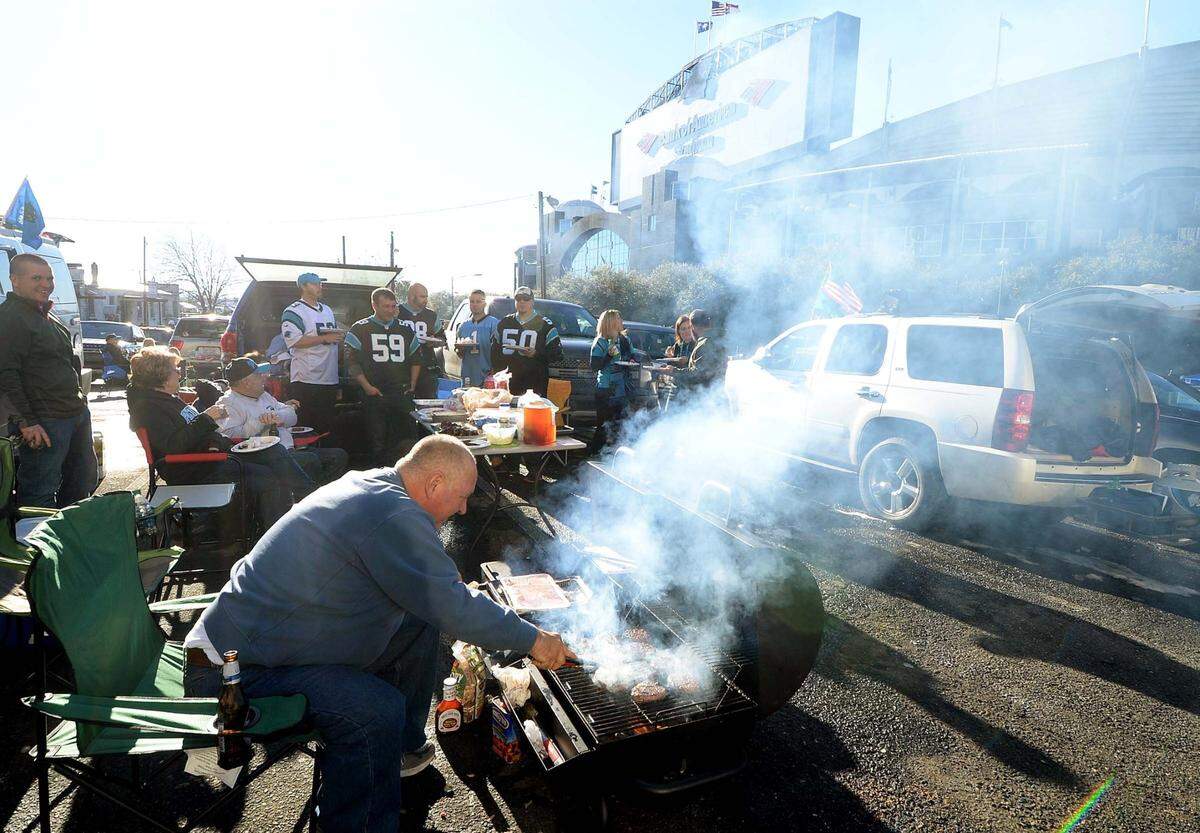
“It was the closest to a real home-field advantage that we’ve ever seen,” he says. “People didn’t want to sell their tickets, or tickets that were for sale were being purchased by Panthers fans — and not opposing fans.”
Cam Newton and those ball giveaways
It was offensive coordinator Mike Shula, Rivera says, who first suggested the idea to Newton, in 2011: “‘Instead of going around and celebrating and doing an individual thing, take the ball and give it to somebody.’ And he did.”
As the victories began piling up in late 2014 and into 2015, so did the demand for seats that could attract attention from Newton after scores. “Every game that you showed up to or you went to,” linebacker Thomas Davis says, “people would come to those games and try to get those seats along the rails, right along there, because they knew they had a great chance of getting a football from Cam Newton.”
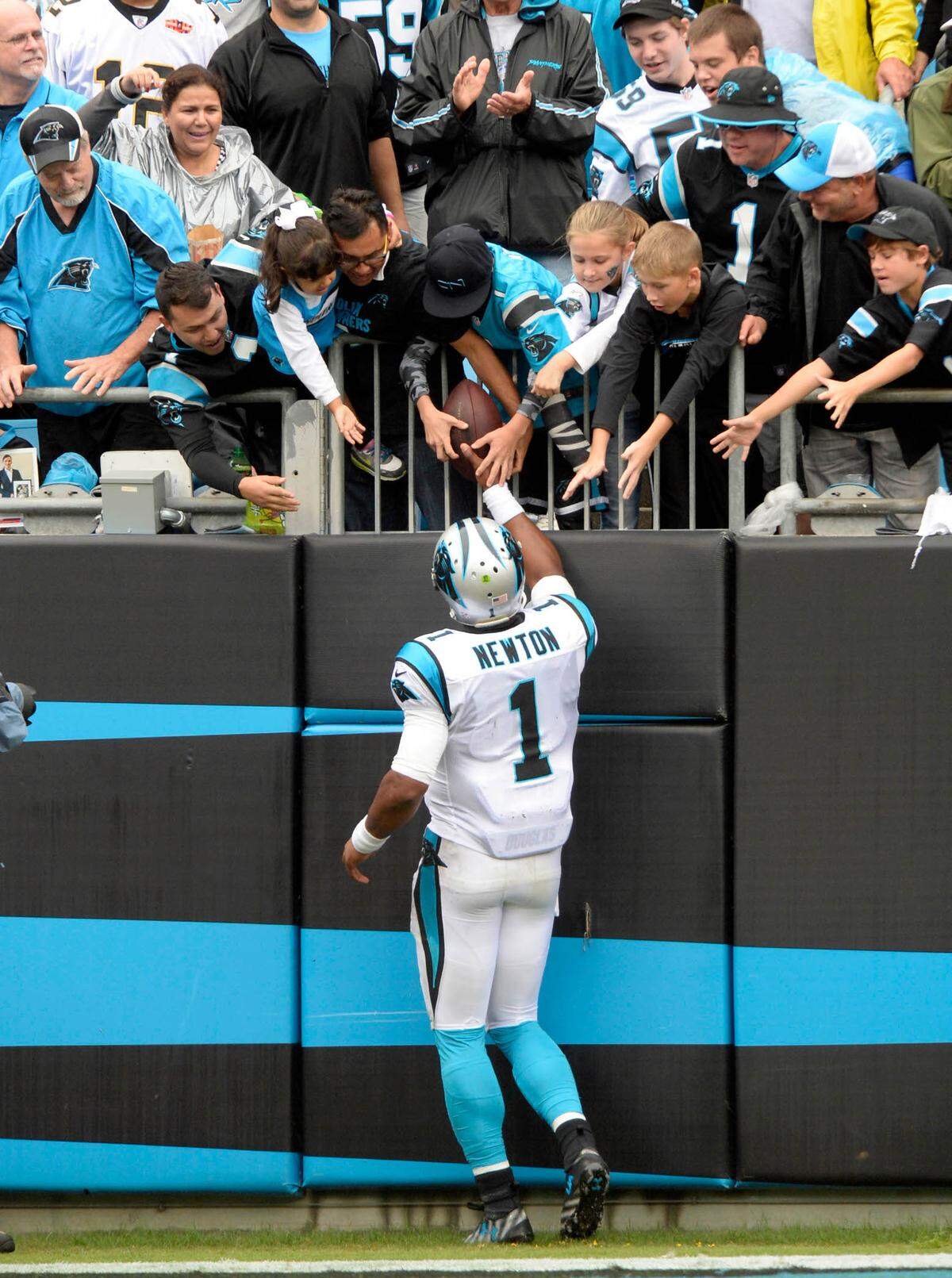
To be fair, he wasn’t the only Panther who gave away touchdown balls. It also wasn’t a practice confined to Charlotte; for instance, when Olsen scored that game-winner in Seattle, he sought out a family in Panthers gear to flip the ball to.
But Newton was the most bullish, the most persistent, and the most obsessive about it.
“Cam was the type that if you took the ball to the sideline (after scoring),” says Panthers fullback Mike Tolbert, “he was gonna come run and get the ball from you, and then take it back to a kid in the stands. So you might as well just give it to him.”
Green Bay Packers defensive star Julius Peppers — an N.C. native and eventual Pro Football Hall of Famer who played for Carolina for 10 of his 17 NFL seasons — was well aware of this; and when the Packers came to Charlotte in November, Peppers got salty about Newton’s ritual. “They scored a touchdown, and I took the football,” Peppers says. “And when he (Newton) was trying to get it from me, I just held it away from him.
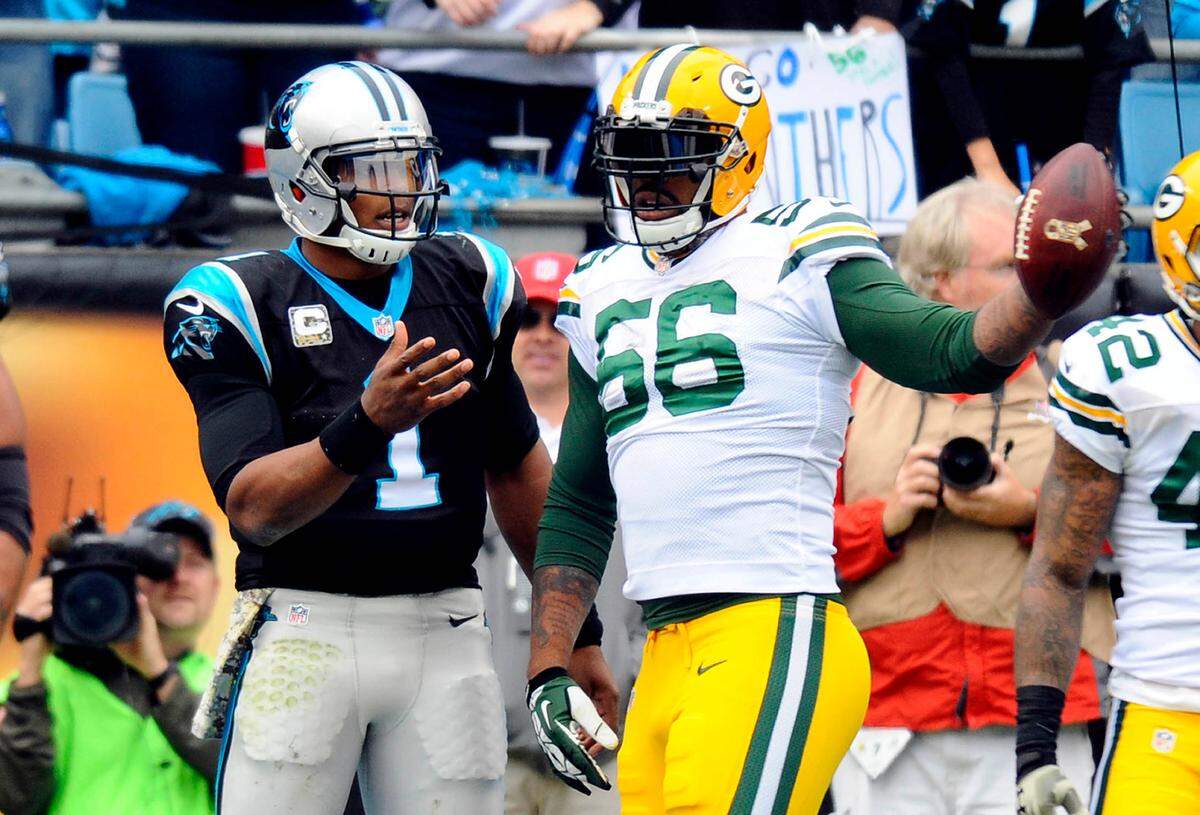
“Then I just threw it off to the side. ... It was like an intimidation kind of tactic. I felt like, you know, when you’re playing a team that was as dominant as they were (7-0 at that point) you had to try to chop the head off the snake. You got to go for the leader. And if you could, try to, like, take him down.”
But, Peppers concedes, “It didn’t work.” Newton retrieved the ball, and quickly found a fan to hand it to.
Says Peppers, again: “It didn’t work.”
A Tennessee mom gets critical of Cam
But what obviously was working was Newton’s ability to get under the skin of opponents and their fans.
“Whenever I would talk to friends of mine who … were fans of other teams, they all had one thing in common, and it was their hate for Cam,” Luttrell says. “It would just be, ‘Ohh, did you see the way he celebrated?’ Like, ‘Yeah, man, I saw. I loved the way he celebrated.’ And it made me ... proud to be like, ‘That’s my guy. Like, I love all this, and I love the fact that it’s hurting your feelings watching him doing it.’”
It was Week 10 when this became a national conversation.
Late in the fourth quarter of a road game against Tennessee that Carolina was running away with, Newton muscled his way past an onslaught of Titans and into the end zone — where he dabbed, then broke out his now-trusty “hit dem folks” dance move. Tennessee linebackers Avery Williamson and Wesley Woodyard took offense and got in Newton’s face. Newton hit dem folks again.
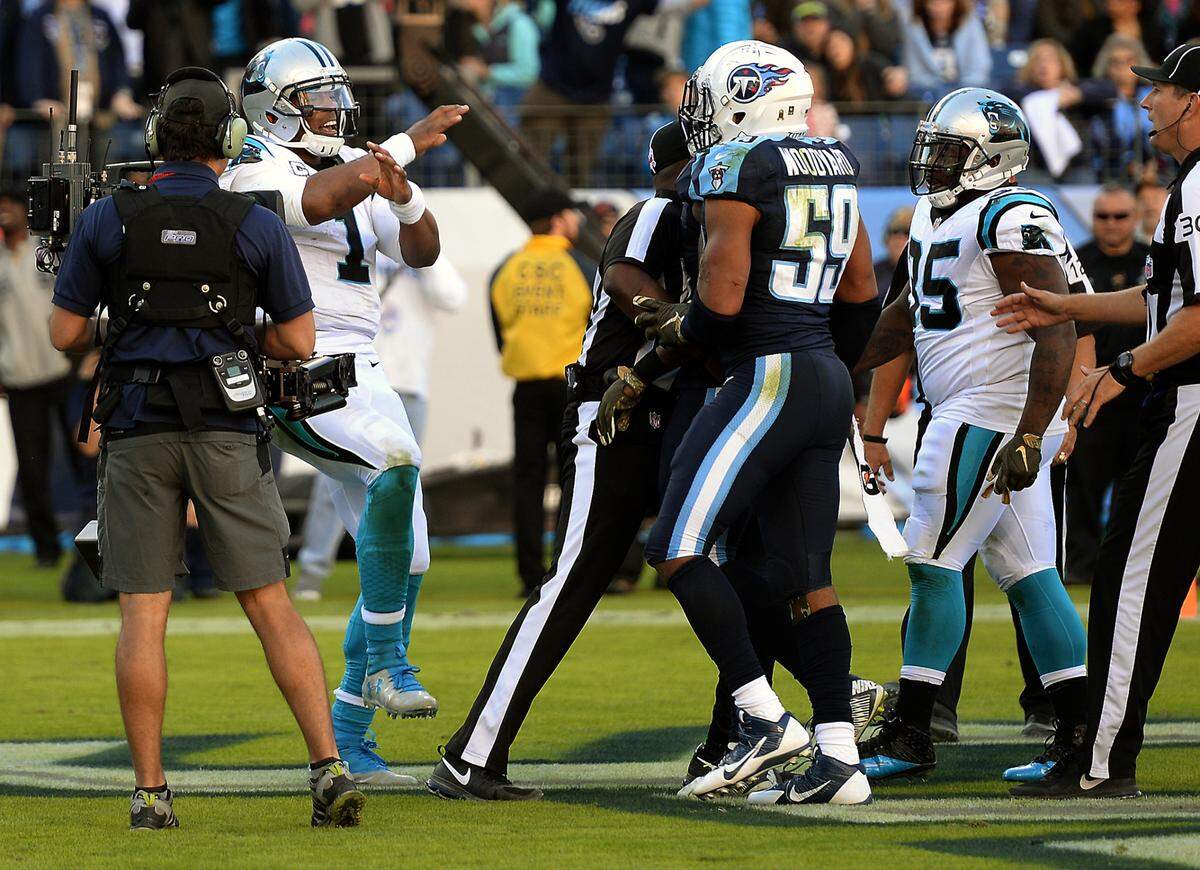
Then he chased down the ball and ran it to a Panthers fan in the front row.
A couple of days later, The Charlotte Observer published a letter from a woman who attended the game in Nashville with her 9-year-old daughter. In it, the woman tried to call Newton out: “You have amazing talent and an incredible platform to be a role model for (kids). Unfortunately, what you modeled for them today was egotism, arrogance and poor sportsmanship.”
The woman later apologized, but not before the letter went viral.
“I do think the letter bothered Cam,” says Drummond, the Panthers director of communications. “If the mom had just said, ‘I’m offended,’ I don’t think it would have mattered at all. But when she brought the daughter in, I think that hit Cam.”
It hit teammates on his behalf, too.
“If you’re mad that he’s showboating or, like, celebrating against your team,” Thomas Davis says, “you should probably talk to the defense and tell them to play better, and don’t allow him to do those things. But don’t attack the man’s character and try to make it seem like he’s just this bad person — because that’s not who he is.”
How the Panthers made a difference
Newton was just one of a number of extraordinarily giving players on a team that was in extraordinarily high demand off the field in 2015.
“The volume of requests, inquiries, or just the desire to connect with the team was at a level that previously we’d never been at before,” says Riley Fields, the Panthers’ director of community relations — who says “it was a little overwhelming at times,” but also “a tidal wave of awesomeness.”
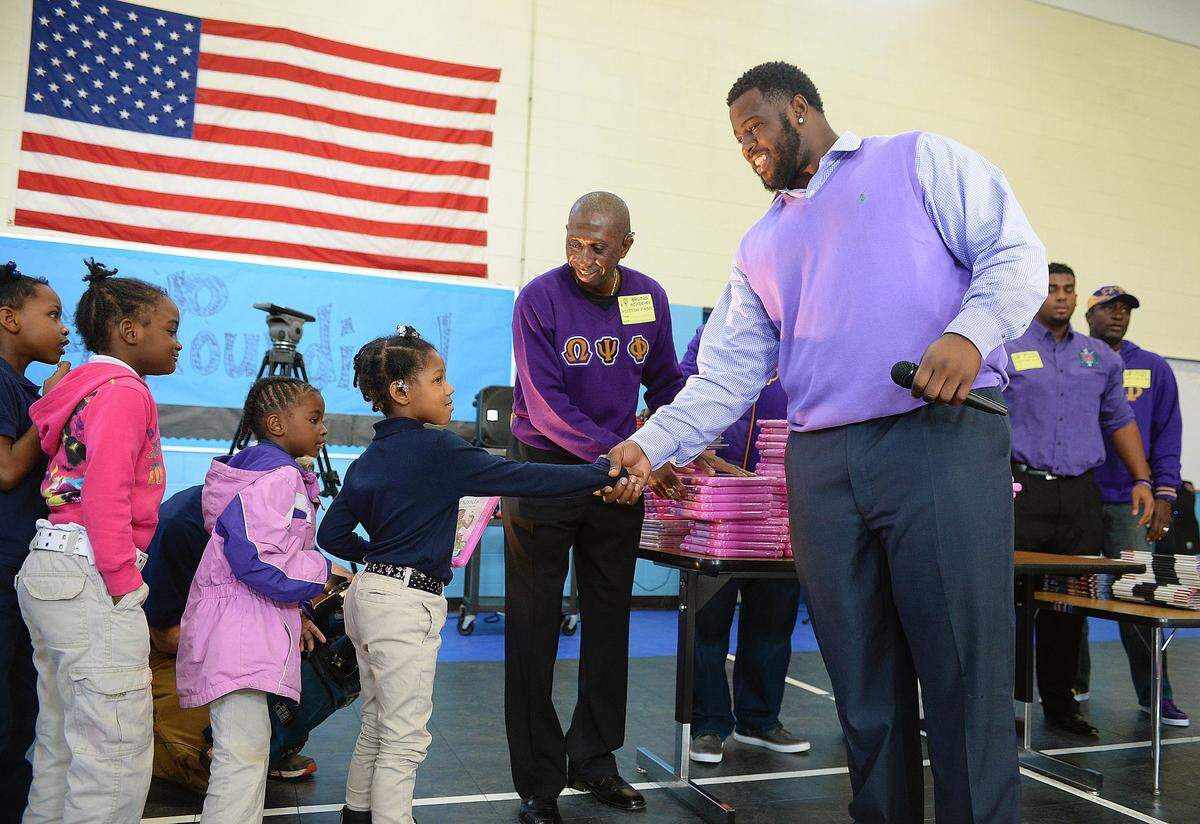
And in addition to community efforts the team participated in directly, there were all sorts of Panthers going above and beyond. Just a sampling: Olsen had his The HEARTest Yard charity, focused on pediatric cardiovascular patients; Rivera and his wife Stephanie often could be found helping out organizations like Second Harvest Food Bank and the Humane Society; and Davis had been named the NFL’s 2014 Walter Payton Man of the Year (the only Panther to ever be awarded the honor) in recognition of his outstanding community service.
Meanwhile, Braylon Beam, the 6-year-old who served as honorary coach of the Panthers at Fan Fest, was getting ongoing royal treatment from the team (free tickets to every game, field passes, memorabilia) as he endured his cancer treatments. “I don’t think they’ll ever know how thankful I am that they gave him that experience and got us through that year,” says his mom, Meredith, with tears in her eyes.
But it was arguable that Newton’s community engagement made the biggest headlines due simply to his sky-high profile — and impressive that his private gestures were able to fly as far under the radar as they did.
It’s the stuff of legend.
Dave Gettleman, the team’s general manager, says Newton would keep a ball in his car in case he drove by a group of kids and had time to play with them. Kim Beal, director of the Cam Newton Foundation, says he’d buy dozens of pizzas and then go searching for people experiencing homelessness that he could give them to.
Then there was 10-year-old Elijah Aschbrenner. Newton called Elijah out of the blue after learning that the Concord boy had cancer and not much longer to live. They talked for 45 minutes, during which Elijah invited Newton to an early Halloween party his neighborhood was throwing for him. Newton said he’d see if he could make it. After the call ended, Becky Hughes told her son, “Nice try, Elijah.”
That weekend, on Sept. 25, Newton showed up unannounced, with a boatload of food. And without any media in tow.
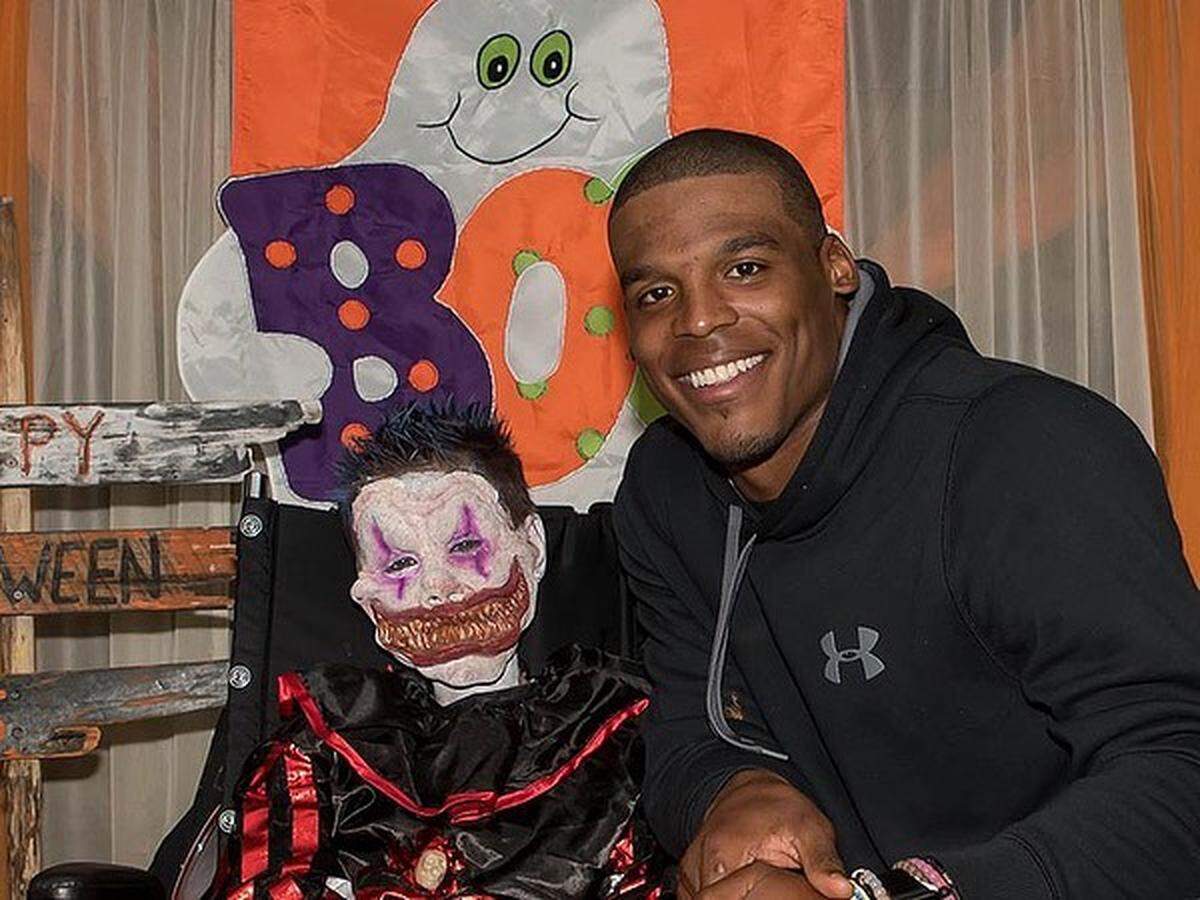
“I tell people you may see what you see on TV … you know, the flashiness and all of that — that’s just his personality,” says Hughes, as she fights back tears. “But ... they don’t see the Cam Newton that came to Elijah’s Halloween party, sitting down next to my child, who only had a few more weeks to live, but he wanted to make those final memories some of the best memories of his life.”
Amid Panthers fever, some disrespect
In Charlotte, everything seemed to be falling into place for the Panthers.
Player after player will tell you one of the main keys to their success in terms of intangibles was the team chemistry, both on and off the field. They were winning like never before, but they were also bonding like never before — hanging out more together than ever before, going to dinner, going for drinks, chilling at each other’s houses, voluntarily working out and watching game film in large groups on Tuesdays (which was, officially, their day off).
The more they clicked personally, the more they clicked professionally.
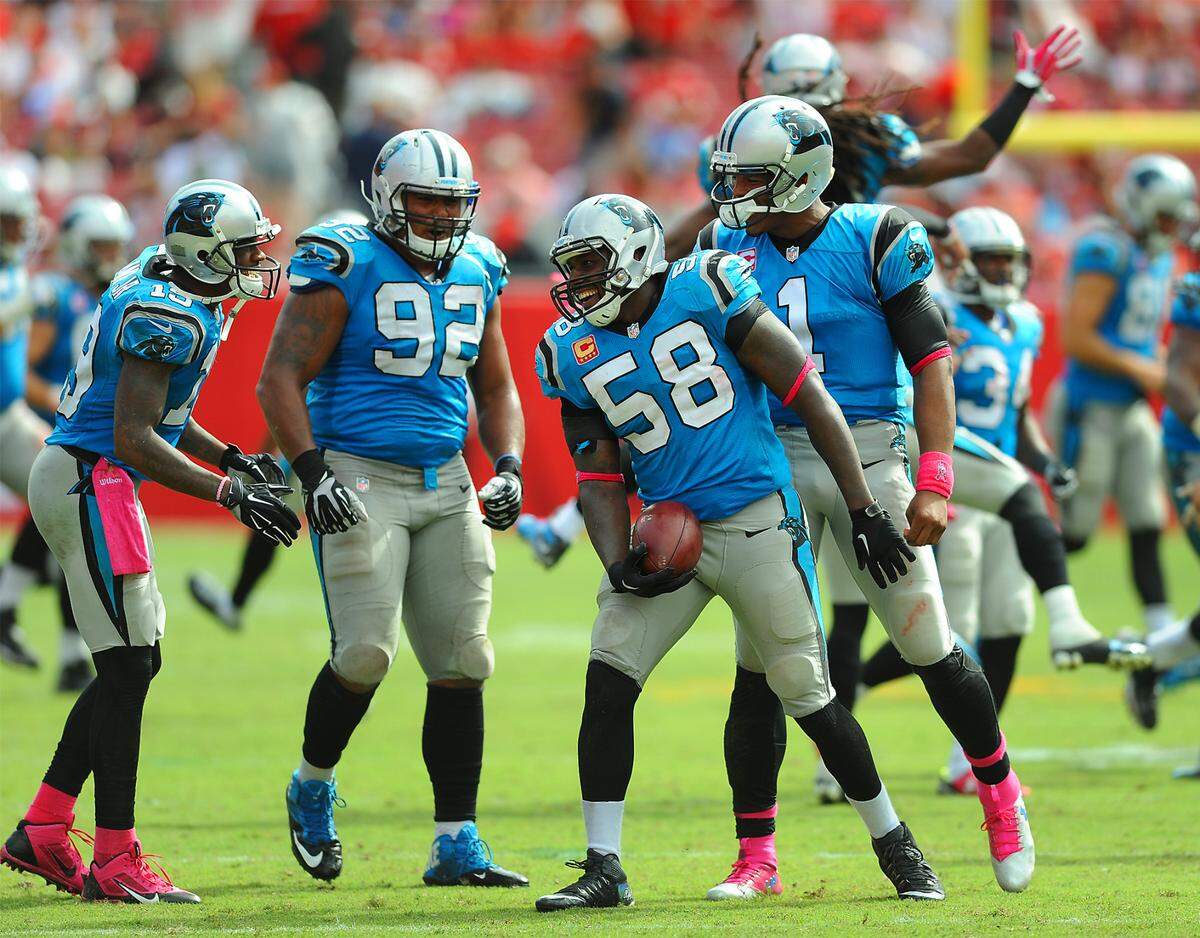
“And the biggest magic to all of that,” Olsen says, “was we had the makeup of guys, the recipe of personalities, where everyone understood Cam was the center. He was going to get all the attention, he was going to get a lot of the recognition. And we all loved that. …
“So we knew Cam’s greatest value — not only just because he was incredible on the field, but he thrived off the energy of the emotion of the crowd and the fans. And the entertainment value was a big part of his personality.”
All of Panthers Nation seemed to be feeding off of it. A prime example: The dab, a dance that originated in Newton’s hometown of Atlanta and was popularized by the hip-hop group Migos. Newton had introduced many games earlier but that went so viral after he did it in Tennessee, the move became a cliche almost as fast as it became a phenomenon. “You could not take a group picture of Panthers fans without being like, ‘And now — dab!’” says Josh Klein, a Charlotte native who led a Panthers fan group in New York City in 2015.

Even people who didn’t know a touchback from a cornerback were talking about the Panthers in their office’s break room.
“Everywhere you went,” the Roaring Riot fan club’s Zack Luttrell says, “somebody was wearing Panthers gear, whether it was SouthPark Mall, Park Road Shopping Center, walking around uptown. It didn’t matter what area of town you were in, there were always people wearing Panthers shirts and sweatshirts and hats, and people were proud to be Panthers fans.”
The only thing that seemed to be missing was respect from beyond the Carolinas.
“Even as we kept extending that streak,” center Ryan Kalil says, “I just remember the conversation around us was something to the extent of paper tigers.”
“They were always ‘the worst undefeated team,’” Klein says. “Like, ‘8-0, is this the worst undefeated team of all time?’ ‘9-0, is this the worst undefeated team of all time?’ … You felt that disrespect throughout the national media just, like, all the time.”
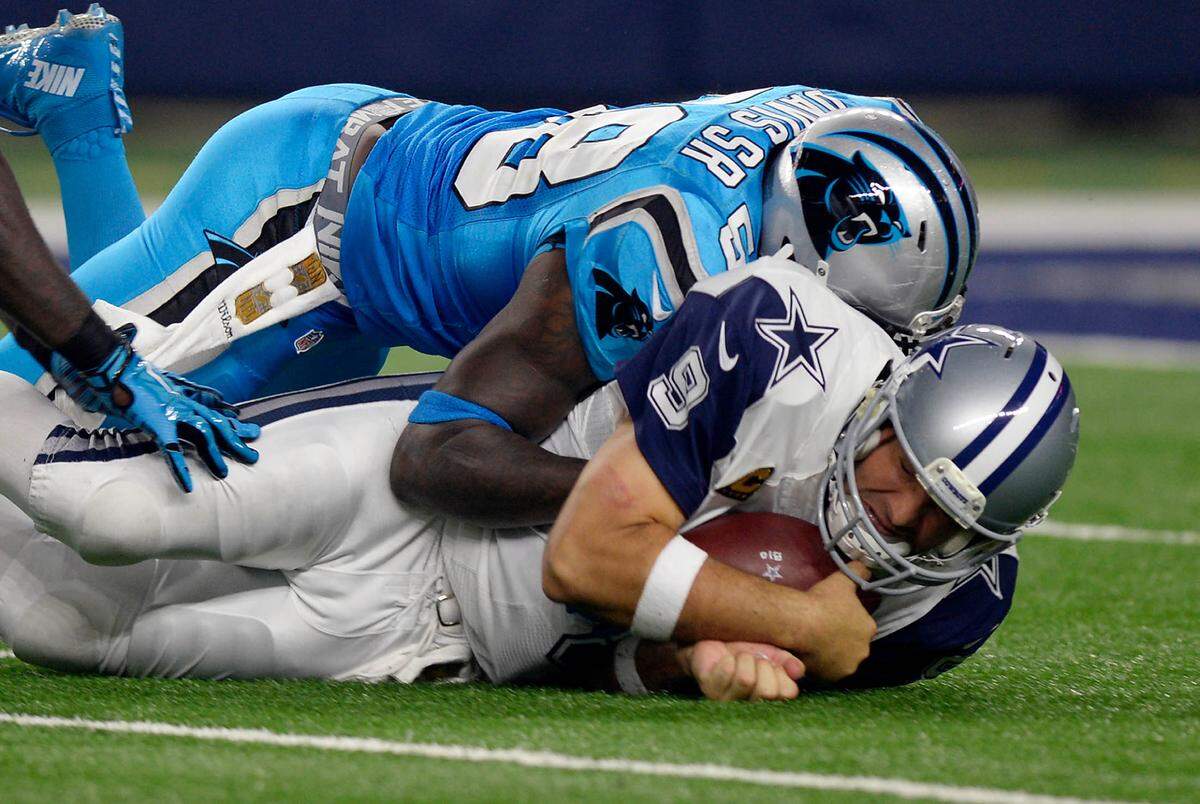
Perhaps the most painful slap in the face came in November, when oddsmakers opened the Panthers’ game against the Cowboys — to be played on Thanksgiving Day in Dallas — with Carolina as a one-point underdog. The Panthers were 10-0 at the time. The Cowboys were 3-7.
The explanation? Dallas had started 2-0, lost seven straight while star quarterback Tony Romo was sidelined with an injury, then had notched its third win in his return the week prior to his Turkey Day start against Carolina.
“That’s all I needed to use against our players,” Rivera says. “I got up in front of ’em and I said to ‘em … I said, ‘Are you effing kidding me? Are you effing kidding me? This one guy is better than all 53 of you guys? One guy’s gonna make the difference? We’re undefeated! And they aren’t! And one guy’s better than our 53??’”
Adds Davis: “And it got ugly fast.”
Part 3 | The Camaraderie
Dallas, PIG, Odell and the bat: A rollicking Panthers season rolls into playoffs.
This story was originally published July 15, 2025 at 5:00 AM.