From ‘scared little girl’ to soccer champ, Jessica McDonald fights for moms everywhere

READ MORE
Payback: The Jessica McDonald story
For striker Jessica McDonald, the U.S. women’s national soccer team’s ongoing legal battle for equal pay is just the latest fight she’s determined to win. A teen runaway who became a single mom, McDonald tells us for the first time how she used two stints of soccer in North Carolina to rise from a broken home to the pinnacle of her sport. Now, she’s using her voice to battle systemic inequalities in soccer. We hope you’ll explore these articles as well as a motion-graphic novel, plus listen to our 10-episode narrative podcast all spring.
Expand All
Jeremiah Stuart is the son of a World Cup champion, but superheroes are more his style than soccer.
It wasn’t a sports injury that sent him to urgent care in September 2019. It was an attempted move inspired by Spider-Man Miles Morales, according to his mother, Jessica McDonald. That’s how her then-7-year-old fell out of a tree and broke his arm.
Jessica — a FIFA Women’s World Cup winner at the forefront of the equal pay movement in women’s soccer — was on a plane getting ready to take off with her National Women’s Soccer League team at the time, the North Carolina Courage, when she received a call from her son’s after school care program.
“They’re like, ‘Hey, Jeremiah fell out of a tree. He’s fine. His arm’s a little sore,’ ” she said.
It didn’t sound serious, so she headed to New Jersey for her match. After she landed, Jessica received another call, this time from a close family friend who was watching Jeremiah. Jeremiah’s injury didn’t look good, the family friend reported, and she was taking him to see a doctor. He didn’t need surgery, but his arm was put in a cast.
When Jessica returned home a day and a half later, she discovered a change in her son.
“He’s like, ‘Mom, I’m never going to climb a tree again. Blah, blah, blah, I’m so upset,’ ” she said. “And I’m like, ‘Oh, buddy, no, no. You have to climb that tree again. You want to know why?’ ”
She showed him her left knee, marked by a five-inch scar that runs vertically from the bottom of her quad to the top of her shin. After surgical repair to fix the patellar tendon she ruptured in 2010, the fibrous tissue is stronger than it once was. It’s a visible reminder that she is, too.
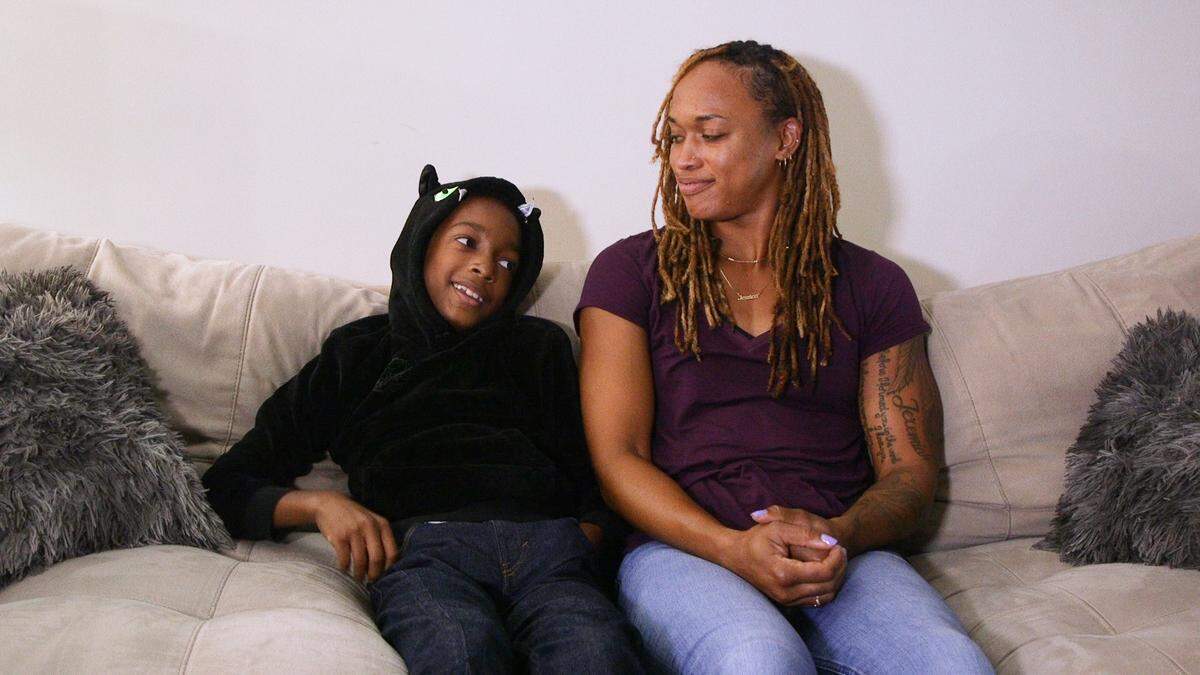
“Do you know how I got this scar?” Jessica asked Jeremiah.
“Yeah,” he said. “It’s from soccer.”
“And what does Mommy still do?” she asked.
“Play soccer,” he said.
“That’s right, son,” she replied. “So you’re going to climb that tree again. You can’t let something scare you. We all go through things we don’t want to go through. This is the part of life where it sucks, and we have to deal with the sucky parts of life.”
A soccer legacy after unlikely odds
Jessica has stunned the odds as a two-time NCAA champion, three-time NWSL champion and World Cup winner. She has overcome major obstacles through every stage of her career while climbing through the ranks of a U.S. professional women’s soccer landscape rife with deficiencies and alleged abuse compared to the top domestic men’s league.
She is as familiar with life’s successes as she is with its “sucky parts.” There was a point years earlier, in 2015, when she contemplated quitting soccer. Not because of injuries, but because at age 27, she was losing hope that she could do the two things that mattered most to her — play soccer while making enough money to support herself and her young son.
She had just finished playing with the Houston Dash, her fourth NWSL team in three years. Making only $15,000 for the season, she worked at an Amazon packing facility in Arizona during the offseason to afford basic necessities. She told her agent she was done playing.
“I felt as if the work that I was putting in for my soccer career just didn’t feel worth it anymore,” she said. “At least for my son.”
A conversation with her uncle changed her mind.
“Look at your son,” Jessica recalled him saying. “Do you think your son would want you to quit right now?”

This is the thought that guided Jessica since the start of her professional soccer career in 2010 to become one of the most experienced players in the NWSL and one of the few Black, single mothers in the league today. She’s sought goals and championships, but said that she sees her long-term legacy as something happening off the pitch — improving conditions for the future mothers in professional soccer.
“Because I’ve been in this league since Day 1 and I’m one of the few that has been,” Jessica said. “Being a mom while scraping pennies, all the trades. You name it, I went through it in this league.”
Jessica has remained in the women’s soccer world long enough to see its growth, which includes a first-ever collective bargaining agreement in the NWSL this year, a milestone step expected to significantly improve the quality of life for players in the league. She is also one of the former U.S. women’s national team soccer players who last month announced that they settled a longstanding lawsuit over equal pay with the U.S. Soccer Federation, which will be part of her long-term legacy, too.
“This was a hard-fought battle,” Jessica said. “We really did this for our future generation, the little girls who are going to be in our shoes one day, who are going to be playing for our country.”
Her resilience to push for progress and break generational cycles stems from a deeply personal place, she said. It’s a story that she’s ready to share to set an example for others. As a mother, business owner and mentor to young children, she said that she feels more empowered to open up about her personal experiences. This week, she’ll enter her 10th season in the league at 34 years old.
There was a time when she said she felt less in control and more afraid. But now she is able to share her story, sparing few details, without any fear.
Future soccer star ‘didn’t wear her struggles’
Jessica McDonald remembers her bloody lip and bruised ego. The blood was temporary, but the pain lasted, and it wasn’t physical.
She also remembers shock. Not because it was entirely surprising that her mother’s fist landed on her face. Similar incidents happened before, she said. This punch stunned Jessica because she was not expecting her mother to hit her from the driver’s seat.
The timing could not have been worse.
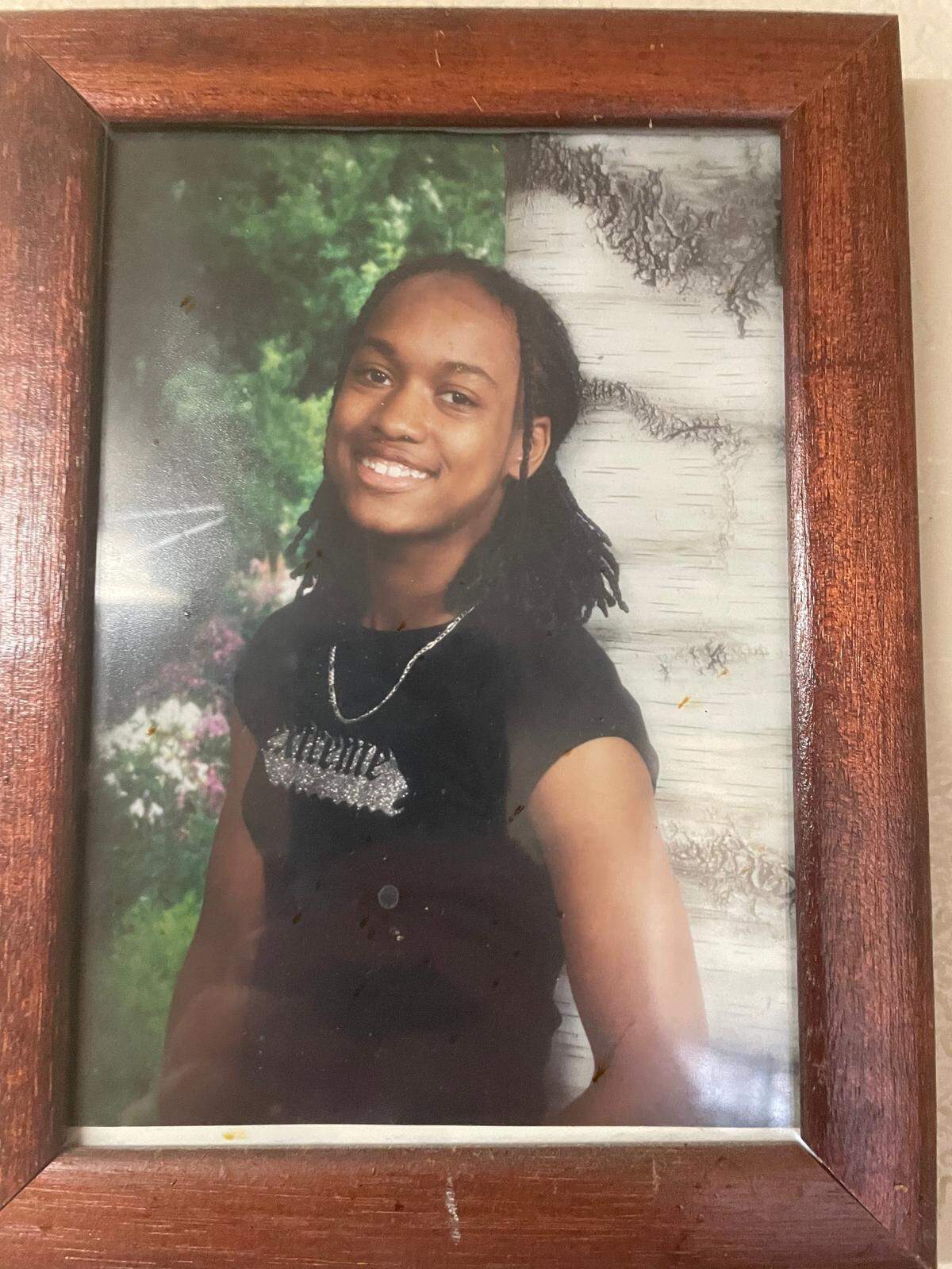
Jessica was not yet the World Cup champion at the forefront of the equal pay movement in women’s soccer that she is today, but she was on the precipice of what was then her biggest break. It was a spring day in 2005 and she was scheduled to meet with the University of North Carolina women’s soccer coach, Anson Dorrance, at her high school in Glendale, Arizona. Jessica was told that a parent had to be present for the visit and said that she asked her mother, Traci McDonald, to come with her.
“I woke up. I was super nervous, because this is my dream school,” Jessica said. “And it’s been my dream school since I was a little girl.”
As a multi-sport athlete, Jessica grew up watching Michael Jordan’s college basketball highlights and the prime of his NBA career. She idolized the Tar Heel brand for that reason.
“He made it like the school you want to go to,” she said. “The colors, the environment, everything.”
Jessica excelled in soccer throughout high school and grew more familiar with UNC’s women’s soccer program, which held similar prestige. Dorrance, a titan of the soccer world and former U.S. women’s national team coach, helped propel the careers of Mia Hamm and Kristine Lilly more than a decade earlier. He was recruiting Jessica to star as a forward on his NCAA title-winning team.
Jessica said that she reminded her mother on the day that Dorrance was scheduled to visit, “Don’t forget at lunch you need to come meet my coach. You have to be there.”
But Jessica sensed something about her mother’s mood.
“I remember reading her vibe,” Jessica said. “And it wasn’t a good one. It was like, ‘Oh, this is the Traci I’m getting today.’ ”
“She was just talking so horribly to me this morning,” she said.
As they drove up to the school before class, Jessica said that she made a defiant comment in response to her mother’s attitude after a disagreement about the car. In response, she said, her mother punched her in the mouth, and told her, “Don’t talk back to me.”
Jessica exited the car, lip bleeding, shock turning to disappointment, she said. Tears pricked her eyes as she walked to her first-period class with a practical thought: Well this sucks. Obviously, she’s not gonna be coming today.
In desperation, Jessica called her grandmother, Abbie McDonald, and asked her to fill in for the meeting with Dorrance. She also called her father, Vince Myers, which was something she said she had never done before. Jessica barely had a relationship with her father since he spent years during her childhood in the Arizona state penitentiary for narcotic drug violations. He was arrested in Maricopa County a little over a year after Jessica was born and given parole when she was 6, according to arrest records. Even after that, Myers said that they didn’t spend much time together.
“I should have been in her life a little bit more as she was growing up,” Myers said.
Jessica said that she could probably count on one hand the number of times she’d seen her father from the day she was born until she was 17. For Myers, the call was an opportunity to reconnect. For Jessica, it was an attempt to reach a parent she needed.
“You haven’t been here my whole life,” Jessica recalled telling Myers. “Now’s the time.”
Myers and Abbie showed up for the meeting with Dorrance. They watched game film together. Jessica remembered that most of the meeting was a blur because of what she said happened with her mother.
Dorrance said details of the meeting are fuzzy for him, too. He also recalled emphasizing that it was critical Jessica improve her grades in order to be eligible for admission to UNC.
Dorrance did not remember seeing Jessica’s swollen lip. He said that even if he’d noticed, he probably assumed it was an athletic battle scar that resulted from a collision during a header. Nothing about her demeanor seemed worrisome to him either.
“She didn’t wear her struggles,” Dorrance said.
Overcoming physical abuse and mental scars
Traci agreed to an interview for this series last spring, but then she did not respond to repeated calls and messages leading up to the meeting date, nor did she respond to subsequent attempts over the past 10 months to get in touch. Traci’s family members said that they are often unable to reach her, which they said is a longstanding pattern.
“Traci would disappear,” her sister, Lori McDonald, said. “ … By the time you’d find out where Traci was living, she would move or they wouldn’t answer the door.”
Myers was not in the car at the time of the alleged incident, but he and others corroborated Jessica’s account about the events that followed. Jessica said that she tried to pass her swollen lip off as an injury from basketball practice — an elbow to the face — when her father asked about it after the meeting, but he pressed her for answers.
Physical abuse inside her home was something Jessica had grown accustomed to. She said that she often watched Traci’s then-boyfriend hit Traci, and that Traci was often verbally abusive toward her.
“There was definitely violence involved that Jessica saw,” Lori said, speaking about relationships between Traci and her partners.
“I would not discount anything Jessica said about the physical abuse, as far as what she recalls happening,” Lori said.
Jessica didn’t share all the details of her home environment with her father, but Myers heard enough. He asked Jessica to live with him in South Phoenix.
Jessica left her home that day, clearing out her childhood bedroom with the help of her estranged father while her mother was out of the house. They went from the school to pack her bags, fitting everything inside Myers’ Lincoln Navigator. Jessica remembered going to a track meet afterward, which she believed was a regional qualifier leading up to the state competition. She set the Arizona state record in the 400-meter dash later that year.
“I ended up qualifying in all the events that I was in that night,” she said. “I just kind of moved on with my life. I think I went to my grandmother’s that night and to my dad’s a lot of nights as well, so I was just bouncing back and forth from grandma’s to my dad’s junior and senior year of high school.”
Jessica said that she didn’t tell anyone at the time about the alleged abuse out of fear, calling herself a “scared little girl.” Lori described those early years of Jessica’s life as “tumultuous.”
“Jessica didn’t have a mother or a father,” Lori said. “And she still made it through.”
Despite the trauma she said she endured while living with Traci, Jessica repeatedly asked her mother to be involved in this story. Because as Jessica sees it, Traci’s story is critical to understanding her own. Lori recognized that as well.
“There would be no Jessica without Traci,” Lori said.
That is true for more reasons than one. Like most family dynamics, that relationship and the history behind it are complicated and remain vital to motivating Jessica’s soccer success.
This story was originally published March 15, 2022 at 9:00 AM with the headline "From ‘scared little girl’ to soccer champ, Jessica McDonald fights for moms everywhere."