Charlotte museum sees ‘defining moment’ with high-tech Revolutionary War exhibit
Cross the Delaware with George Washington. Meet John Adams. Witness the signing of the Declaration of Independence. And learn how Charlotte and the Carolinas played a pivotal role in the American Revolution.
It’s all part of the Charlotte Museum of History’s most ambitious exhibition to date — “American Revolution: The Augmented Exhibition” — which opens April 14 and runs through next April.
Securing the immersive touring exhibition on the American Revolution was three years in the making, Terri White, CEO and president of Charlotte’s oldest history museum, said during a recent media tour of the exhibit. She called it “a defining moment for our museum.”
Developed in partnership with the Museum of the American Revolution in Philadelphia, the exhibit is part of a nationwide commemoration of the 250th anniversary of the Declaration of Independence.
The Charlotte museum has exclusive Southeast regional rights for one year within a four-hour radius to the high-tech show. “We did that intentionally to draw tourism to Charlotte,” White said.
Designed by French firm Histovery, the exhibit also is a revolution of sorts in museum history. Visitors use augmented reality and video game technology on a tablet to be transported to key American Revolution moments, like the Boston Tea Party, the Constitutional Convention and the Battle of Yorktown.
This is the type of exhibit you see at large institutions like the Smithsonian and The Met, White said. “For a sleepy museum like us to have it is a really big deal,” she said.
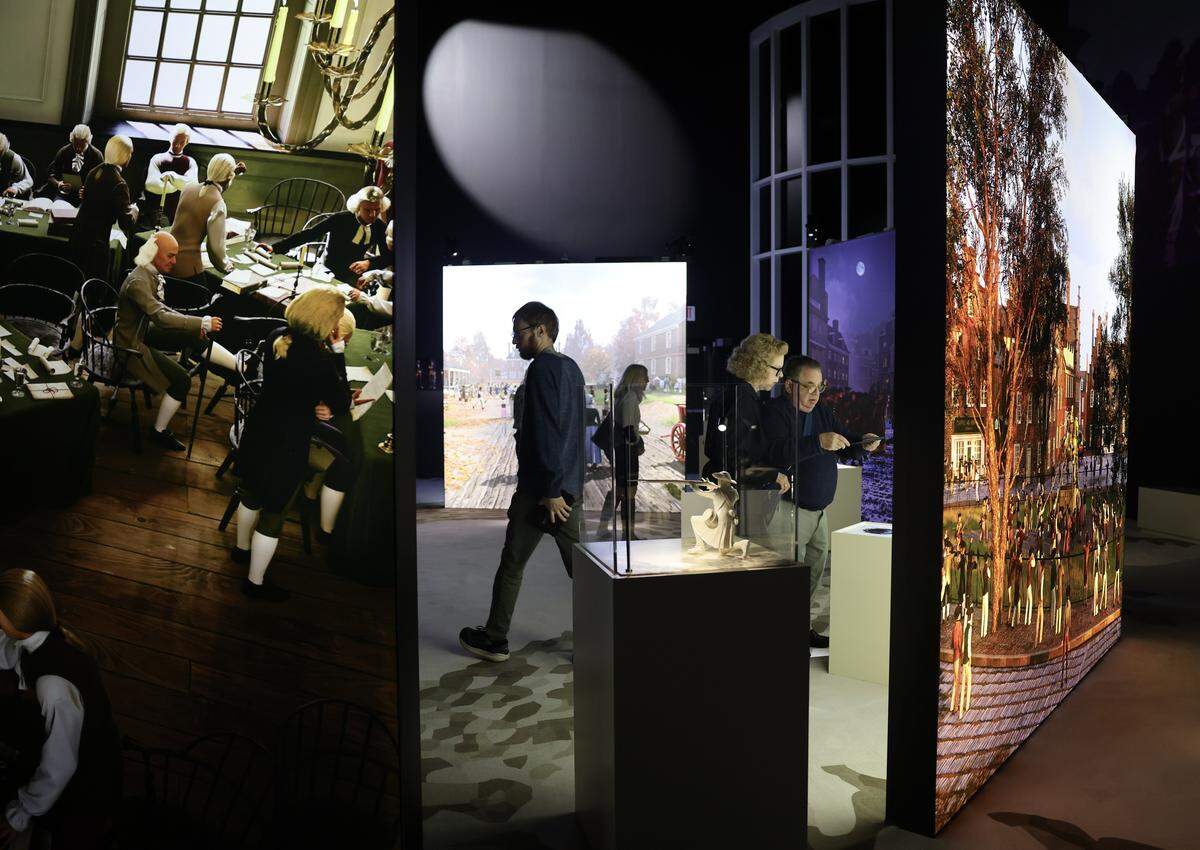
Inside the immersive tech bringing history to life in Charlotte
The museum’s 5,000-square-foot first floor has been transformed into the exhibit.
With over 20 interactive portals through the years 1763 to 1789, visitors can take deep-dives into moments of revolutionary history. Preparation on Tuesday included finishing the installation of new carpet with the segmented snake design of Benjamin Franklin’s “Join or Die” cartoon.
After hitting scan on the tablet, or Histopad, a circle appeared. Hovering over the portal in front of one of the display scenes, history leaps to life with movement and sounds in a 3D re-creation of Fort Ticonderoga on Dec. 5, 1775.
Snow falls as horses neigh. The story explains that Henry Knox, under orders by George Washington, sets off on one of the most daring missions of the American Revolution by transporting cannons over 300 miles to Cambridge, Massachusetts, near besieged Boston.
Between the exhibition rooms in the rotunda is four viewpoints of the conflict that represent the Native American, Loyalist, Patriot and British perspectives with two-story images.
Another highlight is an augmented reality video installation where portraits of figures like John Adams talk to visitors using quotes from the time period.
The museum also leverages this technology internally, tracking which portals people are scanning and how long they spend at different points to help shape future programming.
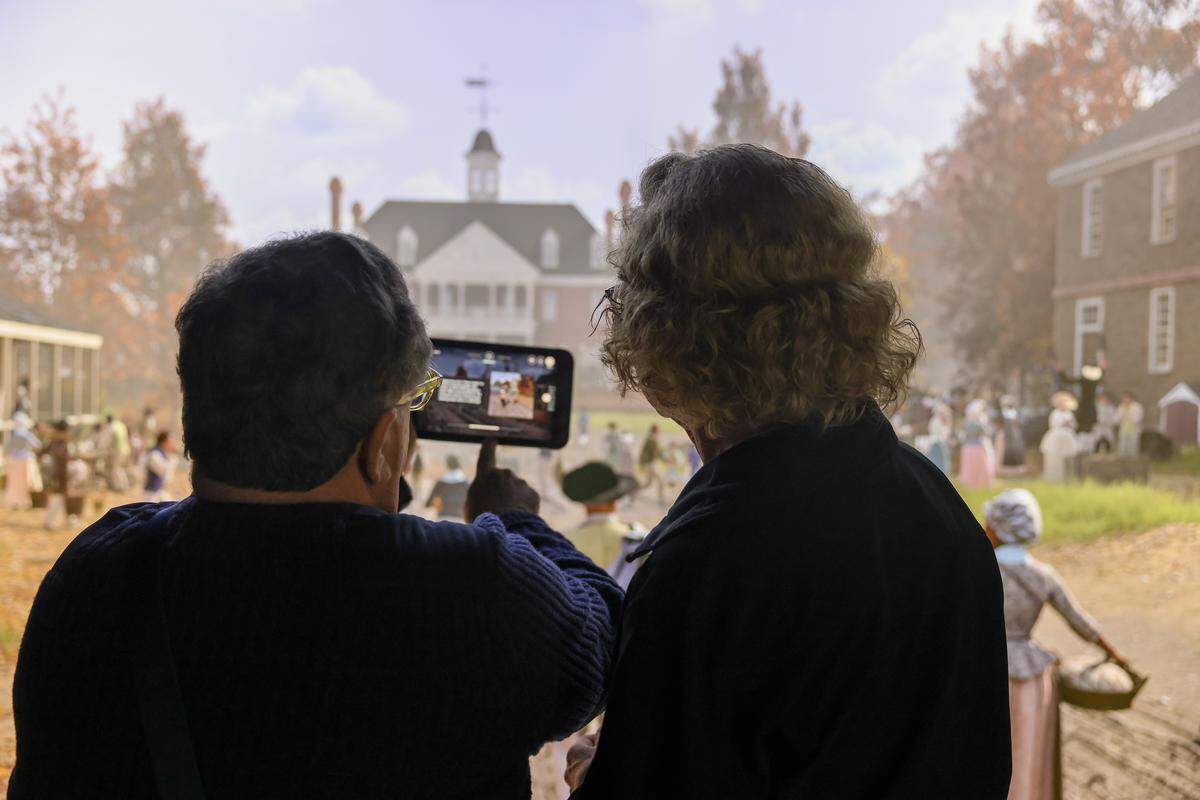
The American Revolution exhibit has exclusive Carolina content
The Charlotte Museum of History also is dedicating a full gallery to telling the story of the Carolinas during the American Revolution. The same augmented reality technology is used with the museum’s own objects and collections, too.
In the Carolinas’ room, the focal point is the museum’s decades-old diorama upgraded with the virtual experience.
Using the HistoPad, visitors fly down a dirt road flanked by wooden snake rail fences to the intersection of Trade and Tryon streets. It’s a time portal to seeing the city during the British occupation nearly 250 years ago. Using a slide on the screen, it shows a 3D picture of the same site today with towering buildings like the Bank of America headquarters.
“Although nothing from the revolutionary era survives here today, the courthouse — a simple wooden building that served as Charlotte’s town hall — once stood precisely at the crossroads of Tryon and Trade streets,” the Histopad shows.
Other portals detail key local conflicts and history, including:
- Capt. James Jack’s 1775 ride from Charlotte to Philadelphia to deliver the Mecklenburg Declaration of Independence to congressional delegates.
- The Battle of Kings Mountain, where the Patriots won a 1780 battle just west of Charlotte, and a recreation of British loyalist leader Maj. Patrick Ferguson’s famous last charge down the hill.
- The Battle of Williamson’s Plantation, also known as Huck’s Defeat, at the Bratton plantation in York County, South Carolina. It was a key American victory. Using the screen, visitors can learn about the sites history and also see what it looks like today.
- The Battle of Charlotte, where a small Patriot militia under Col. William Richardson Davie confronted British Gen. Lord Cornwallis’ army at Trade and Tryon streets. The British troops eventually occupied the town. Still, it marked the beginning of a turning point in the Southern campaign of the American Revolution, according to the museum. A real “Hornet’s Nest” (sans the insects) on exhibit explains the legend of Cornwallis calling Charlotte a “Hornet’s nest of rebellion” during the 1780 occupation.
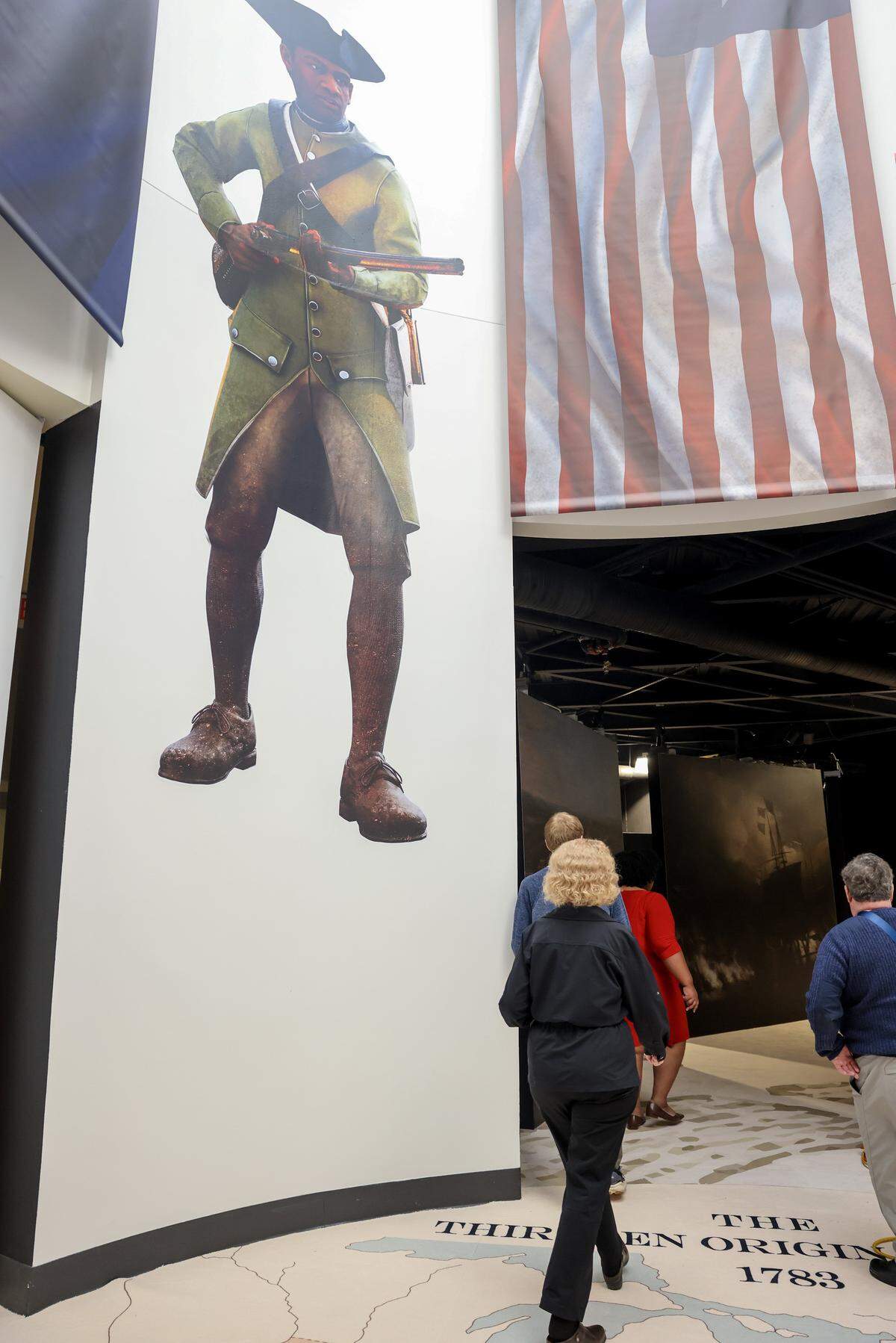
The Catawba Nation, Mecklenburg’s oldest house and a movie costume
Nolan Dahm, historian and exhibits manager for the museum, worked closely with the Catawba Nation to feature the 1763 encampment on the North and South Carolina border.
Gen. Thomas Sumter was a South Carolina militia general during the revolution, nicknamed “Gamecock.” He was a symbol of resilience in the struggle for independence in the southern backcountry, according to information on the Histopad.
“Catawba land at the time, they allowed Sumter to camp at this location and 41 Catawba men enlisted in the local army. This scene is that site,” Dahm said. It also includes a map made by the Catawba people, along with pottery.
The exhibit also integrates the Rock House, the oldest revolutionary-era building and structure in Mecklenburg County.
Tours of the 1774 Alexander Rock House built by slaves are available on the museum’s 8-acre site. A sword from the house’s original owner, Hezekiah Alexander, is also on display. Alexander was a revolutionary statesman and framer of North Carolina’s first Constitution and Bill of Rights.
It’s the only local building still standing from the American Revolution, according to the museum.
And, a costume from Mel Gibson’s “Patriot” will also be on display, on loan from Historic Brattonsville in York County where the movie took place and was filmed.
Dahm had a tip for visitors: “There’s a lot. Pace yourself. Don’t just start with No. 1 and read every word. Free flow, come back another time.”

About the American Revolution exhibit
The exhibit will travel to other cities through 2031 with a goal of reaching all 50 states. Charlotte is the second city, with a 10-month exhibition debuting last month at Historic New Orleans Collection.
The Charlotte Museum of History raised over $1 million in private and public funding to bring the exhibit to the Queen City. But it’s still fundraising for marketing, facilities upgrades and a year of programming to go along with the exhibition, White said.
The Charlotte exhibition will work in tandem to promote other sites and museums highlighting the Carolinas’ role in the Revolutionary War.
“We also want to be a benefit to the whole state,” White said.
Want to see ‘American Revolution: The Augmented Exhibition’
Where: 3500 Shamrock Drive, Charlotte
When: April 14 until April 2027
Tickets: Cost: $20; discounts for seniors, students, veterans and active military. Available at charlottemuseum.org/america250
More arts coverage
Want to see more stories like this? Sign up here for our free, award-winning “Inside Charlotte Arts” newsletter: charlotteobserver.com/newsletters. And you can join our Facebook group, “Inside Charlotte Arts,” by going here: facebook.com/groups/insidecharlottearts.
This story was originally published April 9, 2026 at 5:15 AM.