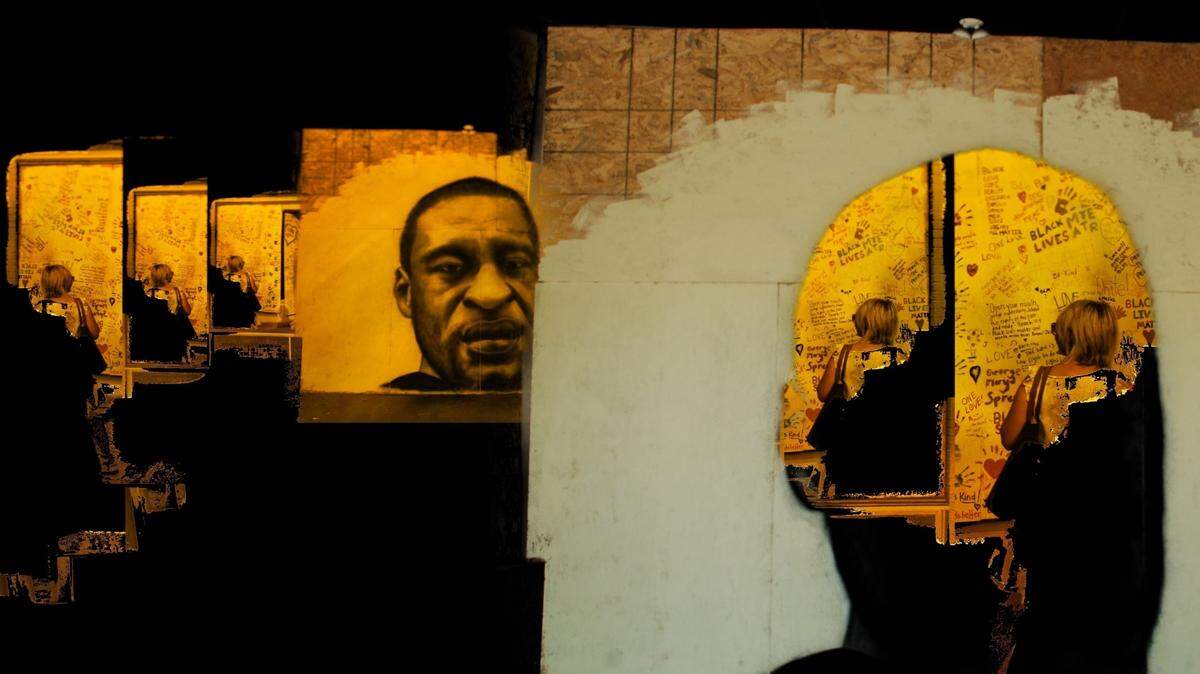
Charlotte’s history and science museums reopen. They’ve been preparing for months.
READ MORE
CLT Fall Arts Guide 2020 Series Nav
Our coverage of the Charlotte Fall Arts season amid COVID, social justice protests
Expand All
The work of Charlotte museums did not stop in March when they could no longer welcome visitors in person due to COVID-19.
That’s why Gov. Roy Cooper’s announcement this month that museums could reopen at reduced capacity as part of North Carolina’s Phase 2.5 didn’t send staffers scrambling. They’ve been preparing for this practically since the novel coronavirus shutdown began.
The Observer checked in with Discovery Place, the Levine Museum of the New South and Charlotte Museum of History to see what changes they’ve made and what lies ahead for the fall arts season.
Concerns about visitor and staff safety are dictating how the museums proceed. We also asked how they’ll be responding to the social justice issues that have roiled the nation.
Discovery Place
When the four Discovery Place museums reopen Sept. 19, they’ll feature contactless entry, a reduced schedule, advance registration and timed tickets, enhanced cleaning, a strict mask policy and social distancing.

Discovery Place has even staged “dress rehearsals” with small groups to ensure their plans work in practice.
“The governor allows us to reopen at 50% capacity,” Discovery Place CEO Catherine Wilson Horne said. “But we’ve chosen to open at 25% capacity.”
The work of Discovery Place — which includes uptown’s Discovery Place Science, Discovery Place Nature in Myers Park, Discovery Place Kids-Huntersville and Discovery Place Kids-Rockingham — continued during the shutdown.
The staff fed and cared for the more than 500 non-human residents, and donors helped ensure the meals kept coming. The great blue turaco, a bird classified as “threatened” by hunting and deforestation, needs fruit and vegetation. And the golden poison dart frog, one of the planet’s most toxic animals, requires fruit flies, crickets and other insects.
Although closed, Discovery Place still hosted Cool Globes, an outdoor art installation with a message about climate change. It’s on view uptown through Jan. 3.
Summer camp happened, too, in-person with social distancing. More than 750 kids took part. Camp went so well, Discovery Place launched “School Camp” at two locations. The full-day camp experience allows K-5 students to attend “virtual school” from the museum while getting an extra dose of science each afternoon.
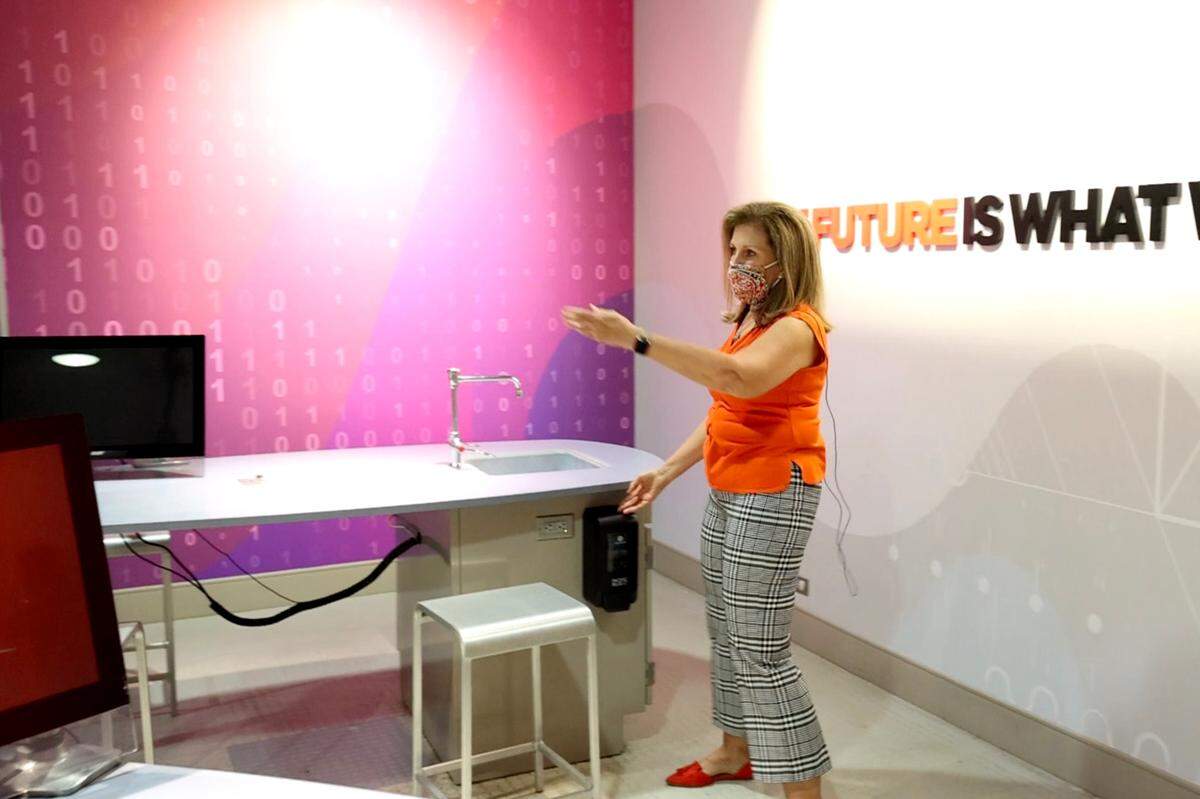
Discovery Place is known for blockbuster exhibitions.
“Antarctic Dinosaurs” was years in the making and unceremoniously closed in late August. Don’t expect that kind of massive (and expensive) show anytime soon. Smaller installations, like the coronavirus exhibition in the uptown Discovery Place lobby, will be more common.
“This era has brought science to the forefront,” Horne said. “The pandemic will be solved by science, and it will be our job to help people understand it.
“The nice thing about science institutions is: We believe in science,” Horne added.
Levine Museum of the New South
Kathryn Hill sees a silver lining to the forced shutdown of the uptown museum she leads.
The CEO of the Levine Museum of the New South said, “We’ve learned more about digital in the last six months than we could have learned in a couple of years if we hadn’t had to close our doors.”
“Digital breaks down barriers,” she said. “When COVID-19 closed our doors, we accelerated our digital programming. We created content for teachers and parents-who’ve-had-to-become-teachers.
“There are 43 curriculum units on our website. They have generated almost 600,000 Facebook impressions and 40,000 live views,” Hill said.

It’s a great way to reach people, but it’s not Hill’s favorite way.
“When you run a museum,” she said, “you’re so close to the people you serve. You see the schoolkids, your long-time members. There’s lots of people-to-people interaction. We miss that.”
Beginning Sept. 19, the museum will be open to the public Fridays through Mondays. Masks are required, capacity will be reduced and there will be timed tickets and enhanced protocols for deep cleaning.
That’s not all that’s changed.
The Black Lives Matter movement “has both confirmed that the museum’s programming was on target and changed us profoundly,” Hill said. “We couldn’t see the names and faces of George Floyd, Breonna Taylor and Ahmaud Arbery without having our individual and collective hearts broken. The New South is a place of opportunity, equity and justice. It is so clear that we are relevant to this conversation.”
The museum created the Facebook Live series, “What is it going to take?” to focus public attention on what communities can do to foster change.
During the shutdown, staffers added an augmented reality component to “Cottonfields to Skyscrapers” that allows visitors to interact (virtually) with former Mayor Harvey Gantt, former Bank of America CEO Hugh McColl and Dorothy Counts-Scoggins, who helped integrate Harding High in 1957.
The lockdown also led to another epiphany.
“We learned our audience is national,” Hill said. A partnership with the Minnesota Historical Society was one result. “Reimagining Policing: A Tale of Two Cities” brought together Charlotte and Minneapolis citizens for an online public conversation.
“We are forever changed by COVID,” Hill said. “We’ll always have a digital presence after this.”
Charlotte Museum of History
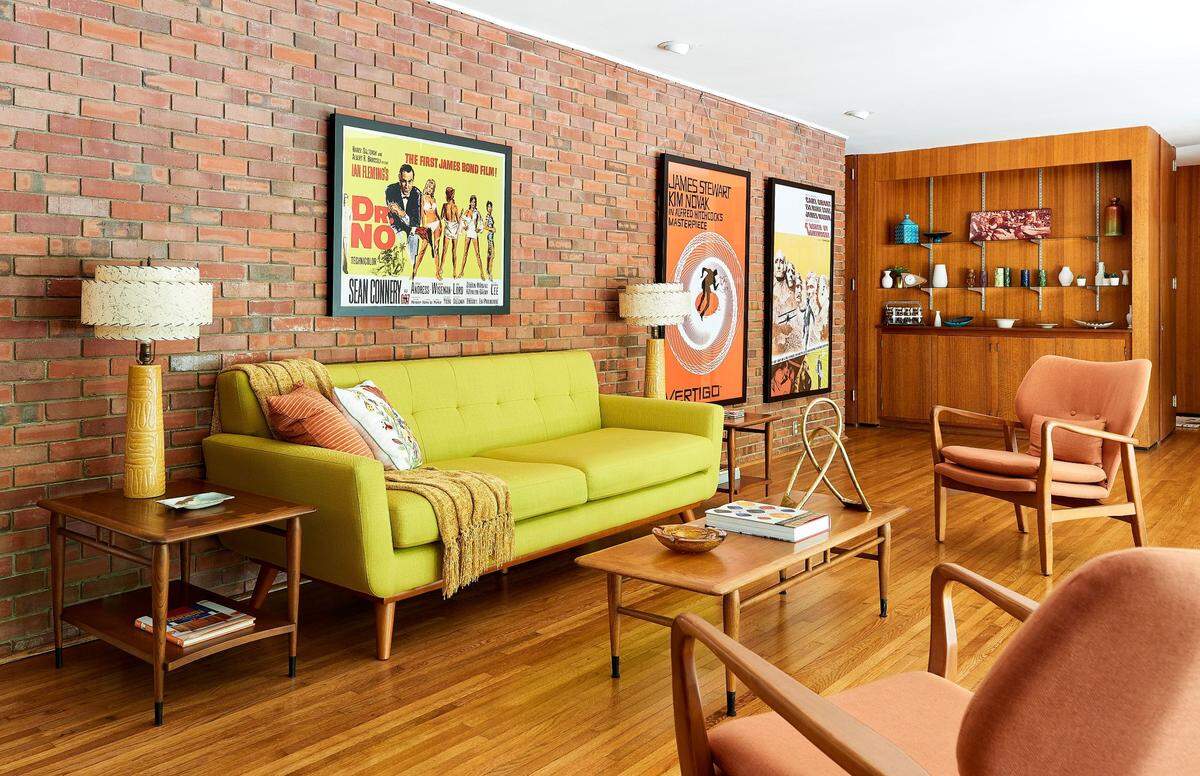
Leaders at the Charlotte Museum of History are converting Mad About Modern, one of their best-loved events, into an online happening.
The home tour typically attracts about 1,300 mid-century modern fans — well above the state’s gathering limit — on a fall Saturday. A virtual tour is safer and can accommodate more.
From Sept. 26-Oct. 4, participants can take an in-depth, online tour of three fully furnished masterpieces. Pay attention, or you might miss the orange rotary dial phone hanging on the kitchen wall in one home. Tickets and details: charlottemuseum.org.
The Black Lives Matter protests that have rocked much of the country, including Charlotte, have impacted the museum.
“We’ve been reevaluating our institution given this historic moment of change, although we were already trying to uplift voices of underrepresented groups and have been for several years,” said Adria Focht, museum president and CEO. “Every February, for instance, we host an African-American celebration that attracts nearly 1,000 people.”
Like all cultural institutions, the museum has taken a financial hit.
“We had an almost immediate shutdown of earned income,” Focht said, explaining that in recent years, funding has come more from museum rental fees, field trips, and alcohol sales than donations. “We had to move back to a contributions model,” she said.
“I’m proud of our team,” Focht said. “We immediately moved to digital the week of March 15. For every 100 people who come in real life, you can engage 1,000 people online.”

The museum has offered free online programming since early in the pandemic. “We were thinking especially of those unexpected homeschooling parents,” Focht said. “Now, we need to move to charging a fee for some of those offerings to make up for lost revenue.”
Focht has especially missed seeing students: “I don’t know if they realize they’re having a formative experience, but we get lots of adults at the Hezekiah Alexander Homeplace who tell us they remember their third-grade field trip here.”
The museum will reopen in phases starting Sept. 19 when visitors can take a self-guided, outdoor tour. “Guests will be able to spread out on our 8-acre campus and learn about some of Charlotte’s earliest history,” Focht said. Advance registration is required: charlottemuseum.org.
More arts coverage
Want to see more stories like this? You can join our Facebook group, “Inside Charlotte Arts,” at https://www.facebook.com/groups/insidecharlottearts/
This story was originally published September 16, 2020 at 1:36 PM.