
Mobile home parks in Charlotte under threat — for reasons all too familiar
Sitting among nearly two dozen empty mobile homes, Adela Sánchez waited one recent afternoon for the familiar sound of the school bus to rumble up the road.
This is where she lived for the last nine years — until last month.
Sánchez and her four children are among the families displaced after new owners of the north Charlotte mobile home park refused to renew their lot leases amid plans for major renovations. The family has moved into an apartment across town, where they have far less space and Sánchez pays more than twice as much rent.
But she still waits every day at Countrywoods Mobile Home Park for her children so they can finish the year in their old school and avoid one more major disruption in their lives.
The park is now nearly deserted.
Some homes have been bulldozed, leaving only patches of freshly overturned red soil and heavy equipment. And then, there are the new, larger and more expensive manufactured homes that were recently delivered, still in their wrapping.
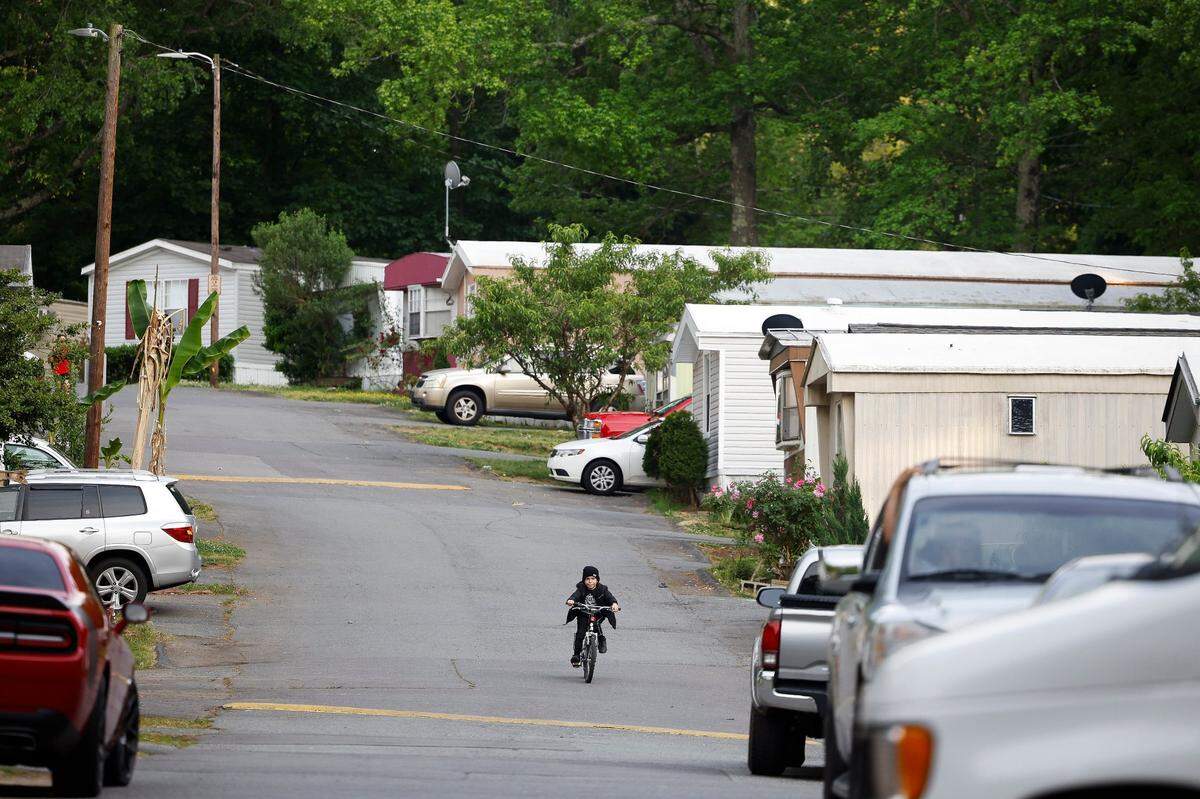
Her kids are having a tough time, she said, asking why they can’t play and ride their bikes with friends here anymore.
“They start to cry” when they ask about their old home, Sánchez said in Spanish, her own voice catching. “It’s sad.”
Mobile home parks like Countrywoods have been a reliable source of affordable housing in Charlotte for decades, offering prices well below nearby apartments or homes. But a confluence of factors, including rising land prices and an influx of investors looking to make money buying parks, threaten this way of life.
New reporting and data analysis from The Charlotte Observer shows how in the middle of the city’s widening affordable housing crisis, this remaining refuge has come under siege.
Much like other property — from apartment complexes to whole blocks of starter homes — the market for local mobile home parks, in the last five years especially, has drawn buyers willing to pay more than ever. These buyers — often private equity firms — become the new landlords for some of the region’s most vulnerable residents.
Some parks go the way of Countrywoods, where the cost of living spikes as new manufactured homes replace older trailers. In other places, developers build even higher priced homes, transforming not only the former mobile home park but much of the neighborhood around it. For others, rent increases push out residents over time.
‘A cash cow’
Manufactured homes are the country’s largest source of unsubsidized affordable housing, including for 14% of North Carolina residents, according to census data. This type of housing is built elsewhere and placed on site.
Much more affordable than stick-built or on-site constructed houses, manufactured homes offer “the first rung of homeownership” for many who might not have the funds, credit or other qualifications for a traditional mortgage, experts say.
Residents and families may rent just the land or rent both their mobile home and the land from a park owner. But unless they own both, they find themselves at the mercy of owners who can raise lot rents or sell the land beneath them on short notice.
“Folks who occupy manufactured homes usually are renting (the land) and therefore they have very little in the way of protection,” said Brian Dabson, who researched mobile homes while with the UNC School of Government.
More and more often, those new owners are out-of-state investors, with a similar strategy to the Wall Street landlords that have taken over the single-family rental industry in cities across the country, including in Charlotte.
Large investors and private-equity firms identified manufactured housing as potential for significant profit years before the focus on single family home purchases, said George McCarthy, president and CEO of the Lincoln Institute of Land Policy.
“When these institutional investors started identifying them as cash cows ... it almost always (means) bad things for the residents,” he said.
That profit is made by raising rents, adding fees for services previously included like cable or water, and removing existing amenities, McCarthy said.
It’s a precarious situation for longtime residents, he said, who for years have had much lower housing costs compared with other options, like renting an apartment or buying a traditional site-built house.
Research from the Lincoln Institute found investors own parks with a combined 800,000 manufactured homes nationally.
While manufactured housing can conjure images of rural communities, there are more of these homes in metro areas than rural ones, McCarthy said, often on fringes of metro areas that continue to expand outward.
That’s true in Mecklenburg, where mobile home parks mostly ring the edges of the county in now fast-growing communities like Huntersville. They range in size from just a few homes to more than 200 in
sprawling communities with winding roads, tucked away but not far from the county’s continued growth.
Mobile home ownership data
Deciphering exactly how many local mobile home parks have been lost or sold in recent years is difficult. A combination of tax, zoning and sales public records offer a complicated view.
An Observer analysis of available records show at least one-third of Mecklenburg County’s inventory of mobile home parks have changed hands in the last five years.
The actual number of sales might be higher — namely because not every mobile home park is classified as such in property or zoning records. The Observer analysis included those zoned for mobile homes and in use as a park, or those existing mobile home parks grandfathered in under previous land use codes.
And the amount of local parks bought by private equity firms could be higher, too — but information on county land records don’t always make clear whether the owner is local.
There are around 55 mobile home parks in Mecklenburg County, according to an Observer review of county parcel data and a file provided by the county’s land use and environmental services that listed addresses with a mobile home onsite. Reporters eliminated locations with just a single mobile home.
Of the estimated 55, at least 20 of the properties have sold since 2017, including several bought by some of the country’s largest owners.
Those companies, including several that made one industry group’s list of top 50 owners by number of homes, paid significantly more than the tax-assessed value of the properties, an indicator that the companies expect to make substantial profit on their investment, experts told the Observer.
Among them:
▪ Maryland-based Horizon Land Co., purchased Bellhaven Estates in northwest Charlotte off Brookshire Boulevard for $7.98 million in February 2020. The county’s valuation for tax purposes of the property, which has some 150 homes on it, was just under $2.3 million. The company owns mobile home parks in 20 states, including seven parks in North Carolina, according to its website.
▪ Stonetown Capital of Colorado bought Woodward Village for $5.85 million in March 2020, three times the combined tax value for the land parcels purchased, county records show. The community is in an unincorporated part of the county between Charlotte and Mint Hill.
▪ Bloomfield Estates, located west of Charlotte Douglas International Airport, sold for $12.6 million in March 2020 to a Utah-based company connected to Havenpark Capital Partners. The sale price was more than 2.7 times the park’s tax-assessed value.
The private investment firm has been accused of sharp rent increases after purchasing other parks according to media reports in Iowa, Montana and Minnesota. The company did not respond to a request for comment, but has previously defended its practices.
Residents at several parks sold in recent years told the Observer that rent increases followed.
“It is hard to find a place to live; I haven’t found anything cheaper than this even though it’s going up,” said one woman, who lives in a northeast Charlotte park bought for $8.2 million in 2019 by a California-based equity firm that has been accused of predatory purchases elsewhere.
She asked that her name not be used because she has struggled to get repairs handled, including gaps in the floor and doors that let in water when it rains. Another resident in the same park said lot rents jumped from $325 to $525 in recent years, a nearly 62% increase.
The owner, Pacific Current Partners, bought two other Charlotte parks in August 2019 for $7.7 million and $1.9 million, respectively. All three purchases were significantly more than the properties’ tax-assessed values. A representative for the company did not respond to a phone call or email request for comment.
‘No need to worry’
The most dramatic recent example of the threat to mobile home residents has played out at Countrywoods in recent months.
The north Charlotte park sold for $1.7 million in August to Raleigh-based Countrywoods Community LLC, according to county property records. The company is tied to KDM Development of upstate New York which, according to its website, began acquiring mobile home parks in 1995 and manages properties in seven states.
In February, two New York-based LLCs also tied to KDM Development each bought a 25% stake in the property for $450,000 apiece.
Most residents were Latino families who were low-income and rented both the land and the homes they lived in. Residents said the park, nestled in a wooded area on Victoria Avenue not far from Statesville Road and W.T. Harris Boulevard, was a quiet, close-knit community where neighbors — many who had lived there for a decade or more — kept an eye on each other.
Residents were paying around $600 per month if they rented both the home and the lot, according to several residents.
That’s significantly lower than other housing in the 28269 ZIP code, where the median home sale price last month was $320,000 and the average asking rent for two-bedroom apartments is $1,565, according to data from Canopy MLS data and real estate research firm CoStar.
Rent quickly increased by $60 to $70 per month, Countrywoods residents said.
Residents say the letters began arriving last fall, announcing a new owner.
“It is not our intent to evict people out of their homes. If tenants are paying their rent and following the community rules, then there is no need to worry,” read one October letter shared with The Charlotte Observer.
By early this year, the new owner had changed its tune.
“We will not be renewing your month-to-month lease,” notes sent in January and February read. “If you fail to vacate the above-described premises ...further action will be taken.”
Millie Erazo, the property manager and KDM Development official, has not responded to phone or email requests asking if removing all residents was intended from the beginning and what is planned for the property.
Before learning they’d be asked to leave, residents fearful of rising rents and displacement held tenant meetings and invited management to answer questions. But residents told the Observer they were unsatisfied by the lack of answers about why they couldn’t sign leases longer than month-to-month for more stability and long-standing repair issues dating back to the previous owner.
City records show code enforcement officers found numerous violations in several homes inspected earlier this year. Complaints reviewed by the Observer show residents reported water damage, unsafe floors and persistent roaches.
Because the owner has told the city it intends to demolish all of the homes, any fines associated with those violations are currently on hold, city spokeswoman Leslie Blaser said.
‘Highest and best use’
When investors buy, they have two common plans, McCarthy said: Continue to run them as a mobile home park with increased charges, or redevelop into something else more profitable.
The latter is what happened to Charlotte tenant organizer Jessica Moreno, whose family’s Matthews mobile home park sold in 2018 to a developer that later built luxury apartments there.
Residents, facing imminent displacement, fought for better relocation packages after the company initially offered $500 per family. They ultimately received $8,000 each, the Observer reported at the time. Moreno’s family was able to buy land in Gastonia to relocate their home, meaning a longer commute but security that their home won’t be threatened again.
That experience launched Moreno’s advocacy career, now as a housing organizer with Action NC.
Working with Countrywoods residents was history repeating itself, she said, especially for the majority-Latino families who lived there who remind her of former neighbors in Matthews, calling the experience “traumatic.”
“I remember how it felt to be this close to being on the streets,” she said. Indications that Countrywoods residents would face a similar fate were obvious, she said.
“People saw it from the beginning that they were being pushed out, that was the goal,” Moreno said. “So screw all those people that lived there for 18 years, 50 years.”
With land prices rising across the Charlotte metro area, longtime “mom and pop” park owners are getting constant offers to sell, said attorney Lawrence Shaheen, who represented about a dozen owners who contested their 2019 property revaluations.
His clients were hit hard by the spike in property values, he said, when residential property values in Mecklenburg County had increased an average of 43% since the county’s last revaluation eight years prior.
With the pressure to build and develop more as Charlotte grows, it’s arguable that running a mobile home park isn’t the “highest and best use” for the land, Shaheen said.
“These rising costs, this inflation of housing is really putting the squeeze on these (owners) and I wouldn’t be surprised in 10 years if there’s not one single mobile home park left in the county,” he said.
Moreno said Charlotte’s development trends will force low-income residents to live further and further out or move into crowded housing.
“It’s going to keep kept happening the same exact way,” she said reflecting on the repeated history of Countrywoods and her own former home. “It happened the same exact way — people were pushed out and they had no protection.”
Database editor Gavin Off contributed to this report.
This story was originally published May 15, 2022 at 6:00 AM.
%20Cropped.jpg)